What Happens When a Deep Sea Fish Is Brought to the Surface?
When a deep sea fish is brought to the surface, it undergoes severe physical and physiological trauma known as barotrauma, driven by the drastic reduction in environmental pressure. As hydrostatic pressure drops, internal gases expand,...
When a deep sea fish is brought to the surface, it undergoes severe physical and physiological trauma known as barotrauma, driven by the drastic reduction in environmental pressure. As hydrostatic pressure drops, internal gases expand, causing the swim bladder to rupture or force organs outward, while delicate gelatinous tissues collapse and cell membranes lose integrity.
Contents
The Physics of Depressurization: Boyle's Law in the Abyss
To understand what occurs when a deep sea fish is brought to the surface, one must first examine the physics governing hydrostatic pressure in the ocean. For every 10 meters (33 feet) of ocean depth, hydrostatic pressure increases by approximately 1 atmosphere (atm), or 101.3 kilopascals (kPa). At the surface, organisms experience 1 atm of ambient pressure. In contrast, a fish residing in the mesopelagic zone at 500 meters encounters 51 atm, while species in the abyssopelagic zone at 4,000 meters face over 400 atm—roughly 400 times the atmospheric pressure at sea level.
| Depth (m) | Pressure (atm) | Gas Volume Expansion Factor |
|---|---|---|
| 0 m | 1 atm | 1x (Baseline) |
| 100 m | 11 atm | 11x expansion if brought to surface |
| 1,000 m | 101 atm | 101x expansion if brought to surface |
| 4,000 m | 401 atm | 401x expansion if brought to surface |
This dynamic is governed by Boyle's Law, which dictates that the volume of a given mass of gas is inversely proportional to its pressure ($P_1V_1 = P_2V_2$). When a deep-sea organism containing internal gas spaces ascends rapidly through the water column, ambient pressure declines sharply. Consequently, any trapped gas expands exponentially.
If a fish adapted to 1,000 meters of depth is hauled upward without specialized pressurized containment, the gas inside its body attempts to expand roughly 101-fold. This violent expansion shatters internal organs, ruptures vascular structures, and alters cellular biology, creating a lethal cascade of physiological disruptions.
Physiological Impacts: Anatomy of Deep-Sea Barotrauma
The anatomical damage suffered during rapid decompression is collectively referred to as barotrauma. While surface-dwelling fish caught at moderate depths (such as 30 to 50 meters) experience mild forms of barotrauma, bringing deep-sea organisms from hundreds or thousands of meters down causes cataclysmic tissue failure.
- Surface Depressurization
- Expanded Swim Bladder Gases: Organ Eversion & Visceral Disruption
- Differential Retrobulbar Gas: Exophthalmia (Bulging Eyes)
- Cellular & Structural Breakdown: Gelatinous Tissue Collapse
- Thermal & Osmotic Stress: Enzymatic & Membrane Failure
1. Swim Bladder Rupture and Organ Eversion
Teleost (bony) fish typically rely on a swim bladder—a gas-filled internal organ—to regulate buoyancy. In shallow-water species, the swim bladder expands or contracts as the fish swims up or down. Deep-sea teleosts are divided into two primary anatomical groups regarding gas management:
- Physostomous fish: These species possess a pneumatic duct connecting the swim bladder directly to the alimentary canal, allowing them to vent gas through the mouth.
- Physoclistous fish: These species lack this duct. Instead, gas exchange occurs via a complex capillary network called the rete mirabile and a vascularized region known as the oval.
Most deep-water teleosts with swim bladders are physoclistous. During a rapid ascent, the gas inside the swim bladder expands far faster than the rete mirabile can reabsorb it. The organ inflates uncontrollably, filling the abdominal cavity.
As pressure continues to drop, the swim bladder frequently ruptures or expands so forcefully that it pushes the stomach inside-out through the fish's mouth—a phenomenon known as visceral eversion.
2. Exophthalmia (Bulging Eyes)
Another signature symptom of barotrauma is exophthalmia, commonly called "pop-eye." Dissolved gases within the fluid spaces behind the eyes (retrobulbar tissues) and inside the ocular chambers expand as hydrostatic pressure dissipates.
This expansion forces the eyes out of their sockets, often tearing optic nerves and micro-vessels. In severe cases, the cornea ruptures entirely, blinding the organism before it even reaches the vessel deck.
3. Structural Tissue Collapse: The Bloated Appearance
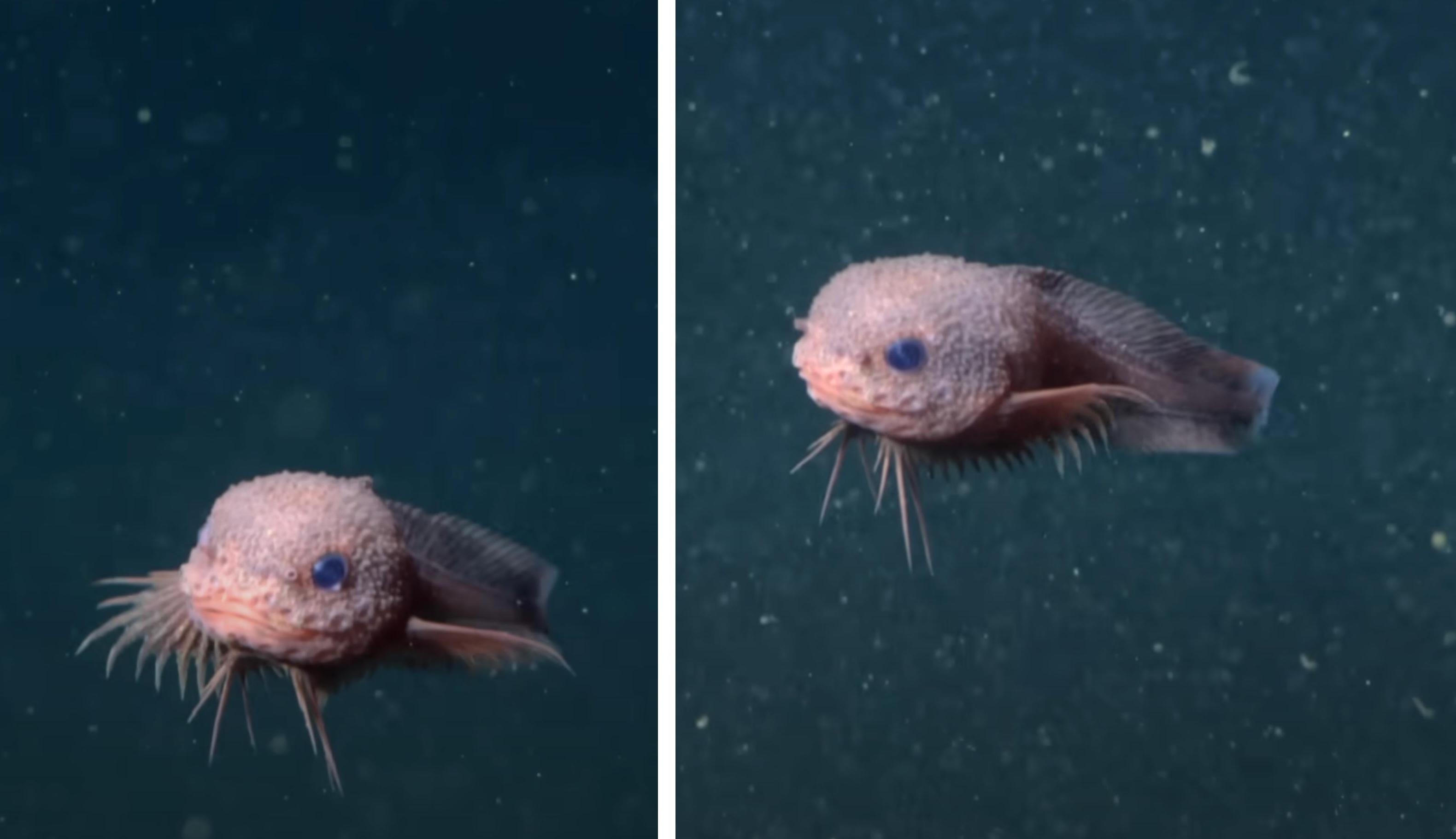
Deep-sea organisms, such as the blobfish (Psychrolutes marcidus), have evolved structural adaptations that lack dense calcium skeletons or rigid muscle fibers. Because building heavy bone structures requires significant metabolic energy—which is scarce in the deep ocean—these animals rely on high water content and gelatinous muscle tissues with density slightly less than that of water.
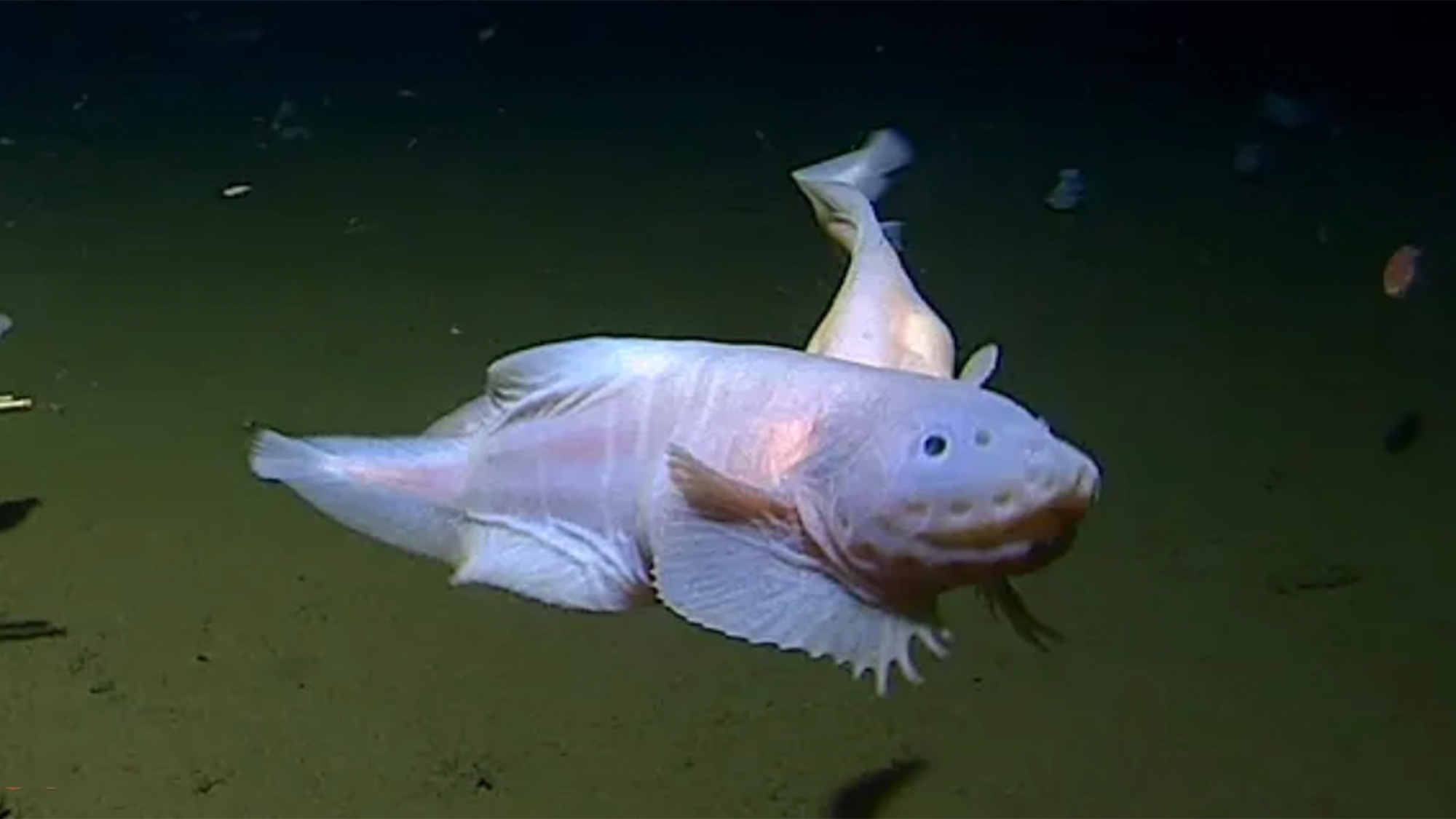
At their natural depths (typically 600 to 1,200 meters), the extreme hydrostatic pressure holds these gelatinous tissues in structural equilibrium, giving the fish a typical, streamlined aquatic form.
However, when brought to 1 atm, the pressure supporting these soft tissues vanishes. Deprived of structural ambient pressure and subjected to cellular rupture, the fish loses its shape, collapsing into a distorted, blob-like mass. The famous imagery of the blobfish as a melted, cartoonish creature is not its living appearance, but rather the result of severe tissue decompression.
- Depth Profile: Psychrolutes marcidus (Blobfish)
- In Deep Water (600–1,200m): High pressure supports soft tissue: Streamlined, intact fish
- At Surface (1 atm): Zero ambient structural support: Gelatinous collapse & distortion
4. Biochemical Disruption and Thermal Shock
The physiological destruction extends down to the molecular level:
- Piezolytes and Protein Folding: Deep-sea organisms produce high concentrations of organic osmolytes called piezolytes, most notably trimethylamine N-oxide (TMAO). TMAO stabilizes cellular proteins against the crushing forces of high pressure, preventing water molecules from forcing their way into protein structures. When ambient pressure drops, this biochemical equilibrium is disrupted, impairing enzyme efficiency and protein function.
- Lipid Membrane Fluidity: Deep-sea cell membranes are rich in polyunsaturated fatty acids to maintain fluidity under cold temperatures and extreme pressure. At surface pressures and warmer surface temperatures, these membranes become overly fluid and unstable, causing cellular leakage and systemic metabolic collapse.
- Thermal Shock: Deep ocean water typically sits between 1°C and 4°C. Bringing a fish through warm surface waters (often 15°C to 25°C) causes rapid thermal shock, accelerating metabolic failure alongside mechanical barotrauma.
Species Susceptibility: Bony Fish vs. Elasmobranchs vs. Invertebrates
Not all deep-sea organisms react identically when brought to the surface. Susceptibility depends heavily on internal anatomy, presence of gas-filled spaces, and biochemical composition.
- High Barotrauma Vulnerability (Gas Bladder Present)
- Deep-sea Teleosts (e.g., Grenadiers, Rockfish, Lanternfish)
- Moderate/Low Barotrauma Vulnerability (No Gas Bladder)
- Elasmobranchs (e.g., Deep-sea Sharks, Chimaeras, Skates)
- Variable Structural Vulnerability (Soft-bodied / Shell-less)
- Deep-sea Invertebrates (e.g., Giant Isopods, Ctenophores, Cephalopods)
Deep-Sea Teleosts (Bony Fish)
Bony fish such as grenadiers (rattails), lanternfish, and deep-water rockfish suffer the most catastrophic barotrauma due to their gas-filled swim bladders. Even deep species that have replaced gas with lipid-filled bladders experience gas micro-bubble expansion within their circulatory systems (decompression sickness), leading to widespread embolism and hemorrhage.
Elasmobranchs (Sharks, Skates, and Rays)
Elasmobranchs lack swim bladders entirely. Instead, species like the sleeper shark (Somniosus) or gulper shark (Centrophorus) rely on enormous, oil-rich livers filled with squalene to maintain buoyancy.
Because lipids do not expand rapidly under depressurization like free gases do, deep-sea sharks do not experience swim bladder eversion or bulging eyes. However, they remain highly vulnerable to thermal shock, cellular membrane breakdown, and rapid changes in blood gas solubility (forming nitrogen bubbles in blood vessels).
Deep-Sea Invertebrates
Invertebrates such as giant isopods (Bathynomus giganteus), deep-sea cucumbers, and octopus species lack internal gas spaces altogether. As a result, many invertebrates endure depressurization far better than teleost fish.
However, soft-bodied invertebrates like comb jellies (ctenophores) or siphonophores often disintegrate upon reaching the surface due to the loss of pressure holding their fragile tissue matrix together, combined with physical turbulence during recovery.
Decompression Responses Across Deep-Sea Marine Organisms
The table below outlines how different classes of deep-sea marine life respond to surface depressurization without specialized recovery hardware:
| Organism Group | Typical Depth Range (m) | Primary Buoyancy Mechanism | Primary Cause of Barotrauma / Mortality | Survival Rate at Surface Pressure (Unassisted) |
|---|---|---|---|---|
| Physoclistous Teleosts (e.g., Grenadiers, Deep Rockfish) | 200 – 3,000 | Gas-filled swim bladder | Swim bladder rupture, visceral eversion, eye proptosis | 0% (Fatal within minutes) |
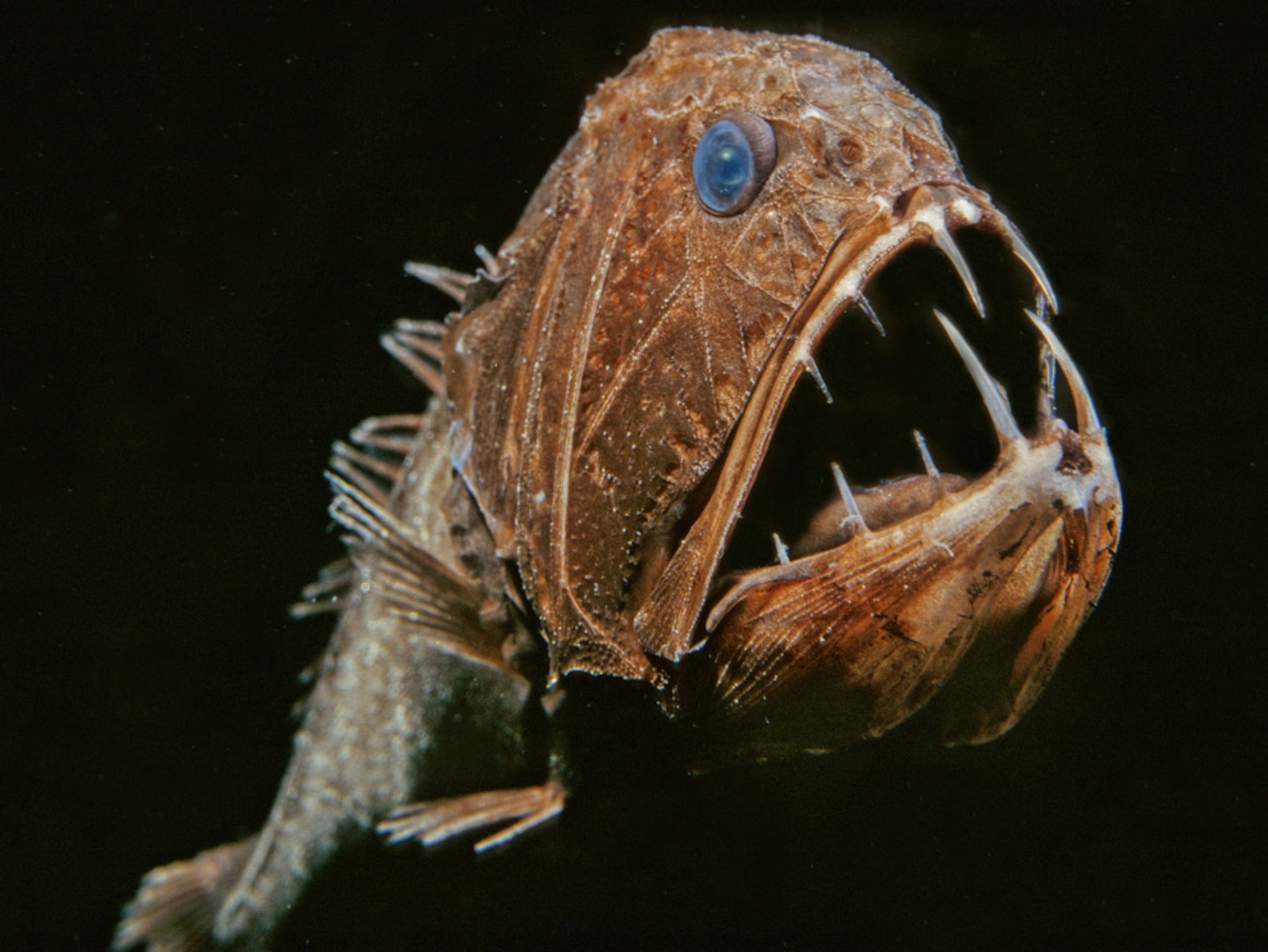
| Aplysic/Lipid Teleosts (e.g., Blobfish, Dragonfish) | 600 – 2,000 | Gelatinous tissue & lipid deposits | Tissue collapse, protein destabilization, thermal stress | Near 0% (Severe physical alteration) |
| Deep-Sea Elasmobranchs (e.g., Sleeper Sharks, Chimaeras) | 300 – 3,000 | Squalene-rich oil liver | Thermal shock, vascular gas embolisms, metabolic failure | Low to Moderate (Depends on handling depth) |
| Crustaceans (e.g., Giant Isopods, Deep Hydrothermal Crabs) | 500 – 4,000 | Exoskeleton & fluid equilibrium | Thermal stress, osmotic dysregulation | Moderate to High (Can survive if kept cold) |
| Gelatinous Zooplankton (e.g., Ctenophores, Siphonophores) | 500 – 6,000+ | High water content, ionic balance | Structural integrity loss, mechanical shredding | Extremely Low (Tissue disintegrates) |
Scientific Innovations: How Researchers Capture Deep-Sea Fish Alive
For decades, studying live deep-sea organisms was nearly impossible because conventional net trawls brought back damaged or dead specimens. To conduct physiological, behavioral, and pharmacological research, oceanographic institutions like the Monterey Bay Aquarium Research Institute (MBARI) and the National Oceanic and Atmospheric Administration (NOAA Ocean Exploration) have engineered hyperbaric collection systems.
Deep Ocean Sampling Routine (Pressurized Retrieval):
- Submersible / ROV Locates Specimen
- Organism Encapsulated in Insulated Hyperbaric Chamber
- Hydraulic Seals Engage at In-Situ Depth & Pressure
- Controlled Ascent (Internal Pressure Maintained at Depth Levels)
- Transfer to Pressurized Surface Aquarium Systems
Pressurized Retrieval Chambers
Modern deep-sea sampling relies on specialized pressure-retaining retrieval hardware attached to Remotely Operated Vehicles (ROVs) or autonomous submersibles:
- PERISCOP (Production and Evaluation of Retrieval Systems for In-situ COnditioning of Pressure): Developed by European oceanographic teams, PERISCOP is an isobaric sampling device designed to capture deep-sea fauna and maintain their native pressure (up to 300 bar) and cold temperature throughout the multi-hour ascent to the surface research vessel.
- ABYSSBOX: Designed for public display and long-term maintenance of deep-sea fauna, systems like the ABYSSBOX maintain internal hydrostatic pressures up to 300 atm. This allows scientists to observe hydrothermal vent organisms and deep benthic species in their natural, pressurized state.
- Insulated Suction Samplers: ROVs use variable-speed suction pumps to draw delicate organisms into acrylic canisters equipped with thermal insulation. While these may not preserve full pressure, they protect specimens from mechanical injury and thermal shock during ascent.
Recompression and Descending Devices in Fisheries
In recreational and commercial fisheries targeting mid-to-deep dwelling species (such as snapper and rockfish between 30 and 150 meters), management agencies require the use of descending devices.
These tools—weighted grips, inverted baskets, or pressure-activated release hooks—transport fish suffering from barotrauma back down to their capture depth before releasing them. Returning the fish to high pressure compresses the expanded gas inside the swim bladder, reversing tissue displacement and enabling high post-release survival rates.
Recompression Mechanics via Descending Devices:
- Surface (Expanded Gas / Bloated)
- Lowered to Original Depth
- Gas Re-compresses
- Normal Buoyancy Restored
Ecological Impact of Deep-Sea Bycatch and Depressurization
The vulnerability of deep-sea species to depressurization introduces serious ecological challenges, particularly regarding industrial deep-sea bottom trawling:
- Extremely Low Recovery Rates: Unlike shallow-water species that can recover from capture stress, deep-sea organisms brought up from depths exceeding 400 meters suffer irreversible physiological damage. Bycatch thrown back overboard almost universally dies from barotrauma or predation at the surface.
- K-Selected Life History Strategies: Deep-sea fish typically exhibit slow growth rates, late sexual maturity (often decades), and low fecundity. For instance, the orange roughy (Hoplostethus atlanticus) can live for over 150 years but does not mature until age 20 to 30. High mortality from depressurization during trawl operations can decimate local populations, taking decades or centuries for stocks to recover.
- Disruption of Carbon Export: Deep-sea fish play a key role in the biological carbon pump by feeding near the surface or midwater at night and excreting carbon at depth. Removing these species through trawl operations and bycatch mortality impairs carbon sequestration in the deep ocean.
Frequently Asked Questions
Why do blobfish look so strange when brought to the surface?
Blobfish (Psychrolutes marcidus) lack high-density skeletons and strong muscle tissues, relying instead on a gelatinous body mass slightly less dense than water. At their natural depths (600 to 1,200 meters), extreme hydrostatic pressure compresses their body into a firm, functional shape. When brought to the surface, the loss of ambient pressure causes their soft tissues to collapse into a distorted mass.
Can a deep-sea fish survive if it is quickly returned to the deep ocean?
For shallow to mid-depth species (30 to 100 meters), returning the fish to depth using a descending device often re-compresses internal gases and allows survival. However, for true deep-sea species hauled from 500+ meters, rapid ascent causes permanent tissue tearing, organ rupture, micro-vascular damage, and biochemical stress that are fatal even if the fish is immediately returned to depth.
Do all deep-sea fish have swim bladders?
No. Many deep-sea fish have evolved without swim bladders to avoid the energetic cost of gas secretion at high pressure. Some species replace gas bladders with lipid-filled bladders, while others, like deep-sea elasmobranchs (sharks and skates), rely on large oil-filled livers and reduced skeletal density to achieve neutral buoyancy.
How do scientists keep deep-sea creatures alive in laboratories?
To study living deep-sea organisms, researchers use specialized hyperbaric aquariums. These systems use high-pressure hydraulic pumps, titanium or thick acrylic walls, and chilled water circulation to recreate the 100+ atm pressure and near-freezing temperatures of the deep ocean.
What is the difference between barotrauma in fish and "the bends" in human divers?
Both conditions involve gas dynamics under changing pressure, but their mechanics differ. "The bends" (decompression sickness) occurs when dissolved nitrogen in tissues forms gas bubbles as ambient pressure drops. In fish, barotrauma includes this tissue bubbling alongside the massive mechanical expansion of free gas inside organs like the swim bladder, leading to physical tearing and organ displacement.
Summary and Next Steps
The extreme pressure differences between the ocean floor and the surface create a physical barrier for deep-sea marine life. When brought to 1 atm, rapid gas expansion under Boyle's law causes swim bladder eversion, tissue destruction, and biochemical failure. Modern oceanography overcomes these limits using hyperbaric collection chambers, allowing scientists to study deep-sea species without causing fatal barotrauma.
To learn more about deep-sea exploration and marine conservation, consider the following resources:
- Review published oceanographic research through the Monterey Bay Aquarium Research Institute.
- Explore deep-sea exploration missions hosted by NOAA Ocean Exploration.
- If participating in ocean angling at depths greater than 30 meters, use approved fish descending devices to mitigate barotrauma and support catch-and-release survival.
Image Gallery