The Defensive Catalyst: Charles Haley’s Enduring San Francisco 49ers Legacy
Charles Haley’s legacy with the San Francisco 49ers is defined by his role as the premier pass-rushing "Elephant" who transformed a high-finesse team into a defensive powerhouse. During his two stints in San Francisco, Haley secured tw...
Charles Haley’s legacy with the San Francisco 49ers is defined by his role as the premier pass-rushing "Elephant" who transformed a high-finesse team into a defensive powerhouse. During his two stints in San Francisco, Haley secured two Super Bowl rings and recorded 66.5 sacks, establishing the blueprint for the modern hybrid edge rusher.
Contents
The Arrival: Redefining the 49ers Defense in 1986
When the San Francisco 49ers selected Charles Haley in the fourth round of the 1986 NFL Draft out of James Madison University, the league was skeptical. Haley was a "tweener"—too small for a traditional defensive end of that era and too aggressive for a standard linebacker role. However, Bill Walsh and defensive coordinator George Seifert saw a unique opportunity to exploit Haley’s explosive first step and relentless motor.
Haley’s arrival coincided with a shift in how the 49ers approached defense. While the "West Coast Offense" headlined the news, the team needed a defensive identity that could disrupt the increasingly sophisticated passing attacks of the NFC. In his rookie season, Haley recorded 12 sacks, signaling a new era of defensive aggression in the Bay Area. He wasn't just a participant; he was the missing ingredient that allowed the 49ers to transition from a team that won with scheme to a team that won with sheer physical dominance.
The "Elephant" Position and Bill Walsh’s Vision
The hallmark of Haley’s 49ers legacy is the creation and mastery of the "Elephant" position. This hybrid role required a player with the strength to hold the edge against the run and the speed to drop into coverage or rush the passer from a standing start. Haley was the prototype.
By lining Haley up in different spots, the 49ers created schematic nightmares for opposing offensive coordinators. If an offensive line accounted for him as a linebacker, he would use his hand-in-the-dirt power to bull-rush the tackle. If they treated him as a defensive end, his lateral agility allowed him to loop into gaps that traditional linemen couldn't reach. This flexibility became a cornerstone of the 49ers' defensive philosophy throughout the late 1980s.
Statistical Dominance and Championship Impact
Haley’s impact on the 49ers' trophy case is undeniable. He was a foundational piece of the teams that won Super Bowl XXIII and Super Bowl XXIV. While the 1980s 49ers are often remembered for Joe Montana’s poise and Jerry Rice’s precision, Haley provided the "teeth" of the defense that made those offensive clinics possible.
| Statistic/Metric | First Stint (1986–1991) | Second Stint (1998–1999) | 49ers Career Total |
|---|---|---|---|
| Sacks | 63.5 | 3.0 | 66.5 |
| Pro Bowl Selections | 3 | 0 | 3 |
| All-Pro Selections | 1 (First Team) | 0 | 1 |
| Super Bowl Wins (with SF) | 2 (XXIII, XXIV) | 0 | 2 |
| Games Played | 90 | 16 | 106 |
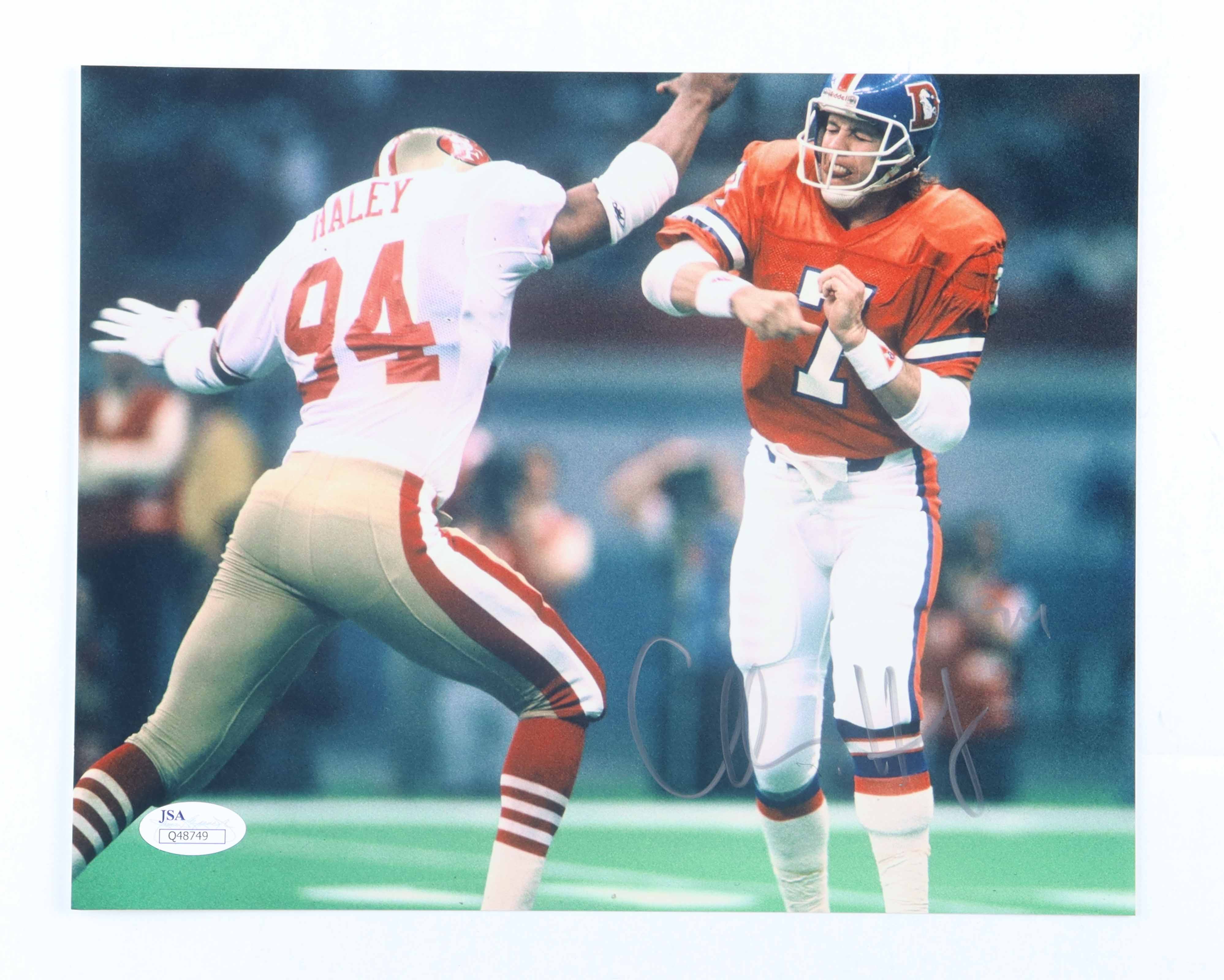
In 1990, Haley reached his statistical peak with the 49ers, recording 16 sacks and earning First-Team All-Pro honors. His ability to apply pressure without requiring a heavy blitz allowed the 49ers to drop seven into coverage, a luxury that suffocated opposing quarterbacks. During the 1989 playoff run, Haley’s presence was a primary reason the 49ers' defense allowed only 26 total points across three games, including a 55-10 demolition of the Denver Broncos in the Super Bowl.
The Complex Persona: Leadership and Turbulence
To understand Charles Haley’s legacy, one must acknowledge the volatile personality that both fueled his greatness and eventually led to his departure. Haley was a mercurial presence in the locker room, often clashing with teammates and coaches. He famously struggled with undiagnosed bipolar disorder during his playing days, a condition he has spoken about openly since his retirement.
His relationship with head coach George Seifert was particularly strained. Despite the tension, Haley’s teammates often remarked that his intensity on the field was infectious. He demanded a level of violence and effort that forced the rest of the defense to elevate their play. He was the "bad cop" in a locker room full of composed stars, providing a necessary edge that kept the team from becoming complacent.
The Trade That Changed NFL History
The most debated chapter of Haley’s 49ers legacy is his 1992 trade to the Dallas Cowboys. Following a series of locker room incidents and growing friction with management, San Francisco traded their best pass rusher to their primary NFC rival for a second and third-round draft pick.
This trade is frequently cited by NFL historians as one of the most significant "what-ifs" in league history. By sending Haley to Dallas, the 49ers essentially handed the Cowboys the final piece of their dynasty. Haley went on to win three more Super Bowls in Dallas, while the 49ers struggled to find a consistent pass rush to counter the Cowboys' rising dominance in the mid-90s. While the trade was intended to preserve locker room harmony, it arguably cost the 49ers at least one or two additional championships during the Steve Young era.
The Return and Retirement in the Red and Gold
After his legendary run in Dallas, Haley returned to the 49ers for the 1998 and 1999 seasons. While he was hampered by chronic back injuries, his return was a sentimental homecoming that allowed him to mend fences with the organization. Even in a diminished physical state, Haley’s veteran presence served as a mentorship bridge for younger players like Bryant Young.
His second stint confirmed that despite the mid-career divorce, Haley’s heart remained in San Francisco. He eventually retired with five Super Bowl rings—the first player in NFL history to achieve that feat—with his foundation firmly rooted in the 49ers' system.
Modern Standing and Hall of Fame Recognition
As of 2026, Charles Haley’s standing in the Pro Football Hall of Fame (inducted in 2015) and the 49ers Hall of Fame remains untouchable. Modern defensive analytics have only strengthened his legacy. When looking at "pressure rate" and "disruption," Haley’s numbers from the late 80s rival those of modern greats like Nick Bosa or Myles Garrett.
The 49ers organization has fully embraced Haley in his post-playing years. He is a frequent fixture at Levi’s Stadium, often acting as an honorary captain. His legacy is now viewed through a lens of both immense athletic achievement and personal resilience. The 49ers' current defensive philosophy—prioritizing a four-man rush and high-motor edge players—is a direct descendant of the "Elephant" role Haley pioneered decades ago.
Frequently Asked Questions
What was the "Elephant" position Charles Haley played for the 49ers?
The "Elephant" was a hybrid defensive position created specifically to utilize Haley's unique skill set. It combined the responsibilities of a 3-4 outside linebacker and a 4-3 defensive end. This allowed Haley to stand up at the line of scrimmage, providing him with a better view of the backfield and the ability to use his speed to overwhelm offensive tackles.
Why did the 49ers trade Charles Haley to the Cowboys in 1992?
The trade was primarily due to escalating locker room tensions and personality conflicts between Haley and the coaching staff, particularly George Seifert. Despite his on-field brilliance, the team felt his volatility was becoming a distraction. Ironically, the move strengthened their biggest rival and helped Dallas win three Super Bowls in the 1990s.
How many Super Bowls did Charles Haley win with the San Francisco 49ers?
Charles Haley won two Super Bowls with the San Francisco 49ers: Super Bowl XXIII (1988 season) and Super Bowl XXIV (1989 season). He later won three more with the Dallas Cowboys (XXVII, XXVIII, and XXX), making him the first player to ever win five Super Bowl rings.
Is Charles Haley in the San Francisco 49ers Hall of Fame?
Yes, Charles Haley was inducted into the Edward J. DeBartolo Sr. 49ers Hall of Fame. His contributions to the 1980s dynasty and his role in revolutionizing the team's defensive schemes make him one of the most celebrated defensive players in franchise history.
What are Charles Haley's total sack numbers for the 49ers?
In his two stints with the San Francisco 49ers, Charles Haley recorded a total of 66.5 sacks. This includes his dominant early period from 1986 to 1991 and his two-season return at the end of his career in 1998 and 1999.
Final Recommendation for Fans and Historians
To truly appreciate the 49ers' defensive evolution, fans should study game film from the 1988 and 1989 seasons. Haley’s legacy isn't just in the stat sheet; it’s in the way he altered the geometry of the field for opposing quarterbacks. For those interested in the mental health aspect of professional sports, Haley’s autobiography, Fear No Evil, provides essential context to the challenges he faced while performing at an elite level. His story remains a powerful testament to the impact one individual can have on a team's culture and success.
Image Gallery