Understanding Parker Gold in the Mining Sector: Geology, Extraction Methods, and Operational Economics
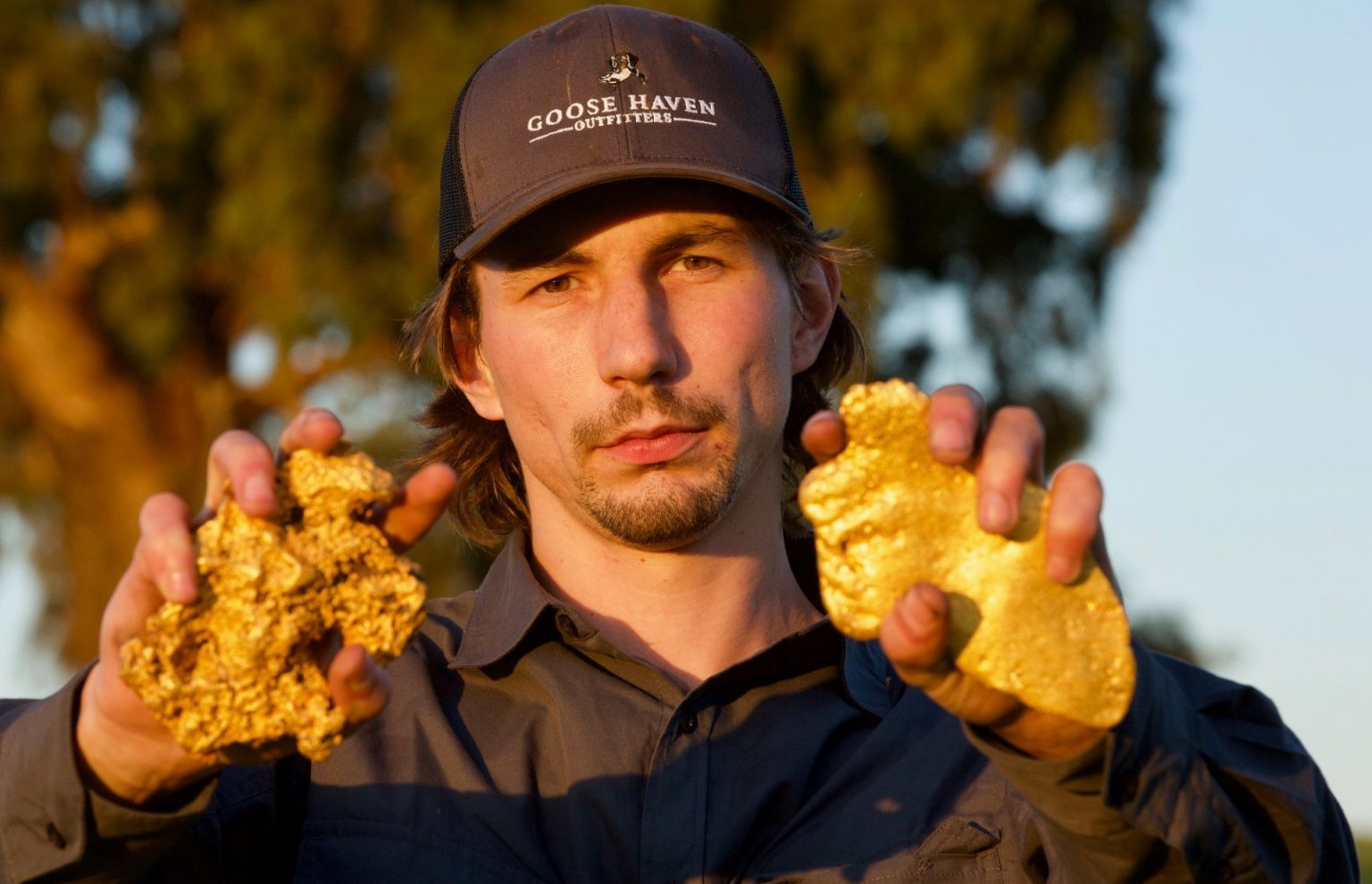
In the mining sector, Parker gold refers primarily to high-volume placer gold extracted through modern industrial earthmoving and gravity separation techniques—a methodology popularized by high-latitude operations in Yukon’s Klondike d...
In the mining sector, Parker gold refers primarily to high-volume placer gold extracted through modern industrial earthmoving and gravity separation techniques—a methodology popularized by high-latitude operations in Yukon’s Klondike district, such as Parker Schnabel’s Little Flake Mining enterprise—while also denoting historical coarse-gold vein deposits such as North Carolina's historic Parker Mine. Understanding this domain requires examining alluvial deposit geology, mechanical paydirt processing, equipment logistics, and operational cost metrics.
Contents
Geological Foundations: Placer Gold vs. Hard-Rock Formations
To evaluate Parker gold operations effectively, one must distinguish between alluvial placer deposits and primary lode (hard-rock) deposits. The commercial viability, equipment selection, and processing flowsheet of a mining venture depend entirely on which geological regime is being exploited.
Gold Deposit Evolution
- Primary Lode Deposit (Hard Rock) [Quartz Veins / Hydrothermal Ore Body]
- Weathering, Erosion & Glacial Activity
- Alluvial Transport [Stream Channels & Bench Gravels]
- Gravity Concentration by Density: 19.3
- Placer Gold Deposit ("Parker Gold") [Paydirt Layers / Bedrock Traps]
Alluvial Placer Mechanics
Placer gold deposits form through millions of years of weathering, erosion, and hydraulic transport. As primary hydrothermal quartz veins break down, free gold particles—possessing a high specific gravity of 19.3—are carried downstream by rivers and meltwater channels. Because gold is significantly denser than surrounding silicates, quartz, and gravels (which typically range from 2.65 to 2.70 g/cm³), it settles out of moving water wherever current velocity decreases.
These concentration zones occur along:
- Inside bends of river meanders, where hydraulic energy drops.
- Bedrock depressions and crevices, which act as natural riffles catching heavy minerals.
- Bench gravels and paleochannels, elevated historic riverbeds created before regional tectonic uplift or valley incision.
In high-latitude mining districts like the Klondike, Dominion Creek, Indian River, and Scribner Creek, gold is concentrated in paydirt layers lying directly above bedrock, capped by meters of sterile gravel and organic-rich frozen silt known as "black muck."
Coarse Nugget Formation and Lode Mining Connections
Historically, the term "Parker Gold" also connects to hard-rock discoveries such as the historic Parker Mine in Stanly County, North Carolina (part of the Carolina Slate Belt). Discovered in the early 19th century, that site was renowned for producing massive, coarse quartz-gold nuggets near the surface due to saprolite weathering.
In modern mining, however, high-volume placer extraction represents the primary context for the term. Unlike hard-rock operations that require drill-and-blast mining, underground shafts, underground hauling, fine crushing, and chemical leaching (cyanidation), placer operations rely entirely on physical mechanical separation to recover free-milling gold particles embedded in un-consolidated or semi-consolidated gravel matrices.
Technical Operations and Industrial Extraction Methods
Industrial placer gold recovery achieves profitability not through ultra-high ore grades, but through massive mechanical throughput. Modern operations move tens of thousands of loose cubic yards (LCY) of material per week, requiring a tightly synchronized operational sequence.
Industrial Placer Processing Flow Sheet
- Overburden Stripping: Excavators & Dozers Remove Black Muck/Gravel
- Paydirt Excavation: High-Reach Excavators Dig Bedrock Paydirt
- Haulage & Stockpiling: Articulated Dump Trucks Transport Paydirt
- Mechanical Sluicing: Wash Plant Sluices & Trommels Wash/Screen
- Gravity Separation: Riffles, Miner's Moss & Shaking Tables
- Environmental Clean-Up: Water Recirculation & Land Contouring
1. Overburden Stripping and Permafrost Thawing
Before accessing gold-bearing paydirt, operations must remove non-barren overburden. In sub-arctic environments, this process involves stripping the insulating vegetative layer and organic black muck using large bulldozers (CAT D9, D10) and excavators (CAT 349, 374).
Where permafrost is present, operators employ systematic solar thawing:
- Stripping overburden in shallow layers (0.5 to 1 meter at a time).
- Allowing seasonal solar radiation to thaw the exposed frozen gravels.
- Ripping thawed gravel with heavy bulldozers to prepare the material for transport.
- Repeating the cycle until reaching the target pay zone.
2. Paydirt Excavation and Bedrock Scraping
The highest concentration of placer gold typically rests in the bottom 1 to 2 meters of gravel and the top 0.5 to 1.5 meters of decomposed bedrock. Placer gold settles into fractures, faults, and weathered pockets within the bedrock floor. High-reach excavators excavate this zone, often ripping into bedrock to ensure heavy gold nuggets trapped in shale or schist fissures are fully recovered.
3. Transport and Feed Logistics
Articulated dump trucks (ADTs, such as 40- to 45-ton capacity units) transport raw paydirt from the open cut to the wash plant processing pad. Maintaining an uninterrupted feed rate to the plant is crucial; a wash plant idling without paydirt incurs substantial fuel and labor costs without producing gold.
4. Wash Plant Processing and Gravity Separation
The heart of the recovery process is the mobile or semi-stationary wash plant (e.g., high-tonnage trommel or screen deck plants rated from 100 to 300+ LCY/hour).
- Raw Paydirt Input
- Hopper/Feeder
- High-Pressure Water Wash
- Oversize (+0.5 inch) [Rejected to Tailings]
- Undersize (-0.5 inch) [Sent to Sluice Runs]
- Sluice Box Matrix
- Hungarian Riffles
- Expanded Metal
- Miner's Moss
- Heavy Gold Concentrate
- Clean-Up Shed Refinement (Shaking Tables & Mag-Sep)
- Sluice Box Matrix
Processing occurs in stages:
- Disaggregation and Washing: High-pressure water monitors spray raw paydirt in the feed hopper to break up consolidated clay matrixes that can wash fine gold out of the system.
- Sizing: Material passes through a rotary trommel or vibrating screen deck. Oversize rock (typically >0.5 inches or >12 mm) is screened out and discharged directly to tailings piles via stacker conveyor belts.
- Sluicing and Settling: The undersize matrix containing water, fine sand, black sand (magnetite and hematite), and gold flows across multi-tier sluice runs. Sluice runs feature a combination of Hungarian riffles, expanded metal mesh, and heavy-duty synthetic turf (miner's moss). Hydraulic turbulence created behind the riffles creates low-velocity vortex zones, allowing dense gold particles to sink into the moss while lighter silicates wash away.
- Concentrate Refinement: Periodically (daily or semi-weekly), sluice mats are washed in clean-up tubs. The resulting high-grade concentrate is processed through finishing equipment, including Gemini shaking tables, centrifugal concentrators (such as Knelson or Falcon units), and magnetic separators to isolate pure elemental gold from heavy black sands.
Operational Comparison: Placer vs. Hard-Rock Mining
The economic and technical parameters governing placer operations differ fundamentally from hard-rock gold mining.
| Operational Parameter | High-Volume Placer Mining (Parker-Style) | Hard-Rock (Lode) Underground / Open-Pit |
|---|---|---|
| Primary Target Material | Unconsolidated gravels, sand, weathered bedrock | Solid quartz veins, intrusive host rock |
| Typical Grade Range | 0.01 to 0.05 oz/ yard³ (approx. 0.3 to 1.5 g/m³) | 1.0 to 10.0+ g/tonne |
| Capital Intensity (CAPEX) | Moderate ($2M – $15M for equipment fleet) | High to Extreme ($100M – $1B+ for mill/shafts) |
| Processing Technology | Mechanical gravity separation (Water + Riffles) | Crushing, ball milling, flotation, cyanidation |
| Chemical Additives | None (Zero chemicals used in recovery) | Sodium cyanide, lime, lead nitrate, flocculants |
| Mine Life / Horizon | Short to Medium (2 to 10 years per claim block) | Long (10 to 30+ years) |
| Permitting Cycle | 1 to 3 years (Water use & placer land use) | 5 to 15 years (Complex EIA, tailings management) |
| Seasonal Constraints | Highly seasonal in North (100–150 operational days) | Year-round indoor/underground operations |
| Gold Purity At Recovery | High raw purity (80% to 92% native gold, rest Ag/Cu) | Requires smelting to produce unrefined Doré bars |
Financial Metrics and Economic Viability
Placer gold mining is fundamentally an exercise in bulk materials handling. Managing unit costs per yard moved against recovered fine ounces dictates commercial success.
OPERATIONAL PROFITABILITY EQUATION
Net Margin ($/oz) = Spot Gold Price - [ ( Total Operating Costs ($) ) / ( Total Volume Moved (LCY) × Recovery Grade (oz/LCY) ) ]
Key Drivers:
- Diesel Consumption (Gallons/Hour per Heavy Unit)
- Equipment Maintenance & Mechanical Availability
- Seasonal Production Window (Days/Year)
- Stripping Ratio (Overburden Yards : Paydirt Yards)
Key Cost Drivers
- Fuel Consumption: Diesel fuel represents 30% to 45% of total operating expenses (OPEX). Heavy excavators, 40-ton haul trucks, and high-horsepower water pumps consume thousands of gallons of fuel daily. Efficient haul road maintenance and minimized cycle times directly enhance margins.
- Stripping Ratio: The ratio of non-gold-bearing overburden to gold-bearing paydirt determines profitability. A stripping ratio of 3:1 (moving 3 yards of waste to access 1 yard of pay) requires moving significantly more material than a 1:1 cut. If overburden depth becomes excessive, strip ratios can eliminate profit margins.
- Equipment Maintenance and Equipment Uptime: Northern mining seasons are short (often mid-May through October). Machine downtime during peak weather costs operators hundreds of ounces in missed production. Preventive maintenance programs and onsite spare parts inventories are operational requirements.
- Royalties and Mineral Lease Costs: Placer operators frequently lease claims from historic claim holders or corporate royalty owners. Standard royalty agreements range from 10% to 20% of gross gold production, paid in physical gold or spot cash equivalent.
Valuation and Purity Factors
Physical gold recovered from placer mines is rarely 100% pure (24-karat). Placer gold typically ranges between 800 and 920 fine (80% to 92% pure gold), with the remaining fraction composed of native silver and minor trace copper or iron.
Refining payouts reflect this composition: $$\text{Payable Value} = \text{Raw Weight (oz)} \times \text{Fineness (%)} \times \text{Spot Gold Price} - \text{Refining Charges}$$
Refinement cost structures must be calculated into cash flow models. Small placer operators sell directly to refiners or bullion dealers, who deduct 1.5% to 3% off spot value alongside processing fees.
Environmental Compliance, Water Rights, and Restoration
Modern placer mining operates under strict regulatory oversight governing land disturbance, water usage, and fish habitat preservation. Operators must adhere to precise regulatory guidelines set by governing bodies such as the Yukon Water Board, Fisheries and Oceans Canada (DFO), and state agencies like the Alaska Department of Natural Resources (ADNR).
Water Management Recirculation System
- Active Wash Plant: Discharges Sediment-Laden Process Water
- Primary Settling Pond: Settles Heavy Coarse Sands & Silts
- Secondary/Polishing Pond: Settles Fine Suspended Solids (TSS control)
- Clean Water Intake Pad: Recirculates Water Back to Wash Plant Hopper
Water Management and Settling Ponds
Sluicing paydirt requires thousands of gallons of water per minute (GPM). Discharging untreated, sediment-laden process water into natural river channels can smother aquatic habitats and violate total suspended solids (TSS) regulatory limits.
To comply with standards:
- Operations utilize closed-loop recycling systems or multi-stage settling ponds.
- Process water flows into primary settling basins where heavy silts drop out of suspension.
- Clarified water passes into polishing ponds before being pumped back into the wash plant hopper.
- Water discharge to natural streams is strictly regulated and tested for turbidity (NTUs) and heavy metal content.
Concurrent Reclamation
Regulatory framework guidelines mandate concurrent mine land reclamation. As open pits (cuts) are mined out, operators must:
- Backfill mined-out cuts with tailings gravels and rock rejected by wash plants.
- Grade and contour the surface to match natural topographical drainage patterns.
- Replace stored topsoil and black muck over restored surfaces to re-establish vegetation.
- Reconstruct river channels and riparian zones to meet aquatic safety specifications if historic stream beds were diverted during operations.
Frequently Asked Questions
What does "Parker gold" mean in contemporary mining contexts?
"Parker gold" generally refers to industrial-scale placer gold mined from high-latitude alluvial deposits (such as those in the Klondike/Yukon region popularized by Parker Schnabel's operations), as well as historical hard-rock quartz-gold occurrences named after original discoverers like the historic Parker Mine in North Carolina.
How do miners test for gold before investing in full-scale excavation?
Mining companies conduct systematic exploration using grid-pattern drilling—primarily via sonic drills or reverse circulation (RC) drills—or test trenching with excavators. Samples taken from drill holes are processed through small-scale test plants or panning to calculate the grade per bank cubic yard (BCY) before committing capital equipment.
Is chemical leaching (like cyanide) used in placer gold recovery?
No. Placer gold recovery relies entirely on gravity separation methods, using water, physical motion, and density differences to separate native gold from gravel and black sand. No chemical leaching or toxic reagents are utilized during field wash plant operations.
How does permafrost affect high-latitude placer gold extraction?
Permafrost freezes ground solid, making direct digging impossible without prior thawing or specialized heavy ripping. Operators must systematically strip overburden layers to allow sunlight to naturally thaw underlying paydirt, creating operational seasonal windows restricted to warmer months.
What equipment is necessary to launch a commercial placer gold operation?
A basic high-volume placer operation requires:
- At least two heavy excavators (30+ ton class) for digging and feeding.
- A tracked bulldozer (CAT D8/D9 class) for stripping and tailing management.
- Articulated dump trucks for material transport.
- A mobile trommel or screen wash plant with integrated sluices and water pumps.
- Tailings stackers and clean-up separation tables.
Actionable Takeaways for Operators and Investors
For prospectors, resource investors, and mine operators analyzing placer gold ventures, execution depends on rigorous planning and resource validation:
- Verify Deposit Geology Before Capitalizing: Do not rely on historical storytelling. Run systematically spaced sonic drill holes across prospective placer claims to establish verified bank-cubic-yard (BCY) reserve estimates and gold distribution profiles.
- Calculate Complete Material Handling Volumes: Placer profitability is driven by material volume, not high grades. Model all operational expenses around the total cubic yards moved per operating hour, accounting for overburden-to-pay ratios, fuel burn rates, and maintenance cycles.
- Design Flowsheets for Fine Gold Retention: While large nuggets yield high visibility, the vast majority of placer reserves exist as fine flake gold (-30 mesh to -100 mesh). Ensure wash plants feature properly tuned hydraulic drop zones, fine-mesh sluicing runs, and secondary gravity concentrators to maximize fine gold retention.
- Secure Water Licenses and Permit Approvals Early: Environmental permitting, stream diversion authorizations, and water recycling permits are critical paths to operation. Establish multi-tier settling pond networks and water recycling loops before initiating paydirt production.
Image Gallery