Finding the Cheapest Low-Cost Auto Insurance in Arizona in 2026
To find the cheapest auto insurance in Arizona in 2026, drivers should seek state-minimum liability coverage, which currently averages between $550 and $850 per year for those with clean driving records. Comparing quotes from high-volu...
To find the cheapest auto insurance in Arizona in 2026, drivers should seek state-minimum liability coverage, which currently averages between $550 and $850 per year for those with clean driving records. Comparing quotes from high-volume carriers like Geico and State Farm, while leveraging specific Arizona-based discounts, remains the most effective strategy for cost reduction.
Contents
Arizona’s insurance market in 2026 continues to be shaped by a combination of high-density urban traffic in the Phoenix-Mesa-Scottsdale corridor and specific state regulatory requirements. For drivers searching for "cheap low auto insurance in az," the goal is typically to balance legal compliance with the lowest possible monthly premium. However, achieving "low" rates requires an understanding of how Arizona Department of Insurance and Financial Institutions (DIFI) regulations, personal credit scores, and regional risk factors converge to determine your final quote.
Arizona Minimum Liability Requirements: The Baseline for Low-Cost Coverage
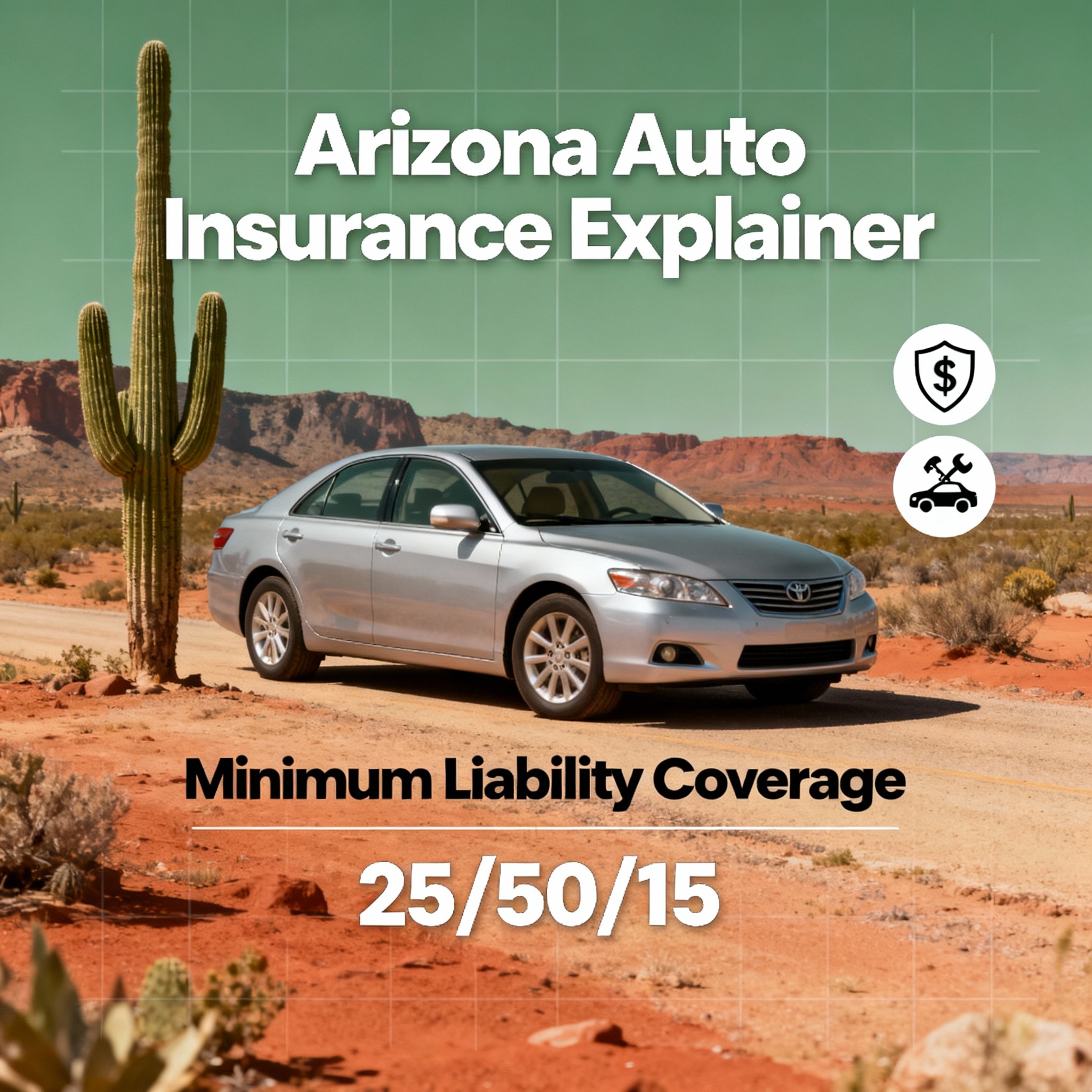
When searching for the cheapest possible insurance, the first step is understanding the legal floor. Arizona law requires all drivers to carry a minimum amount of liability insurance to cover damages or injuries they may cause to others in an accident. These are often referred to as "25/50/15" limits.
The current 2026 requirements include:
- $25,000 for bodily injury liability per person.
- $50,000 for bodily injury liability per accident (total for all persons injured).
- $15,000 for property damage liability per accident.
Choosing these minimums is the fastest way to secure the lowest premium. However, drivers must recognize that these limits have not significantly increased in years, while the costs of medical care and vehicle repairs in Arizona have risen. If you cause an accident where the damages exceed $15,000 for a late-model electric vehicle or $25,000 for a serious injury, you may be held personally liable for the difference. Therefore, while "low cost" is the priority, many experts suggest that the "cheapest" insurance is the one that prevents a total financial collapse following a single error on the road.
Top Providers for Cheap Auto Insurance in Arizona
Market data for 2026 indicates that several national and regional carriers consistently offer the most competitive rates for Arizona residents. Because insurance is underwritten based on proprietary algorithms, a company that is cheap for a 40-year-old in Tucson might be expensive for a 21-year-old in Tempe.
Geico
Geico remains a dominant force for low-cost insurance in the Grand Canyon State. Their automated systems and direct-to-consumer model reduce overhead, which often translates into lower premiums for drivers with clean records. In 2026, Geico continues to offer robust discounts for federal employees and military members, a significant demographic in Arizona given the presence of Luke Air Force Base and Davis-Monthan Air Force Base.
State Farm
As one of the largest insurers in the state, State Farm utilizes a vast network of local agents. While they may not always have the absolute lowest "sticker price" for a policy, their "Drive Safe & Save" telematics program allows Arizona drivers to earn substantial discounts by proving they are safe drivers. This is particularly beneficial for retirees in communities like Sun City who drive fewer miles and avoid high-traffic hours.
Progressive
Progressive is often the most competitive choice for drivers who may not have a perfect record. If you have a prior speeding ticket or a minor "fender bender" on your Arizona driving record, Progressive’s "Name Your Price" tool and Snapshot program can help stabilize rates that might otherwise skyrocket with other carriers.
Mercury Insurance
For those looking for a smaller, more specialized carrier, Mercury often provides low-cost alternatives that rival the national giants. They frequently target urban drivers in Phoenix and Las Vegas (neighboring market), offering aggressive pricing for those who only need the state-mandated minimums.
Factors Influencing Your Arizona Insurance Premium
To secure the lowest rates, you must understand the variables that Arizona insurers use to calculate risk. Unlike some states that have banned certain demographic factors, Arizona still allows a wide range of data points to influence your premium.
Credit-Based Insurance Scores
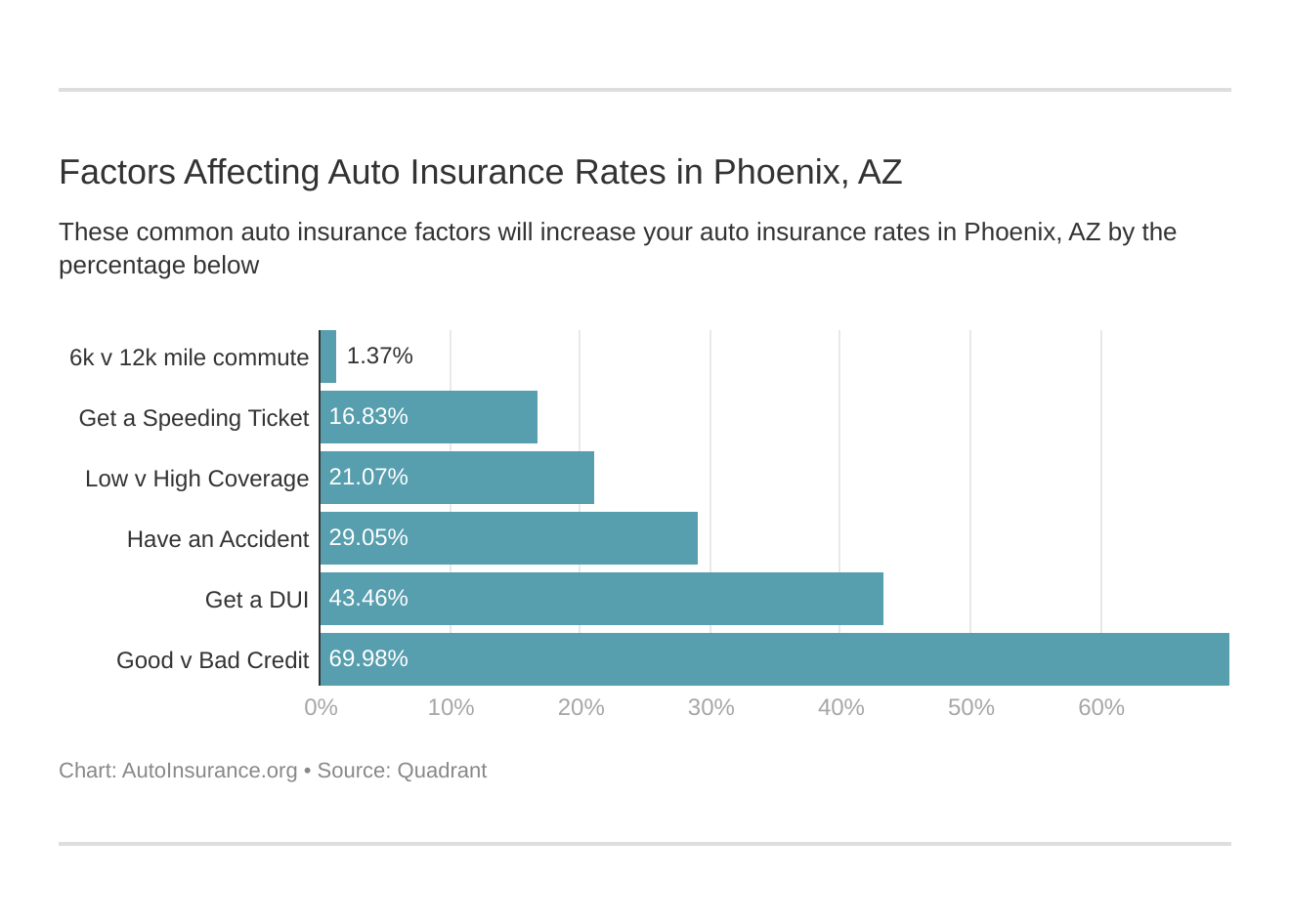
Arizona is a state where your credit history significantly impacts your auto insurance rate. Actuaries have found a high correlation between credit stability and claim frequency. In 2026, a driver with an "Excellent" credit score might pay 40% less for the exact same coverage than a driver with a "Poor" credit score. If you are aiming for cheap insurance, improving your credit score is often as effective as shopping for new providers.
Geographic Location (Zip Code)
Where you park your car at night is one of the most critical factors. Urban centers like Phoenix, Glendale, and Mesa have higher rates of vehicle theft and higher traffic density, leading to more frequent claims. Conversely, drivers in rural areas like Yavapai or Cochise County often enjoy significantly lower premiums. In 2026, the disparity between a Phoenix zip code and a Prescott zip code can be as much as $500 per year.
The Impact of Modern Vehicle Tech
Arizona’s heat is notoriously hard on vehicles, but the high cost of repairing modern sensors and ADAS (Advanced Driver Assistance Systems) has pushed "cheap" premiums higher. Even a minor collision in a modern car can require the replacement of expensive LiDAR or radar sensors located in bumpers and windshields. Drivers looking for low insurance often find that older, "low-tech" vehicles are significantly cheaper to insure because they lack these high-repair-cost components.
Comparison of Estimated Annual Premiums in Arizona (2026)
The following table provides an estimate of annual premiums based on a driver with a clean record, 2026 vehicle model, and standard credit.
| Provider | Minimum Coverage (Annual) | Full Coverage (Annual) | Primary Advantage |
|---|---|---|---|
| Geico | $595 | $1,420 | Lowest base rates for clean records |
| State Farm | $640 | $1,510 | Excellent multi-policy discounts |
| Progressive | $685 | $1,650 | Best for drivers with minor infractions |
| Travelers | $710 | $1,720 | Strong hybrid/electric vehicle discounts |
| Mercury | $625 | $1,580 | Competitive rates for urban commuters |
Note: These figures are estimates based on state averages. Actual quotes will vary based on specific zip codes and individual driving history.
Strategies to Lower Your Arizona Auto Insurance Rates
If you have already selected a provider and still find your rates too high, several actionable strategies can help drive the cost down further.
1. Increase Your Deductibles
For those carrying full coverage (collision and comprehensive), increasing your deductible from $500 to $1,000 can lower your monthly premium by 15% to 30%. In Arizona, where glass damage from road debris is common, many drivers opt for a "Full Glass" endorsement. While this is convenient, removing it and paying for glass repairs out of pocket can sometimes lower the overall policy cost over the long term.
2. Utilize Telematics Programs
Most major carriers in 2026 offer mobile apps that track your driving habits (braking, acceleration, and speed). In Arizona, where long highway stretches invite high speeds, proving you adhere to the limit can result in a "Safe Driver" discount of up to 30%. This is an ideal path for those seeking the absolute lowest insurance price.
3. Seek Out Arizona-Specific Discounts
- Defensive Driving Courses: Drivers over a certain age (usually 55+) can often take a state-approved defensive driving course to receive a mandatory discount for three years.
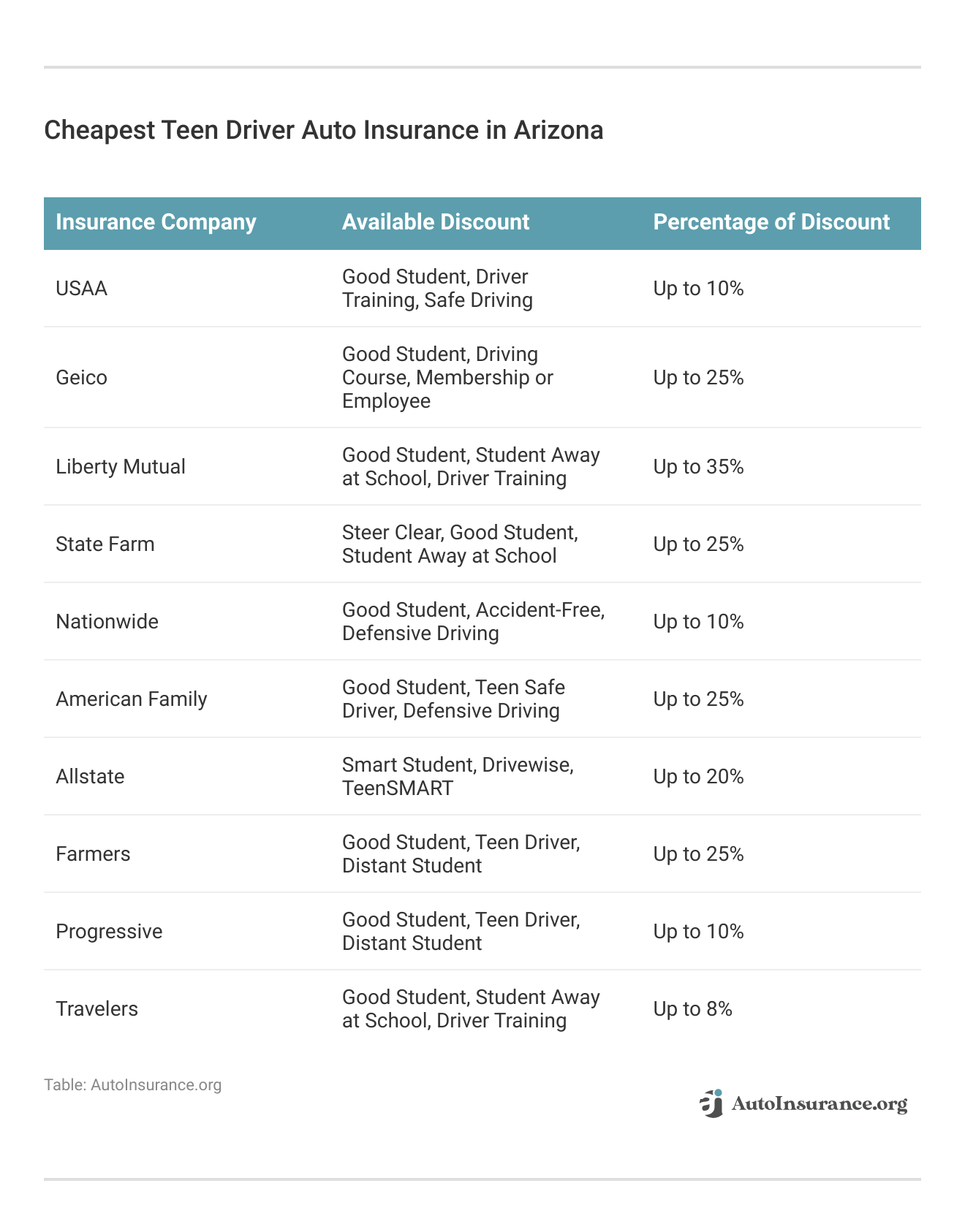
- Academic Excellence: Students at Arizona State University (ASU), University of Arizona (UofA), or Northern Arizona University (NAU) who maintain a "B" average or higher are eligible for "Good Student" discounts.
- Professional Affiliations: Many insurers offer lower rates to members of the Arizona State Bar, medical professionals, or teachers within the Maricopa County Community College District.
Specialized Insurance: High-Risk and SR-22 in Arizona
For some, "cheap" insurance is relative. If you have been convicted of a DUI or have multiple at-fault accidents, you may be required to file an SR-22 certificate with the Arizona Department of Transportation (ADOT). An SR-22 is not insurance itself; it is a form filed by your insurer to prove you meet the state's minimum liability requirements.
Finding low-cost insurance with an SR-22 requirement is challenging. Major carriers may non-renew your policy, forcing you into the "non-standard" market. Companies like Dairyland or Gainsco specialize in these high-risk drivers. While the rates will be higher than the state average, shopping specifically within the non-standard market is the best way to find the most affordable option under these circumstances.
Common Mistakes to Avoid When Shopping for Cheap Insurance
In the pursuit of the lowest possible price, many Arizona drivers fall into traps that cost more in the long run. One common error is failing to report a change in "garaging address." If you move from a high-cost area like Scottsdale to a lower-cost area like Buckeye but don't update your policy, you might be overpaying—or worse, you could face a claim denial for "rate evasion" if an accident occurs.
Another mistake is neglecting to compare quotes annually. The Arizona insurance market is highly competitive, and carriers frequently adjust their rate filings with the DIFI. A company that was the cheapest for you in 2025 may no longer be the price leader in 2026.
Frequently Asked Questions
Does Arizona allow insurance companies to use my credit score?
Yes. In 2026, Arizona remains a state where insurers can use your credit-based insurance score to help determine your premium. Maintaining a higher credit score is a direct path to lowering your insurance costs.
What is the average cost of "cheap" insurance in Arizona?
For a state-minimum liability policy, "cheap" is generally considered anything under $70 per month. For full coverage, "cheap" usually falls between $120 and $150 per month, depending on the vehicle and driver profile.
Is uninsured motorist coverage required in Arizona?
Arizona law requires insurers to offer Uninsured Motorist (UM) and Underinsured Motorist (UIM) coverage, but you have the right to reject it in writing. While rejecting it will lower your premium, it is a risky move in Arizona, where a significant percentage of drivers operate vehicles without any insurance.
Can I get a discount for an electric vehicle in Arizona?
Many carriers, including Travelers and Geico, offer "Green Vehicle" discounts in 2026. However, these discounts are often offset by the higher cost of repairing EVs, so it is important to look at the total policy cost rather than just the discount line item.
How does a DUI affect "low-cost" insurance in AZ?
A DUI conviction in Arizona will typically cause your insurance rates to double or triple for at least three to five years. To find the "cheapest" possible rate after a DUI, you must look toward non-standard insurers and ensure your SR-22 filing is handled correctly.
Practical Next Steps for Arizona Drivers
To secure the cheapest low-cost auto insurance in Arizona for 2026, start by gathering your current policy "Declarations Page." This allows you to compare "apples to apples" when looking at new quotes. Use an online comparison tool to get rates from at least three different carriers—ideally one national giant (like Geico), one agent-based company (like State Farm), and one non-standard or regional carrier (like Mercury). Once you have the quotes, call the lowest-priced provider and ask if there are any additional discounts for telematics or professional affiliations that weren't captured online. This final step often shaves an additional 5% to 10% off an already low rate.
Image Gallery