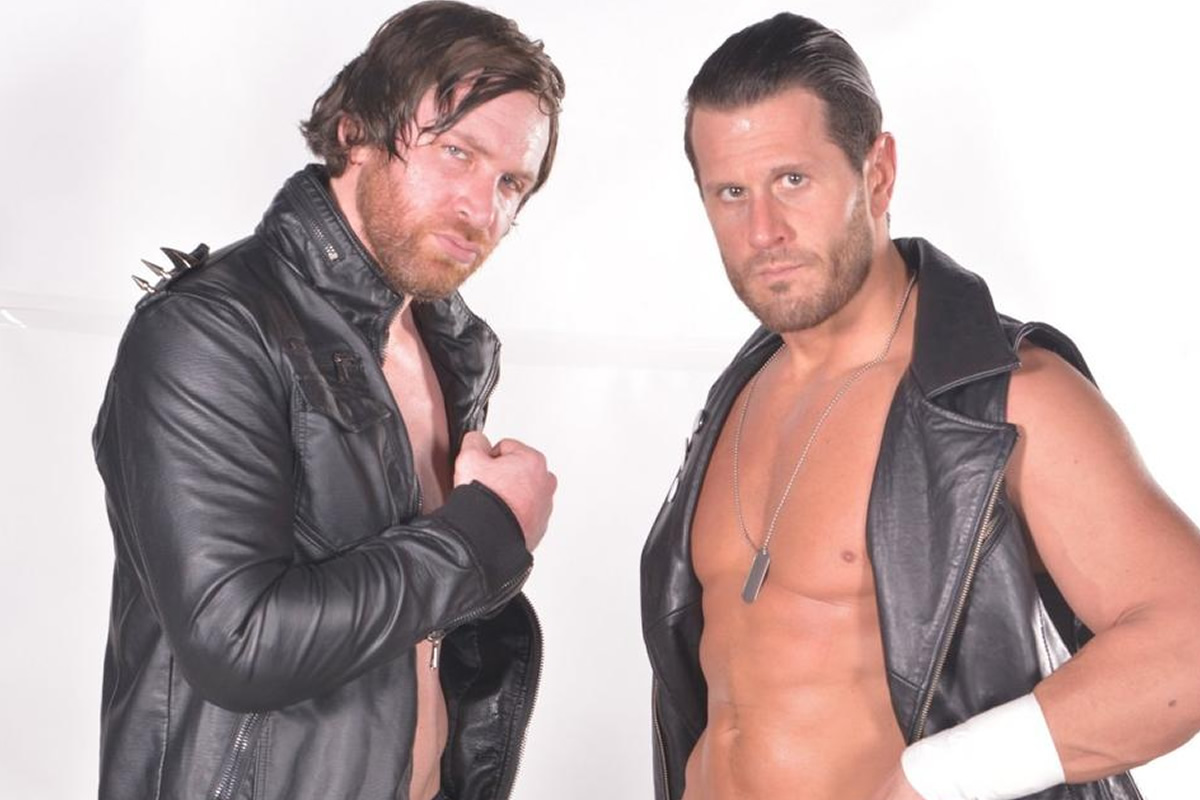
Why the Alex Shelley and Chris Sabin Partnership Still Matters
The enduring partnership of Alex Shelley and Chris Sabin, collectively known as the Motor City Machine Guns, remains a foundational pillar of modern tag team wrestling because their innovative blend of high-speed cooperative offense, d...
The enduring partnership of Alex Shelley and Chris Sabin, collectively known as the Motor City Machine Guns, remains a foundational pillar of modern tag team wrestling because their innovative blend of high-speed cooperative offense, deep psychological continuity, and revolutionary influence on a generation of athletes fundamentally redefined the division.
Contents
The Genesis of the Motor City Machine Guns
Long before they captured global imagination in promotions like Total Nonstop Action Wrestling (TNA), Ring of Honor (ROH), and New Japan Pro-Wrestling (NJPW), Alex Shelley and Chris Sabin were individual standouts in the independent circuit of the mid-2000s. Both men had earned reputations as technically sound, high-flying junior heavyweights who could adapt to any style—whether it was lucha libre, traditional mat-based grappling, or bruising brawling.
When bookers initially paired them together, tag team wrestling in major American promotions was largely dominated by heavy-set power duos or thrown-together singles combinations. Shelley and Sabin brought a fresh dynamic. They were peers with complimentary skill sets rather than a mentor-student pairing or an odd couple. Their early work in TNA’s X-Division laid the groundwork for a tag team philosophy built on speed, precision, and a seamless ability to transition between holds and aerial strikes without losing momentum. This foundation allowed them to carve out a distinct identity that stood apart from the traditional tag team tropes of the era.
Technical Innovation and In-Ring Chemistry
The primary reason the Shelley and Sabin partnership continues to matter lies in their technical innovation. The Motor City Machine Guns did not merely execute double-team moves; they created an interconnected system of offense where every strike, submission, and transition flowed logically into the next.
Synchronization and Cooperative Offense
Traditional tag teams often relied on classic "tag mechanics"—one partner working over an opponent while the other waited on the apron. Shelley and Sabin subverted this by introducing fluid, overlapping sequences where tags were quick, frequent, and designed to disorient opponents. Their execution of complex tandem maneuvers, such as the Slice Bread #2 combined with simultaneous kicks or intricate bridging submissions, required split-second timing.
Psychology and Selling
Beyond high-velocity acrobatics, the duo excelled in ring psychology. They understood that high spots lose their impact without narrative framing. Shelley’s cerebral, calculated heel tendencies balanced Sabin’s fiery babyface resilience, even when they worked as fan favorites. They sold limb work meticulously, structured their matches to build dramatic crescendos, and always ensured that their opponents looked credible, thereby elevating the entire division around them.
| Feature / Element | Traditional 2000s Tag Teams | Motor City Machine Guns Style |
|---|---|---|
| Pacing | Slow, methodical, reliant on standard hot tags | Fast-paced, fluid transitions, constant motion |
| Double Teams | Occasional high-impact finishers or interference | Integrated, multi-step cooperative sequences |
| Division Focus | Often secondary to heavyweight singles titles | Treated as a primary discipline requiring elite skill |
| In-Ring Persona | Standardized alignments (face/heel archetypes) | Nuanced, modern competitive athletes |
Impact on the Evolution of Modern Tag Team Wrestling
The stylistic footprint left by Shelley and Sabin is visible across contemporary professional wrestling promotions globally. Prior to their breakout run, the prevailing American wrestling philosophy often treated tag team wrestling as a stepping stone for singles competitors. The Motor City Machine Guns proved that a dedicated tag team could headline pay-per-view events based purely on the quality of their bell-to-bell work and intense, personal rivalries—most notably their legendary series of matches against Beer Money Inc. (James Storm and Robert Roode).
Their influence directly shaped the modern indie and corporate styles seen today in promotions like All Elite Wrestling (AEW), NJPW, and independent promotions worldwide. Modern teams that emphasize rapid-fire sequences, cooperative double-team offense, and seamless hot tags owe a structural debt to the groundwork laid by Shelley and Sabin. They demonstrated that tag team wrestling is a distinct art form requiring specialized chemistry rather than a mere combination of two individual wrestlers.
Longevity, Adaptability, and Late-Career Renaissance
A critical component of why the partnership still matters is its remarkable longevity and adaptability. Wrestling partnerships often dissolve due to injuries, creative stagnation, or individual singles pushes. While both Shelley and Sabin experienced significant singles success and severe injuries—most notably Sabin’s multiple career-threatening knee surgeries—their bond remained a reliable creative anchor.
When they reunited for major runs in later years, including high-profile championship reigns and international excursions, they did not rely solely on nostalgia. Instead, they adapted their pacing and style to reflect seasoned veterans. They transitioned from reckless high-flyers to cunning, strategic tacticians who could dictate the pace of a match through sheer ring generalship. This evolution proved that their partnership was not just a product of 2000s trends, but a timeless template for tag team excellence.
Common Misconceptions About the Duo
Evaluating the historical significance of the Motor City Machine Guns often involves untangling a few common misunderstandings regarding their career trajectory and impact:
- Misconception: They were strictly a high-flying junior heavyweight team. While rooted in the X-Division style, their later work emphasized grounded mat wrestling, targeted limb submission work, and stiff striking exchanges.
- Misconception: Their success was limited to TNA Wrestling. Although TNA served as their primary platform, their influential runs in Ring of Honor, various independent promotions, and New Japan Pro-Wrestling cemented their international reputation.
- Misconception: They hindered each other's singles careers. Both men proved capable of holding major singles world championships, demonstrating that their tag team identity enhanced rather than restricted their individual capabilities.
Frequently Asked Questions
Who are the members of the Motor City Machine Guns?
The Motor City Machine Guns consist of professional wrestlers Alex Shelley and Chris Sabin. The team formed in the mid-2000s and became famous for their technical prowess, speed, and innovative tag team maneuvers.
Why are Alex Shelley and Chris Sabin considered influential?
They modernized tag team wrestling by introducing fast-paced, highly synchronized cooperative offense, moving away from slow, formulaic tag mechanics and proving that tag teams could carry major wrestling shows through technical excellence.
Where did the Motor City Machine Guns achieve their greatest success?
While they competed and won championships across multiple promotions worldwide, including Ring of Honor and New Japan Pro-Wrestling, their most iconic and defining feud and championship runs took place in Total Nonstop Action Wrestling (TNA).
Are Alex Shelley and Chris Sabin still active as a team?
Yes, they continue to compete selectively in major promotions, maintaining their status as active veterans who blend historical prestige with contemporary in-ring adaptation.
Practical Next Actions for Fans and Historians
For viewers interested in fully understanding the enduring legacy of Alex Shelley and Chris Sabin, examining primary source material is essential. Seek out their definitive matches against Beer Money Inc. from TNA’s 2008–2010 era, as well as their high-intensity matches in Ring of Honor against teams like the Briscoe Brothers. Analyzing these bouts reveals the structural evolution of modern tag team wrestling and demonstrates why the partnership remains a gold standard in the industry.
Image Gallery