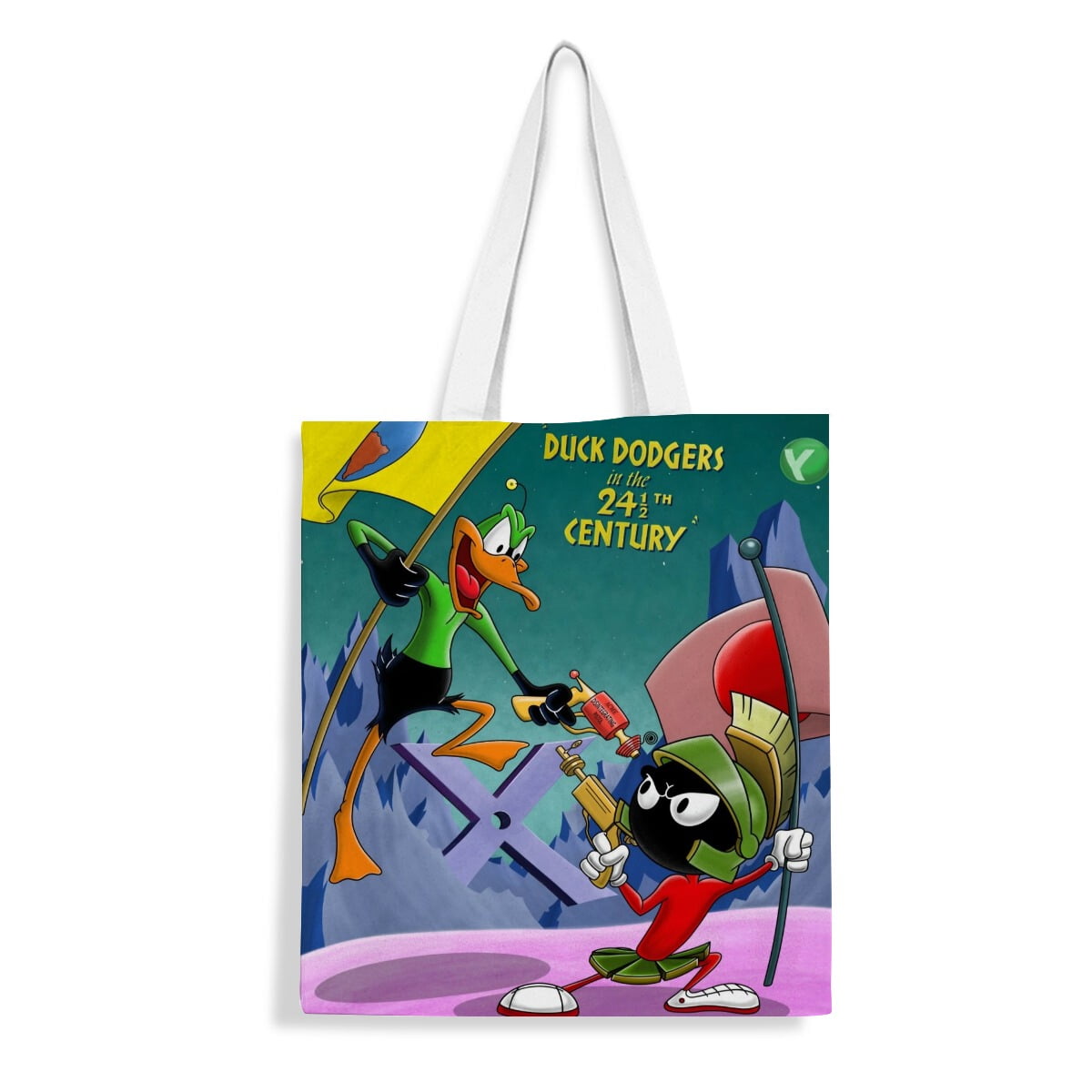
Why the Duck Dodgers Intro Still Matters: A Masterclass in Animation Title Sequences
The Duck Dodgers intro remains a high-water mark for television animation because it paired legendary vocalist Tom Jones with psychedelic rock group The Flaming Lips to craft a cinematic James Bond parody. By pairing sweeping orchestra...
The Duck Dodgers intro remains a high-water mark for television animation because it paired legendary vocalist Tom Jones with psychedelic rock group The Flaming Lips to craft a cinematic James Bond parody. By pairing sweeping orchestral scale with Daffy Duck’s signature ego and incompetence, the sequence defined the show's comedic identity while setting an enduring benchmark for title design and musical collaboration in animated television.
Contents
| Property | Details |
|---|---|
| PERFORMER | Tom Jones |
| SONGWRITERS | Wayne Coyne & Steven Drozd (The Flaming Lips) |
| VISUAL STYLE | 1960s Spy-Fi / Maurice Binder Title Homage |
| SERIES DEBUT | 2003 (Warner Bros. Animation / Cartoon Network) |
| MAJOR ACCOLADE | Annie Award Nomination for Music in Animated TV Production |
The Unexpected Musical Collaboration: Tom Jones and The Flaming Lips
When Warner Bros. Animation launched Duck Dodgers in 2003, executive producers Spike Brandt and Tony Cervone sought an opening sequence that could match the theatrical ambitions of the original 1953 Chuck Jones short, Duck Dodgers in the 24½th Century. Rather than relying on a standard children's cartoon jingle, the production team assembled a rare musical pairing: Welsh lounge icon Sir Tom Jones providing lead vocals on a track composed and written by Wayne Coyne and Steven Drozd of the Oklahoma-based indie rock band The Flaming Lips.
- The Flaming Lips (Composed Track)
- Sir Tom Jones (Lead Vocals)
- "Duck Dodgers Theme"
- Executed Intro
- "Duck Dodgers Theme"
This choice was not merely a novelty stunt; it was a deliberate artistic decision anchored in pop culture history. Jones famously sang the theme for the 1965 James Bond film Thunderball. Bringing him back to belt out high-register brass notes for a Saturday morning cartoon immediately established an authentic connection to classic mid-century spy cinema.
The Flaming Lips brought an avant-garde, psychedelic texture to the composition. Coyne and Drozd blended traditional big-band horn arrangements with driving rock drums and space-age synthesizer lines. The result was a track that sounded simultaneously retro and modern, providing an uncommonly sophisticated sonic foundation for an animated comedy.
Visual Design and the Maurice Binder Aesthetic
The visual language of the Duck Dodgers intro is a homage to title designer Maurice Binder, whose minimalist, silhouette-driven title cards defined the classic James Bond films from Dr. No (1962) through Licence to Kill (1989).
| Visual Element | Implementation in Duck Dodgers Intro |
|---|---|
| High-Contrast Silhouettes | Dark outlines of Dodgers set against glowing sci-fi backgrounds. |
| Dynamic Geometry | Concentric circles, laser beams, and spinning retro rocket motifs. |
| Stylized Typography | Sleek, mid-century sans-serif fonts integrated into character action. |
| Dramatic Lighting | Neon blues, deep purples, and intense crimson space backdrops. |
Instead of simply cutting together recycled clips from upcoming episodes—a common cost-saving measure in animated television—the animators crafted a dedicated, standalone sequence. Dodgers poses triumphantly against shifting geometric backdrops, fires ray guns into deep space, and strikes heroic stances amid swirling laser grids.
The color palette relies heavily on saturated primary and secondary colors against deep space blacks, creating an impression of grandeur that elevates the character far beyond his actual capabilities.
The Narrative Power of Comedic Contrast
The primary structural reason the Duck Dodgers theme song works so effectively is its use of dramatic irony. The music and visuals present Duck Dodgers as an unstoppable, suave galactic savior—the exact opposite of who he actually is within the show.
| EXPECTATION (The Intro) | REALITY (The Show) |
|---|---|
| • Flawless galactic savior | • Blundering, narcissistic officer |
| • Heroic, larger-than-life tone | • Total reliance on Cadet (Porky) |
| • Unshakable poise under pressure | • Self-inflicted disasters |
Throughout the series, Dodgers (voiced by Joe Alaskey) is incompetent, narcissistic, and oblivious, constantly rescued from total destruction by his longsuffering assistant, the Eager Young Space Cadet (Porky Pig). The opening theme presents the world entirely through Dodgers' delusion:
- The Heroic Lyricism: Jones sings lyrics like "He's a man of skill and courage" with deadpan earnestness, inviting the viewer to laugh at the disconnect between song and reality.
- The Cinematic Weight: The orchestral swells suggest high-stakes space opera, making Dodgers' inevitable low-stakes blunders in the actual episode much funnier.
- The Ego Reinforcement: The sequence functions as a literal representation of Dodgers' internal self-image, framing the entire episode through his inflated perspective.
By establishing this contrast before every single episode, the intro primes the audience for the show's core satirical joke: a fool who genuinely believes he is the star of an epic saga.
Comparing 2000s Animated Action-Comedy Title Sequences
The early 2000s represented a golden era for cartoon intros, with networks commissioning customized tracks from major recording artists and independent bands. The table below compares Duck Dodgers alongside contemporary animated intro sequences from the same era:
| Series Name | Premiere Year | Musical Artist / Composer | Musical Genre | Visual Approach | Key Artistic Distinction |
|---|---|---|---|---|---|
| Duck Dodgers | 2003 | Tom Jones / The Flaming Lips | Orchestral Lounge Pop / Psychedelic Rock | Silhouette & Geometric 1960s Spy Homage | Direct parody of Bond themes sung by actual Bond vocalist. |
| Teen Titans | 2003 | Puffy AmiYumi | J-Pop / Surf Rock | Stylized Anime-Inspired Character Vignettes | Dual-language theme (English/Japanese) matching episode tone. |
| Batman Beyond | 1999 | Kristopher Carter | Industrial Metal / Cyberpunk Electronic | Live-Action Cutups & High-Contrast 3D | Dark, abrasive sound design defining a futuristic Gotham. |
| Justice League | 2001 | Lolita Ritmanis | Orchestral / Symphonic Rock | Early 3D CGI Character Statues | Brass-heavy superhero anthem emphasizing mythic scale. |
| Samurai Jack | 2001 | WILL.I.AM / George S. Clinton | Hip-Hop / Electronic / Cinematic | Minimalist Voiceover & Kinetic Graphic Cuts | Integrated story setup narrative with heavy bass beats. |
Compared to its peers, Duck Dodgers stands out for its deliberate cross-generational appeal. While shows like Teen Titans and Batman Beyond leveraged contemporary rock or industrial electronic sounds to appeal to youth culture, Duck Dodgers bridged classic 1960s lounge pop with 2000s alternative rock, matching the cross-generational appeal of the Looney Tunes franchise itself.
Why the Sequence Retains Relevance Today
In modern television production, the traditional 60-to-90-second animated intro has largely been phased out in favor of 5-second title cards or automated "Skip Intro" prompts on streaming platforms. This structural shift makes intros like Duck Dodgers even more valuable as artifacts of animation craftsmanship.
| 1990s - mid-2000s Era | Modern Streaming Era |
|---|---|
| • Full 60–90 second sequences | • 5–10 second logo cards |
| • Bespoke, full-length songs | • "Skip Intro" optimization |
| • Establishes tone and mood | • Prioritizes rapid content flow |
1. A High-Water Mark for Cartoon Network Soundtracks
The Duck Dodgers title sequence earned an Annie Award nomination in 2004 for Music in an Animated Television Production. It served as proof that children's television could attract elite, mainstream musical talent without sacrificing artistic integrity or diluting the humor.
2. Preservation of Film Parody as an Art Form
Parody requires deep respect for the source material to succeed. The creative team did not merely mock James Bond tropes; they replicated the exact production techniques, vocal delivery, and visual rhythms of classic spy films. This level of detail ensures the sequence remains funny to adult cinephiles while remaining catchy and visually engaging for younger audiences.
3. Digital Preservation and Cult Appreciation
On platforms like YouTube and digital archives, the Duck Dodgers intro consistently pulls millions of views independently from the show itself. It functions as a standalone short film—a concentrated shot of nostalgia, high musical craft, and character satire that works even without the context of a full 22-minute episode.
Frequently Asked Questions
Who sang the Duck Dodgers theme song?
The theme song was performed by legendary Welsh singer Sir Tom Jones. Famous for hits like "It's Not Unusual" and the theme song to the 1965 James Bond film Thunderball, Jones provided his signature powerhouse vocals to the track.
Who wrote and composed the Duck Dodgers intro music?
The song was written and composed by Wayne Coyne and Steven Drozd of the acclaimed American psychedelic rock band The Flaming Lips, in collaboration with Warner Bros. Animation's musical department.
Was the Duck Dodgers intro nominated for any awards?
Yes. The musical team received an Annie Award nomination in 2004 for Outstanding Individual Achievement for Music in an Animated Television Production, recognizing the unique work done by Tom Jones and The Flaming Lips.
What film genre is the Duck Dodgers intro parodying?
The intro explicitly parodies classic mid-century spy films, specifically the James Bond title sequences created by designer Maurice Binder during the 1960s. It mirrors the high-contrast silhouettes, dynamic geometric shapes, and dramatic orchestral brass typical of early 007 film openings.
Why did the show use a James Bond style for a sci-fi cartoon?
The Bond style was chosen to highlight the hilarious delusion of the main character. Duck Dodgers views himself as an invincible, world-saving secret agent, despite being bumbling and insecure. The sleek, dramatic intro sets up this core character vanity before every episode.
Final Takeaway for Animation and Media Enthusiasts
For animation fans, creators, and television historians, the Duck Dodgers intro remains a textbook example of how to execute a title sequence. Rather than treating the opening minutes as an afterthought, the creative team crafted a standalone masterpiece that established the show's comedic premise before a single line of dialogue was spoken.
To best appreciate the sequence today, watch it alongside the opening title sequence of the 1965 James Bond film Thunderball. Comparing the visual beats, vocal flourishes, and color choices reveals just how much care, artistry, and cinematic precision went into crafting a 60-second cartoon opening.
Image Gallery