Navigating the Federal Sentencing Table in 2026
The Federal Sentencing Table serves as the foundational legal matrix used by United States district courts to determine advisory imprisonment ranges for individuals convicted of federal crimes. Understanding how this administrative gri...
The Federal Sentencing Table serves as the foundational legal matrix used by United States district courts to determine advisory imprisonment ranges for individuals convicted of federal crimes. Understanding how this administrative grid operates requires navigating the intersection of criminal history, offense levels, and statutory mandates. For defense attorneys, prosecutors, and defendants alike, mastering the mechanics of the United States Sentencing Guidelines (USSG) is essential for anticipating judicial outcomes in 2026.
Contents
Structure and Mechanics of the Federal Sentencing Grid
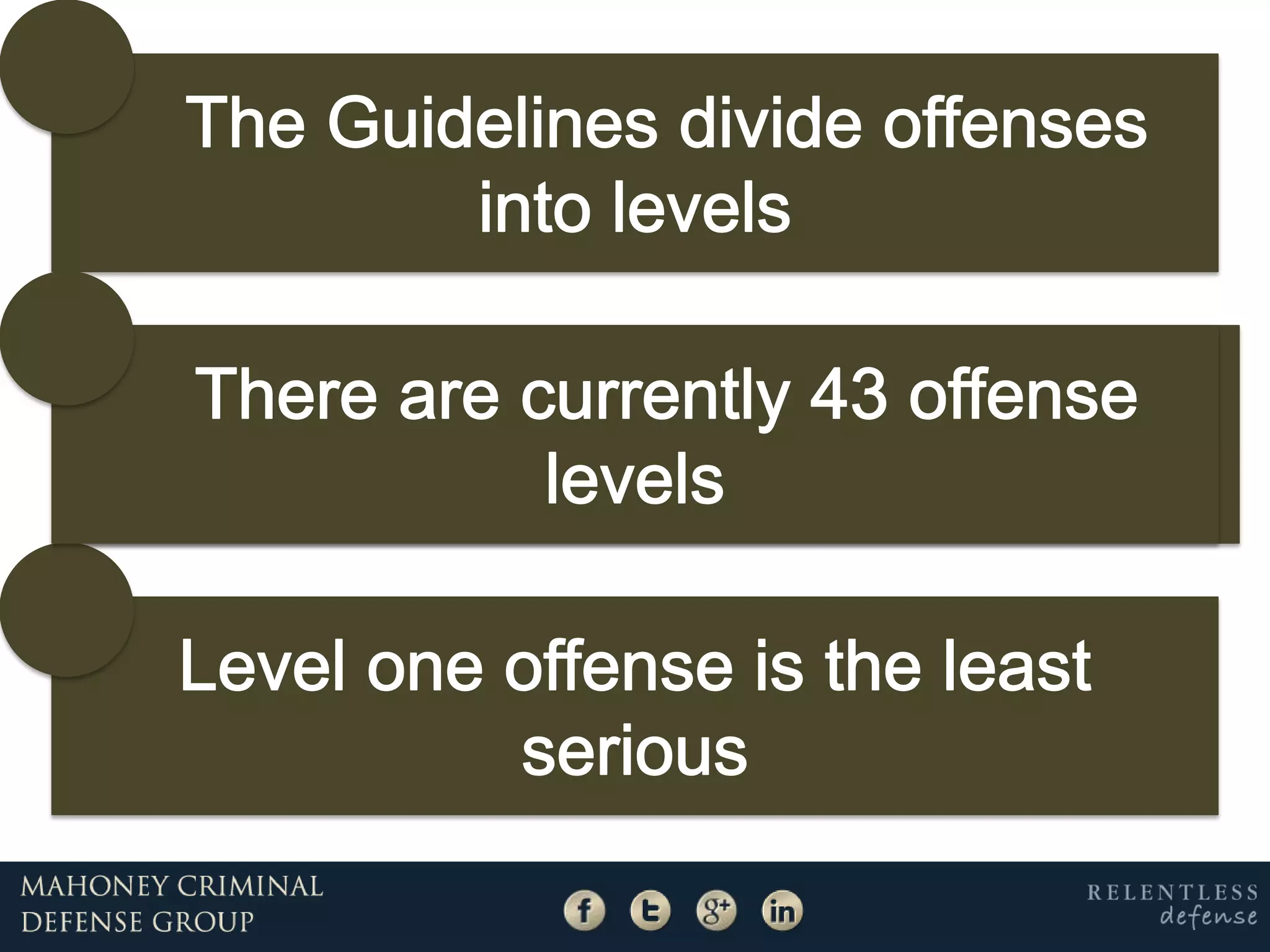
The United States Sentencing Commission constructs the federal sentencing table as a two-axis grid. The vertical axis represents the Offense Level, which ranges from Level 1 (least severe) to Level 43 (most severe). The horizontal axis represents the Criminal History Category, which spans from Category I (minimal prior record) to Category VI (extensive prior record).
When these two coordinates intersect on the table, they yield a specific sentencing range measured in months of imprisonment. For instance, an offense level of 24 paired with a criminal history category of II produces a significantly different sentencing range than the same offense level paired with category V.
Key Variables in Offense Level Calculation
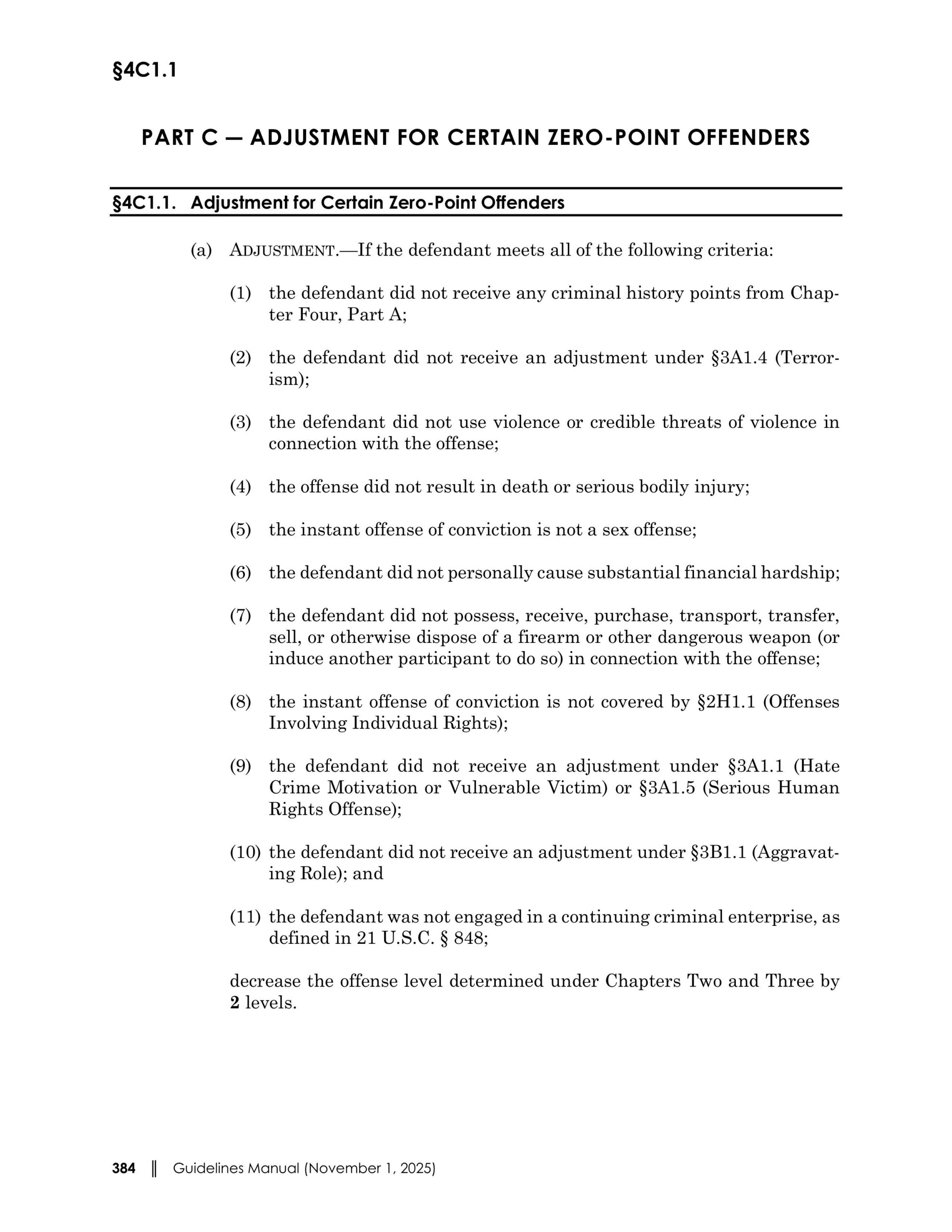
Calculating the final offense level involves a multi-step process governed by the sentencing guidelines manual. It begins by identifying the base offense level assigned to the specific statute of conviction. From there, specific offense characteristics, victim-related adjustments, role in the offense, and obstructions of justice modify the baseline number upward or downward.
- Base Offense Level: The starting point determined by the primary guideline section corresponding to the statutory crime.
- Specific Offense Characteristics: Incremental increases based on factual details, such as the monetary loss amount in white-collar crimes or the presence of a firearm in drug offenses.
- Adjustments: Modifications for aggravating or mitigating roles, such as being a leader or organizer, versus acting as a minimal participant.
- Acceptance of Responsibility: A downward adjustment of two or three levels for defendants who clearly demonstrate remorse and cooperate with authorities early in the judicial process.
Criminal History Categories and Their Impact
The horizontal axis of the federal sentencing table evaluates a defendant's past criminal conduct through a point-based system. Each prior sentence of imprisonment, probation term, or revocation contributes points to the overall tally, which ultimately dictates the criminal history category.
Evaluating Prior Convictions The manual explicitly dictates which prior offenses count toward criminal history points and which ones are excluded based on the age of the conviction and the severity of the sentence imposed. Misfortunes involving minor infractions or very old sentences often fall outside the calculation window, preventing disproportionate penalties for decades-old mistakes.
The table below illustrates sample intersections of offense levels and criminal history categories, demonstrating how sentencing ranges expand across different tiers.
| Offense Level | Criminal History Category I | Criminal History Category III | Criminal History Category VI |
|---|---|---|---|
| Level 10 | 6 - 12 months | 10 - 16 months | 21 - 27 months |
| Level 20 | 33 - 41 months | 41 - 51 months | 70 - 87 months |
| Level 30 | 97 - 121 months | 121 - 151 months | 188 - 235 months |
| Level 40 | 292 - 365 months | 360 - life | Life imprisonment |
Advisory Nature of the Guidelines Post-Booker
While the federal sentencing table remains the mandatory starting point for all federal judges, the Supreme Court's landmark decision in United States v. Booker established that the guidelines are advisory rather than mandatory. District court judges must calculate the applicable sentencing range accurately, but they possess the legal discretion to impose sentences outside that range—either above or below—after considering the statutory factors outlined in Title 18 of the United States Code, Section 3553(a).
Factors Influencing Variances and Departures
Judges evaluate the broader context of the offense and the offender before pronouncing a final sentence. These considerations allow for individualized justice when the rigid grid system fails to account for unique mitigating or aggravating circumstances.
- Nature and Circumstances of the Offense: The specific motivations, execution methods, and real-world impact of the criminal conduct.
- History and Characteristics of the Defendant: Personal background, mental health history, substance abuse struggles, and community ties.
- Need for the Sentence Imposed: Balancing deterrence, public protection, rehabilitation, and the promotion of respect for the law.
- Policy Statements: Adherence to guidance issued by the Sentencing Commission regarding specific types of offender rehabilitation.
Comparing Advisory Guidelines and Statutory Mandates
Navigating federal criminal defense requires distinguishing between guideline ranges and statutory requirements. The table below outlines the core differences between these legal boundaries.
| Metric | Federal Sentencing Guidelines Table | Statutory Mandatory Minimums |
|---|---|---|
| Origin | Promulgated by the U.S. Sentencing Commission | Enacted by acts of Congress |
| Judicial Discretion | Advisory; judges may depart or vary based on 18 U.S.C. Section 3553(a) | Mandatory; judges cannot go below the minimum unless specific statutory exceptions apply |
| Flexibility | Incorporates adjustments for acceptance of responsibility and mitigating roles | Rigid statutory floors independent of personal remorse or minor roles |
| Calculation Basis | Matrix of offense levels and criminal history points | Specific statutory thresholds (e.g., drug quantities or firearm types) |
Frequently Asked Questions
What is the federal sentencing table?
The federal sentencing table is a grid established by the U.S. Sentencing Commission that matches offense levels with criminal history categories to calculate advisory imprisonment ranges. It serves as the primary benchmark for federal judges when determining prison terms.
Are federal sentencing guidelines mandatory?
No, following the Supreme Court decision in United States v. Booker, the guidelines are strictly advisory. Judges must calculate the applicable range correctly but have the authority to impose sentences above or below that range.
How is the offense level determined?
The offense level begins with a baseline score for the specific crime of conviction and is adjusted upward or downward based on specific offense characteristics, the defendant's role, and acceptance of responsibility.
Can criminal history points be challenged?
Yes, defense counsel frequently scrutinize the calculation of criminal history points to ensure that prior convictions are correctly categorized and that old or ineligible sentences are excluded from the final tally.
What is the difference between a departure and a variance?
A departure refers to an adjustment made pursuant to specific policy statements within the sentencing guidelines manual, whereas a variance is a sentence outside the advisory range based on a broader evaluation of the statutory factors in 18 U.S.C. Section 3553(a).
How do statutory mandatory minimums affect the sentencing table?
If a statutory mandatory minimum sentence is higher than the maximum end of the calculated guideline range, the mandatory minimum replaces the guideline range as the floor for the sentence imposed.
Strategic Next Steps for Legal Defense
Navigating the complexities of federal sentencing requires meticulous analysis of presentence investigation reports, guideline manuals, and case law. Defendants facing federal charges must consult with experienced defense counsel immediately to audit criminal history points, challenge erroneous offense level enhancements, and present compelling mitigating arguments under Section 3553(a) to secure the most favorable judicial outcome.
Image Gallery