Where Most Diamonds Are Mined Today: Global Leaders and Emerging Sources
As of 2026, the majority of the world's natural diamonds are mined in a concentrated group of countries led by Russia, Botswana, and Canada. While Russia remains the largest producer by volume, Botswana consistently leads in terms of t...
As of 2026, the majority of the world's natural diamonds are mined in a concentrated group of countries led by Russia, Botswana, and Canada. While Russia remains the largest producer by volume, Botswana consistently leads in terms of total value, followed by significant contributions from the Democratic Republic of Congo (DRC), South Africa, and Angola.
Contents
The global diamond mining industry has undergone a significant transformation leading into 2026. While the physical locations of the world's primary diamond deposits remain relatively static, the geopolitical landscape, technological advancements in extraction, and the rise of ethical sourcing requirements have shifted where and how these precious stones reach the international market. Understanding where most diamonds are mined today requires a look at the "Big Five" producers and the specific geological pipes that yield the highest concentrations of gem-quality stones.
Russia: The Global Leader in Volume
Russia holds the position of the world's largest producer of diamonds by carats. The vast majority of Russian production is managed by ALROSA, a partially state-owned enterprise that accounts for nearly 90% of the country’s diamond output. Russian diamond deposits are primarily located in the Sakha Republic (Yakutia) in Siberia, a region characterized by permafrost and extreme weather conditions that present unique engineering challenges.
The scale of Russian operations is immense. Mines such as Udachny and Aikhal are among the largest open-pit and underground operations globally. Historically, the Mir mine was a cornerstone of production, and while it faced significant flooding issues in previous years, ongoing redevelopment efforts reflect Russia's commitment to maintaining its volume lead. Despite international trade restrictions and sanctions that have complicated the flow of Russian diamonds into Western markets in recent years, the sheer volume of Siberian rough diamonds continues to dominate the global supply chain, often finding its way to cutting centers in India and the Middle East before entering broader circulation.
Botswana: The Pinnacle of Diamond Value
If Russia is the leader in quantity, Botswana is the undisputed leader in quality and value. Since diamonds were first discovered there in the late 1960s, the nation has transformed its economy through a highly successful partnership with De Beers known as Debswana. This 50/50 joint venture between the Botswana government and De Beers ensures that a significant portion of diamond revenue stays within the country to fund infrastructure, education, and healthcare.
The Jwaneng Diamond Mine, located in south-central Botswana, is frequently cited as the richest diamond mine in the world. It is an open-pit mine that produces high-quality gem-grade diamonds that command premium prices. Alongside Jwaneng, the Orapa and Letlhakane mines contribute to Botswana’s status. In 2026, Botswana remains the primary hub for the sorting and sales of De Beers' global production, having successfully negotiated larger shares of its own rough production for local sale and beneficiation, which has strengthened its position as a global diamond powerhouse.
Canada: Arctic Diamonds and Ethical Branding
Canada emerged as a major player in the diamond industry in the 1990s and has maintained a top-tier position through 2026. Most Canadian diamonds are mined in the Northwest Territories, specifically in the remote Arctic regions. The primary mines—Ekati, Diavik, and Gahcho Kué—operate under some of the world's most stringent environmental and labor regulations.
Canadian diamonds are highly valued in the 2026 market due to their "conflict-free" and "ethical" branding. Many consumers, particularly in North America and Europe, prefer Canadian stones because they are tracked from the mine to the retail counter. However, mining in the Arctic is incredibly expensive; mines are accessible by "ice roads" for only a few weeks a year, and the operational costs of heating and maintaining equipment in sub-zero temperatures are astronomical. As some of the older mines like Diavik approach the end of their planned lifespans, the industry is looking toward new deposits and the expansion of underground operations to sustain Canada's output.
The Democratic Republic of Congo (DRC)
The DRC is a unique case in the diamond world. While it produces a massive volume of carats—often rivaling or exceeding Botswana in sheer numbers—the vast majority of these stones are industrial diamonds rather than gem-quality. These are used in cutting, grinding, and drilling applications across various industries.
A significant portion of the DRC's diamond mining is artisanal and small-scale mining (ASM), rather than large-scale industrial operations. This means that thousands of individual miners work small plots, often in alluvial deposits (riverbeds). While this provides a livelihood for many, it also presents ongoing challenges for the Kimberley Process in terms of transparency and ensuring that the diamonds are not used to fund regional conflicts. In 2026, international efforts continue to formalize the DRC's artisanal sector to improve safety and ensure miners receive fair market value.
South Africa: The Historic Heartland
South Africa is where the modern diamond industry began with the discovery of the Kimberley pipe in the 19th century. Today, South Africa remains a major producer, blending historic deep-shaft mining with modern technology. The Venetia Mine, owned by De Beers, is the country’s largest producer. It recently transitioned from an open-pit to a massive underground operation to extend its life well into the 2040s.
Another notable South African site is the Cullinan Diamond Mine, operated by Petra Diamonds. This mine is famous for producing some of the largest and most famous diamonds in history, including the Cullinan Diamond found in 1905. It remains one of the world's most significant sources of rare blue diamonds, which continue to fetch record-breaking prices at auction in 2026.
Comparison of Top Diamond Producing Nations (2026 Projections)
The following table summarizes the primary characteristics of the leading diamond-producing countries based on recent production trends and geological capacity.
| Country | Primary Mining Entity | Leading Mine(s) | Primary Product Type | Key Market Strength |
|---|---|---|---|---|
| Russia | ALROSA | Udachny, Nyurba | Gem & Industrial | Highest overall volume |
| Botswana | Debswana | Jwaneng, Orapa | High-Quality Gem | Highest total market value |
| Canada | Rio Tinto, Burgundy | Diavik, Ekati | Premium Gem | Ethical & "Conflict-Free" |
| DRC | MIBA / Artisanal | Bakwanga (alluvial) | Industrial | High volume, low value |
| South Africa | De Beers, Petra | Venetia, Cullinan | Gem & Rare Blue | Historical prestige/Technology |
| Angola | Catoca / Endiama | Catoca | Gem-Quality | High untapped potential |
Angola and the Growth of the Lunda Province
Angola is often considered the "frontier" of the diamond industry in 2026. The country possesses significant primary kimberlite pipes that have yet to be fully explored. The Catoca mine is currently the fourth-largest diamond mine in the world and produces a significant amount of gem-quality stones.
The Angolan government has recently moved to attract more foreign investment by increasing transparency and reforming mining laws. This has led to renewed interest from major global miners who see Angola as a key area for replacing the dwindling production of aging mines in other parts of the world. The Lunda North and Lunda South provinces remain the epicenters of this geological bounty.
The Impact of Marine Mining in Namibia
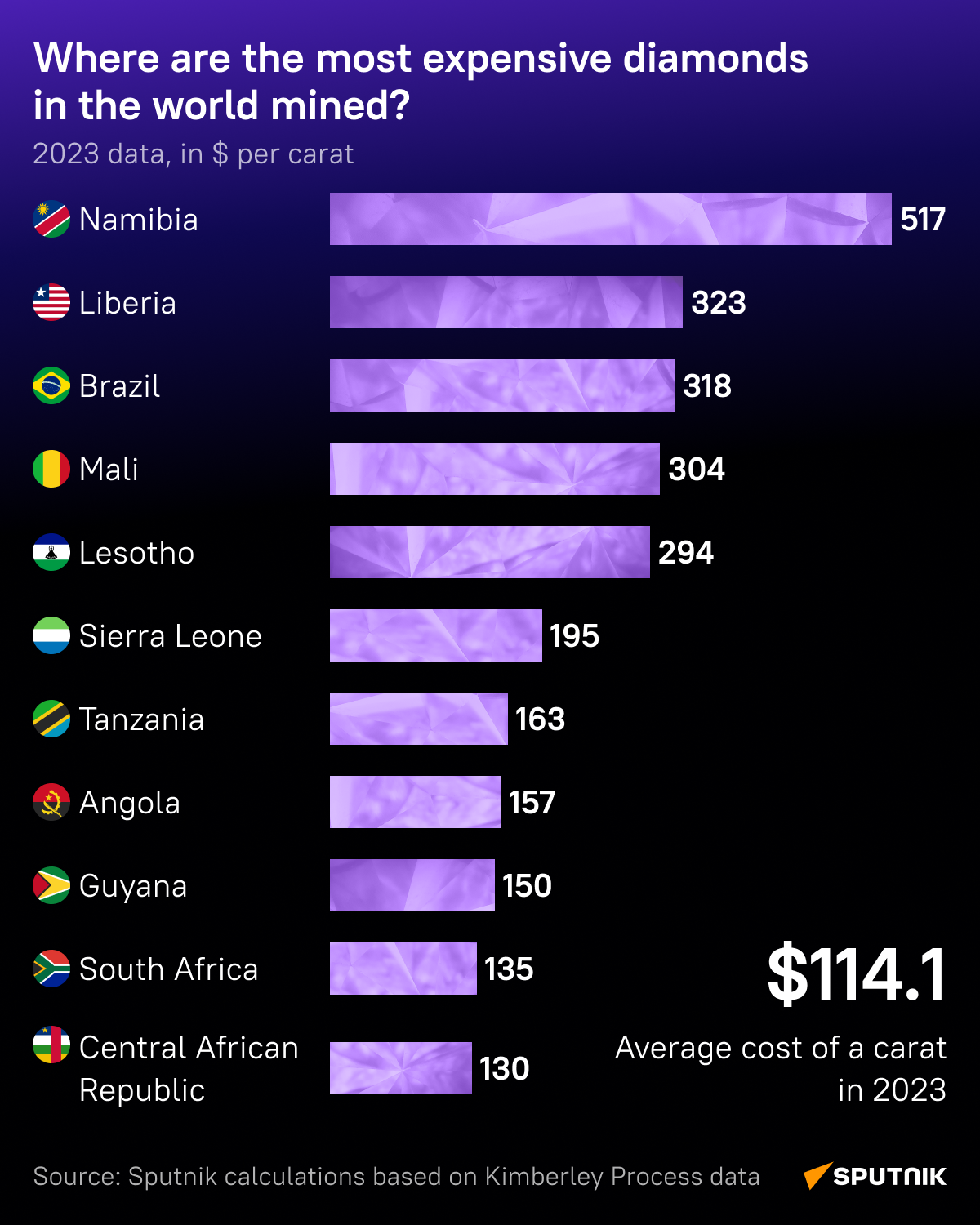
While not a top producer by volume, Namibia deserves mention for its unique extraction method: marine mining. Because diamonds are durable, they have been washed down the Orange River over millions of years and deposited on the ocean floor along the Namibian coast. Debmarine Namibia, a joint venture, uses highly advanced vessels to crawl the seabed and suck up diamond-bearing gravels. These diamonds are almost 100% gem-quality because only the highest-quality stones could survive the long journey from the interior to the ocean.
Supply Chain Evolution: Natural vs. Lab-Grown
As we look at where diamonds are mined in 2026, it is impossible to ignore the impact of Lab-Grown Diamonds (LGDs). While LGDs are produced in factories (primarily in China, India, and the United States) rather than mined from the earth, they have significantly impacted the market for smaller, lower-quality natural stones.
This competition has forced the mining industry to focus more on the "story" of the diamond—its origin, the community benefits it provides, and its geological rarity. This has increased the importance of traceability technologies, such as blockchain-based systems like Tracr, which allow consumers to verify exactly which mine in Botswana, Canada, or South Africa their diamond originated from.
Frequently Asked Questions
Which country produces the most diamonds?
Russia is the leading producer of diamonds by volume, accounting for approximately 30% of global output. However, Botswana produces the most diamonds by value due to the high percentage of gem-quality stones found in its mines.
Are diamonds still mined in Australia?
Australia's production significantly dropped after the closure of the famous Argyle Mine in late 2020. Argyle was the world's primary source of rare pink diamonds. While some small-scale mining and exploration continue, Australia is no longer a top-five global producer by volume.
What is the "richest" diamond mine in the world?
The Jwaneng Diamond Mine in Botswana is widely considered the richest mine in the world. This is measured by the value of the diamonds extracted relative to the cost of mining, as well as the high "grade" (carats per hundred tons of rock) of the ore.
How does the Kimberley Process affect diamond mining?
The Kimberley Process Certification Scheme (KPCS) is an international initiative aimed at preventing "blood diamonds" or "conflict diamonds" from entering the mainstream market. It requires member nations to certify that rough diamond exports are conflict-free, which has significantly increased the transparency of mining operations in Africa and beyond.
Is diamond mining bad for the environment?
Like all large-scale mining, diamond extraction has an environmental footprint, including land disturbance and water usage. However, in 2026, major mining companies like De Beers and ALROSA have committed to carbon-neutral goals. Many Canadian mines also operate under strict environmental protections to preserve the Arctic ecosystem.
Summary and Next Actions
Today, diamond mining is dominated by a few key nations, with Russia and Botswana sitting at the top of the hierarchy. If you are a consumer looking to purchase a diamond in 2026, your next action should be to ask for origin certification. Knowing whether a diamond was mined in the Arctic of Canada, the pipes of Botswana, or the deep mines of South Africa not only tells a story of geological wonder but also ensures that your purchase supports regulated industries that contribute to national economies. For those interested in the investment side of diamonds, monitoring the output of the Venetia (South Africa) and Catoca (Angola) mines will provide the best insights into future supply trends.
Image Gallery