The Hague and the United Nations: The Global Hub for Peace and Justice in 2026
The Hague serves as the "International City of Peace and Justice," uniquely hosting the International Court of Justice (ICJ), the only principal organ of the United Nations located outside New York. This presence, augmented by speciali...
The Hague serves as the "International City of Peace and Justice," uniquely hosting the International Court of Justice (ICJ), the only principal organ of the United Nations located outside New York. This presence, augmented by specialized agencies like the OPCW and UN-affiliated courts, establishes the city as the world’s primary judicial center for resolving international disputes and upholding global law.
Contents
The relationship between The Hague and the United Nations (UN) is not merely a matter of administrative residency; it is the physical manifestation of the international legal order. While New York serves as the political heart of the UN and Geneva as its humanitarian center, The Hague is its judicial soul. As of 2026, the city hosts over 200 international organizations and 160 embassies, all revolving around the core mission of maintaining global peace through the rule of law.
The International Court of Justice (ICJ): The UN’s Judicial Anchor
The International Court of Justice is the cornerstone of the UN presence in The Hague. Established in 1945 by the Charter of the United Nations, it began its work in 1946 at the Peace Palace. The ICJ is the only one of the six principal organs of the UN not located in the United States. Its primary functions are twofold: settling legal disputes submitted by states (contentious cases) and providing advisory opinions on legal questions referred to it by authorized UN organs and specialized agencies.
In 2026, the ICJ remains the world's highest judicial authority. Its docket has seen a significant shift toward environmental law and climate justice, following landmark requests for advisory opinions regarding the obligations of states in respect of climate change. The court consists of 15 judges elected for nine-year terms by the UN General Assembly and the Security Council. These judges must represent the "main forms of civilization and of the principal legal systems of the world," ensuring that the UN's judicial presence in The Hague is truly representative of the global community.
The Peace Palace: A Monument to Arbitration
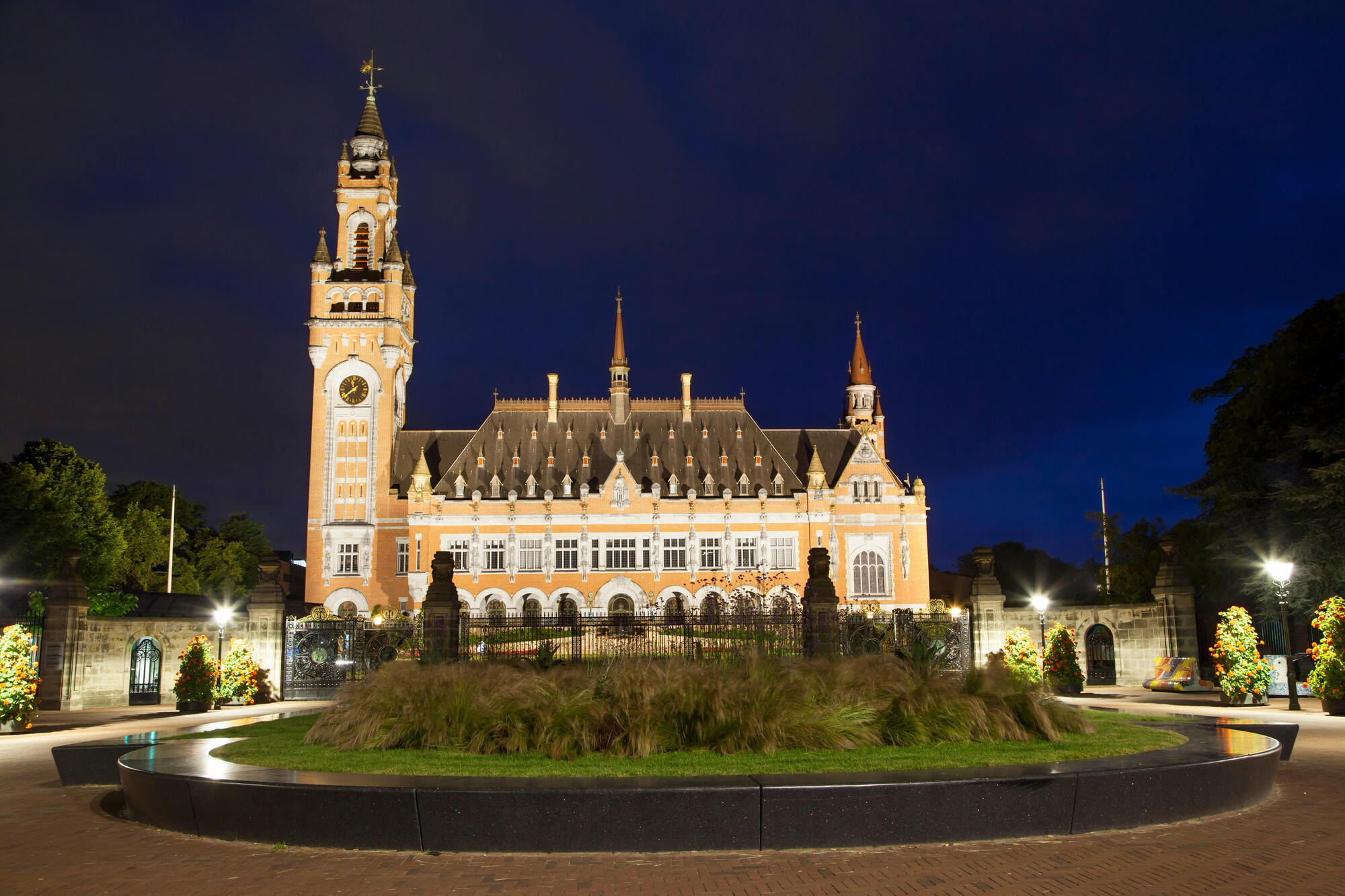
The Peace Palace (Vredespaleis) is the physical site of the UN’s judicial power. While owned by the Carnegie Foundation, it is the permanent seat of the ICJ. The palace also houses the Permanent Court of Arbitration (PCA), which, while not a UN body, works in close proximity to the UN framework to resolve international disputes through arbitration and other peaceful means. For the UN, the Peace Palace provides a neutral, prestigious ground where sovereign states can meet on equal footing under the eyes of international law.
Specialized UN Agencies and Affiliated Organizations
Beyond the ICJ, The Hague hosts several organizations that are either part of the UN system or have a formalized relationship with it. These entities address specific facets of international security, justice, and human rights.
The Organization for the Prohibition of Chemical Weapons (OPCW)
The OPCW is an autonomous international organization with a working relationship with the United Nations. As the implementing body for the Chemical Weapons Convention, which entered into force in 1997, the OPCW works to permanently eliminate chemical weapons. In 2026, the OPCW remains a vital pillar of the Hague's UN ecosystem, focusing on the prevention of the re-emergence of chemical weapons and the safe management of chemical stockpiles in volatile regions. Its presence in The Hague reinforces the city’s role in technical and legal oversight of global security.
The International Criminal Court (ICC)
While the ICC is not a UN agency, it was established by the Rome Statute and maintains a negotiated Relationship Agreement with the United Nations. The ICC is the first permanent, treaty-based, international criminal court established to help end impunity for the perpetrators of the most serious crimes of concern to the international community. The UN Security Council can refer situations to the ICC prosecutor, creating a functional bridge between the UN’s political arms in New York and the judicial infrastructure in The Hague.
The Residual Mechanism for International Criminal Tribunals (IRMCT)
The IRMCT (often referred to as the Mechanism) is a direct UN body. it was established by the UN Security Council to carry out a number of essential functions of the International Criminal Tribunal for the former Yugoslavia (ICTY) and the International Criminal Tribunal for Rwanda (ICTR) after the completion of their respective mandates. In 2026, the Hague branch of the Mechanism continues to manage archives, protect witnesses, and supervise sentences, ensuring that the UN's commitment to justice for past atrocities is maintained.
Comparing Global UN Hubs: The Hague's Unique Position
The UN distributes its functions across several global cities to ensure neutrality and specialized focus. The Hague occupies a niche that is distinct from its counterparts in New York, Geneva, and Vienna.
| Feature | New York (Headquarters) | Geneva (UNOG) | The Hague | Vienna (UNOV) |
|---|---|---|---|---|
| Primary Focus | Political & Diplomatic | Humanitarian & Rights | Judicial & Legal | Security & Science |
| Key Organs | General Assembly, Security Council | Human Rights Council, WHO | International Court of Justice | IAEA, UNODC |
| Nature of Work | Policy and Deliberation | Field Operations & Health | Adjudication & Arbitration | Regulation & Crime Control |
| Presence Type | Administrative Heart | Operational Center | The "World's Courtroom" | Technical Oversight |
Legal and Operational Framework: The Host Country Agreement
The presence of the UN in The Hague is governed by "Host Country Agreements" between the United Nations and the Kingdom of the Netherlands. These legal documents define the status, privileges, and immunities of the UN organs and their staff.
The Dutch government provides the necessary infrastructure and security to ensure these organizations can operate independently of local political influence. This includes diplomatic immunity for judges and officials, which is essential for the ICJ to render impartial judgments against even the most powerful member states. In 2026, the Netherlands continues to invest heavily in "The Hague Project Peace and Justice," a municipal initiative that streamlines the integration of international staff and ensures the safety of the international zone where many UN-related buildings are located.
Career and Educational Integration
The Hague's UN presence creates a massive ecosystem for education and professional development. The Hague Academy of International Law, located on the grounds of the Peace Palace, serves as a premier center for the study and teaching of public and private international law. Many UN judges and legal officers lecture here, creating a direct link between judicial practice and academic theory.
For professionals in 2026, the UN presence offers various paths:
- Legal Internships: The ICJ and the Mechanism offer highly competitive clerkships and internships for postgraduate law students.
- Junior Professional Officer (JPO) Programs: The Dutch government often sponsors JPOs to work within UN bodies in The Hague, fostering the next generation of international civil servants.
- The Hague Humanity Hub: This platform facilitates collaboration between the UN, NGOs, and digital innovators, focusing on how data and technology can support the UN's goals of peace and justice.
Practical Guidance for Engaging with the UN in The Hague
For diplomats, legal professionals, and students looking to engage with the UN presence in 2026, several protocols must be followed:
- Accessing the Peace Palace: The ICJ holds public hearings, but seating is limited and often requires prior registration via the ICJ's official website. Visitors must clear UN-standard security screenings.
- Verifying Case Status: The ICJ maintains a comprehensive digital archive of all contentious cases and advisory opinions. For legal research, the Recueil des arrêts, avis consultatifs et ordonnances remains the authoritative source for citations.
- Diplomatic Protocol: Engagement with UN agencies in The Hague is typically conducted through Permanent Representations. Most UN member states maintain a specific mission to the international organizations in The Hague, separate from their embassy to the Netherlands.
Frequently Asked Questions
Is the International Criminal Court (ICC) part of the United Nations?
No, the ICC is an independent international organization. However, it has a "Relationship Agreement" with the UN, and the UN Security Council has the power to refer cases to the ICC prosecutor. Unlike the ICJ, which deals with disputes between states, the ICC prosecutes individuals.
Can individuals file lawsuits at the International Court of Justice in The Hague?
No, individuals cannot bring cases to the ICJ. Only sovereign states that are parties to the Statute of the Court can be parties to contentious cases. The Court’s jurisdiction is limited to disputes between nations and requests for advisory opinions from UN organs.
Why was The Hague chosen as the UN's judicial center instead of New York?
The Hague’s status as a center for international law predates the UN. The Hague Peace Conferences of 1899 and 1907 established the city as a neutral ground for arbitration. When the UN was formed, it was decided to maintain this tradition of neutrality by placing its judicial arm in a location historically associated with the peaceful settlement of disputes.
Are UN hearings in The Hague open to the public?
Most ICJ hearings are public unless the Court decides otherwise. However, due to security and space constraints in the Peace Palace, members of the public and the press must usually apply for accreditation or reserve seats well in advance. Many hearings are now streamed live via the UN Web TV platform.
What is the role of the Dutch government in the UN presence?
The Dutch government acts as the "Host Country." It provides the land, security, and legal framework (through host country agreements) that allow UN entities to operate. The Ministry of Foreign Affairs manages these relationships, ensuring that the international organizations enjoy the necessary immunities to perform their functions.
Final Recommendation
For those seeking to understand or participate in the UN’s mission in The Hague, it is essential to distinguish between the various legal mandates of the organizations present. The International Court of Justice remains the primary destination for matters of state-to-state international law. If your interest lies in criminal accountability, the ICC or the Residual Mechanism are the relevant entities. In 2026, the most effective way to engage with this ecosystem is through the official digital portals of these institutions, which provide real-time updates on dockets, vacancies, and public hearings.
Image Gallery