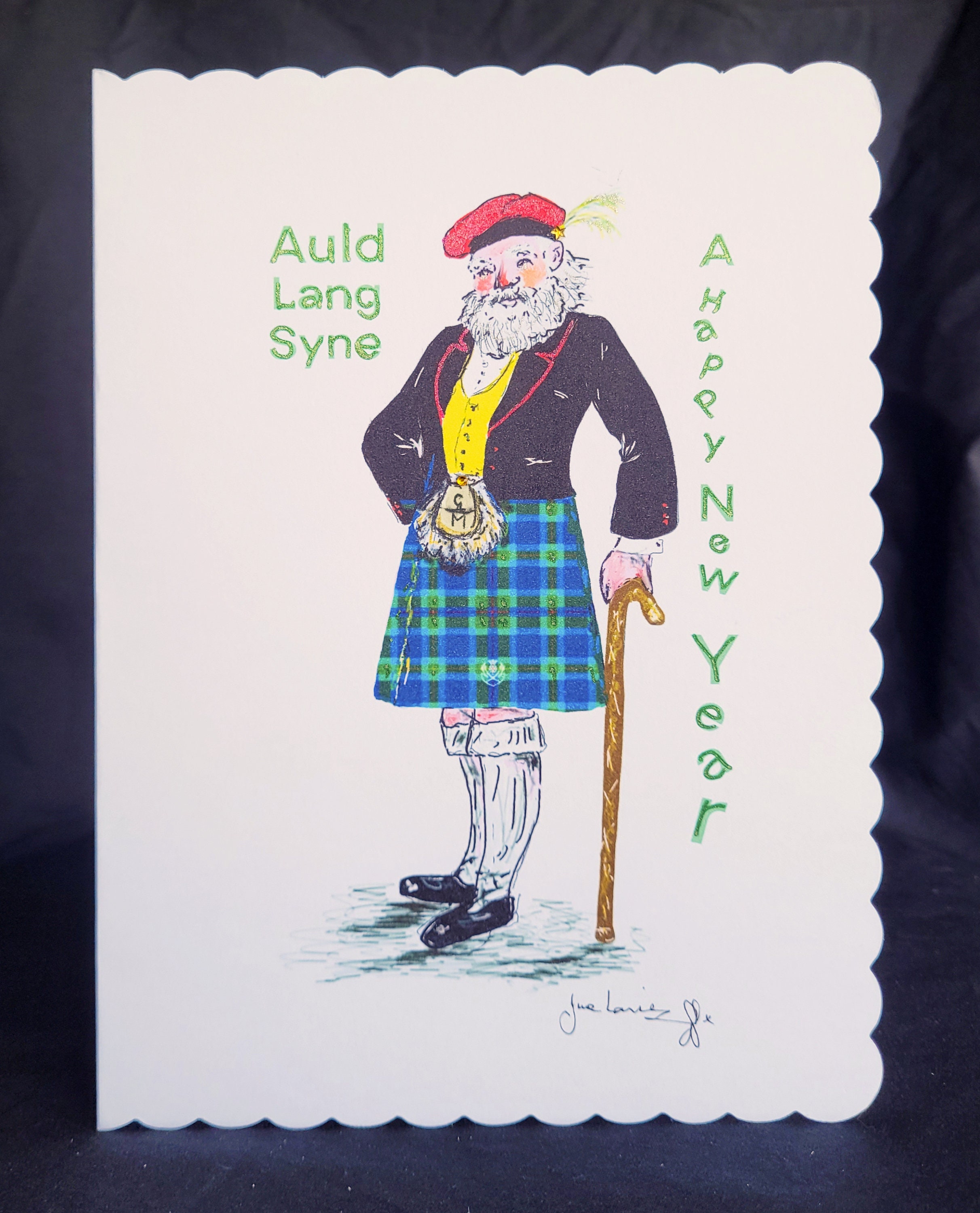
The New Year Auld Lang Syne Tradition Explained: History, Meaning, and Global Rituals
The tradition of singing "Auld Lang Syne" at the stroke of midnight on New Year’s Eve is a global phenomenon rooted in Scottish folklore. It serves as a symbolic bridge between the past and the future, prompting participants to remembe...
The tradition of singing "Auld Lang Syne" at the stroke of midnight on New Year’s Eve is a global phenomenon rooted in Scottish folklore. It serves as a symbolic bridge between the past and the future, prompting participants to remember old friendships and shared experiences while welcoming the coming year with hope and a "cup of kindness."
Contents
The song’s journey from a 18th-century poem to a mandatory holiday anthem involves a mix of literary preservation, Scottish emigration, and 20th-century mass media influence. To understand why we sing these specific words every December 31st, one must look at the linguistic origins of the phrase, the editorial work of Robert Burns, and the unlikely role of a Canadian bandleader in New York City.
The Linguistic Roots: What Does "Auld Lang Syne" Mean?
For many English speakers, the title "Auld Lang Syne" sounds like a beautiful but incomprehensible incantation. The phrase is written in Scots, a Germanic language variety closely related to English but with its own distinct vocabulary and phonology.
Translated literally into modern English, "Auld Lang Syne" means "old long since." In more idiomatic terms, it translates to "long, long ago," "days gone by," or "for old times' sake." When we sing the chorus, we are essentially asking a rhetorical question: Should we forget our old friends and the times we spent together? The answer, implied by the tradition, is a resounding "no."
The phrase appeared in Scottish literature and song long before the version we know today. Variations such as "Old Long Syne" were used by anonymous balladeers and poets like James Watson in the late 17th and early 18th centuries. However, it was not until the late 1700s that the version we recognize was codified and popularized.
The Robert Burns Connection
While often credited as the author of "Auld Lang Syne," the legendary Scottish poet Robert Burns did not invent the song in its entirety. In 1788, Burns sent a copy of the poem to the Scots Musical Museum, noting that he had "took it down from an old man’s singing."
Burns was a dedicated collector of Scottish folk traditions. He recognized that the oral history of Scotland was at risk of being lost to time. He took the fragments of the traditional song—specifically the title and the first verse—and expanded them with his own poetic flair. He added verses about wandering the hills (the "braes"), paddling in the stream (the "burn"), and the physical act of joining hands in friendship.
The Evolution of the Melody
Interestingly, the tune we sing today is not the one Burns originally intended. The poet originally paired his lyrics with a slower, more melancholic folk melody. The upbeat, pentatonic tune we use now—characterized by the rhythmic "Scotch snap"—was first attached to the lyrics in the late 1790s by publisher George Thomson. This more melodic and communal version proved far more infectious, eventually displacing Burns’ original choice and becoming the standard for celebrations.
From Scottish Hogmanay to Global Tradition
The transition of "Auld Lang Syne" from a regional Scottish folk song to a global New Year’s staple occurred in two major phases: the spread of the Scottish diaspora and the advent of radio broadcasting.
The Influence of Hogmanay
In Scotland, New Year’s Eve is known as Hogmanay. Historically, Hogmanay was a more significant celebration than Christmas, which was effectively banned or discouraged by the Kirk (the Church of Scotland) for nearly 400 years following the Reformation. As Scots emigrated to North America, Australia, and across the British Empire, they brought their Hogmanay traditions with them, including the singing of "Auld Lang Syne" to mark the transition of the calendar.
The Guy Lombardo Effect
While the Scottish diaspora planted the seeds, it was Guy Lombardo and His Royal Canadians who cemented the song’s status in the United States and beyond. On December 31, 1929, Lombardo and his orchestra performed the song during a live radio broadcast from the Roosevelt Hotel in New York City.
The performance occurred just after the stroke of midnight. It resonated so deeply with the public that Lombardo's "Auld Lang Syne" became a permanent fixture of his annual New Year’s Eve broadcasts, which moved to television and continued until 1976. For decades, Lombardo was "Mr. New Year’s Eve," and his specific arrangement of the song became the blueprint for how the world celebrates the holiday.
Understanding the Lyrics: A Verse-by-Verse Breakdown
Most people only know the first verse and the chorus, but the full poem contains five verses that paint a vivid picture of nostalgia and reconnection. As of 2026, historical scholarship continues to highlight these verses as an essential part of the Scottish literary canon.
| Verse / Section | Key Imagery | Meaning and Context |
|---|---|---|
| Verse 1 | Old acquaintance, forgot | A rhetorical question asking if we should let old friendships fade away. |
| Chorus | Cup o' kindness | A call to drink a toast in honor of the past and the bond of friendship. |
| Verse 2 | Pint-stowp (cup) | Two friends acknowledge they will both buy a drink for the other. |
| Verse 3 | Braes (hills), gowans (daisies) | Reminiscing about running in the hills as children. |
| Verse 4 | Burn (stream) | Recalling playing in the water from morning until dinner time. |
| Verse 5 | Trusty fiere (friend), hand | The physical act of shaking hands or joining hands in a circle. |
The progression of the song moves from the abstract concept of memory to specific, shared physical experiences, ending with a literal hand-clasp. This is why the physical tradition of the "circle" is so integral to the performance.
Traditional Rituals and Etiquette
How one sings "Auld Lang Syne" is often as important as the words themselves. In the United Kingdom and many Commonwealth nations, a specific set of movements accompanies the song, particularly during large gatherings or ceilidhs.
- The Circle: Participants form a large circle, holding hands with the people next to them.
- The Cross-Over: At the beginning of the final verse ("And there’s a hand, my trusty fiere!"), singers cross their arms across their chests so that their left hand holds the hand of the person to their right, and their right hand holds the hand of the person to their left.
- The Surge: When the music speeds up or reaches its crescendo, the circle moves inward toward the center and then back out, often while cheering.
It is a common mistake to cross your arms at the very beginning of the song. According to traditional Scottish etiquette, the arms should remain uncrossed until the specific verse mentioning the "hand" appears. However, in modern celebrations—especially in noisy party environments—many people cross their arms from the start to ensure the circle remains intact.
Global Variations and Cultural Significance
Beyond New Year’s Eve, "Auld Lang Syne" has been adopted by various cultures for vastly different purposes. Its theme of "parting and remembrance" makes it versatile.
- Japan: Known as "Hotaru no Hikari" (The Light of the Firefly), the tune is played in Japanese department stores and restaurants to signal that the establishment is closing for the night. It is also a staple at graduation ceremonies.
- South Korea: Before the country adopted its current national anthem, the lyrics of "Aegukga" were often sung to the tune of "Auld Lang Syne" during the period of Japanese occupation.
- Graduations and Funerals: In many parts of the world, the song is used to mark the end of an era, such as the closing of a school year or the passing of a loved one.
- The Scout Movement: Robert Baden-Powell, the founder of Scouting, adopted the song as a "farewell" anthem, and it is now sung at Scout jamborees worldwide.
Common Myths and Misconceptions
Despite its ubiquity, several myths persist about the "Auld Lang Syne" tradition.
Myth 1: The Song is About Drinking to Forget
In reality, the song is about drinking to remember. The "cup o' kindness" is a gesture of goodwill. While the lyrics mention a "pint-stowp," the focus is on the companionship that accompanies the drink, not the intoxication itself.
Myth 2: It Has Always Been a New Year’s Song
As established, it was a folk song about friendship first. Its association with the calendar year is a relatively modern development, spurred by 19th-century social clubs and 20th-century media.
Myth 3: Robert Burns Wrote the Music
Burns was a poet and a lyricist, not a composer. He collected melodies and occasionally suggested which tunes should accompany his words, but the "Auld Lang Syne" tune we know is a traditional folk melody that was polished by professional arrangers long after Burns first submitted the text.
Frequently Asked Questions
Why is the song so sad?
The song is often perceived as sad because it deals with the passage of time and the loss of childhood innocence. However, it is technically a song of celebration. It celebrates the fact that despite the years and the distance ("seas between us broad hae roared"), the bond of friendship remains.
Is it "For the sake of" or "For sake of" Auld Lang Syne?
The traditional lyric is "For auld lang syne," which essentially means "for the sake of old times." Adding the word "the" is a common modern variation but is not part of the original Scots text.
Do I have to cross my arms?
While crossing your arms is a traditional part of the Scottish Hogmanay experience, it is not a requirement. In many American celebrations, people simply stand in a group or hold hands without the specific "cross-over" maneuver.
What is a "pint-stowp"?
A "pint-stowp" (or pint-stoup) is a traditional Scottish drinking vessel, typically a large flagon or tankard that holds a Scottish pint (which was historically larger than an imperial pint).
Why do some people sing "For the days of auld lang syne"?
This is a common lyrical "filler" used by those who aren't familiar with the Scots dialect. The original line is simply "For auld lang syne, my jo / For auld lang syne."
Planning Your New Year Tradition
To truly honor the "Auld Lang Syne" tradition in 2026 and beyond, consider more than just the melody. Focus on the core message of the lyrics: reconnection.
If you are hosting a gathering, you might provide guests with a printed copy of the first two verses to ensure everyone can participate meaningfully. Incorporating the Scottish "circle" tradition can also provide a sense of unity that simply standing and singing cannot match. Whether you are in a crowded city square or a quiet living room, the song serves as a reminder that while the future is uncertain, our shared history and friendships are the foundation upon which we build the new year.
Image Gallery