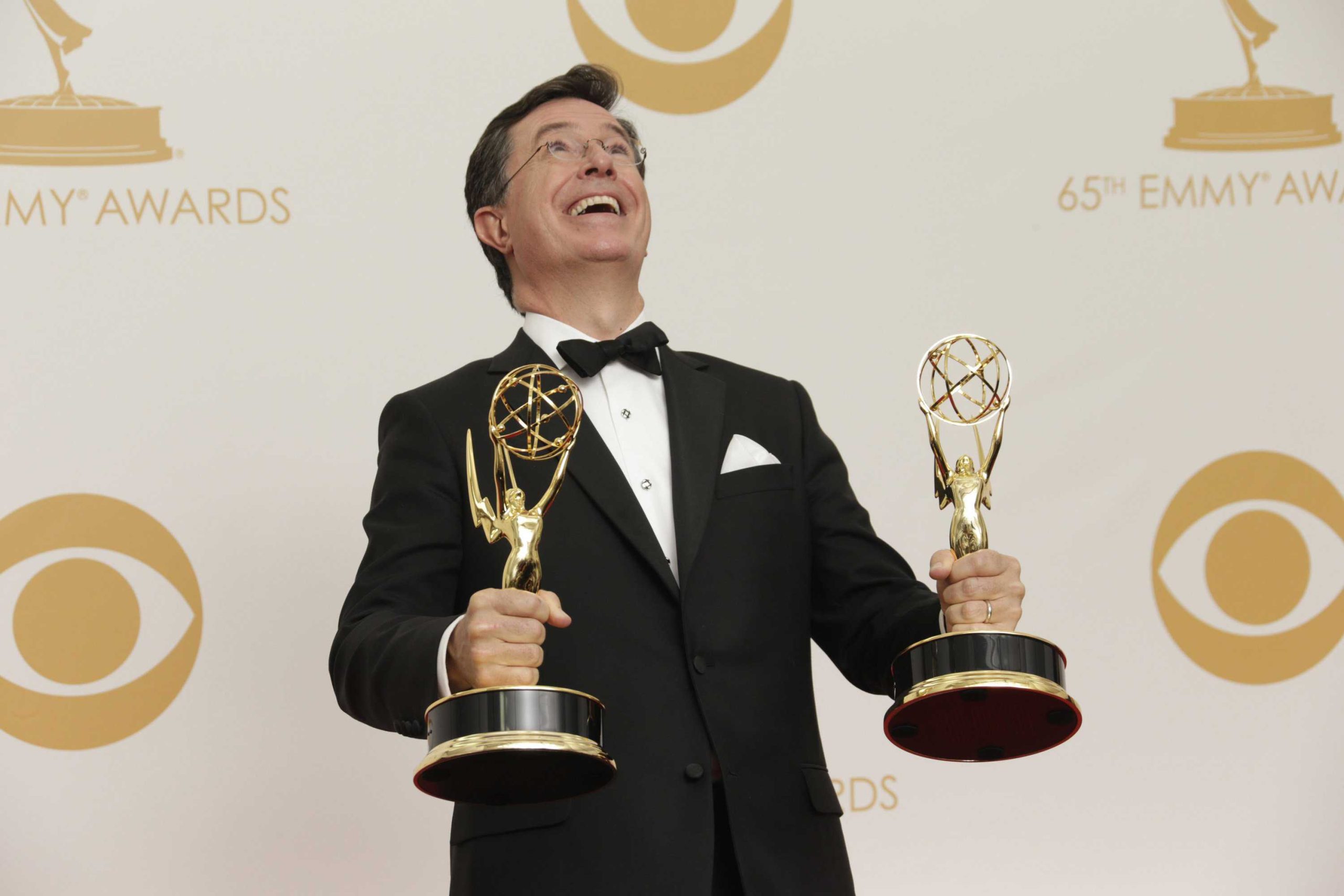
Stephen Colbert’s Emmy Awards Explained: Wins, Nominations, and Career Impact
Stephen Colbert has won multiple Primetime Emmy Awards as a writer and executive producer, spanning his work on The Daily Show, The Colbert Report, and The Late Show. As of 2026, his career reflects over two decades of critical acclaim...
Stephen Colbert has won multiple Primetime Emmy Awards as a writer and executive producer, spanning his work on The Daily Show, The Colbert Report, and The Late Show. As of 2026, his career reflects over two decades of critical acclaim, characterized by a transition from a satirical character to a leading voice in late-night political commentary.
Contents
The Legacy of Stephen Colbert at the Emmy Awards
The history of the Primetime Emmy Awards cannot be written without a significant chapter dedicated to Stephen Colbert. Since his early days as a correspondent and writer, Colbert has been a perennial favorite of the Television Academy. His relationship with the Emmys is not merely about the number of trophies on his shelf, but about how his wins mirror the changing landscape of American television comedy.
Colbert’s Emmy journey is divided into three distinct eras: his "apprenticeship" and early success at The Daily Show with Jon Stewart, his decade of dominance as a satirical persona on The Colbert Report, and his current tenure as the host of The Late Show on CBS. Each era has seen Colbert navigate different competitive categories, from writing to producing, and finally to the prestigious Outstanding Variety Talk Series category.
Understanding Colbert's Emmy record requires looking beyond the "Wins" column. His nominations often exceed 40 across his entire career, highlighting a level of consistency that few performers in history have matched. For Colbert, the Emmys have served as a validation of his unique brand of intellectual, high-concept comedy that manages to reach a broad broadcast audience.
The Foundation: The Daily Show with Jon Stewart Era
Before he was a household name, Stephen Colbert was a foundational member of the "Best F#@king News Team Ever." During his tenure at The Daily Show, which began in the late 1990s and lasted until 2005, Colbert was part of a writing and producing staff that redefined political satire.
His first Emmy wins came as part of the collective writing staff for The Daily Show. These awards were shared with Jon Stewart and other notable writers like Ben Karlin and David Javerbaum. During this period, The Daily Show began a historic streak in the Outstanding Variety, Music or Comedy Series category, winning ten consecutive years from 2003 to 2012.
Colbert’s role during these years was primarily as a correspondent, but his contributions to the writing room were what earned him his initial statuettes. The Television Academy recognized the show for its ability to distill complex news cycles into digestible, biting satire. This era established Colbert’s reputation as a top-tier comedy writer, a skill that would eventually lead to his own spin-off and even greater individual success.
The Satirical Peak: The Colbert Report (2005–2014)
When Colbert left The Daily Show to launch The Colbert Report in late 2005, he faced the daunting task of competing against his mentor, Jon Stewart. For several years, Stewart’s Daily Show held a monopoly on the top variety series prize. However, the Emmy tide eventually turned in Colbert's favor.
Breaking the Streak
In 2013, The Colbert Report famously broke The Daily Show’s ten-year winning streak by taking home the Emmy for Outstanding Variety Series. This was a watershed moment for late-night television. It signaled that Colbert’s high-wire act—playing a hyper-conservative, narcissistic pundit—had reached a level of artistic perfection that the Academy could no longer ignore.
Writing and Directing Wins
The success of The Colbert Report was not limited to the main series category. The show was a consistent winner in the Outstanding Writing for a Variety Series category. The Academy specifically valued the "Colbert" character's internal logic; the writing had to be funny on two levels—one for the character's surface-level absurdity and one for the actual political point Colbert was making.
In 2014, the final full year of the show, Colbert again won Outstanding Variety Series. These back-to-back wins cemented The Colbert Report as one of the most successful satirical programs in the history of the medium, proving that a character-driven talk show could sustain critical excellence over nearly a decade.
Transition to The Late Show and the "Streaming Era" Competition
In 2015, Colbert moved to CBS to succeed David Letterman. This transition represented a massive shift in his Emmy prospects. He dropped the satirical character and began appearing as himself. While the show was a ratings success, the Emmy landscape had become significantly more competitive.
The Rise of John Oliver
Coinciding with Colbert’s move to CBS was the ascent of John Oliver’s Last Week Tonight on HBO. Because the Television Academy groups broadcast, cable, and premium streaming shows together in the Variety Talk categories, Colbert found himself competing against Oliver’s high-budget, weekly investigative comedy.
From 2016 through the early 2020s, Last Week Tonight dominated the Outstanding Variety Talk Series category. Despite The Late Show with Stephen Colbert being the most-watched late-night show in America for several years, the Emmy wins for the main series category remained elusive during this stretch.
Live Specials and Election Coverage
Where Colbert found renewed Emmy success on CBS was in his live specials. The Television Academy often recognizes the technical difficulty and cultural relevance of live television. Colbert’s election night specials, such as Stephen Colbert’s Election Night 2020: Democracy’s Last Stand: Keep It Together America, provided a different avenue for wins. These specials often competed in the Outstanding Variety Special (Live) category, allowing the Academy to honor Colbert’s expertise in real-time commentary without having to choose between him and John Oliver’s scripted format.
Emmy Statistics: A Quantitative Look at Colbert’s Career
To understand the scope of Colbert's impact, one must look at the data. As of 2026, the following table summarizes the primary categories where Colbert has seen the most success.
| Program | Major Category | Key Winning Years | Total Wins (Staff/Individual) |
|---|---|---|---|
| The Daily Show | Outstanding Variety Series | 2003, 2004, 2005, 2006 | 3+ (Shared Writing/Producing) |
| The Daily Show | Outstanding Writing for a Variety Series | 2004, 2005, 2006 | 3+ |
| The Colbert Report | Outstanding Variety Series | 2013, 2014 | 2 |
| The Colbert Report | Outstanding Writing for a Variety Series | 2008, 2010, 2013, 2014 | 4 |
| The Late Show | Outstanding Writing for a Variety Series | 2021 (Special), 2022 | 2+ |
| Election Night Specials | Outstanding Variety Special (Live) | 2021 | 1 |
Note: Total win counts include shared awards as an Executive Producer and Writer.
Why Stephen Colbert’s Wins Matter for Late-Night TV
Colbert’s Emmy success is significant because it represents the evolution of the "Variety" category. In the 1990s, the category was dominated by traditional variety shows and standard talk formats like The Tonight Show. Colbert, along with Jon Stewart, pushed the Academy to recognize political satire as a distinct and prestigious art form.
The Importance of the Writing Category
For Colbert, the Writing Emmy has always been the most personal. He identifies primarily as a writer, and his shows are known for their dense, reference-heavy scripts. When The Colbert Report won for writing, it wasn't just for being "funny"; it was for maintaining a complex narrative structure that lasted 1,447 episodes.
Executive Producing and Creative Control
As an Executive Producer, Colbert’s Emmy wins also reflect his skill as a showrunner. Winning in the "Series" category is a recognition of the entire machine—the booking, the field segments, the musical performances, and the monologue. Colbert’s ability to maintain high production standards while transitioning from a small cable studio to the massive Ed Sullivan Theater is a feat that the Academy has frequently noted in his nomination citations.
Comparison with Other Late-Night Legends
In the pantheon of late-night Emmy winners, Colbert sits comfortably alongside names like David Letterman, Lorne Michaels, and Jon Stewart.
- David Letterman: While Letterman is a pioneer, Colbert has arguably had a more diverse winning record due to his work in both cable and broadcast.
- John Oliver: Oliver has more wins in the "Series" category in the modern era, but Colbert has a longer history of nominations across multiple different shows.
- Saturday Night Live: While SNL holds the record for most total Emmys, Colbert’s wins are concentrated in the "Talk" and "Writing" disciplines, whereas SNL wins across dozens of technical categories (makeup, lighting, etc.).
Frequently Asked Questions
How many Emmys does Stephen Colbert have?
As of 2026, Stephen Colbert has won over 10 Primetime Emmy Awards. These include wins for Outstanding Variety Series, Outstanding Writing for a Variety Series, and Outstanding Variety Special. His total nomination count is significantly higher, often cited as being over 40.
Did Stephen Colbert win an Emmy for The Late Show?
Yes. While The Late Show struggled for several years to beat Last Week Tonight in the main series category, Colbert and his team have won Emmys for writing and for specific live specials produced under The Late Show umbrella.
Has Stephen Colbert ever hosted the Emmys?
Yes, Stephen Colbert hosted the 69th Primetime Emmy Awards in 2017. His hosting duties were well-received, and the ceremony itself was nominated for several awards, further cementing his relationship with the Television Academy.
Why did The Colbert Report win more Emmys than The Late Show?
The competition in the Variety Talk category became much fiercer during Colbert's transition to CBS. The emergence of John Oliver on HBO and the continued dominance of Saturday Night Live in variety categories changed the voting dynamics. Additionally, The Colbert Report occupied a unique niche in satire that was highly favored by Emmy voters during the late 2000s and early 2010s.
What is the difference between "Outstanding Variety Talk Series" and "Outstanding Scripted Variety Series"?
The Television Academy split the variety category into "Talk" (interviews/monologues like The Late Show) and "Scripted" (sketches like SNL). This change was made to ensure that different formats weren't unfairly competing against one another. Colbert competes in the "Talk" category.
Practical Guidance for Fans and Researchers
If you are looking to track Stephen Colbert’s Emmy history or view his winning moments, the best resource is the official Emmy Awards website (Emmys.com). This database provides a comprehensive list of every nomination and win, including the specific category and the other individuals who shared the award.
For those interested in the craft of his comedy, studying the years he won for Outstanding Writing (such as 2013 and 2014) is highly recommended. These episodes represent the pinnacle of satirical writing in the 21st century. Many of these award-winning segments are archived on the Official Late Show YouTube channel or through Paramount+, where historical episodes of The Colbert Report are occasionally available.
When analyzing Colbert's awards, remember that the Emmy is a "peer-voted" award. His success indicates not just popularity with the public, but deep respect from other writers, producers, and performers in the television industry.
Image Gallery