The Heliopolitan Creation Myth: Cosmology, Deities, and the Great Ennead
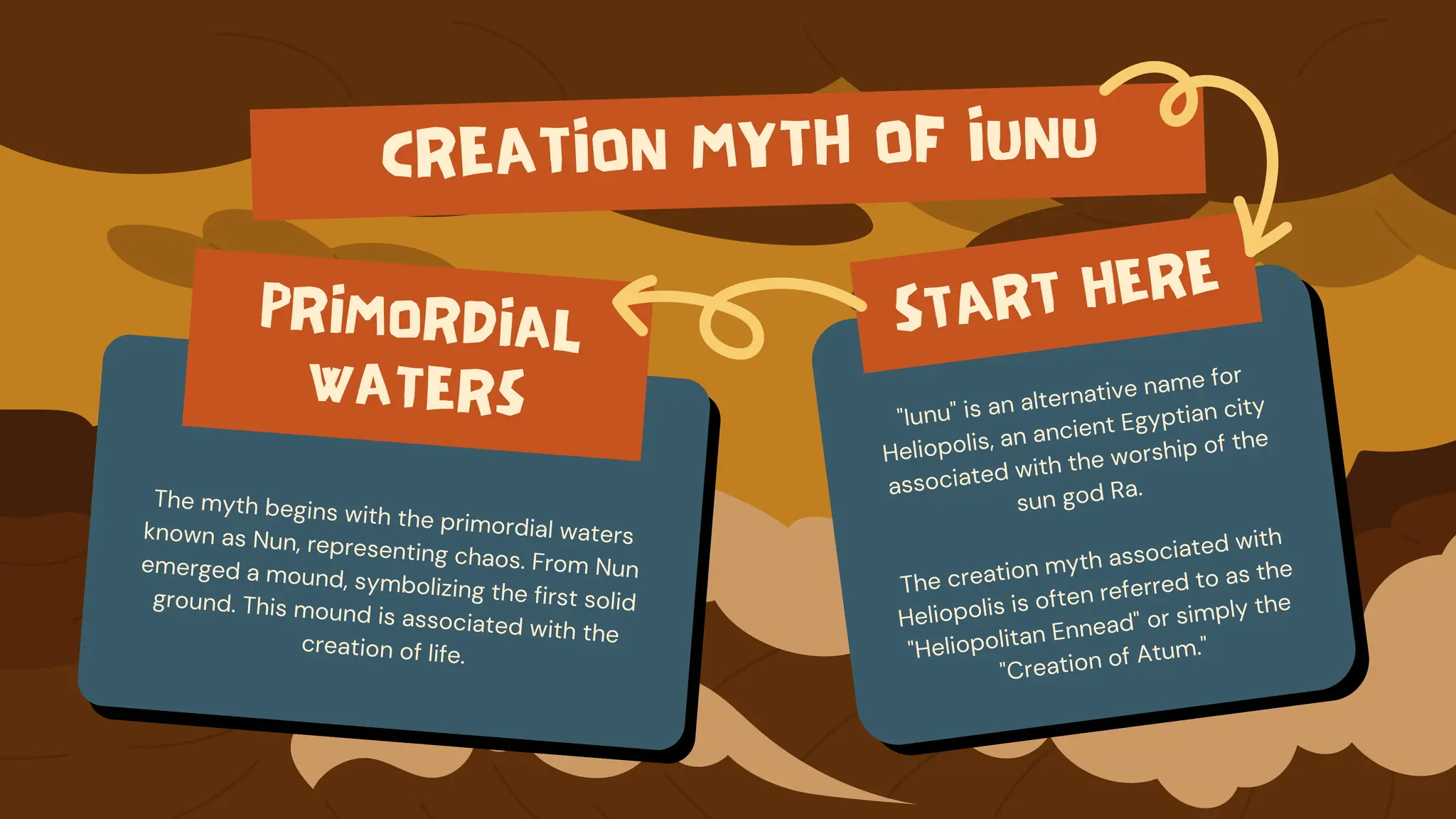
The Heliopolitan creation myth is an ancient Egyptian cosmogony originating from the city of Iunu (known to the Greeks as Heliopolis). It explains how the self-engendered sun deity Atum emerged from primordial waters (Nun) onto a prime...
The Heliopolitan creation myth is an ancient Egyptian cosmogony originating from the city of Iunu (known to the Greeks as Heliopolis). It explains how the self-engendered sun deity Atum emerged from primordial waters (Nun) onto a primeval mound (Benben) to create nine interconnected deities—the Great Ennead—establishing physical cosmic order (Ma'at) and the divine foundation for earthly kingship.
Contents
Primordial Origins: Chaos, the Benben, and Atum
Before the formation of the ordered universe, Egyptian cosmology posited the existence of Nun, an infinite, dark, inert ocean representing non-existence and potentiality. Nun was not considered evil; rather, it was the unformed state of reality lacking space, time, light, and distinction. The Heliopolitan theological tradition, curated by the priesthood of Ra at Iunu, asserted that creation began when a latent consciousness within Nun willed itself into being.
- Primordial Waters of Nun
- Atum Emerges
- Primeval Mound: Benben
- Shu: Air
- Tefnut: Moisture
- Geb: Earth
- Nut: Sky
- Osiris
- Isis
- Seth
- Nephthys
This first conscious entity was Atum (whose name translates to "The Complete One" or "The All-Inclusive"). Atum represented both everything and nothing—an undifferentiated monad containing all matter and divine essence required to generate the universe. To initiate creation, Atum manifested physical form by standing upon the Benben, the first hillock of solid earth that rose out of the receding waters of Nun.
The concept of the Benben held profound religious and architectural significance throughout ancient Egyptian history. It symbolized the initial spark of creation, the solidification of order out of fluid chaos, and the first reception of divine light. The physical temple at Heliopolis housed a sacred Benben stone, which served as the prototype for the capstones (pyramidions) placed atop pyramids and the pointed tips of obelisks throughout Egypt.
Atum’s act of self-generation was achieved without a mate. Religious texts describe this event through two primary metaphors:
- Generative Exudation: Atum masturbated or spat to produce his offspring, using his own internal dual essence (combining male and female creative principles within himself).
- Vocal Incantation: Later interpretations and parallel texts suggest Atum spoke the true names of elements, bringing them into existence through divine utterance.
The Structure of the Great Ennead (Pawt Pesedjet)
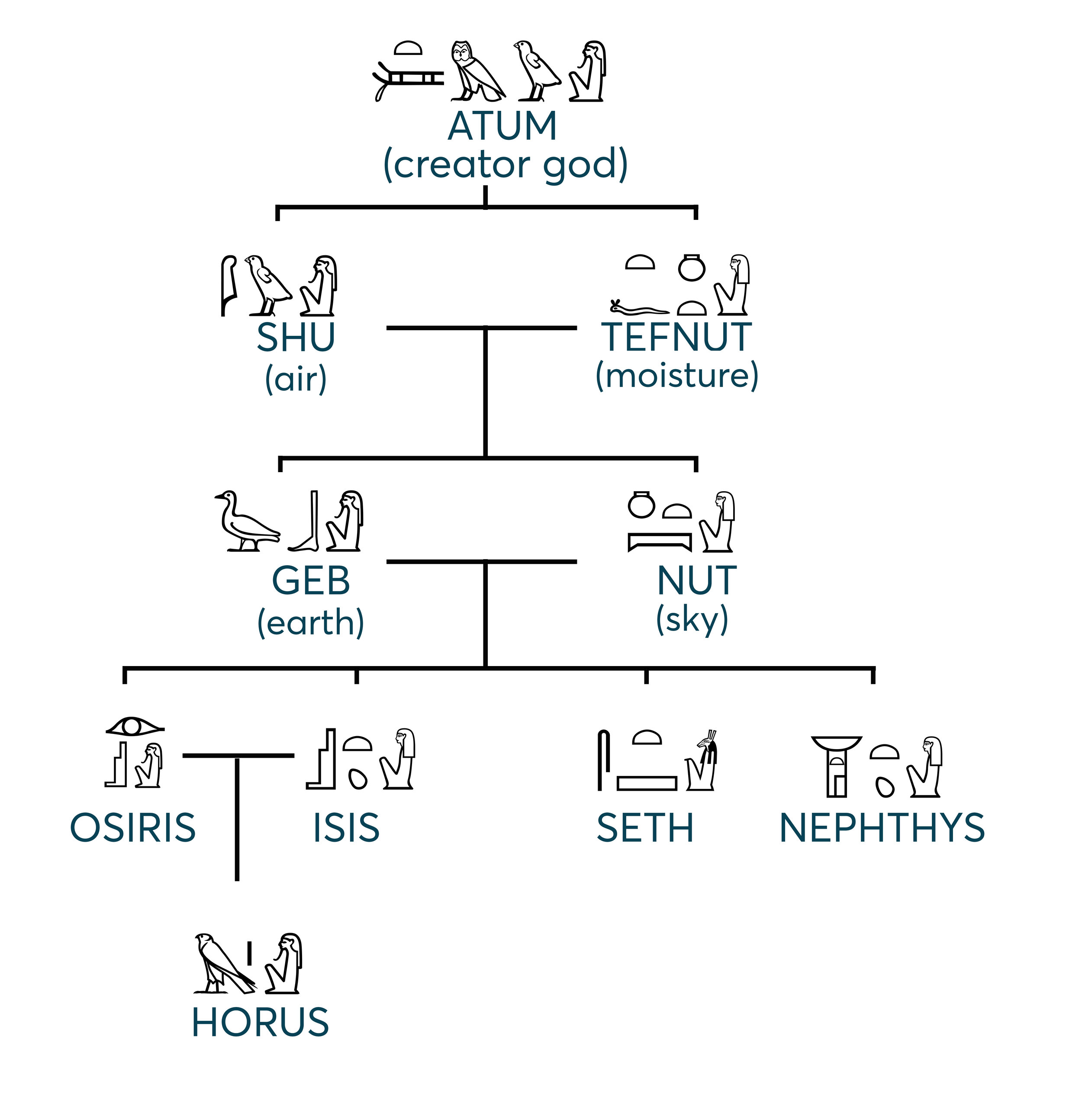
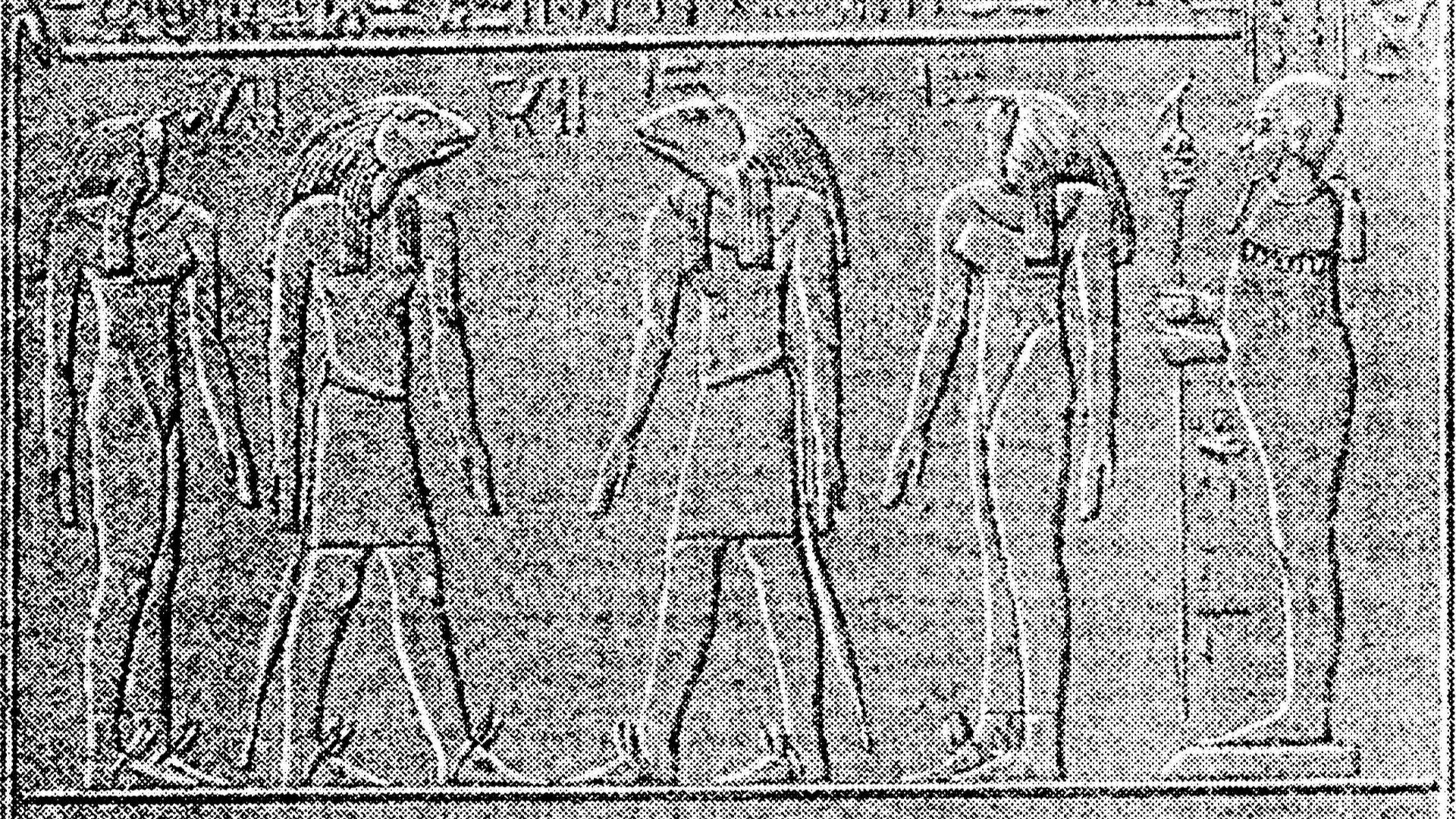
The core framework of the Heliopolitan creation myth is the Great Ennead (from the Greek enneás, meaning "a group of nine," translated from the Egyptian Pawt Pesedjet). The Ennead consists of nine specific deities organized across four distinct generations, tracing the transition from abstract cosmological forces to tangible terrestrial governance.
- ATUM (Self-Created Creator)
- SHU (Air)
- TEFNUT (Moisture)
- GEB (Earth)
- NUT (Sky)
- OSIRIS (Ruler/Under)
- ISIS (Magic)
- SETH (Chaos)
- NEPHTHYS (Lamentation)
1. The Prime Creator: Atum
Atum represents the source of all existence. While originally distinct from the sun god Ra, the two deities merged during the Old Kingdom into Atum-Ra. In this combined solar theology, Atum represented the setting sun (the mature, completed aspect), Ra represented the midday sun, and Khepri represented the rising sun.
2. The First Generation: Shu and Tefnut
From Atum emerged the first gendered, differentiated pair of deities:
- Shu (God of Air and Wind): Representing the dry atmosphere and the void between heaven and earth. Shu embodies the breath of life (Ankh) that sustains living beings.
- Tefnut (Goddess of Moisture and Dew): Representing atmospheric water, mist, and corrosion. Tefnut also embodies the corrosive element of heat and fire, frequently linked with the Solar Eye (Eye of Ra).
Together, Shu and Tefnut established the elemental conditions necessary for physical life: air to breathe and moisture to preserve form.
3. The Second Generation: Geb and Nut
Shu and Tefnut mated to produce the physical architecture of the visible world:
- Geb (God of the Earth): Depicted as a reclining man whose body forms the landscape, hills, and valleys. Earthquakes were believed to be Geb’s laughter, and vegetation sprouted from his skin.
- Nut (Goddess of the Sky): Depicted as an elongated woman arched over Geb, anchored by her hands and feet at the cardinal points. Her star-covered body formed the firmament.
In Heliopolitan mythology, Geb and Nut were originally locked in an eternal embrace, leaving no space for light, air, or life to exist between them. Atum commanded Shu (Air) to step between them and lift Nut away from Geb. This act of separation created the atmosphere, allowing time to begin, vegetation to grow, and living beings to inhabit the space between earth and sky.
4. The Third Generation: Osiris, Isis, Seth, and Nephthys
Nut gave birth to four children, who transformed the cosmological narrative into a socio-political framework governing humanity and divine rule:
- Osiris: The eldest son, representing righteous kingship, order, agriculture, and eventually resurrection and the afterlife.
- Isis: The sister-wife of Osiris, representing magic, maternal devotion, wisdom, and protection.
- Seth: The god of disorder, the desert, storms, violence, and necessary conflict. Seth represents the destructive forces that challenge civil order.
- Nephthys: The sister-wife of Seth and companion to Isis, associated with mourning, night, protection of the dead, and the unseen realms.
Comparative Matrix of the Ennead Deities
| Deity Name | Elemental Domain | Generation Tier | Primary Attributes & Symbols | Mythological Role |
|---|---|---|---|---|
| Atum | Undifferentiated Primeval Cosmos / Solar Source | Creator (Generation 0) | Benben mound, Double Crown, solar disk | Self-creation, initiating existence out of Nun |
| Shu | Air, Wind, Atmospheric Space | First Generation | Ostrich feather, raised arms | Separating sky from earth, preserving life breath |
| Tefnut | Moisture, Dew, Corrosive Heat | First Generation | Lioness head, Solar Eye, Uraeus | Maintaining environmental balance and moisture |
| Geb | Solid Earth, Soil, Topography | Second Generation | Goose, green/brown skin, vegetation | Physical foundation of the world, agricultural vessel |
| Nut | Celestial Firmament, Night Sky | Second Generation | Star-patterned body, water pot | Birthing the sun daily, sheltering the cosmos |
| Osiris | Order (Ma'at), Divine Kingship, Afterlife | Third Generation | Atef crown, crook and flail, mummified form | Progenitor of earthly pharaonic rule and resurrection |
| Isis | Magic (Heka), Motherhood, Healing | Third Generation | Throne hieroglyph, vulture cowl, cow horns | Protecting the royal heir, mastering magical arts |
| Seth | Desert, Storms, Chaos, Violence | Third Generation | Seth Animal (unidentified hybrid), scepter | Challenging static order, repelling the chaos serpent Apep |
| Nephthys | Mourning, Protection of the Dead | Third Generation | Temple house enclosure sign, funerary wrappings | Guiding spirits, assisting Isis in resurrection rites |
Textual Sources and Epigraphic Evidence
Our modern understanding of the Heliopolitan creation myth derives from three primary bodies of ancient Egyptian funerary literature:
1. The Pyramid Texts (Old Kingdom, c. 2400–2200 BCE)
First appearing on the interior walls of the pyramid of King Unas (Fifth Dynasty) at Saqqara, the Pyramid Texts contain the oldest recorded references to the Ennead. Pyramid Text Utterance 527 explicitly describes Atum creating Shu and Tefnut in Heliopolis, while Utterance 600 addresses the royal dead as an incarnation of Atum, affirming the divine connection between the creator god and the ruling pharaoh.
2. The Coffin Texts (Middle Kingdom, c. 2055–1650 BCE)
Inscribed on the interior surfaces of wooden coffins of non-royal elites, these texts democratized the Heliopolitan afterlife doctrine. Coffin Text Spell 75 (often called the Spell of Shu) provides detailed dialogue describing Shu’s emergence from Atum’s breath and his functional role as the cosmic divider preventing heaven and earth from collapsing back into primordial dark water.
3. The Book of the Dead (New Kingdom, c. 1550–1070 BCE)
Compilations such as the Papyrus of Ani contain explicit invocations of the Nine Gods of Heliopolis. Chapter 17 offers extended theological commentaries on Atum’s self-creation, clarifying that the creator and the primordial waters represent two aspects of a unified continuous cosmos.
- Pyramid Texts (Old Kingdom Royal Tombs)
- Coffin Texts (Middle Kingdom Elite Sarcophagi)
- Book of the Dead (New Kingdom Papyrus Scrolls)
Theological Significance and Political Functions
The Heliopolitan cosmogony was not merely an abstract explanation of physical nature; it fulfilled vital religious, societal, and political functions within the Egyptian state.
Establishing Cosmic Order (Ma'at)
Creation in Egyptian thought was not a finished event (creatio ex nihilo), but an ongoing battle to maintain Ma'at (truth, justice, harmony, and cosmic order) against Isfet (chaos, disorder, and non-existence). The Heliopolitan myth positioned the creation of the Ennead as the definitive establishment of Ma'at. Every morning, as the sun emerged from Nut, the act of creation was symbolically repeated, repelling the chaotic forces of Nun.
Legitimizing Pharaonic Kingship
The sequence of the Ennead directly connected the divine origin of the universe to the ruling pharaoh:
- Atum holds absolute cosmic authority.
- Osiris inherits legitimate governance over the Earth from Geb.
- Seth murders Osiris, attempting to disrupt divine order.
- Horus (son of Osiris and Isis) defeats Seth in legal and physical combat to reclaim the throne.
The reigning king of Egypt was viewed as the living Horus, inheriting legitimate rule established by Atum. Upon death, the pharaoh became Osiris, passing the earthly throne to his successor (the new Horus) while ascending to join Atum-Ra in the sky.
Comparative Cosmogonies of Ancient Egypt
Heliopolis was one of several major religious centers in ancient Egypt, each asserting its own theological system centered on a localized pantheon:
| Center | Dominant Creator God | Core Creation Principle |
|---|---|---|
| Heliopolis | Atum / Atum-Ra | Generative Exudation / Evolution |
| Memphis | Ptah | Spoken Word / Heart & Tongue |
| Hermopolis | Ogdoad (4 Pairs) | Primordial Elemental Interaction |
| Thebes | Amun-Ra | Unseen Primordial Wind / Breath |
- Memphite Theology: Center on Ptah, who created the universe intellectually through his "heart" (thought) and "tongue" (speech), incorporating Atum as an instrument of his divine will.
- Hermopolitan Cosmogony: Focused on the Ogdoad—four pairs of male and female deities representing the raw properties of Nun (fluidity, infinity, darkness, and hiddenness)—who produced a primeval egg from which the sun emerged.
- Theban Theology: Elevated Amun ("The Hidden One") as a transcendent creator who existed prior to Nun, fusing with Ra to form Amun-Ra as the supreme imperial deity during the New Kingdom.
Rather than rejecting competing myths, Egyptian theologians frequently integrated these systems, treating them as complementary perspectives describing different phases or aspects of a unified divine truth.
Frequently Asked Questions
How does Atum create Shu and Tefnut in Egyptian texts?
In the oldest texts, such as the Pyramid Texts, Atum creates Shu (air) and Tefnut (moisture) through self-fertilization. The texts use vivid metaphors of bodily fluid generation—describing Atum masturbating or spitting—to emphasize that no external mate was required. Alternative textual traditions emphasize phonetic puns, where Atum sneezes out Shu (Ishesh) and spits out Tefnut (Tef).
What is the difference between the Ennead of Heliopolis and the Ogdoad of Hermopolis?
The Ennead of Heliopolis consists of nine deities structured genealogically, focusing on how a single creator god (Atum) evolved into the physical elements of the cosmos and established royal lineage. The Ogdoad of Hermopolis consists of eight deities (four male-female pairs) representing the raw, unorganized qualities of primordial chaos (depth, infinity, darkness, invisibility) that combined to spawn the cosmic egg or lotus containing the sun god.
Why was the primeval mound (Benben) significant in ancient Egyptian architecture?
The Benben represented the first solid ground to rise out of the chaotic waters of Nun, marking the physical location where life and order began. Ancient Egyptians incorporated this symbol into sacred architecture through the pyramidion (the capstone of pyramids) and the tapered tops of monumental obelisks. These structures were designed to catch the first rays of the morning sun, replicating Atum's emergence at the dawn of creation.
Where does Horus fit within the Heliopolitan Ennead?
In the strict, classic Ennead of nine deities, Horus is not listed among the core nine, as the generation stops with Osiris, Isis, Seth, and Nephthys. However, in broader Heliopolitan tradition, Horus the Child (Harpocrates) or Horus the Elder (Haroeris) functions as the essential tenth figure. He acts as the direct heir of Osiris who resolves the dynastic crisis caused by Seth, serving as the bridge between the divine Ennead and human kingship.
How did the Heliopolitan myth influence the ancient Egyptian calendar?
According to myth, Geb and Nut mated illegally against the command of Ra. Angered, Ra cursed Nut so that she could not give birth on any day of the 360-day calendar year. The wisdom god Thoth interceded, playing a game of draughts with the moon deity Khonsu to win five extra days of light. Thoth added these 5 epagomenal days to the end of the year, allowing Nut to give birth to Osiris, Horus, Seth, Isis, and Nephthys on consecutive days without breaking Ra's decree.
Research Recommendations for Comparative Mythology
For students, academic researchers, and enthusiasts studying ancient Egyptian cosmogony, understanding the Heliopolitan creation myth requires examining both textual evidence and physical monuments:
- Examine Direct Primary Sources: Consult reliable translations of the Pyramid Texts (such as James P. Allen's standard academic translation) to study the original context of Utterances 527 and 600 without late dynastic reinterpretations.
- Analyze Architectural Contexts: Study the physical layout of Old Kingdom mortuary complexes at Saqqara and Abusir, noting how architectural elements—such as causeways, solar temples, and pyramidions—physically map the journey from primordial dark waters to the elevated Benben.
- Compare Regional Syncretism: Contrast the Heliopolitan myth with the Shabaqa Stone (which records the Memphite Theology) to understand how competing priesthoods reinterpreted Atum's creative acts to serve local political and religious agendas.
Image Gallery