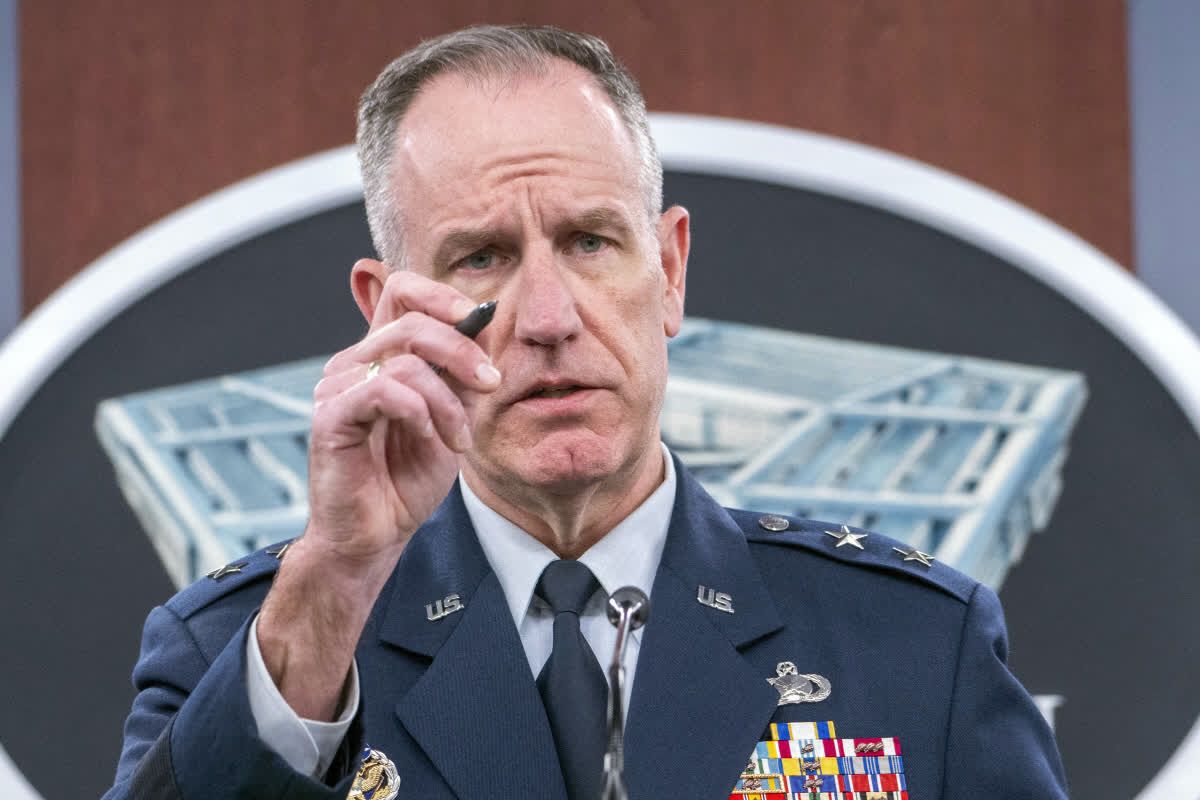
What Does the DoD Do? The Functions and Structure of the Department of Defense
The United States Department of Defense (DoD) is the executive branch department responsible for coordinating and supervising all agencies and functions of the government related directly to national security and the United States Arme...
The United States Department of Defense (DoD) is the executive branch department responsible for coordinating and supervising all agencies and functions of the government related directly to national security and the United States Armed Forces. Its primary mission is to provide the military forces needed to deter war and protect the security of the nation.
Contents
Headquartered at the Pentagon in Arlington, Virginia, the DoD is the nation’s largest employer. As of 2026, it manages millions of active-duty service members, National Guard and Reserve forces, and civilian employees. Understanding what the DoD does requires a look at its multi-layered mission: from maintaining nuclear deterrence and conducting global combat operations to providing humanitarian aid and driving technological innovation through advanced research.
The Primary Mission: National Defense and Deterrence
The fundamental reason for the existence of the Department of Defense is to protect the sovereignty of the United States, its citizens, and its interests abroad. This is achieved through a strategy of integrated deterrence, which involves using every tool at the department's disposal to convince potential adversaries that the costs of aggression outweigh any possible benefits.
Maintaining Force Readiness
At any given moment, the DoD must ensure that its personnel are trained, its equipment is maintained, and its logistics chains are functional. Readiness is not a static state but a continuous process of modernization. In the 2026 operational environment, this includes not just traditional physical training, but also ensuring that software-defined systems and autonomous platforms are updated and resilient against electronic warfare.
Global Power Projection
The DoD maintains a presence in nearly every region of the world. Through its geographic combatant commands, the department ensures that the United States can respond to crises—be they military conflicts or natural disasters—within hours or days. This presence serves as a physical manifestation of U.S. commitments to international allies and a stabilizer for global maritime trade routes.
The Organizational Hierarchy of the DoD
The Department of Defense is organized to ensure civilian control of the military—a cornerstone of American democracy. This structure is designed to provide clear lines of authority while fostering specialized expertise across different domains of warfare.
Civilian Leadership: The Secretary of Defense
The Secretary of Defense (SECDEF) is the principal assistant to the President in all matters relating to the Department. By law, the Secretary must be a civilian, and if they were formerly a member of the military, they must have been out of uniform for a specific period (typically seven years). The SECDEF exercises authority, direction, and control over the three military departments and the various defense agencies.
The Joint Chiefs of Staff
While the SECDEF handles policy and administration, the Joint Chiefs of Staff (JCS) provide military advice. The Chairman of the Joint Chiefs of Staff is the highest-ranking military officer in the U.S. Armed Forces but does not have operational command authority over troops. Instead, the JCS focuses on strategic planning, unified doctrine, and the "man, train, and equip" requirements of the force.
The Military Departments
The DoD is divided into three military departments, which oversee the six branches of the armed forces:
- Department of the Army: Oversees the U.S. Army.
- Department of the Navy: Oversees the U.S. Navy and the U.S. Marine Corps.
- Department of the Air Force: Oversees the U.S. Air Force and the U.S. Space Force.
- Note: The U.S. Coast Guard resides under the Department of Homeland Security during peacetime but can be transferred to the Department of the Navy during times of war.
Core Responsibilities by Service Branch
Each branch within the DoD has a distinct role, ensuring that the United States can operate across land, sea, air, space, and cyberspace.
| Service Branch | Primary Domain | Core Mission Focus | Key Asset Examples |
|---|---|---|---|
| U.S. Army | Land | Sustained land combat and occupation. | Abrams Tanks, Stryker Vehicles |
| U.S. Navy | Sea | Maritime security and sea power projection. | Aircraft Carriers, Nuclear Submarines |
| U.S. Marine Corps | Land/Sea/Air | Expeditionary and amphibious operations. | Amphibious Assault Ships, F-35B |
| U.S. Air Force | Air/Cyber | Air superiority and strategic bombing. | F-22 Raptors, B-21 Raiders |
| U.S. Space Force | Space | Satellite protection and orbital warfare. | GPS Satellites, Space Fence |
Unified Combatant Commands: How the DoD Fights
The DoD does not "fight" as individual branches. Instead, it operates through Unified Combatant Commands (CCMDs). These are composed of forces from at least two military departments and have a broad, continuing mission.
Geographic Commands
These commands are responsible for specific areas of the world. For example, USINDOPACOM (Indo-Pacific Command) manages operations in the Pacific and Indian Oceans, while USEUCOM (European Command) focuses on the defense of Europe and cooperation with NATO. These commands are the primary interface between the U.S. military and foreign nations within their respective regions.
Functional Commands
Functional commands provide specific capabilities across the entire globe, regardless of geography.
- USSTRATCOM (Strategic Command): Manages the nuclear triad and global strike capabilities.
- USCYBERCOM (Cyber Command): Defends DoD networks and conducts offensive operations in the digital realm.
- USTRANSCOM (Transportation Command): The logistical backbone of the military, moving troops and supplies worldwide.
- USSOCOM (Special Operations Command): Oversees elite units like Navy SEALs, Army Green Berets, and Air Force Pararescue.
Secondary Missions: Humanitarian Aid and Innovation
While combat is the most visible role of the DoD, a significant portion of its budget and manpower is dedicated to non-combat functions that have global impacts.
Humanitarian Assistance and Disaster Relief (HADR)
The DoD is often the only organization with the logistical capacity to respond to massive natural disasters. Using heavy-lift aircraft and hospital ships like the USNS Mercy and USNS Comfort, the department provides medical care, clean water, and infrastructure repair following earthquakes, hurricanes, or tsunamis. This "soft power" helps build international partnerships and stability.
Research, Development, and Technology
The DoD is one of the world's largest drivers of technological innovation. Through agencies like DARPA (Defense Advanced Research Projects Agency), the department funds high-risk, high-reward research. Historically, this has led to the development of the Internet (ARPANET), GPS, and autonomous vehicle technology. In 2026, the focus has shifted heavily toward artificial intelligence, hypersonic propulsion, and quantum computing to maintain a competitive edge.
Cybersecurity and Critical Infrastructure
In the modern era, the DoD's responsibility extends to the "fifth domain" of warfare: cyberspace. The department protects the Defense Industrial Base (DIB)—the network of private companies that build military hardware—from foreign espionage. It also coordinates with civilian agencies to protect national infrastructure, such as power grids and financial systems, from state-sponsored cyberattacks.
The Economic and Civil Impact of the DoD
The Department of Defense operates on a budget that usually exceeds $800 billion annually. This spending has a profound impact on the U.S. and global economies.
- Employment: Beyond active-duty troops, the DoD supports millions of jobs in the private sector through defense contracts.
- Education and Training: The DoD is a major provider of vocational training and higher education. Through the G.I. Bill and Tuition Assistance programs, it funds the education of hundreds of thousands of veterans and active members.
- Infrastructure: The DoD maintains thousands of facilities, including bases, shipyards, and testing ranges, many of which serve as the economic lifeblood of their local communities.
Challenges and Future Outlook in 2026
As we navigate 2026, the DoD faces a complex landscape characterized by "Great Power Competition." The shift away from the unconventional warfare of the early 2000s toward preparing for high-end conflict requires massive reinvestment in hardware and a cultural shift in how personnel are recruited and retained.
The department must balance the need for expensive "legacy" platforms (like aircraft carriers) with the emerging necessity of "attritable" systems—cheaper, unmanned drones and sensors that can be lost in combat without devastating the force. Furthermore, the DoD is increasingly focused on climate security, recognizing that rising sea levels and extreme weather pose a direct threat to military installations and global stability.
Frequently Asked Questions
Is the DoD the same as the Pentagon?
While the terms are often used interchangeably in news reports, the "Pentagon" is the physical building that serves as the headquarters for the Department of Defense. The "DoD" refers to the entire organization, including millions of personnel and hundreds of bases worldwide that are not located in the Pentagon building.
Who has the final authority over the DoD?
Under the U.S. Constitution, the President is the Commander in Chief of the Armed Forces. However, the Secretary of Defense has statutory authority over the department, and Congress maintains "power of the purse," meaning it controls the DoD's funding and must approve major policy shifts and military promotions.
Does the DoD operate inside the United States?
The Posse Comitatus Act generally prohibits the use of federal military personnel to act as domestic law enforcement. However, the DoD can provide support during domestic emergencies (like hurricane response) through "Defense Support of Civil Authorities" (DSCA) and maintains the National Guard, which can operate under state control for law enforcement purposes.
How does the DoD differ from the Department of Veterans Affairs (VA)?
The DoD is responsible for active-duty military operations, training, and current defense policy. Once a service member leaves the military, their healthcare and benefits are managed by the Department of Veterans Affairs (VA), which is a completely separate executive department.
What is the Defense Intelligence Agency (DIA)?
The DIA is one of many intelligence components within the DoD. It focuses on "military intelligence"—specifically what foreign militaries are doing, what weapons they have, and their operational intentions—to inform the Secretary of Defense and the Joint Chiefs.
Next Steps for Information
If you are seeking more granular data on DoD spending, the official Defense.gov website provides annual "Greenbook" reports detailing budget allocations. For those interested in joining the department, either as a service member or a civilian employee, USAJOBS.gov and specific branch recruiting portals are the primary gateways for application and eligibility verification.
Image Gallery