The Animal Pyramid Kingdom Explained: Taxonomy and Trophic Structures
The animal pyramid kingdom refers to the dual organization of the biological world: the taxonomic classification of Kingdom Animalia and the ecological trophic pyramid that dictates energy flow. Animals are multicellular, eukaryotic or...
The animal pyramid kingdom refers to the dual organization of the biological world: the taxonomic classification of Kingdom Animalia and the ecological trophic pyramid that dictates energy flow. Animals are multicellular, eukaryotic organisms categorized by shared ancestry and physical traits, while their position in the ecological pyramid is determined by their dietary habits and energy consumption within an ecosystem.
Contents
Defining Kingdom Animalia: The Taxonomic Foundation
To understand the "animal kingdom," one must first look at biological taxonomy. As of 2026, the classification system remains rooted in the Linnaean hierarchy, though it is increasingly informed by advanced phylogenomics—the use of genomic data to determine evolutionary relationships. Kingdom Animalia, also known as Metazoa, comprises all living and extinct animals.
Animals are distinguished from other kingdoms, such as Plantae or Fungi, by several core characteristics. They are multicellular, meaning they consist of complex specialized cells. They are heterotrophic, necessitating the ingestion of organic material for sustenance, unlike plants that produce their own food through photosynthesis. Furthermore, animal cells lack the rigid cell walls found in plants and fungi, allowing for the development of complex tissues like muscles and nerves, which facilitate movement and sensory perception.
The taxonomic "pyramid" or hierarchy begins at the broadest level and narrows down to specific organisms:
- Domain: Eukarya
- Kingdom: Animalia
- Phylum: (e.g., Chordata, Arthropoda)
- Class: (e.g., Mammalia, Insecta)
- Order: (e.g., Carnivora, Lepidoptera)
- Family: (e.g., Felidae, Hominidae)
- Genus: (e.g., Panthera, Homo)
- Species: (e.g., Panthera leo, Homo sapiens)
In 2026, researchers continue to emphasize that the vast majority of the animal kingdom consists of invertebrates. While humans often focus on mammals and birds, phyla such as Arthropoda (insects, spiders, crustaceans) represent over 80% of all described animal species. This numerical dominance is a critical component of the kingdom's structural integrity.
The Ecological Pyramid: Energy and Trophic Levels
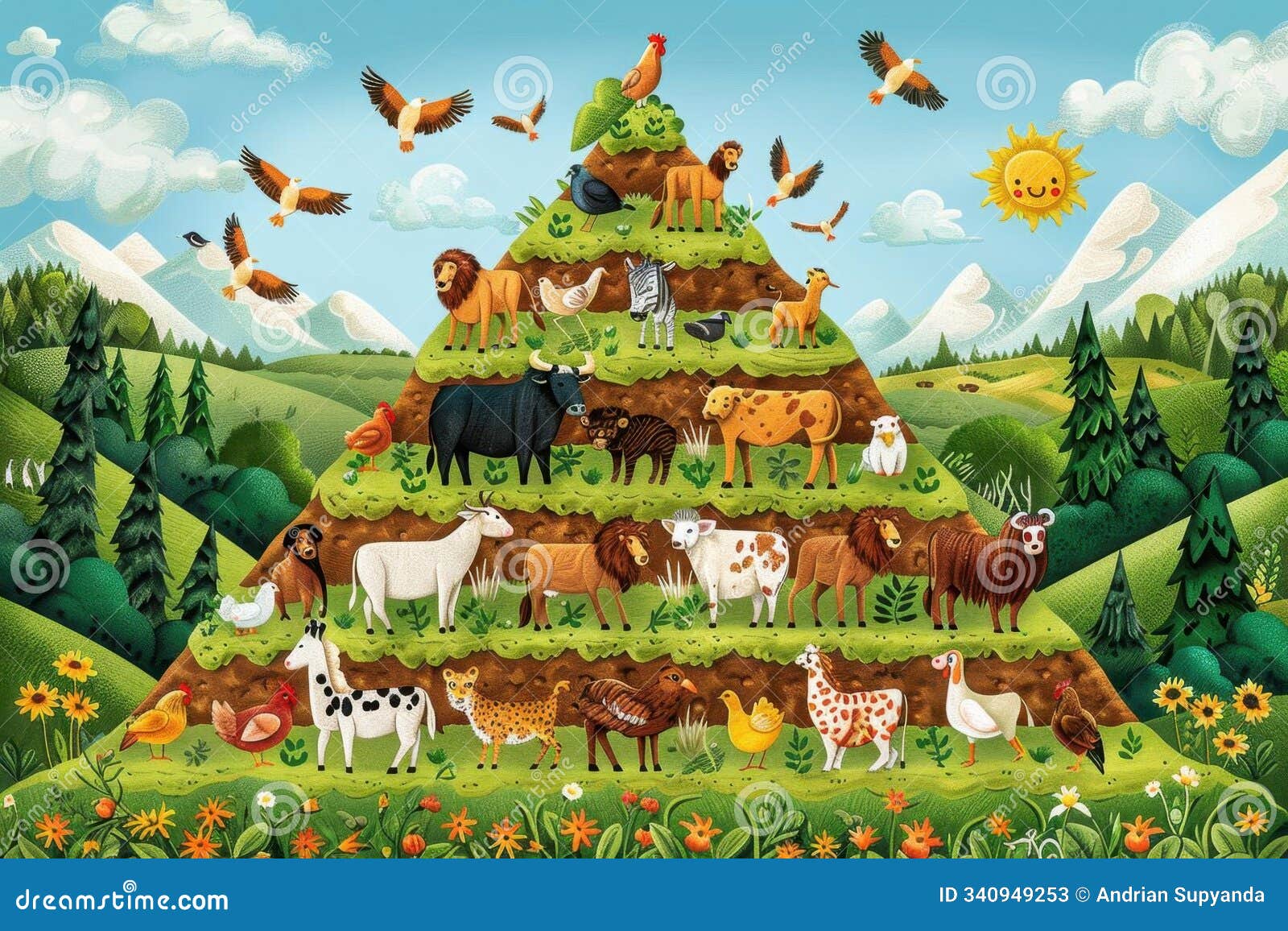
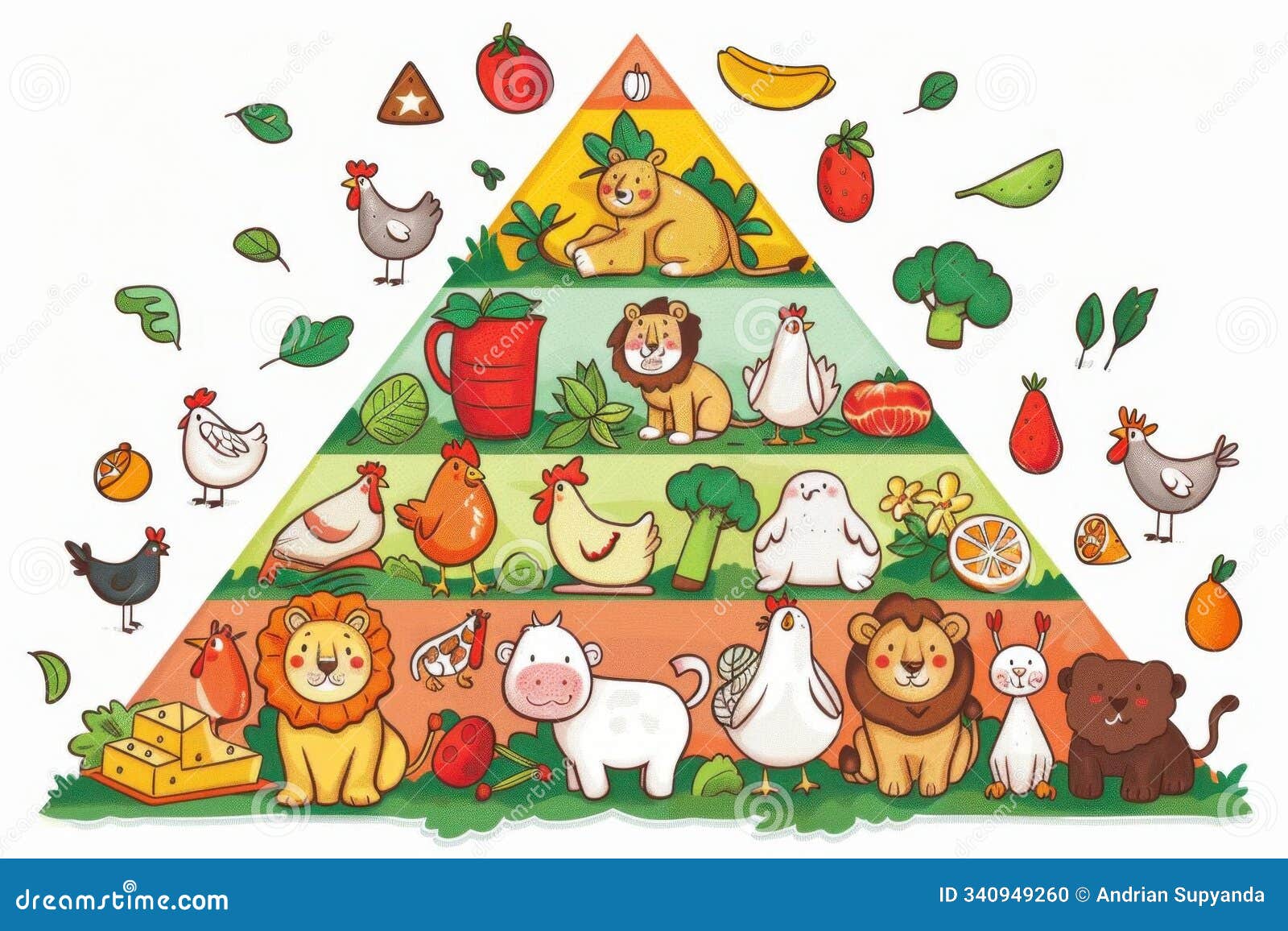
While taxonomy classifies what animals are, the ecological pyramid explains what they do and how they survive. An ecological pyramid (or trophic pyramid) is a graphical representation designed to show the biomass or bio-productivity at each trophic level in a given ecosystem.
Producers: The Foundation
At the very base of the pyramid are the primary producers, or autotrophs. While these are not members of the animal kingdom (they are typically plants, algae, or cyanobacteria), they are the essential foundation. They convert solar energy into chemical energy via photosynthesis. Without this base, the animal pyramid would collapse, as animals cannot synthesize their own energy from sunlight.
Primary Consumers: The Herbivores
The second level of the pyramid consists of primary consumers. These are animals that eat producers. This group includes a vast array of species, from microscopic zooplankton in the ocean to massive elephants on the savannah. In a stable ecosystem, the biomass of primary consumers must be significantly less than that of the producers to ensure the vegetation is not depleted faster than it can regrow.
Secondary Consumers: The Carnivores
Secondary consumers occupy the third level. These animals prey upon the primary consumers. This level includes small carnivores like frogs that eat insects, or snakes that eat rodents. Omnivores, such as humans and bears, can occupy multiple levels of the pyramid simultaneously depending on their current diet.
Tertiary and Quaternary Consumers: Apex Predators
At the top of the pyramid sit the tertiary and quaternary consumers. These are apex predators—animals that have few to no natural predators of their own, such as orcas, lions, or eagles. Because energy is lost at each level of the pyramid, the population size and total biomass of apex predators are the smallest in the entire system.
The 10% Rule: Why the Pyramid Narrows
The "pyramid" shape is not arbitrary; it is dictated by the Laws of Thermodynamics. Specifically, the 10% Rule of energy transfer states that when energy is passed from one trophic level to the next, only about 10% of that energy is stored as biomass in the consumer.
The remaining 90% of energy is lost through several pathways:
- Metabolic Heat: Animals expend energy to move, breathe, and maintain body temperature.
- Waste: Not all parts of a prey animal are digestible (e.g., bones, fur, cellulose), and energy is excreted as waste.
- Life Processes: Energy is used for cellular repair, growth, and reproduction.
By the time energy reaches a tertiary consumer, it is a tiny fraction of the energy originally captured by the producers. For example, if a field of clover captures 10,000 units of solar energy, the rabbits eating that clover only retain 1,000 units. The snakes eating the rabbits retain 100 units, and the hawk at the top retains only 10 units. This explains why an ecosystem can support millions of blades of grass but only a handful of hawks.
Comparing Trophic Structures and Classifications
The following table outlines the relationship between animal roles and their positions within the ecological pyramid.
| Trophic Level | Role | Animal Kingdom Examples | Primary Energy Source |
|---|---|---|---|
| Level 1 | Primary Producer | N/A (Plants, Algae) | Sunlight (Photosynthesis) |
| Level 2 | Primary Consumer | Grasshoppers, Deer, Zooplankton | Level 1 Producers |
| Level 3 | Secondary Consumer | Frogs, Small Fish, Spiders | Level 2 Consumers |
| Level 4 | Tertiary Consumer | Snakes, Seals, Foxes | Level 3 Consumers |
| Level 5 | Apex Predator | Orcas, Lions, Polar Bears | Level 2, 3, or 4 |
| Decomposers | Recyclers | Earthworms, Invertebrate Larvae | Detritus (Dead Matter) |
The Role of Invertebrates in the Animal Kingdom
A common misconception is that the "Animal Kingdom" is synonymous with "Vertebrates." In reality, vertebrates (animals with backbones) make up only about 3% of all animal species. The ecological pyramid is heavily supported by the "hidden" world of invertebrates.
The Smithsonian Institution notes that there are approximately 900,000 different kinds of living insects known, representing the vast majority of the animal kingdom's diversity. These creatures serve as primary and secondary consumers and are essential for pollination, soil health, and as a food source for higher trophic levels. If the invertebrate base of the animal pyramid were to disappear, the higher levels—including humans—would face immediate extinction due to the collapse of energy flow and essential ecosystem services.
Keystone Species and Trophic Cascades
The stability of the animal pyramid often depends on "Keystone Species." A keystone species is one that has a disproportionately large effect on its natural environment relative to its abundance. Often, these are apex predators.
When a keystone species is removed, it triggers a Trophic Cascade. For instance, if wolves are removed from an ecosystem, the population of deer (primary consumers) may explode. These deer then overgraze the vegetation (producers), leading to soil erosion and the loss of habitat for birds and insects. This effectively "flattens" the pyramid, reducing biodiversity and making the ecosystem more susceptible to collapse.
In 2026, conservation efforts are increasingly focused on rewilding and the protection of these keystone species to ensure that the animal pyramid remains balanced and resilient against climate changes.
Frequently Asked Questions
What is the difference between a food chain and an ecological pyramid?
A food chain is a linear sequence that shows who eats whom. An ecological pyramid provides a more comprehensive view by showing the total biomass or energy at each level of an entire ecosystem. While a food chain might show one hawk eating one snake, the pyramid shows that it takes thousands of rodents to support a small population of hawks.
Can an animal occupy more than one level of the pyramid?
Yes, animals that are omnivores can occupy multiple levels. For example, a bear eating berries is acting as a primary consumer (Level 2). When that same bear eats a salmon (which is a secondary consumer), the bear acts as a tertiary consumer (Level 4). This flexibility often makes species more resilient to changes in food availability.
Why are there rarely more than five levels in a pyramid?
Because of the 10% rule, energy is depleted very quickly as you move up. By the fifth level, there is usually not enough energy left to support a viable population of a sixth level. The energy "cost" of hunting becomes higher than the energy gained from the prey.
How do decomposers fit into the animal pyramid?
Decomposers and detritivores (like earthworms and certain beetles) are often placed to the side of the pyramid or at the very bottom. They break down dead organic matter from all levels, returning nutrients to the soil for the producers to use. They are the "recyclers" that close the loop of the energy pyramid.
Is the human species at the top of the animal pyramid?
Ecologically, humans are generally considered secondary or tertiary consumers depending on their diet. While humans are "apex" in terms of having no natural predators in modern society, our trophic level is actually closer to that of a pig or an anchovy (roughly 2.21) because our diet consists so heavily of producers (plants) and primary consumers.
Strategic Recommendation for Further Study
To gain a deeper understanding of the animal pyramid, it is recommended to study specific local ecosystems, such as a localized wetland or forest. Observing how energy moves from the sun to the local flora, and subsequently through the insect and vertebrate populations, provides a practical application of these biological principles. Utilizing resources from the World Wildlife Fund (WWF) can provide updated 2026 data on how specific animal kingdoms are being affected by habitat shifts and the importance of maintaining trophic balance for global food security.
Image Gallery