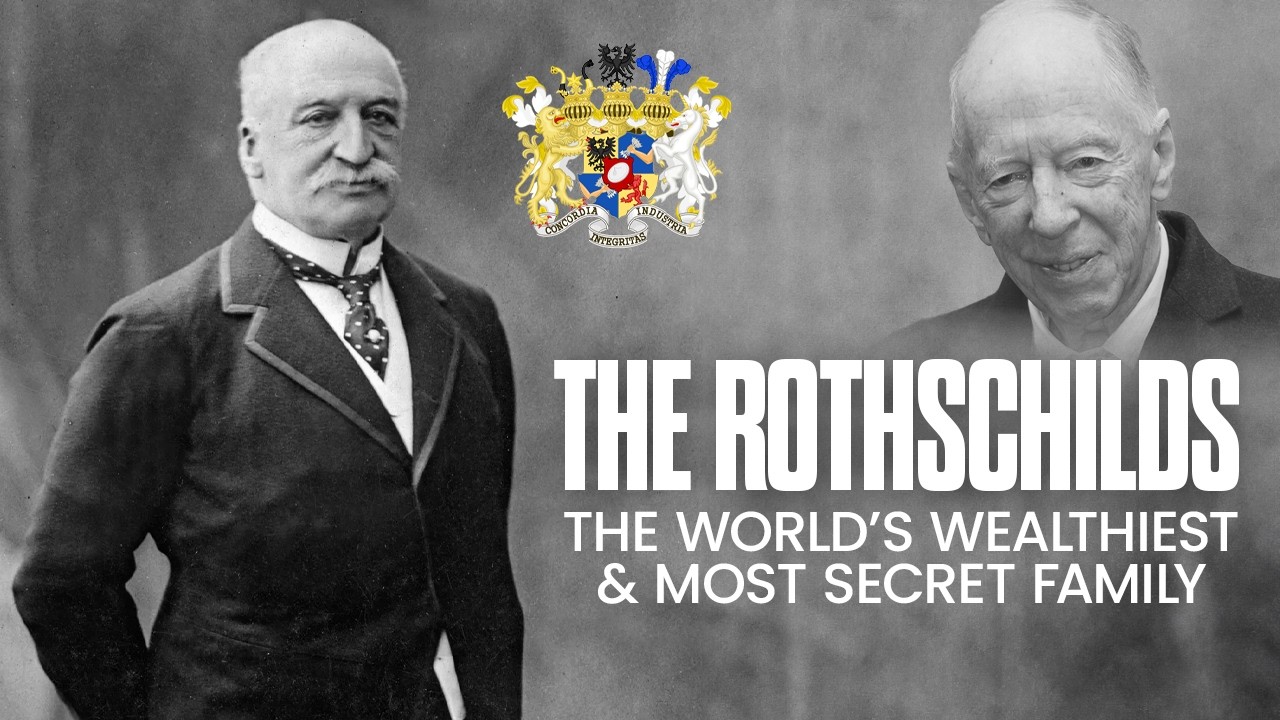
The Rothschild Family: Distinguishing History from Dynastic Myth
The Rothschild family is a European banking dynasty that rose to international prominence in the late 18th century. Often erroneously labeled as "royalty," the family achieved global influence through finance, investment, and philanthr...
The Rothschild family is a European banking dynasty that rose to international prominence in the late 18th century. Often erroneously labeled as "royalty," the family achieved global influence through finance, investment, and philanthropy rather than inherited sovereign titles. Their legacy is defined by a decentralized banking network that bridged major European economies during the Industrial Revolution.
Contents
Origins of the Rothschild Banking Network
The foundation of the Rothschild financial house began with Mayer Amschel Rothschild (1744–1812) in the Frankfurt Judengasse. A dealer in rare coins and bullion, Mayer Amschel established a reputation for reliability and financial acumen, eventually serving as a court agent for Landgrave William IX of Hesse-Kassel. This position provided the initial capital and political access necessary to expand his operations beyond Frankfurt.
The true expansion of the dynasty occurred when Mayer Amschel dispatched his five sons to establish banking houses in Europe’s primary financial centers: Frankfurt, London, Paris, Vienna, and Naples. This strategic geographical distribution allowed the family to act as a unified information and capital network, giving them a distinct advantage over competitors who relied on slower, less localized intelligence.
The London branch, established by Nathan Mayer Rothschild, became the most influential during the 19th century. By facilitating the financing of the British government’s war efforts during the Napoleonic Wars and subsequently investing in large-scale infrastructure projects like railways and mining, the family integrated themselves into the sovereign debt markets of the world’s leading powers.
Dispelling the "Royal" Misconception
It is a common historical misconception to categorize the Rothschild family as part of the European "royal family" structure. The family never held monarchical power, sovereign titles, or claims to the throne of any nation. Instead, they belonged to the aristocracy of wealth and influence.
Their elevated social status was recognized through various state honors. In 1816, the Austrian Emperor Francis I granted the family the title of Barons (Freiherrn). This enabled them to operate at the highest levels of European society, allowing them to mingle with monarchs and aristocrats, yet their power was strictly rooted in commercial and financial capital rather than hereditary right or political sovereignty.
This distinction is crucial for understanding their historical role. Unlike royal houses, which derived legitimacy from divine right or dynastic succession, the Rothschilds derived their authority from their utility to governments. They provided essential liquidity, managed national debts, and stabilized currencies, making them indispensable partners to the very crowns that ruled the continent.
Financial Innovations and Institutional Impact
The Rothschilds are credited with pioneering several core components of modern international banking. Their influence was not merely a matter of scale; it was a matter of methodology.
1. International Arbitrage
The family utilized their interconnected network to move gold and financial instruments between European capitals. By leveraging the difference in currency values and interest rates, they engaged in early forms of international arbitrage, which helped create a more integrated European financial market.
2. Underwriting Sovereign Debt
Throughout the 1800s, the Rothschilds became the preferred intermediaries for governments seeking to raise capital. By underwriting loans for nations such as the United Kingdom, France, and Prussia, they acted as a private centralizing force in a fragmented global economy.
3. Intelligence Networks
Long before the advent of digital communications, the family developed an independent courier system. This ensured that news of major political or military events reached their banking offices before it reached the broader markets. While the legendary stories regarding their "advance knowledge" of the Battle of Waterloo are often exaggerated in folklore, the speed and accuracy of their information flow were undoubtedly superior to those of their contemporaries.
Comparative Overview of Historical Influence
The following table highlights the distinction between the Rothschild banking model and the traditional sovereign model of the 19th century.
| Feature | Rothschild Family | Sovereign Royal Houses |
|---|---|---|
| Source of Power | Private Capital / Banking | Hereditary/Divine Right |
| Primary Activity | Asset Management / Lending | Governance / Statecraft |
| Legal Status | Aristocracy (Barons) | Monarchs / Royalty |
| Operational Scope | Multinational Financial Network | Territorial Sovereignty |
| Accountability | Market Performance/Contracts | Succession Law/Public Duty |
The Family in the 21st Century
By 2026, the Rothschild name represents a decentralized series of private banks and investment firms rather than the monolithic empire of the 19th century. The family’s business interests have evolved to focus on private wealth management, advisory services, and merchant banking.
Modern entities operating under the name, such as Rothschild & Co, function as global financial services groups. They provide M&A (mergers and acquisitions) advisory, debt financing, and wealth management services to corporations, governments, and ultra-high-net-worth individuals. These institutions operate in a highly regulated environment, subject to the same oversight as any other tier-one financial institution, ensuring compliance with international banking standards and anti-money laundering (AML) protocols.
Frequently Asked Questions
Are the Rothschilds currently the wealthiest family in the world?
No. While the family retains significant private assets and influence in the banking sector, they do not appear on top-tier rankings of individual or family net worth. Wealth in the 21st century is largely concentrated in technology, retail, and manufacturing sectors, far exceeding the scale of private banking dynasties.
Did the Rothschilds own the central banks of the world?
This is a persistent conspiracy theory unsupported by historical record. While the Rothschilds were instrumental in providing liquidity to central banks and governments in the 19th century, they never possessed legal ownership of central banks. Central banks operate under the authority of sovereign states and are governed by statutes and central bank governors appointed by government officials.
Why is the family often associated with secret global agendas?
The family’s early dominance in European finance, combined with their discreet management style, led to widespread public suspicion during a time of significant social and economic upheaval. These narratives have been recycled over two centuries and are frequently conflated with antisemitic tropes that have no basis in the actual financial operations or corporate history of the banking house.
How does the modern firm differ from the 19th-century partnership?
The modern iterations of the family’s businesses are structured as transparent corporate entities, often publicly traded or managed as strictly regulated private partnerships. They operate within the modern financial framework, characterized by rigorous regulatory compliance and institutional transparency, which contrasts sharply with the informal, family-run partnerships of the 1800s.
Where is the primary office located?
The Rothschild name is associated with various corporate headquarters, but Paris and London have historically been the centers of their most significant operations. Today, the firms operate globally, with offices in major financial hubs including Zurich, New York, and Hong Kong.
Next Steps for Researchers
For those interested in the authentic history of the Rothschild family, it is recommended to consult the archives maintained by The Rothschild Archive in London. This institution provides verified access to historical correspondence, business records, and biographical information, allowing researchers to differentiate between the documented reality of the family's banking operations and the myths surrounding their influence.
Image Gallery