What the G20 Country List Means for You: A Guide to Global Economic Impact in 2026
The G20 country list represents the world’s most influential economies, collectively accounting for 85% of global GDP and 75% of international trade. For the individual, this list dictates everything from the interest rates on your mor...
The G20 country list represents the world’s most influential economies, collectively accounting for 85% of global GDP and 75% of international trade. For the individual, this list dictates everything from the interest rates on your mortgage and the price of imported goods to the international regulations governing your digital privacy and carbon footprint.
Contents
Understanding the G20 is no longer a niche requirement for diplomats or economists. As we navigate 2026, the decisions made within this forum directly influence domestic policies regarding inflation, technological standards, and labor mobility. Whether your nation is a permanent member or a guest, the G20’s "standard-setting" power creates a ripple effect that touches every household and business.
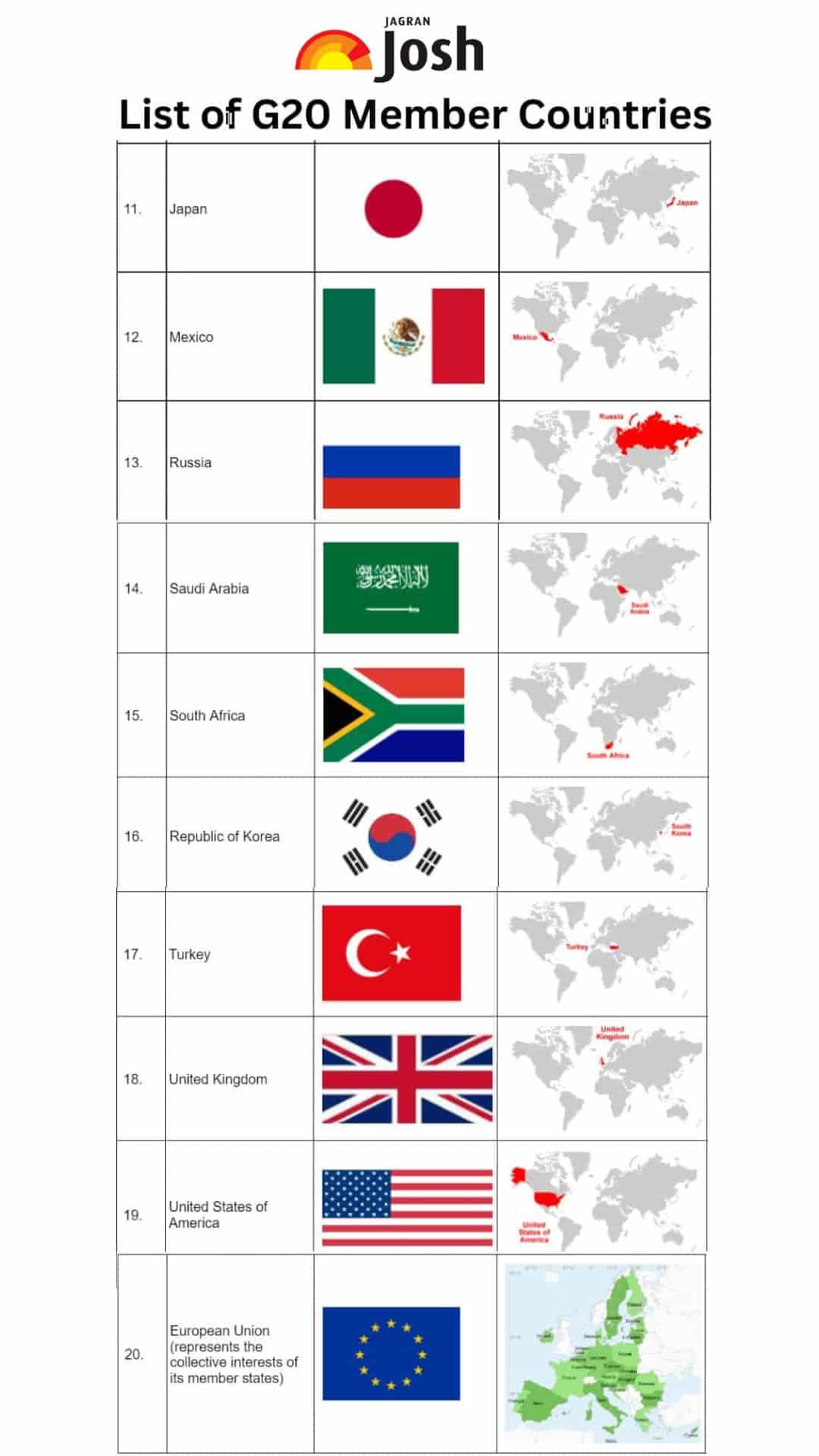
The Definitive G20 Membership in 2026
The G20, or Group of Twenty, has evolved from a crisis-management meeting for finance ministers into the premier forum for international economic cooperation. In 2026, the group consists of 19 individual countries, the European Union (EU), and the African Union (AU), which became a permanent member during the 2023 summit in New Delhi.
The Full Member List
- North America: Canada, Mexico, United States.
- South America: Argentina, Brazil.
- Europe: France, Germany, Italy, United Kingdom, European Union.
- Asia & Oceania: Australia, China, India, Indonesia, Japan, Republic of Korea, Saudi Arabia, Türkiye.
- Africa: South Africa, African Union.
- Eurasia: Russia.
The inclusion of the African Union marks a historic shift in the G20’s composition. For you, this means that global economic discussions now more accurately reflect the demographic and economic realities of the 21st century. As the AU integrates into the G20’s working groups, policies regarding global supply chains, resource extraction, and digital infrastructure are increasingly viewed through a lens that includes the world’s fastest-growing continent.
How G20 Decisions Influence Your Personal Finances
While G20 summits often appear to be high-level photo opportunities, the technical "Working Groups" that meet throughout the year establish the frameworks for your local economy. The most direct impact is felt through monetary policy coordination and taxation standards.
Inflation and Interest Rates
Central bank governors from G20 nations meet to discuss global liquidity and inflationary pressures. When the G20 agrees on the necessity of "price stability," it signals a coordinated approach to interest rates. In 2026, as nations continue to manage the post-pandemic debt cycles and transition to green energy, these coordinated signals prevent sudden currency devaluations. For you, this means more predictable borrowing costs and a stabilized value for your savings, as G20 members work to avoid the "beggar-thy-neighbor" currency wars of the past.
The Global Minimum Corporate Tax
One of the most significant G20 achievements in recent years has been the implementation of the OECD/G20 Inclusive Framework on Base Erosion and Profit Shifting (BEPS). This 15% global minimum corporate tax rate, which reached full operational maturity by 2026, ensures that multinational corporations pay a fair share of tax in the jurisdictions where they actually operate.
- The Benefit to You: This reduces the tax burden on individual citizens by recouping billions in lost revenue for national treasuries. These funds are often redirected into public infrastructure, education, and healthcare in your home country.
- Market Fairness: It levels the playing field for small local businesses that cannot utilize offshore tax havens, potentially leading to more competitive local markets.
The G20 and the Future of Your Career
The G20’s "Employment Working Group" focuses on how global trends—specifically Artificial Intelligence (AI) and the "Gig Economy"—affect workers. In 2026, the G20 has intensified its focus on cross-border labor standards and digital skill certifications.
AI Ethics and Job Security
As generative AI matures, the G20 provides the "High-Level Principles" that many governments use to draft national legislation. When you see new workplace protections regarding AI-driven hiring or automated layoffs, those regulations often stem from G20 consensus. The goal is to ensure that technological advancement does not lead to a "race to the bottom" regarding worker rights.
Portable Benefits and Remote Work
With the rise of digital nomads and remote work, the G20 has been instrumental in discussing the portability of social security benefits. If you are a freelancer or remote worker in 2026, G20-led initiatives are currently paving the way for more streamlined tax treaties, making it easier for you to work across borders without facing double taxation or losing access to retirement schemes.
Environmental Policy and Your Energy Bills
The G20 nations are responsible for approximately 80% of global greenhouse gas emissions. Therefore, their collective stance on the energy transition dictates the global price of carbon and, by extension, your utility bills and transportation costs.
| G20 Policy Area | Direct Impact on Individuals | Expected Outcome in 2026 |
|---|---|---|
| Phasing Out Fossil Fuel Subsidies | Higher prices at the pump in the short term; long-term transition to renewables. | Increased investment in electric vehicle (EV) infrastructure. |
| Common Framework for Green Finance | Lower interest rates for "green" home loans and energy-efficient renovations. | Standardization of "Energy Star" and similar ratings globally. |
| Critical Mineral Supply Chains | Price stability for electronics, smartphones, and EV batteries. | Diversification of mining beyond single-country monopolies. |
| Carbon Border Adjustment Mechanisms | Potential price increases on imported goods from non-compliant nations. | Shift toward locally produced or "low-carbon" consumer products. |
The International Energy Agency (IEA) often coordinates with the G20 to provide data that drives these decisions. For the average consumer, this means that the "G20 country list" is essentially a list of the nations that will decide how fast—and how expensive—your personal transition to a low-carbon lifestyle will be.
Travel, Health, and Digital Identity
The G20’s impact extends into your passport and your smartphone. Following the global health disruptions of the early 2020s, the G20 has worked toward a more unified approach to international travel protocols.
Digital Health and Identity
The G20 has been a primary advocate for the WHO Global Digital Health Certification Network. In 2026, this means that your vaccination records or health certifications are more likely to be recognized instantly when you cross borders within the G20 countries. This standardization reduces the bureaucratic friction of international travel and enhances global health security.
Cross-Border Payments
If you send money to family abroad or purchase items from international sellers, the G20 "Roadmap for Enhancing Cross-border Payments" is vital. The group has set targets for 2027 to make international payments faster, cheaper, and more transparent. By 2026, we have already seen a significant reduction in remittance fees, directly putting more money back into the pockets of the millions of people who work abroad.
Why Your Country’s Inclusion (or Exclusion) Matters
If you live in a G20 member nation, your government has a "seat at the table" to help draft the rules of the global economy. However, if you live in a non-member nation, the G20 list still matters because these countries are "rule-takers."
- Investment Flows: Inclusion in the G20 often acts as a signal of stability to international investors. For a citizen, this results in higher Foreign Direct Investment (FDI), which creates jobs and improves infrastructure.
- Diplomatic Leverage: Member nations can negotiate bilateral trade deals more effectively under the umbrella of G20 summits.
- The Guest Country System: Every year, the host nation (the United States in 2026) invites guest countries and regional organizations. Living in a guest country provides a temporary window for your national interests to be heard on the global stage.
The World Bank provides extensive data on how G20 policies affect developing nations, emphasizing that while the G20 represents the largest economies, its decisions must account for the global "spillover effects" on non-members.
FAQ: Understanding the G20 in 2026
1. Is the G20 a formal government with legal powers? No, the G20 is an informal forum. It does not have a permanent secretariat or the power to pass laws. However, because its members represent the bulk of the world's economic and military power, the "agreements" made in G20 Communiqués are typically implemented through national legislation or international bodies like the IMF and WTO.
2. Why is it called the G20 if there are more than 20 members? The name "G20" was established when the group consisted of 19 countries and the European Union. Despite the addition of the African Union as a 21st permanent member, the name has been retained for brand recognition. It reflects the core group that manages the global economic architecture.
3. Does the G20 affect the price of my groceries? Yes. Through the Agricultural Market Information System (AMIS), which was a G20 initiative, member nations share data on crop yields and food stocks. This transparency is designed to prevent the food price spikes and panic-buying that often affect household grocery bills during periods of geopolitical tension.
4. How does the G20 handle digital currency and Bitcoin? In 2026, the G20 continues to focus on the "Financial Stability Board" (FSB) recommendations for the regulation of crypto-assets. Their goal is "same activity, same risk, same regulation." This means you can expect more rigorous reporting requirements for crypto-exchanges and more standardized rules for Central Bank Digital Currencies (CBDCs).
5. What is the "Troika" and why does it matter to me? The Troika consists of the previous, current, and incoming G20 presidencies (South Africa, USA, and the next host for 2027). This ensures continuity. For you, this means that global policies don't shift radically every 12 months, providing a more stable environment for long-term financial planning.
Strategic Recommendation: How to Use This Information
To benefit from the G20’s influence, you should monitor the Presidency's Final Communiqué, usually released at the end of the annual summit. In 2026, pay close attention to the sections on "Digital Infrastructure" and "Trade Resilience."
For business owners, align your expansion strategies with the G20’s priority sectors—currently renewable energy and AI-integrated manufacturing. For individuals, understand that the G20’s focus on tax transparency means that offshore "tax loopholes" are closing; it is advisable to ensure all international assets are fully compliant with the evolving G20-led reporting standards. Staying informed about the G20 country list and its agenda allows you to anticipate economic shifts rather than merely reacting to them.
Image Gallery