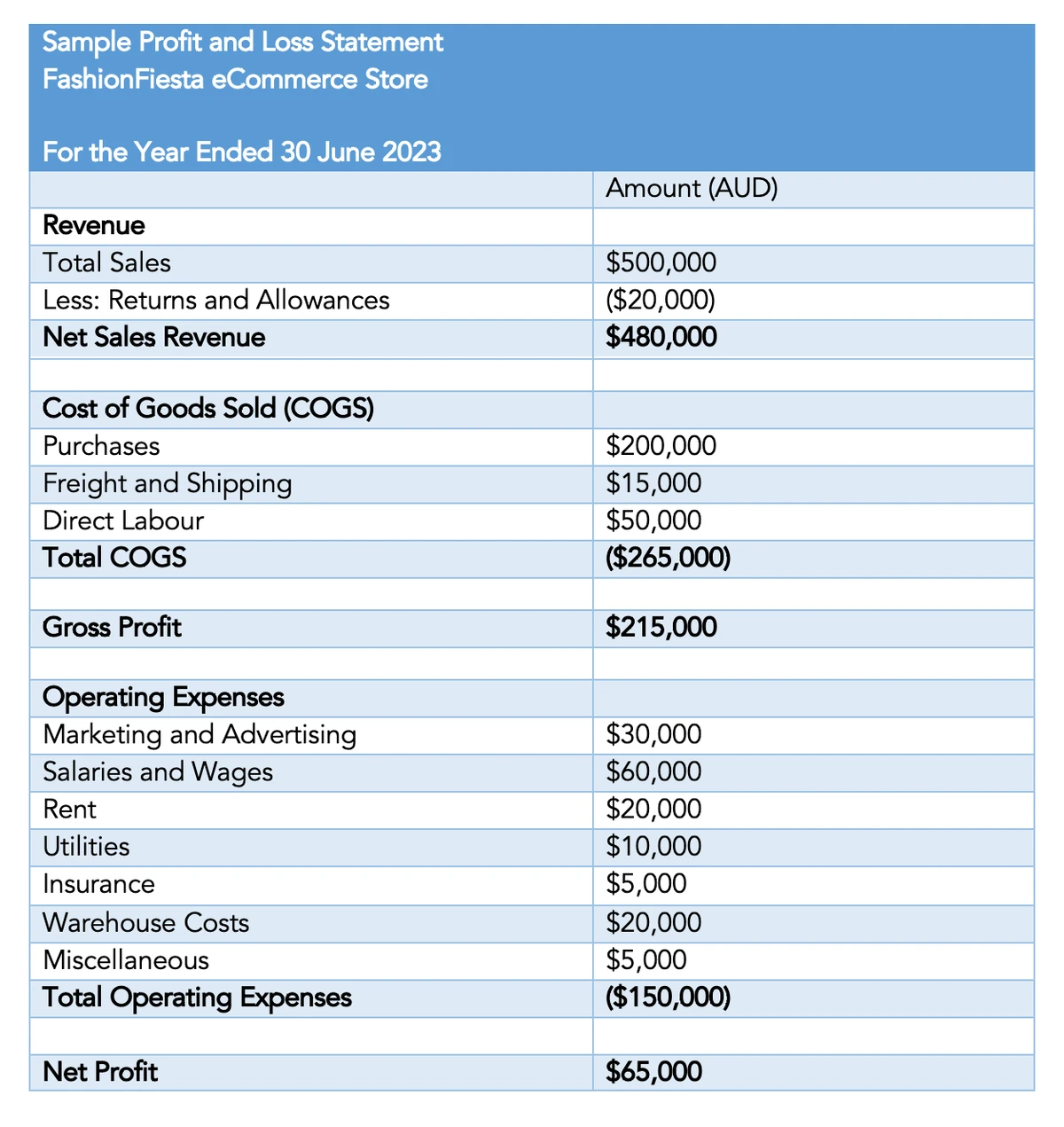
High-Profit Business Examples: Proven Models and Structural Profit Drivers
A for-profit business operates to generate revenue that exceeds total expenses, creating net income for owners, partners, or shareholders. High-profit business examples typically leverage low overhead costs, high pricing power, scalabl...
A for-profit business operates to generate revenue that exceeds total expenses, creating net income for owners, partners, or shareholders. High-profit business examples typically leverage low overhead costs, high pricing power, scalable distribution, or recurring revenue models to achieve strong gross and net profit margins across service, digital, and physical sectors.
Contents
Understanding For-Profit Business Models and Profit Metrics
Evaluating a profit-oriented business requires looking beyond top-line revenue. A enterprise can generate millions of dollars in annual sales yet remain unprofitable if cost of goods sold (COGS), operating overhead, debt service, and customer acquisition costs outpace revenue. Sustainable profitability depends on financial structure and underlying unit economics.
To analyze business examples effectively, financial metrics must be defined:
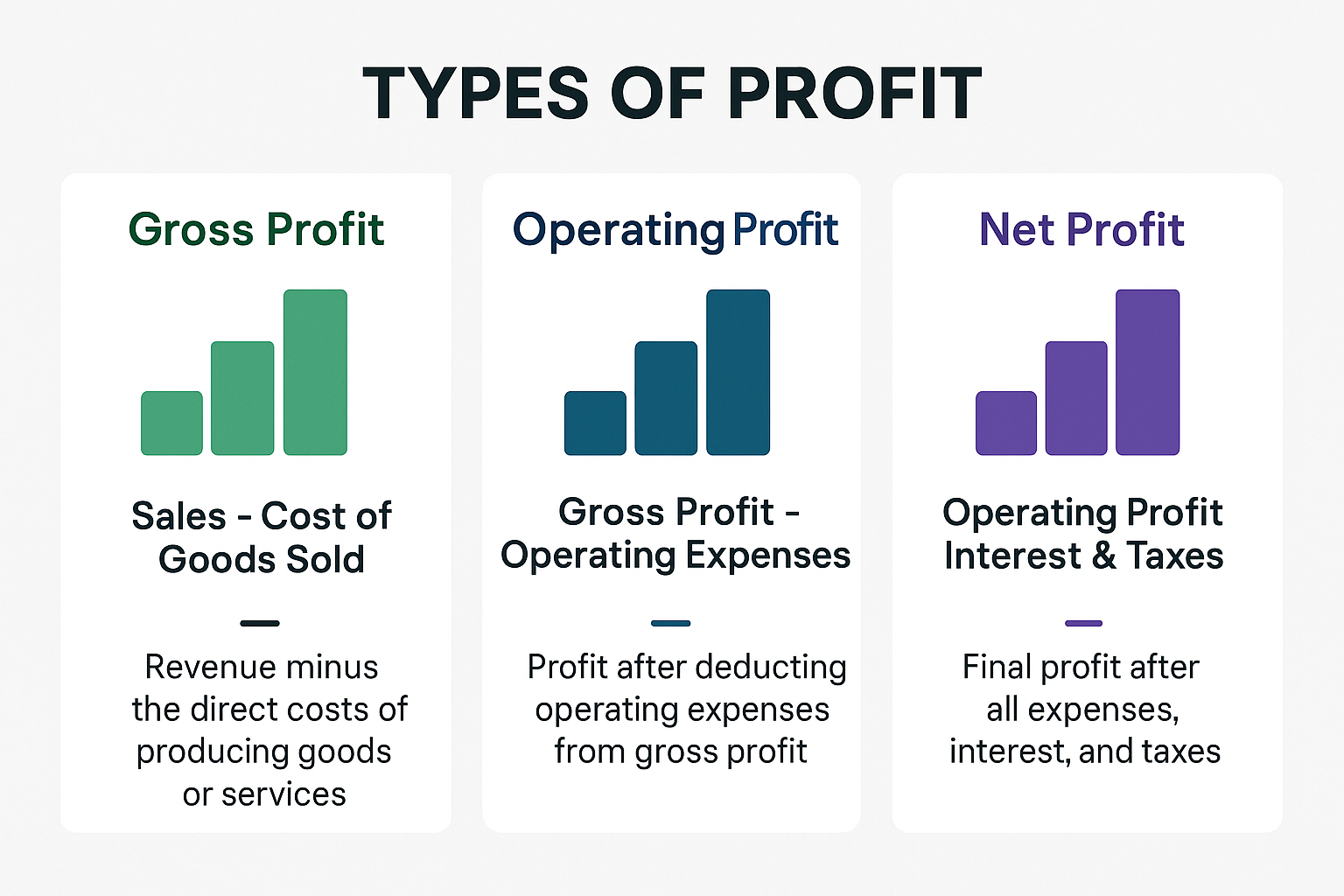
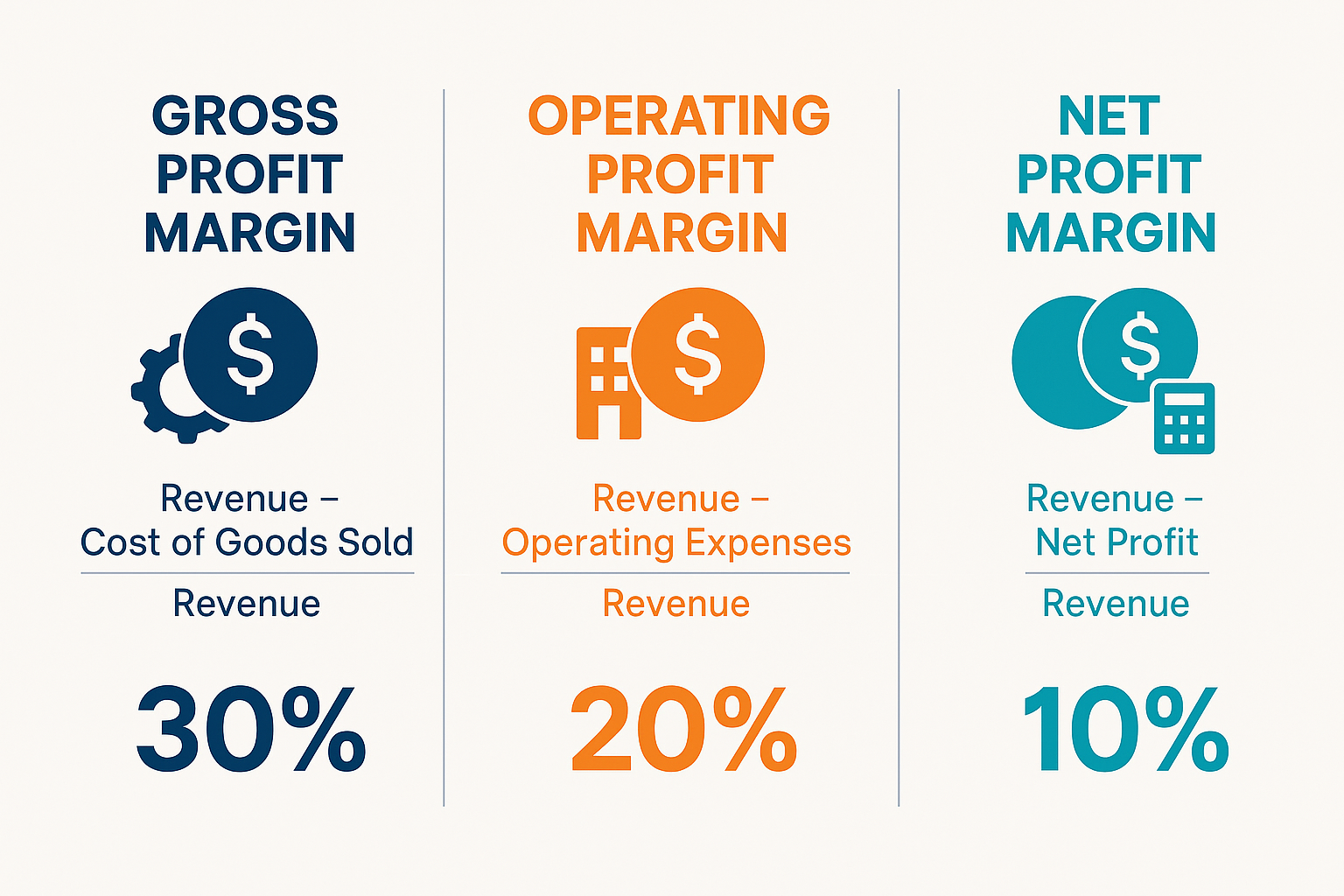
- Gross Profit Margin: The percentage of revenue remaining after deducting the direct costs of producing goods or delivering services (COGS). Calculated as
(Revenue - COGS) / Revenue * 100. High gross margins indicate strong pricing power or low direct production costs. - Net Profit Margin: The percentage of revenue remaining after deducting all operational expenses, taxes, interest, depreciation, and administrative overhead. Calculated as
Net Income / Revenue * 100. Net margin represents the true bottom-line profitability of the business enterprise. - Operating Leverage: The degree to which a business can increase operating income by increasing revenue. High operating leverage occurs when fixed costs are substantial, but variable costs per additional unit sold are minimal, enabling net profit to expand rapidly as customer volume grows.
- Customer Lifetime Value (LTV) to Customer Acquisition Cost (CAC) Ratio: A core metric in recurring revenue and service models. A healthy profit model maintains an LTV:CAC ratio of 3:1 or higher, ensuring marketing and sales investments generate compounding financial returns.
High-Margin Digital and Service-Based Business Examples
Digital enterprises and professional services consistently rank among the most profitable business structures. Because their primary inputs are intellectual property, specialized skill, and software infrastructure rather than physical inventory or raw materials, variable costs per client remain low.
1. Business-to-Business (B2B) Software as a Service (SaaS)
B2B SaaS companies develop cloud-hosted software tools sold to commercial clients via monthly or annual subscriptions. Examples include workflow automation, customer relationship management (CRM) portals, financial compliance software, and enterprise cybersecurity tools.
- Financial Profile: Gross profit margins frequently reach 75% to 85%. Net profit margins after mature marketing and administrative expenses range from 20% to 35%.
- Profit Mechanics: Once initial software development costs are absorbed, hosting additional users requires minimal marginal expense. Subscription renewal fees provide predictable, recurring income streams that lower long-term sales costs.
2. Specialized Advisory & Executive Consulting
Niche advisory firms—such as legal practice groups, regulatory compliance consultants, specialized tax advisory partnerships, and IT security auditing agencies—sell expertise directly to enterprise clients on fee-for-service, retainer, or project-based structures.
- Financial Profile: Gross margins routinely exceed 60% to 75%, while net margins for lean consultancy practices often average 25% to 40%.
- Profit Mechanics: Overhead is largely limited to compensation for specialized personnel, office administrative tools, and professional indemnity insurance. High hourly or project fees yield substantial margins when billable rates reflect complex, high-value problem solving.
3. Digital Content Platforms & Enterprise Licensing
Enterprises that create proprietary digital assets—such as specialized training databases, technical education platforms, industry market research hubs, and specialized software plugins—can license these materials repeatedly without continuous manufacturing expenses.
- Financial Profile: Gross margins often exceed 85%, while net margins can reach 30% to 50% depending on organic distribution efficiency and platform maintenance costs.
- Profit Mechanics: Content creation acts as a fixed upfront capital expenditure. Subsequent distribution via automated access management generates near-pure net operating income per sale.
High-Profit Physical and Asset-Based Business Examples
While physical inventory, real estate, and capital equipment require greater upfront capital and introduce inventory risk, specific physical business models deliver exceptional net returns through operational efficiency, local market dominance, or high-value asset utilization.
1. Asset-Light Franchising & Brand Licensing
Franchisors establish a proven business model, operational playbook, and brand trademark, then license these assets to third-party franchise operators. Examples span commercial cleaning, quick-service restaurant (QSR) chains, specialized fitness centers, and auto repair networks.
- Financial Profile: Pure franchisors frequently report gross margins above 70% and net operating profit margins between 30% and 50%.
- Profit Mechanics: Franchisees supply the upfront capital for store build-outs, inventory, and local labor. The franchisor collects ongoing royalty fees (typically 4% to 8% of gross sales) alongside initial franchise application fees, insulating the corporate entity from unit-level operational losses.
2. Commercial Real Estate Storage & Industrial Leasing
Self-storage facilities, specialized cold-storage warehouses, and industrial flex-space properties rent physical space to commercial or retail tenants on multi-month or annual lease contracts.
- Financial Profile: Net operating income (NOI) margins for self-storage and industrial flex facilities generally range between 55% and 70%, with net profit margins (after financing and depreciation) maintaining 20% to 35%.
- Profit Mechanics: Labor costs remain low, as automation tools handle tenant onboarding, security access, and bill payment. Utility consumption, maintenance expenditure, and tenant turnover expenses are low compared to multi-family residential housing.
3. Contract Manufacturing & Proprietary Private Labeling
Contract manufacturing organizations (CMOs) produce specialized components, pharmaceuticals, cosmetics, or specialized equipment for third-party brands. Conversely, private-label brand owners contract out production while focusing exclusively on branding, distribution, and high-margin retail sales.
- Financial Profile: Contract manufacturers operate on lower gross margins (25% to 40%) but high, stable net income due to multi-year supply contracts. Private-label brand owners often secure gross margins of 55% to 70% by taking advantage of low-cost outsourced production.
- Profit Mechanics: Contract manufacturers maximize facility throughput to cover fixed machinery costs. Brand owners leverage high retail markups without incurring heavy capital expenditure for factory construction or equipment maintenance.
Comparative Analysis of High-Profit Business Models
The table below compares core business models across operational metrics, typical margin profiles, capital requirements, and primary risk vectors.
| Business Model Type | Typical Gross Margin | Target Net Margin | Upfront Capital Required | Scalability Potential | Primary Risk Vector |
|---|---|---|---|---|---|
| B2B SaaS | 75% – 85% | 20% – 35% | Moderate to High | High (Global reach, low variable cost) | High initial churn, elevated development costs |
| Specialized Advisory | 60% – 75% | 25% – 40% | Low | Low to Moderate (Constrained by billable hours) | Key-person dependency, client concentration |
| Asset-Light Franchising | 70% – 85% | 30% – 50% | High (System development) | Very High (Capital provided by franchisees) | Brand reputation damage from poor unit operators |
| Self-Storage & Flex Real Estate | 60% – 75% | 20% – 35% | High (Real estate acquisition) | Moderate (Geographically limited) | Interest rate fluctuations, localized oversupply |
| Private-Label E-Commerce | 50% – 70% | 15% – 25% | Low to Moderate | High (Digital logistics distribution) | Supply chain disruption, ad spend inflation |
| Specialized Medical / Dental | 55% – 70% | 18% – 30% | High (Equipment & licensing) | Moderate (Requires qualified practitioners) | Regulatory shifts, insurance reimbursement delays |
Structural Drivers That Maximize Business Profitability
Achieving high net profit margins across any market sector relies on specific structural advantages built into the corporate operating structure.
1. Predictable Cash Flow via Recurring Revenue
Business models that rely on single transactions require continuous, expensive marketing investments to replace departing buyers. Structuring offers around ongoing retainers, maintenance contracts, or subscriptions stabilizes operating revenues and dramatically increases total lifetime customer value.
2. High Value-to-Weight or Value-to-Volume Ratios
For physical product businesses, profitability is dictated by logistics efficiency. Products with high price points relative to their shipping volume and weight—such as specialized pharmaceuticals, electronics components, luxury cosmetics, and dental devices—keep freight, warehousing, and fulfillment expenses to a low percentage of overall sales.
3. Sustainable Pricing Power
Businesses operating in crowded commodity markets are forced to compete on price, compressing profit margins. Companies that establish proprietary technology, trade secrets, strong regulatory barriers to entry, or distinct brand equity preserve pricing power, allowing them to pass rising input costs directly to customers without losing market share.
Financial Pitfalls That Undermine Business Profitability
Even businesses within historically lucrative sectors can experience thin or negative net margins if key management operational mistakes occur.
- Confusing Cash Flow with Profitability: Accrual accounting metrics can show profitability on income statements while actual bank account balances drop due to unpaid accounts receivable, inventory backlogs, or heavy debt payment obligations.
- Uncontrolled Overhead Escalation: As sales grow, business owners often expand non-essential administrative staff, move into expensive commercial office leases, or purchase unnecessary capital assets, diluting operational leverage.
- Indiscriminate Price Discounting: Attempting to grow market share by offering persistent price discounts reduces gross margins directly. A 10% price cut requires substantial volume increases just to maintain identical gross profit dollars.
- Customer Acquisition Cost (CAC) Inflation: Relying exclusively on paid digital advertising without organic search visibility, referral partners, or high retention rates leaves a company vulnerable to rising advertising costs that consume gross margins.
Frequently Asked Questions
What is the most profitable business model for a small start-up?
Service-based advisory, specialized consulting, and digital agency models generally offer the highest immediate profitability for small start-ups. These structures require negligible capital expenditure, carry low ongoing overhead, and deliver gross profit margins exceeding 70%, allowing founders to reach cash-flow positivity quickly.
How does gross profit margin differ from net profit margin?
Gross profit margin measures revenue remaining after subtracting direct production costs (COGS) like raw materials and direct labor. Net profit margin measures the final revenue remaining after subtracting all company expenses, including indirect overhead, administrative salaries, rent, taxes, marketing, debt servicing, and depreciation.
Which industries consistently maintain the highest profit margins?
Accounting standards and industry disclosures consistently show software and digital services, specialized legal and financial consulting, real estate asset management, and pharmaceutical manufacturing among the highest operating margin sectors. These industries benefit from low marginal production costs, high pricing power, or intellectual property protections.
How can an existing business improve its net profit margin?
A business can improve its net margin by auditing direct suppliers to reduce production costs, raising prices on high-value offerings, eliminating unprofitable product lines or low-margin clients, automating repetitive administrative workflows, and restructuring customer acquisition strategies around retention and secondary upsells.
Can a business have high annual revenue but low profit margins?
Yes. Grocery retail networks, high-volume general e-commerce merchants, and general construction contracting businesses often generate millions of dollars in top-line revenue while operating on net profit margins between 1% and 5%. These enterprises rely on massive transaction volume and inventory turnover to yield acceptable total dollar returns.
Next Steps for Business Selection and Evaluation
To select, launch, or restructure a business for optimal net profitability, evaluate the operational plan against clear structural benchmarks:
- Analyze Unit Economics First: Map out direct production costs (COGS), variable delivery costs, and expected customer acquisition costs before committing capital to a new venture or product line.
- Target High Gross Margins: Prioritize concepts that yield gross margins above 50% for physical products and above 75% for services or software, providing a buffer for overhead and marketing.
- Build Recurring Revenue Elements: Convert standard one-off sales into recurring service contracts, annual software licenses, or replenishment subscriptions to stabilize cash flow.
- Audit Overhead Expenses Periodically: Maintain operational leverage by regularly reviewing fixed corporate expenses to ensure back-office costs do not grow faster than top-line revenue.
Disclaimer: This article is for informational and educational purposes only and does not constitute formal legal, accounting, tax, or investment advice. Readers should consult certified public accountants (CPAs), corporate attorneys, or qualified financial advisors to analyze specific financial situations and regulatory requirements prior to making capital allocation or business structure decisions.
Image Gallery