Single Sign-On in Cloud Service Security: Architecture, Protocols, and Risk Mitigation
Single Sign-On (SSO) in cloud service security centralizes identity authentication across multiple cloud platforms, allowing users to access diverse applications with a single set of cryptographically secured credentials. By consolidat...
Single Sign-On (SSO) in cloud service security centralizes identity authentication across multiple cloud platforms, allowing users to access diverse applications with a single set of cryptographically secured credentials. By consolidating access through identity providers using open standards like SAML and OpenID Connect, SSO reduces credential sprawl, enhances administrative control, and enables unified multi-factor authentication.
Contents
Understanding SSO in the Cloud Security Paradigm
As enterprise infrastructure shifts from on-premises data centers to hybrid and multi-cloud environments, identity has replaced the traditional network perimeter as the primary security boundary. In a legacy architecture, security teams enforced control through physical firewalls and localized IP restrictions. In cloud-native ecosystems—where corporate assets reside across Infrastructure as a Service (IaaS), Platform as a Service (PaaS), and Software as a Service (SaaS) environments—users access systems from varying devices and network locations.
Managing independent user credentials for dozens or hundreds of disparate cloud applications creates operational drag and severe security vulnerabilities. Without centralized authentication, employees often reuse weak passwords across platforms, while IT administrators lose visibility into active sessions and access privileges.
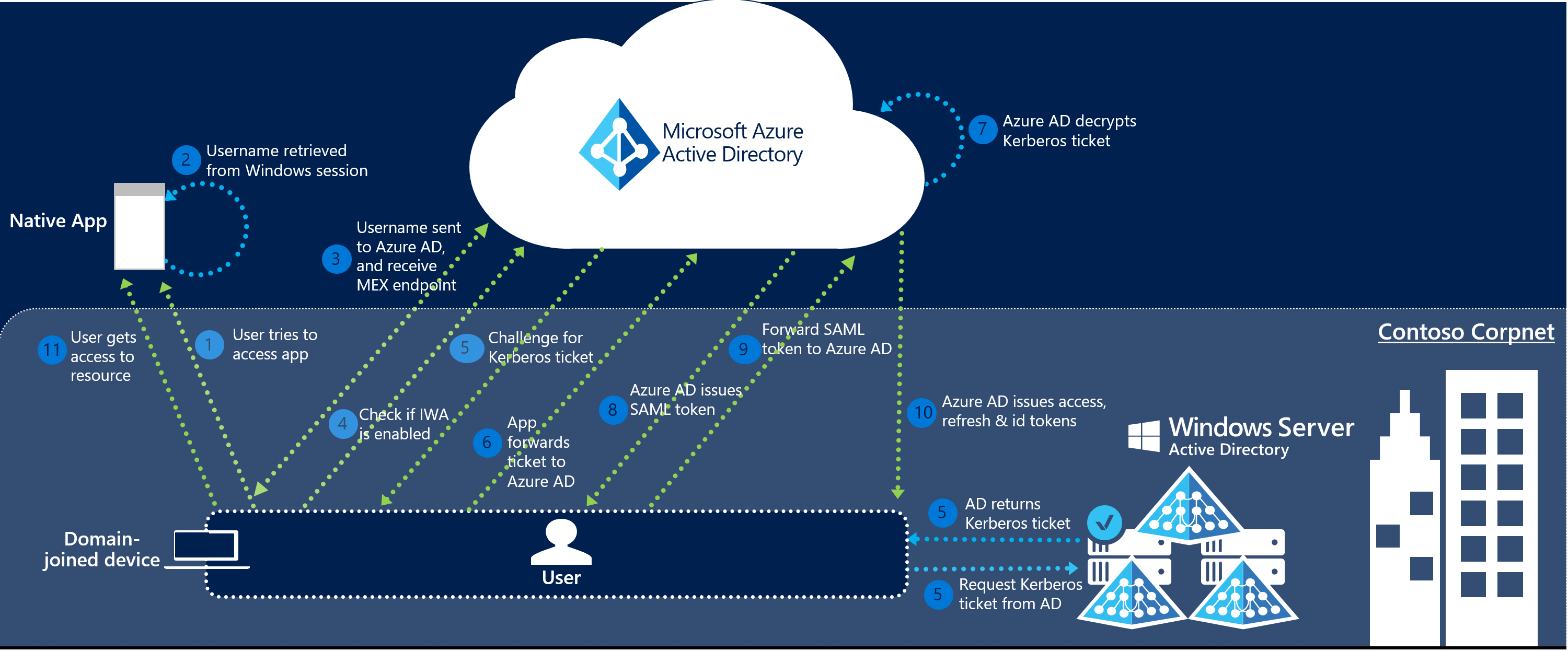
Single Sign-On addresses these architectural challenges by decoupling identity authentication from individual applications. Under an SSO framework, an enterprise delegates authentication responsibilities to a centralized Identity Provider (IdP). When a user attempts to access a cloud application (the Service Provider, or SP), the service trusts the IdP to verify the user's identity and pass cryptographically signed assertions confirming access authorization.
This separation of duties establishes a foundation for identity-centric security models. By channeling all login attempts through a unified control plane, security teams can enforce consistent security policies, implement contextual access controls, and maintain complete audit logs across the entire cloud portfolio.
Core Protocols Powering Cloud SSO
Modern cloud SSO relies on standardized, open communication protocols to pass identity tokens securely between browsers, identity providers, and cloud services without exposing raw user credentials to third-party applications.
- Access Request: User Browser (Client Web) to Service Provider (SaaS App)
- Redirect to Identity Provider: Service Provider (SaaS App) to User Browser (Client Web)
- Login: User Browser (Client Web) to Identity Provider (IdP) (e.g., Okta, Entra ID, Ping Identity)
- Issue Cryptographic Token / Assertion: Identity Provider (IdP) to User Browser (Client Web)
- Token Validation: Identity Provider (IdP) to Service Provider (SaaS App)
SAML 2.0 (Security Assertion Markup Language)
Maintained by the OASIS Open Standards Body, SAML 2.0 is an XML-based framework designed primarily for enterprise-to-enterprise web applications. In a typical SAML authentication flow, the user attempts to access a cloud application (Service Provider). The Service Provider generates a SAML Authentication Request and redirects the user's browser to the Identity Provider.
Once the user authenticates, the IdP returns an XML assertion signed with an X.509 digital certificate. The assertion contains claims regarding the user's identity, role membership, and session duration. The Service Provider verifies the cryptographic signature against the IdP's public key, granting access without ever handling the user's master password.
OAuth 2.0 and OpenID Connect (OIDC)
While SAML remains widespread in legacy enterprise applications, web-native and mobile applications heavily leverage OpenID Connect (OIDC). OIDC is an identity layer built on top of the IETF OAuth 2.0 Framework.
Where base OAuth 2.0 strictly governs authorization (granting third-party applications scoped permission to access resources), OIDC introduces standardized user authentication via JSON Web Tokens (JWT). The IdP issues an id_token containing user identity attributes alongside an access_token used for API resource authorization. OIDC's RESTful architecture and JSON payloads make it lightweight, flexible, and natively supported in modern microservices and mobile application stacks. Complete specifications for user authentication flows are detailed by the OpenID Foundation Core Standards.
SCIM (System for Cross-domain Identity Management)
While SAML and OIDC handle real-time authentication and session creation, the IETF SCIM Protocol Standard automates identity provisioning and deprovisioning. Defined in RFC 7643 and RFC 7644, SCIM uses a standardized REST API schema to synchronize user accounts, group assignments, and privilege modifications between the central identity directory and cloud applications. Without SCIM, an SSO user might be authenticated by the IdP, but fail to access a application because their local user account within the SaaS tool was never generated.
Architectural Comparison: SSO Protocols and Identity Frameworks
The selection of identity protocols depends on the architectural requirements of the enterprise enterprise environment, client application types, and device ecosystems.
| Protocol / Standard | Primary Purpose | Data Format | Dominant Cloud Use Case | Session & Access Control |
|---|---|---|---|---|
| SAML 2.0 | Enterprise Authentication | XML | B2B SaaS web applications, legacy enterprise web portals | Session assertions validated via X.509 certificate signatures. |
| OpenID Connect (OIDC) | Identity Verification | JSON / JWT | Single-page apps, mobile clients, modern cloud microservices | id_token delivers verified identity claims; integrated with OAuth 2.0. |
| OAuth 2.0 | API Authorization | JSON / Bearer Tokens | Delegated access permission between microservices and APIs | Issues short-lived access and refresh tokens without user credentials. |
| SCIM 2.0 | Identity Provisioning | JSON REST API | Automated user lifecycle synchronization (JIT, offboarding) | Manages create, read, update, and delete (CRUD) operations on user accounts. |
Security Advantages of Implementing SSO in Cloud Environments
Integrating Single Sign-On into enterprise cloud architecture fundamentally alters an organization's threat exposure.
- WITHOUT SINGLE SIGN-ON
- User manages 30+ unique passwords
- Threat: Password Fatigue
- Weak, reused passwords across unmonitored SaaS applications
- Threat: Account Takeover
- Orphaned accounts remain active long after employee departure
- WITH SINGLE SIGN-ON
- User authenticates ONCE via IdP
- Unified Policy Control Plane
- Mandatory Multi-Factor (MFA) + Risk-Based Adaptive Challenges
- Cryptographic Session Tokens
- Instant centralized offboarding revokes ALL cloud app access
Centralized Access Visibility and Policy Enforcement
Without SSO, security operations teams face fragmented identity landscapes. Auditing user activity requires aggregating logs from independent cloud services, each with disparate auditing standards. SSO consolidates authentication logs into a single Identity Provider platform. Security Information and Event Management (SIEM) systems can ingest these centralized streams, allowing analysts to correlate login patterns, detect anomalies (such as impossible travel velocity), and enforce uniform access rules across all integrated systems.
Elimination of Credential Sprawl and Password Reuse
When users are forced to maintain individual sets of credentials for dozens of enterprise SaaS applications, they invariably default to insecure behavior: reusing passwords, choosing simple variations, or storing credentials in unencrypted text files. SSO eliminates password management at the individual application level. Users store a single master set of credentials—or engage entirely passwordless mechanisms such as FIDO2/WebAuthn hardware keys—reducing the organizational surface area vulnerable to brute-force, dictionary, and credential stuffing attacks.
Instantaneous Deprovisioning and Offboarding
Unmanaged accounts associated with departed employees represent a common entry vector for malicious actors. In a non-SSO environment, offboarding an employee requires IT personnel to manually delete accounts across dozens of SaaS services—a process prone to human error and oversight. With SCIM-enabled cloud SSO, revoking a user's status in the primary directory (e.g., Microsoft Entra ID, Okta, or PingFederate) instantly invalidates active sessions and prevents further access to all downstream cloud services.
Unified MFA and Risk-Based Conditional Access
Deploying Multi-Factor Authentication (MFA) across multiple independent cloud applications leads to inconsistent security controls and high user friction. SSO allows enterprises to enforce step-up authentication at the IdP gateway level. Security teams can configure adaptive, conditional access policies dictated by guidelines such as the NIST SP 800-63 Digital Identity Guidelines. These policies evaluate risk signals—such as device security posture, IP reputation, network location, and user behavior analytics—before granting access tokens to sensitive cloud resources.
Security Risks, Vulnerabilities, and Mitigation Strategies
While Single Sign-On delivers immense structural security benefits, it also alters risk distribution by concentrating access controls into a single framework.
The Single Point of Failure and Blast Radius Risk
The central strength of SSO is also its primary vulnerability: consolidating authentication into one Identity Provider creates a high-value target for threat actors. If an attacker successfully compromises a user's primary SSO credentials, they gain immediate access to every cloud application linked to that user's identity profile.
Mitigation:
- Enforce phishing-resistant MFA (such as FIDO2 hardware tokens or certificate-based authentication) for all SSO access points.
- Implement Zero Trust Network Architecture principles as detailed in the CISA Zero Trust Maturity Model, ensuring that initial identity authentication does not grant blanket trust across the network.
- Mandate continuous re-authentication and conditional access checks for sensitive administrative workloads.
Session Hijacking, Token Theft, and Pass-the-Token Attacks
Once a user authenticates via SSO, the IdP issues cryptographically signed session tokens (SAML assertions or JWTs). Threat actors targeting cloud systems often pivot away from cracking passwords to stealing active tokens via adversary-in-the-middle (AiTM) phishing kits, browser malware, or unsecured session storage.
Mitigation:
- Utilize short session lifetimes for access tokens and require frequent refresh cycles.
- Implement token-binding protocols that bind authentication tokens to the TLS channel or specific device hardware.
- Enforce strict IP matching and device trust verification, revoking active session tokens if a user's network or device state shifts unexpectedly.
Misconfigured SAML Assertions and IdP Impersonation
Improper validation of SAML assertions can lead to high-severity authentication bypass vulnerabilities. For example, XML Signature Wrapping (XSW) attacks exploit discrepancies between how an application verifies a digital signature and how it parses identity elements within the XML payload, allowing attackers to forge assertions and impersonate legitimate users.
Mitigation:
- Use audited, mature SAML processing libraries rather than custom XML parsing code.
- Ensure Service Providers explicitly enforce signature validation on both the SAML Assertion and the SAML Response elements.
- Enforce clock synchronization (NTP) to restrict the validation window for time-stamped assertions (
NotBeforeandNotOnOrAfterattributes).
Step-by-Step Implementation Framework for Enterprise Cloud SSO
Deploying a resilient SSO architecture across an enterprise cloud footprint requires a structured, multi-phase execution plan.
- Phase 1: Identity Discovery & Directory Consolidation
- Audit SaaS catalog; eliminate shadow IT; clean active directories.
- Phase 2: IdP Architecture & Protocol Standard Selection
- Choose IdP; establish SAML 2.0 / OIDC integrations & SCIM specs.
- Phase 3: MFA & Conditional Access Policy Configuration
- Enforce FIDO2/WebAuthn; set risk rules, geolocation, device checks
- Phase 4: Continuous Auditing, Monitoring, and Session Lifecycle
- Connect IdP to SIEM; enforce token refresh limits & auto-deprovis.
Phase 1: Identity Discovery and Directory Consolidation
- Audit Cloud Inventory: Run Cloud Access Security Broker (CASB) tools and network discovery scans to identify all SaaS, PaaS, and IaaS applications in use, including unmanaged "shadow IT" deployments.
- Cleanse Directory Data: Standardize user attributes (e.g., email address, employee ID, role definitions) across your primary authoritative directory (e.g., Active Directory, HRIS). Eliminate duplicate, inactive, or orphaned accounts prior to federation.
Phase 2: IdP Selection and Federation Configuration
- Establish the Primary IdP: Select an enterprise-grade Identity Provider capable of supporting open identity standards (SAML 2.0, OIDC, SCIM 2.0) and supporting resilient cross-region redundancy.
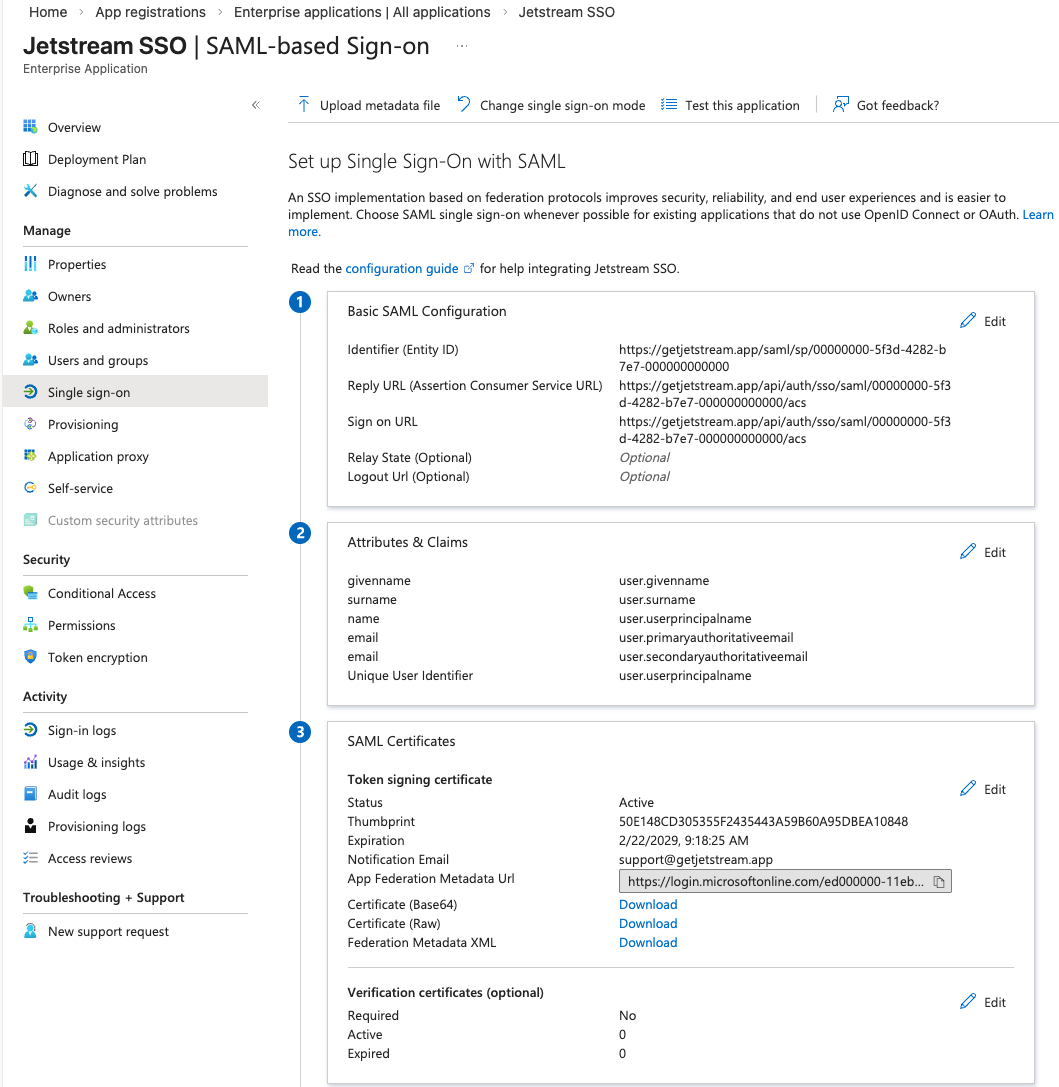
- Configure Trust Relationships: Establish federated trust between the IdP and cloud Service Providers by exchanging metadata, public key X.509 certificates, and assertion endpoints.
- Automate Provisioning: Implement SCIM connections to automate real-time synchronization of user creation, group updates, and account revocations.
Phase 3: MFA and Conditional Access Policy Configuration
- Mandate Phishing-Resistant MFA: Require users to enroll in secure authentication factors (FIDO2 keys, push-notification applications with number matching) before accessing the SSO portal.
- Deploy Risk-Based Rules: Write rules restricting access based on contextual parameters:
- Block access requests originating from unauthorized geolocations or known malicious IP ranges.
- Require managed device verification (via Unified Endpoint Management agents) for applications containing confidential data.
Phase 4: Continuous Auditing, Monitoring, and Lifecycle Management
- SIEM Integration: Stream authentication events from the IdP into a centralized Security Operations Center (SOC) dashboard. Configure alerts for impossible travel, rapid authentication failures, or privilege escalation events.
- Automated Session Revocation: Configure token lifespan limits (e.g., 15-minute access token expiration) and establish automated triggers that terminate active SSO sessions across all integrated cloud applications when identity anomalies occur.
Frequently Asked Questions
How does Single Sign-On differ from a password manager?
A password manager is a client-side digital vault that stores, encrypts, and auto-fills separate login credentials for individual websites. Single Sign-On is a server-side identity federation architecture where applications trust a centralized Identity Provider to authenticate the user directly. With SSO, individual application passwords are eliminated entirely, replaced by cryptographically signed identity tokens passed between trusted systems.
Does implementing SSO eliminate the need for Multi-Factor Authentication (MFA)?
No. SSO and MFA are complementary controls. SSO provides the operational centralized framework for identity management, while MFA acts as an authentication challenge mechanism. Implementing SSO without MFA amplifies risk, as a single compromised password could unlock an enterprise's entire cloud app catalog. Enforcing MFA at the SSO gateway ensures that all downstream cloud applications are protected by step-up authentication controls.
What happens to cloud service access if the primary SSO Identity Provider experiences an outage?
If a central Identity Provider suffers an outage, users cannot generate new authentication sessions for downstream cloud applications relying on that IdP. Existing sessions may persist depending on token expiration policies. To mitigate outage risks, enterprise IdPs operate across multi-region high-availability infrastructure and often support offline break-glass backup authentication paths reserved exclusively for designated system administrators.
How do OAuth 2.0 and OpenID Connect interact during a cloud SSO login?
OAuth 2.0 provides the authorization framework that manages access scopes and issues access tokens. OpenID Connect operates as a thin identity layer directly on top of OAuth 2.0. During an OIDC login, the Identity Provider authenticates the user and issues both an id_token (a JSON Web Token containing identity claims for authentication) and an access_token (used by OAuth 2.0 to grant access to backend API resources).
What is the role of SCIM alongside SAML or OIDC in cloud environment operations?
SAML and OIDC handle real-time user authentication (verifying who the user is at the moment of access). However, they do not manage account lifecycles independently of login events. SCIM (System for Cross-domain Identity Management) operates in the background to automatically create, update, and delete user profiles and permission groups across cloud services. This ensures that when an employee is terminated, their accounts are automatically deprovisioned across all SaaS applications even before they attempt a login.
Strategic Next Steps for IT and Security Teams
To maintain a secure cloud security architecture, enterprise technical leaders should evaluate their current identity posture against these strategic milestones:
- Audit Application Trust Settings: Conduct an immediate review of all active SAML digital certificates and OIDC client secrets. Rotate any certificates nearing expiration and eliminate unused federated application trusts.
- Transition to Phishing-Resistant Authentication: Replace legacy MFA mechanisms (such as SMS codes and basic push notifications) with FIDO2/WebAuthn hardware keys or certificate-based authentication across all SSO workflows.
- Integrate Continuous Access Evaluation (CAE): Configure your IdP and cloud service providers to support near-real-time session revocation standards (such as OpenID Shared Signals and Events). This ensures that session tokens are invalidated the moment a security risk is detected, rather than waiting for token expiry limits.
Image Gallery