Samsung Refrigerator Door Adjustment Explained: A Complete Guide to Alignment and Leveling
Adjusting Samsung refrigerator doors involves leveling the appliance's front legs and then using the built-in adjustment nuts or clips on the hinges to align the door heights. Proper alignment prevents cooling leaks, ensures the "Auto-...
Adjusting Samsung refrigerator doors involves leveling the appliance's front legs and then using the built-in adjustment nuts or clips on the hinges to align the door heights. Proper alignment prevents cooling leaks, ensures the "Auto-Close" feature works correctly, and protects the internal components from excessive wear caused by gasket friction.
Contents
Misaligned refrigerator doors are more than just a cosmetic annoyance; they are a functional liability. When doors are uneven, the magnetic gaskets often fail to create a vacuum seal against the refrigerator frame. In the climate of 2026, where energy efficiency standards for home appliances have become increasingly stringent, a compromised seal can lead to a significant spike in electricity consumption and premature compressor wear. This guide provides a comprehensive technical walkthrough for homeowners and maintenance professionals on how to resolve these issues safely and effectively.
Why Door Alignment Is Critical for Performance
Before diving into the mechanics of adjustment, it is essential to understand the physics of the appliance. A Samsung refrigerator is designed to sit slightly tilted toward the rear. This orientation utilizes gravity to assist the doors in closing automatically when they are within a certain angle. If the unit is tilted forward or to one side, the doors may swing open unexpectedly or fail to close entirely, leading to "Door Ajar" alarms and internal temperature fluctuations.
Furthermore, modern Samsung units—particularly those in the Bespoke and Family Hub lines—feature complex internal wiring for displays, water dispensers, and cameras. If doors are significantly misaligned, the stress placed on the wiring harnesses located within the top hinges can lead to electrical failures over time. Proper adjustment ensures that these components are not under tension and that the gaskets compress evenly, preventing frost buildup and "sweating" around the door frame.
Step 1: Preparing the Unit and Tools
You cannot accurately adjust refrigerator doors if the unit is actively being used or if the floor surface is obstructed. Begin by clearing any heavy items from the door bins. Weight distribution plays a major role in how a door hangs; if one door is loaded with heavy gallon jugs and the other is empty, your adjustments will be skewed once the groceries are redistributed.
Required Tools for 2026 Samsung Models
- Flat-head Screwdriver: Used for adjusting the leveling legs and removing the kick plate (if applicable).
- Phillips-head Screwdriver: Necessary for removing top hinge covers.
- Allen Wrench (4mm or 5mm): Required for models that utilize a hex bolt at the bottom hinge.
- Pliers: Helpful for inserting C-clips (snap rings) on French door models.
- Spirit Level: Essential to verify that the chassis itself is square before moving the doors.
Ensure the refrigerator is pulled out slightly from the wall if you need to access the rear leveling feet, though most modern Samsung units focus their leveling mechanisms on the front two corners.
Step 2: Leveling the Refrigerator Chassis
Door adjustment should never be the first step. In approximately 70% of cases, "uneven doors" are actually the result of an unlevel refrigerator base. If the floor is uneven, the entire frame of the refrigerator can "rack" or twist, making the doors appear misaligned.
Adjusting the Front Legs
Locate the leveling legs underneath the front of the refrigerator. On many models, you may need to remove the plastic base cover (kick plate) by unscrewing two Phillips screws or simply pulling the plate forward.
- To Raise a Side: Turn the leveling leg clockwise with a flat-head screwdriver. This extends the leg, lifting that corner of the refrigerator.
- To Lower a Side: Turn the leveling leg counter-clockwise.
- The "Paper Test": Place a spirit level on top of the refrigerator. Once the bubble is centered horizontally, check the vertical tilt. The front of the fridge should be slightly higher than the back—usually by about 1/4 inch to 1/2 inch—to ensure the doors close on their own.
If the unit is level but the doors remain uneven, you must then proceed to specific door height adjustments.
Step 3: Adjusting Height on French Door Models
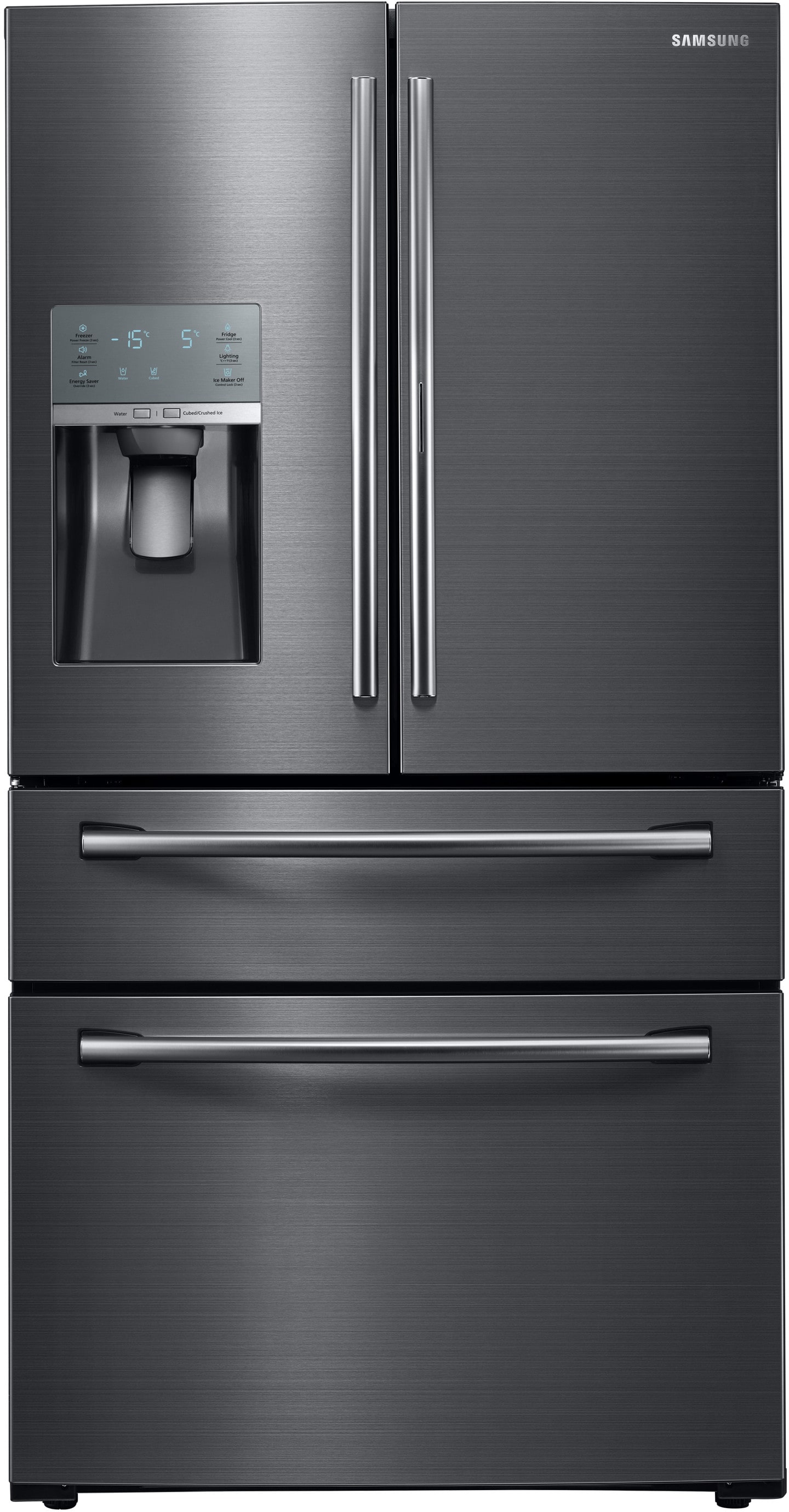
Samsung French door refrigerators (RF series) often utilize a system of "C-clips" or snap rings. These are plastic spacers that are inserted around the hinge pin of the lower door to physically lift it.
Using C-Clips (Snap Rings)
Most Samsung refrigerators come with a small plastic bag containing several C-clips of varying thicknesses (1mm, 1.5mm, 2mm, and 2.5mm).
- Identify the Lower Door: Determine which door is sitting lower than its counterpart.
- Open the Door: Open the lower door to gain access to the bottom hinge.
- Insert the Clip: Use pliers or your fingers to snap the C-clip onto the hinge pin between the door and the hinge grommet. The clip acts as a shim, lifting the door body upward.
- Check Alignment: Close the door and check the alignment at the top. If the doors are still uneven, you can add another clip or replace the existing one with a thicker version.
Note: Never use more than two clips per hinge, as this can cause the hinge pin to become unstable or interfere with the door's rotation.
Step 4: Adjusting Side-by-Side Models (RS Series)
Side-by-side models generally do not use C-clips. Instead, they feature an adjustment bolt located at the bottom of the freezer and fridge doors.
Using the Adjustment Bolt
- Locate the Bolt: Open the door and look at the bottom hinge. You will see a small nut or hex-head bolt built into the hinge assembly.
- Use an Allen Wrench: Insert your 4mm or 5mm Allen wrench into the bolt.
- Adjust the Height:
- Clockwise: Generally lowers the door.
- Counter-clockwise: Generally raises the door.
- Incremental Turns: Make small adjustments—half a turn at a time. Close the door after each adjustment to allow the weight to settle and check the alignment against the other door.
Step 5: Managing the Gap and Top Hinge Alignment
Occasionally, the doors are at the correct height, but the vertical gap between them is wider at the top than at the bottom. This indicates a tilt in the door's vertical axis rather than a height discrepancy.
To fix this, you must adjust the top hinges.
- Remove the Hinge Cover: Use a Phillips screwdriver to remove the screws holding the plastic cover on top of the refrigerator.
- Loosen Hinge Bolts: Slightly loosen the three large bolts holding the hinge plate to the top of the chassis. Do not remove them entirely.
- Shift the Door: Manually move the door slightly left or right until the vertical gap is uniform.
- Tighten and Test: While holding the door in the corrected position, tighten the bolts securely. Reinstall the hinge cover.
Comparison of Adjustment Methods by Model Type
| Refrigerator Type | Primary Adjustment Mechanism | Difficulty Level | Common Tool Required |
|---|---|---|---|
| French Door (RF) | Plastic C-Clips / Snap Rings | Low | Pliers or Fingers |
| Side-by-Side (RS) | Integrated Bottom Hinge Bolt | Medium | 4mm/5mm Allen Wrench |
| Bespoke Series | Leveling Legs & Snap Rings | Low-Medium | Screwdriver & C-Clips |
| 4-Door Flex | Bottom Hinge Bolt (Lower Doors) | Medium | Allen Wrench |
Troubleshooting Common Alignment Issues
The Door "Autoclose" Feature Isn't Working
If your doors stay wide open or require a push to close, the refrigerator is likely leaning too far forward. Revisit the leveling legs and ensure the front is higher than the back. If the unit is level but the problem persists, check the "closer" or "cam" at the bottom of the door. These plastic components can crack or wear down over several years of use, requiring a replacement of the hinge cam kit.
The Gasket is Pinching or Folding
If the door is adjusted too high, the gasket may catch on the center mullion (the vertical bar on French door models) or the top frame. If you notice the gasket folding over itself, lower the door height immediately. A folded gasket will quickly lose its shape and fail to seal, causing the refrigerator to run constantly.
Doors Move When One Is Closed
This is often a sign that the refrigerator is not making solid contact with the floor on all four points. Ensure the leveling legs are carrying the weight of the unit and that the rollers (wheels) are slightly off the ground or only lightly touching.
Safety and Warranty Considerations
When performing these adjustments in 2026, it is important to remember that while door leveling is considered a "user-serviceable" task, significant structural repairs should be handled by a certified technician. According to Samsung's Official Support Guidelines, improper removal of hinge bolts can lead to the door falling, which poses a risk of injury or damage to the internal water lines and electrical harnesses.
Always disconnect the power if you are removing hinge covers that house wiring for dispensers or Family Hub screens. This prevents short circuits if a wire is accidentally pinched during the re-alignment process.
Summary of Next Actions
Once you have completed the adjustment, perform a final verification. Open both doors 90 degrees and let them go; they should swing shut smoothly without slamming. Use a piece of paper to check the seal: close the door on a sheet of paper; if you can pull the paper out with no resistance, the gasket is not sealing, and further leveling or gasket cleaning is required.
By maintaining proper alignment, you extend the life of your Samsung refrigerator’s compressor, reduce your carbon footprint through optimized energy use, and ensure the long-term integrity of the appliance’s sophisticated cooling systems.
Frequently Asked Questions
Why is one Samsung refrigerator door higher than the other right after installation?
Most often, this is due to the floor not being perfectly level. Even a minor slope in kitchen flooring is magnified across the height of the refrigerator. Installers often prioritize leveling the unit for stability, but they may neglect the fine-tuning of the door heights. Always start by checking the leveling legs before assuming the doors themselves are faulty.
Can I adjust the doors if my refrigerator is full?
While it is possible, it is not recommended. The weight of food—especially heavy items in the door bins—can cause the door to sag during the adjustment process, leading to inaccurate results. For the best precision, remove heavy liquids and condiments from the door bins before using C-clips or adjusting hinge bolts.
What should I do if my Samsung refrigerator doesn't have C-clips?
If your model did not come with C-clips and does not have an adjustment bolt, you may need to check the leveling legs. In some older or entry-level models, door height is solely managed by the level of the chassis. If the chassis is perfectly level and the doors are still uneven, contact Samsung support to see if a shim kit is available for your specific model number.
How do I know if the door seal is broken after an adjustment?
Perform the "flashlight test." Place a bright flashlight inside the refrigerator pointed toward the door seal, then turn off the kitchen lights. If you see light leaking through the gasket at any point, the door is either misaligned or the gasket is damaged. Adjust the door height or tilt until no light escapes.
Will adjusting the doors void my Samsung warranty?
No, leveling the refrigerator and adjusting door heights using the provided C-clips or adjustment bolts are considered standard maintenance tasks and do not void the manufacturer's warranty. However, removing the doors entirely or tampering with the internal wiring within the hinges could potentially affect warranty claims if not done according to the user manual.
Image Gallery