Why Group Term Life Insurance Often Beats Group Permanent Life Insurance for Most Employees
For the vast majority of employees in 2026, group term life insurance is the superior choice because it provides the highest death benefit for the lowest out-of-pocket cost during the years when financial protection is most critical. U...
For the vast majority of employees in 2026, group term life insurance is the superior choice because it provides the highest death benefit for the lowest out-of-pocket cost during the years when financial protection is most critical. Unlike permanent policies, group term is simple, cost-effective, and aligns perfectly with the temporary nature of major financial obligations like mortgages and child-rearing.
Contents
Employer-sponsored benefit packages have evolved significantly, but the fundamental debate between term and permanent (whole or universal) life insurance remains a cornerstone of financial planning. As we navigate the professional landscape of 2026, the data continues to suggest that for the average worker, "buying term and investing the difference" is not just a cliché—it is a mathematically sound strategy.
Understanding the Core Mechanics of Group Term Life Insurance
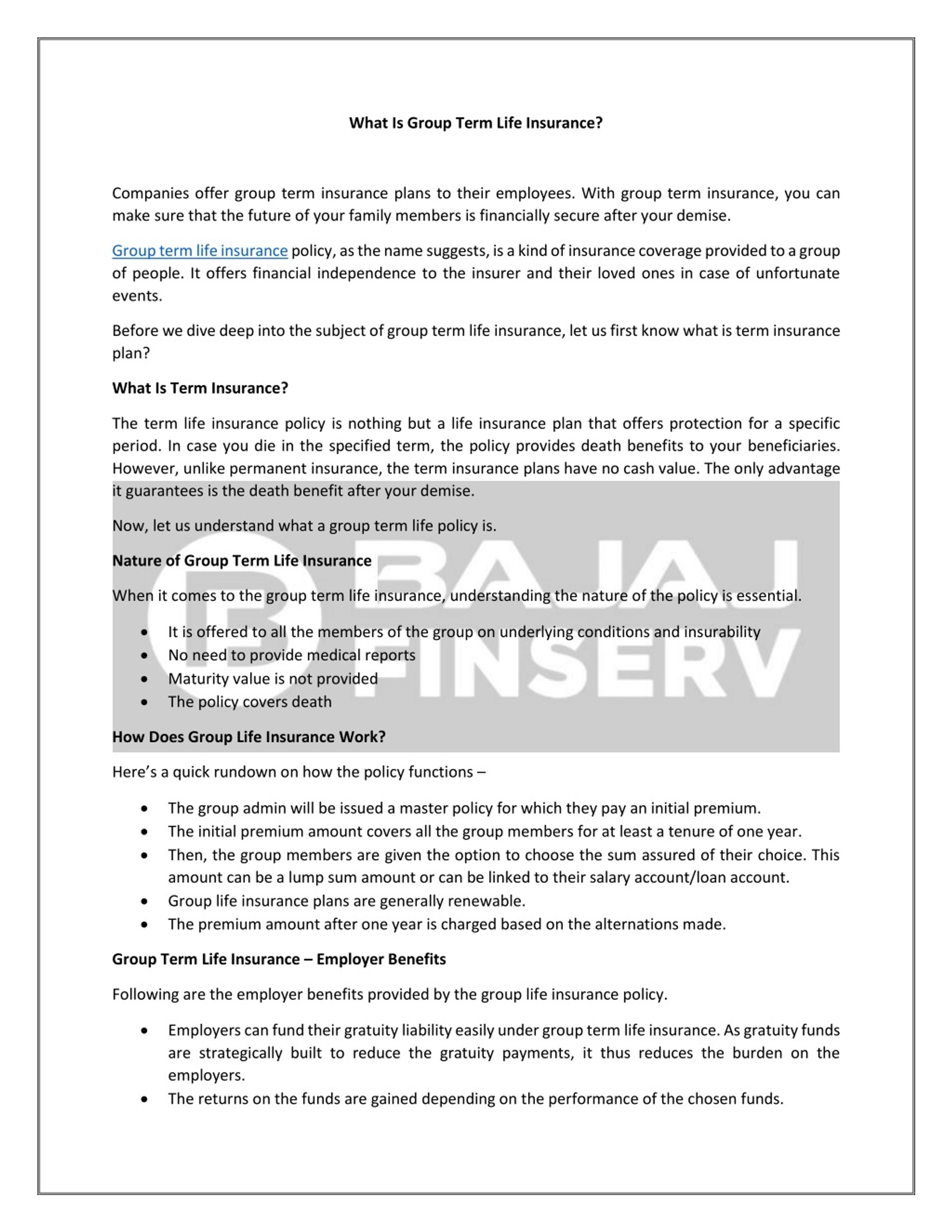
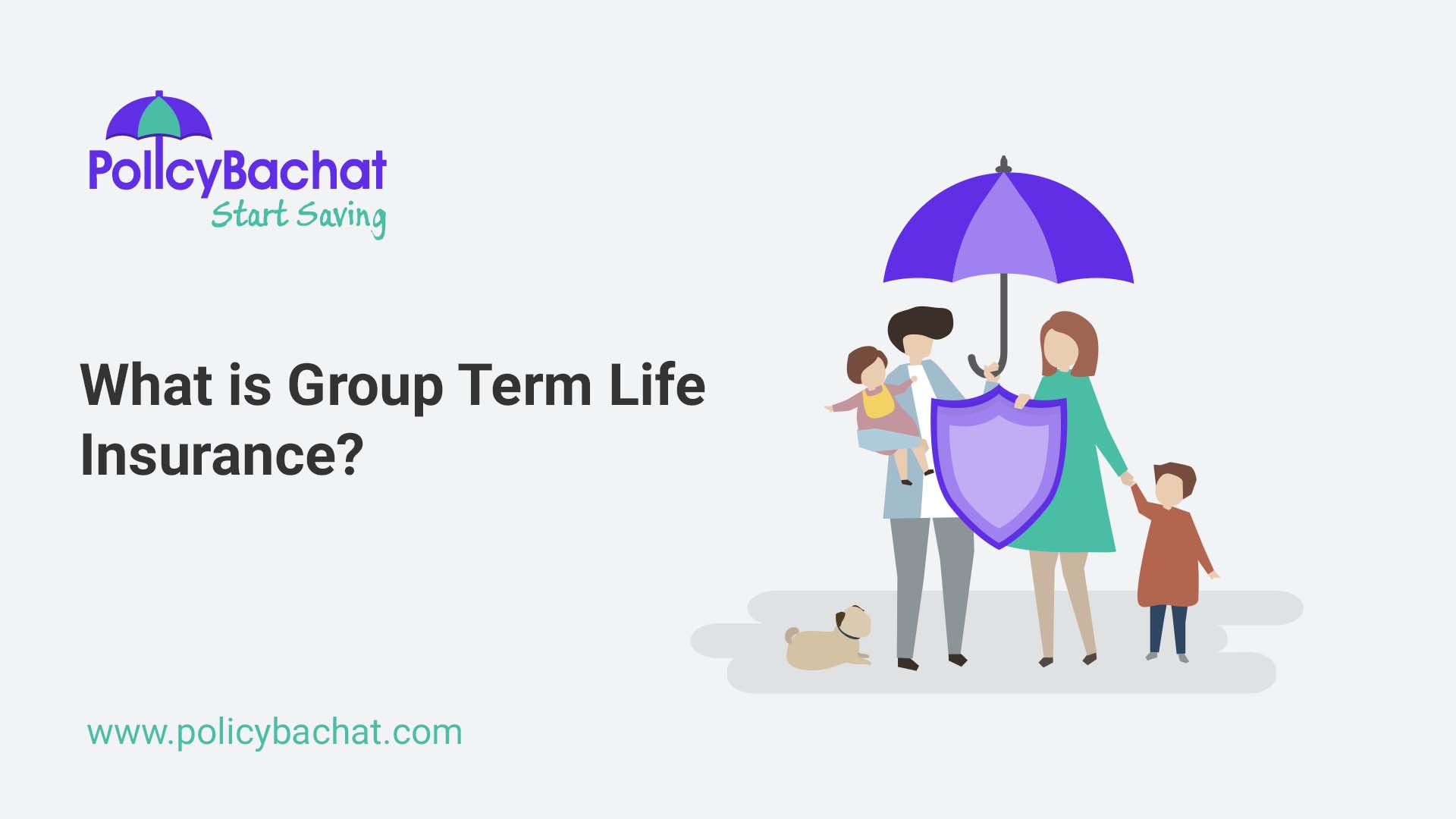
Group term life insurance is a type of life insurance coverage offered by an employer to a group of employees. It provides a death benefit for a specific "term" or period—usually the duration of your employment. Most employers provide a basic amount of coverage (often one or two times your annual salary) at no cost to the employee, with the option to purchase supplemental coverage at group rates.
The primary characteristic of group term insurance is its simplicity. It is "pure" insurance, meaning it has no cash value, no investment component, and no complex surrender charges. Because the insurance company is only pricing for the risk of death within a specific window, and because that risk is spread across a large pool of employees, the premiums are exceptionally low. In 2026, the efficiency of digital underwriting has further streamlined these costs, making group term the most accessible entry point for life insurance for millions of households.
The Overwhelming Cost Advantage
The most compelling reason why group term life insurance beats permanent options for most employees is the price-to-benefit ratio. Permanent life insurance—whether it is group whole life or group universal life—must fund two distinct things: the death benefit and a cash value accumulation account. To do both, the premiums must be significantly higher.
For a healthy 35-year-old employee in 2026, $500,000 in supplemental group term coverage might cost less than $30 per month. In contrast, a group permanent policy with the same death benefit could easily cost $300 to $500 per month.
Why This Price Gap Matters
Most employees have limited "benefit dollars" or discretionary income. If an employee chooses a permanent policy, they may be forced to settle for a lower death benefit (e.g., $50,000) because the premiums for a $500,000 policy are unaffordable. This leaves the family dangerously underinsured. By choosing group term, the employee can afford the high level of coverage necessary to replace their income, pay off a mortgage, and fund their children’s education, which are the primary reasons for having life insurance in the first place.
Aligning Insurance with Financial Milestones
Life insurance is generally intended to cover "temporary" financial risks. These risks typically peak when you are younger and decline as you approach retirement. For example:
- Mortgages: A 30-year mortgage will eventually be paid off.
- Dependents: Children will eventually become self-sufficient adults.
- Wealth Accumulation: As you save for retirement in 401(k)s or IRAs, your "self-insurance" increases, and the need for a massive death benefit decreases.
Group term insurance is designed for this trajectory. It provides maximum protection during the decades where your debt is highest and your savings are lowest. Permanent insurance, which is designed to last until you die (even if that is at age 95), often forces employees to pay for coverage they will no longer need once their house is paid off and their children are grown.
Transparency and the Absence of Hidden Fees
Group permanent policies are often marketed as a "savings vehicle," but they are frequently less efficient than other investment options available to employees in 2026. Permanent policies carry internal costs, including mortality charges, administrative fees, and commissions, which can eat into the early years of cash value accumulation.
When an employee contributes to group term insurance, they know exactly what they are paying for: protection. There are no confusing illustrations or "guaranteed vs. non-guaranteed" interest rate projections to decode. For wealth building, most financial experts recommend utilizing an employer’s 401(k) match or a Roth IRA before ever considering the cash value component of a life insurance policy. These dedicated investment accounts typically offer lower fees, better tax advantages, and greater transparency than the "black box" of a group permanent life insurance policy.
Tax Considerations and IRS Section 79
The tax treatment of group term life insurance remains a major benefit. Under IRS Section 79, the first $50,000 of employer-paid group term life insurance is a tax-free benefit to the employee. While coverage amounts exceeding $50,000 result in "imputed income" (taxable income based on IRS Premium Table I), these costs remain remarkably low compared to the tax complexities of permanent policies.
Permanent policies can offer tax-deferred growth on cash value, but accessing that money often involves loans or withdrawals that, if not managed correctly, can lapse the policy and trigger a significant tax bill. For the average employee, the simplicity of the group term tax structure is far more manageable and less prone to expensive errors.
Comparing Group Term and Group Permanent Life Insurance
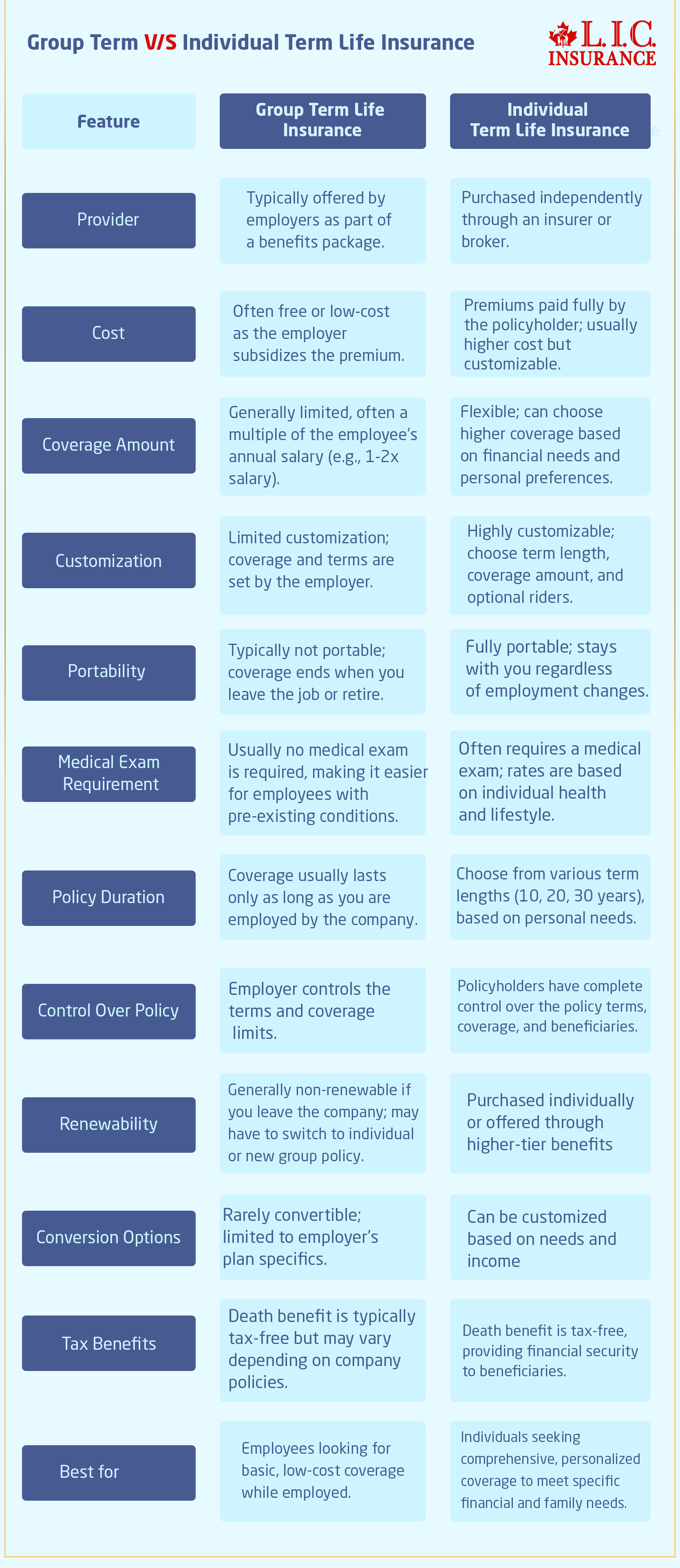
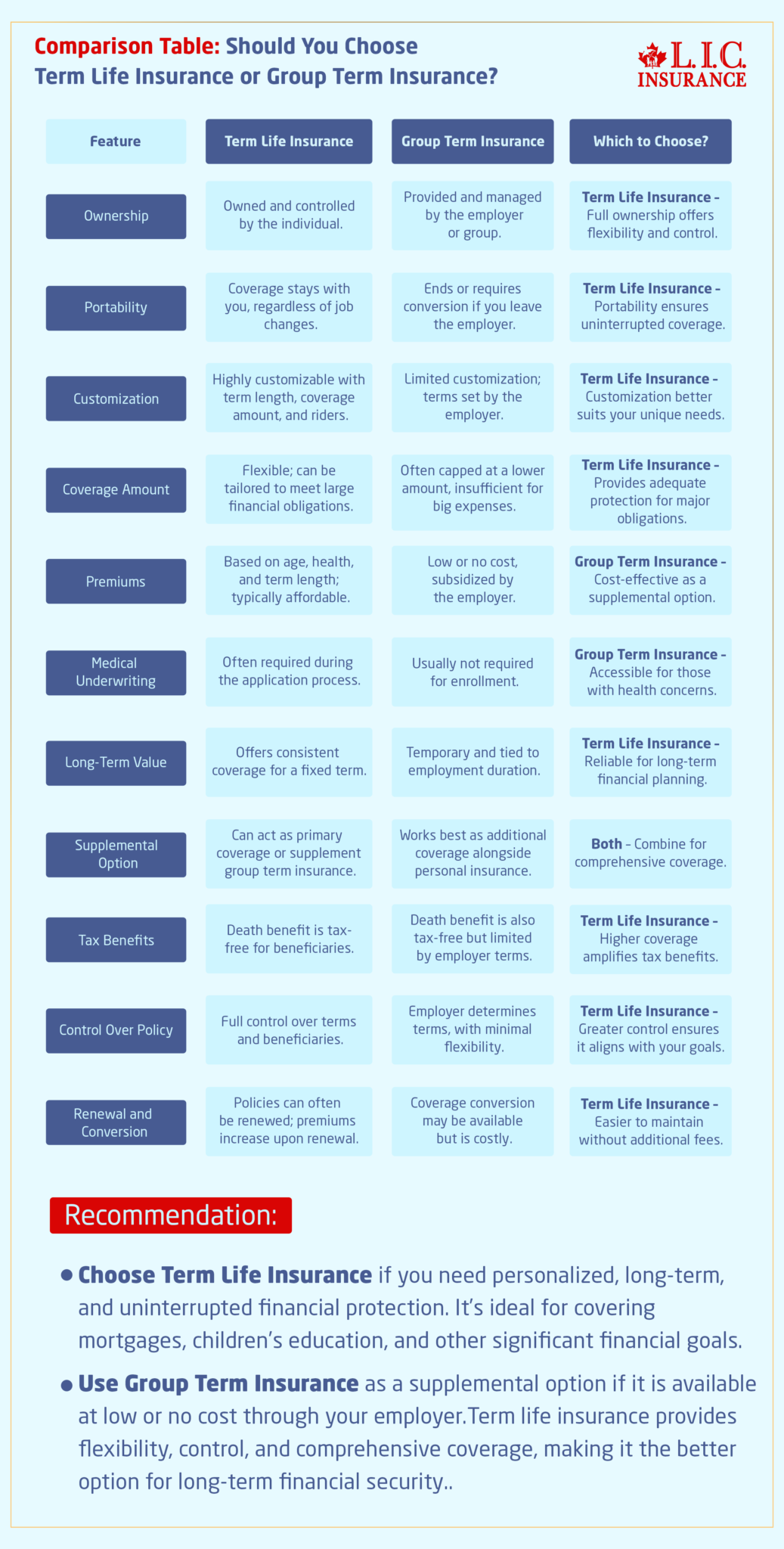
The following table outlines the functional differences that make group term the preferred choice for most working professionals in 2026.
| Feature | Group Term Life Insurance | Group Permanent Life Insurance |
|---|---|---|
| Primary Purpose | Pure death benefit protection. | Protection plus cash value accumulation. |
| Premium Cost | Low; highly affordable for high coverage. | High; often 5x to 10x more than term. |
| Cash Value | None. | Grows over time (tax-deferred). |
| Complexity | Simple; easy to understand. | High; involves interest rates and fees. |
| Portability | Often portable via "conversion" or "portability" riders. | Usually portable, but premiums stay high. |
| Ideal For | Replacing income and covering large debts. | Estate planning or niche tax strategies. |
| Underwriting | Often "guaranteed issue" up to certain limits. | May require more medical data. |
The Portability Myth
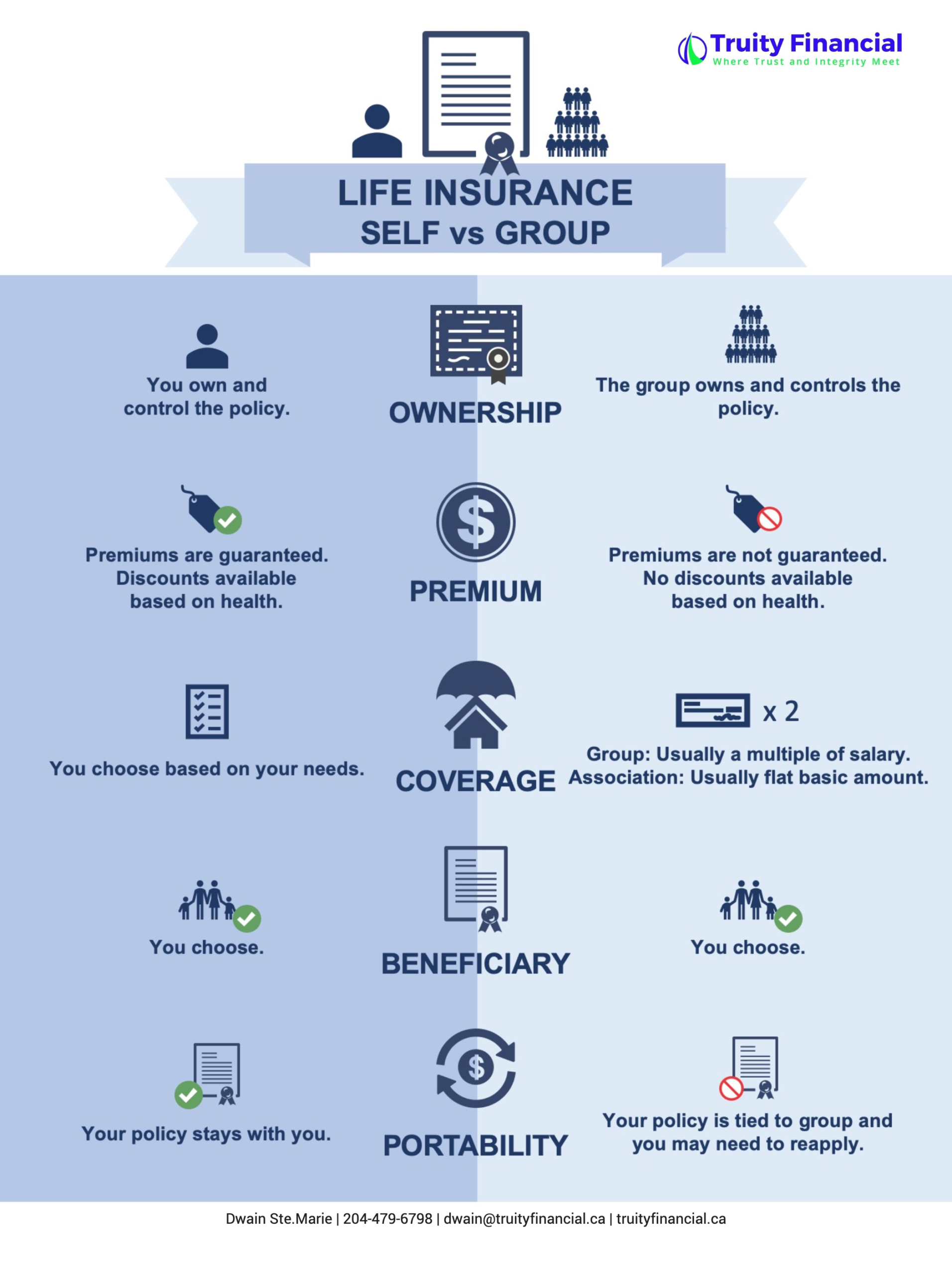
A common argument in favor of group permanent insurance is that it is "portable," meaning you can take it with you if you leave your job. While this is true, group term insurance in 2026 is almost universally portable or convertible as well.
Most modern group term plans allow employees to "port" their coverage (continue the term policy at a slightly higher rate) or "convert" it to an individual permanent policy without a medical exam if they leave the company. While converting to permanent is expensive, the option is there. Therefore, the "fear" of losing coverage should not be the primary driver for choosing a high-cost permanent policy from day one. It is often more logical to buy term and, if the need for permanent insurance arises later in life, purchase a high-quality individual policy that isn't tied to an employer's group contract.
When Does Group Term Not Win?
While group term is the winner for "most" employees, it is not a universal solution. Permanent insurance may be appropriate for:
- High-Net-Worth Individuals: Those who have exhausted all other tax-advantaged investment vehicles and are looking for estate liquidity.
- Special Needs Planning: Families who need a guaranteed payout at any age to fund a trust for a dependent with a disability.
- Final Expenses: Employees who simply want a small, guaranteed $10,000 to $25,000 policy to cover funeral costs regardless of when they die.
However, for the standard objective of protecting a family's standard of living during the working years, term remains the gold standard.
Common Questions About Group Term Life Insurance
Can I have both group term and an individual policy?
Yes, and many financial advisors recommend this. Relying solely on group term can be risky if you become too ill to work and lose your job (and thus your coverage). A common 2026 strategy is to take the free basic group term, supplement it with some additional group term for its low cost, and maintain a foundational individual term policy that stays with you regardless of your employment status.
What happens to my group term insurance when I retire?
In most cases, group term insurance ends when you retire, or the premiums become prohibitively expensive as you enter older age brackets (rates typically increase every five years). However, by the time you retire, your need for life insurance should ideally be lower because your debts are paid and your retirement savings are funded.
Is the "cash value" in group permanent policies worth the extra cost?
Generally, no. The rate of return on the cash value in many group permanent policies is lower than what an employee could achieve by investing in a diversified stock and bond portfolio. Additionally, the fees associated with the insurance wrapper often negate the tax benefits for those in middle-income brackets.
Are group term premiums fixed?
For basic coverage, the employer usually pays the premium. For supplemental coverage that you pay for, the rates are usually "age-banded." This means your premium will stay the same for a period (e.g., ages 30-34) and then increase slightly when you move into the next age bracket. Even with these increases, the cost usually remains far below that of a permanent policy for the duration of a career.
How much group term insurance should I buy?
A standard rule of thumb in 2026 is to aim for a total death benefit (including group and individual policies) of 10 to 12 times your annual income. Group term is the most affordable way to reach this target.
Final Recommendation
For most employees, the goal of life insurance is to provide a "safety net" that allows their family to maintain their lifestyle in the event of a tragedy. Group term life insurance provides the strongest safety net for the fewest dollars.
As you review your benefits for the 2026 plan year, prioritize maximizing your term coverage to ensure your family is fully protected. If you find yourself with extra money to invest, consider putting it into your employer-sponsored retirement plan or a health savings account (HSA) before committing to the high costs and complexities of a group permanent life insurance policy. The combination of high-limit term insurance and aggressive retirement saving is the most reliable path to long-term financial security.
Image Gallery