Understanding Irrevocable Life Insurance Trust Taxes for Cancel Decisions
Deciding to terminate or "cancel" an Irrevocable Life Insurance Trust (ILIT) requires a careful analysis of income tax on policy gains, potential gift tax reassessments, and estate tax exposure. Because ILITs are legally permanent, "ca...
Deciding to terminate or "cancel" an Irrevocable Life Insurance Trust (ILIT) requires a careful analysis of income tax on policy gains, potential gift tax reassessments, and estate tax exposure. Because ILITs are legally permanent, "cancellation" usually involves lapsing the policy, decanting the trust, or seeking a judicial dissolution, each triggering unique IRS reporting requirements.
Contents
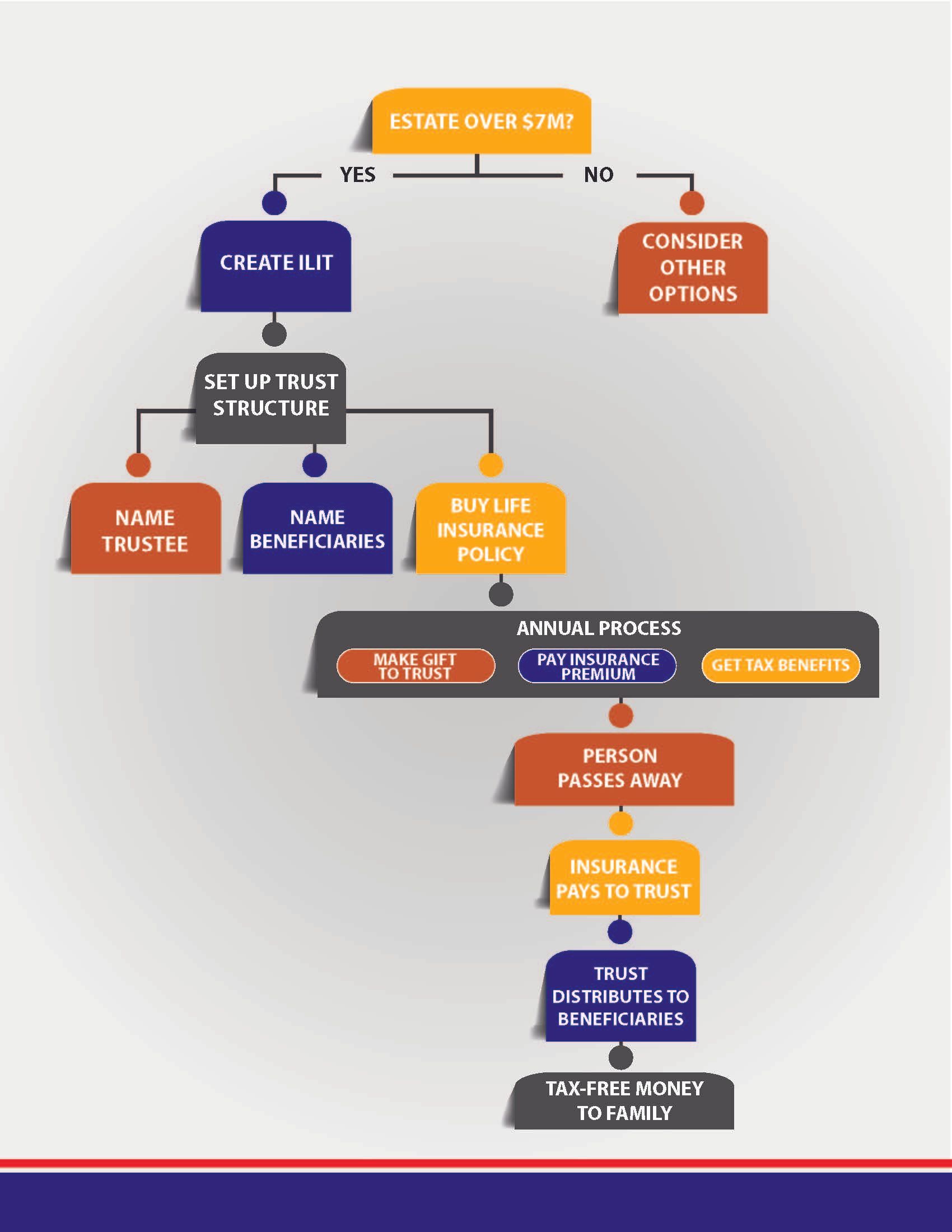
The landscape of estate planning changed significantly as of January 1, 2026. With the sunset of the enhanced federal estate tax exemptions provided by the Tax Cuts and Jobs Act of 2017, the exemption levels have reverted to approximately $7 million (adjusted for inflation) per individual. This shift has placed many taxpayers back into the "taxable estate" category, making the decision to dissolve an Irrevocable Life Insurance Trust (ILIT) a high-stakes financial move.
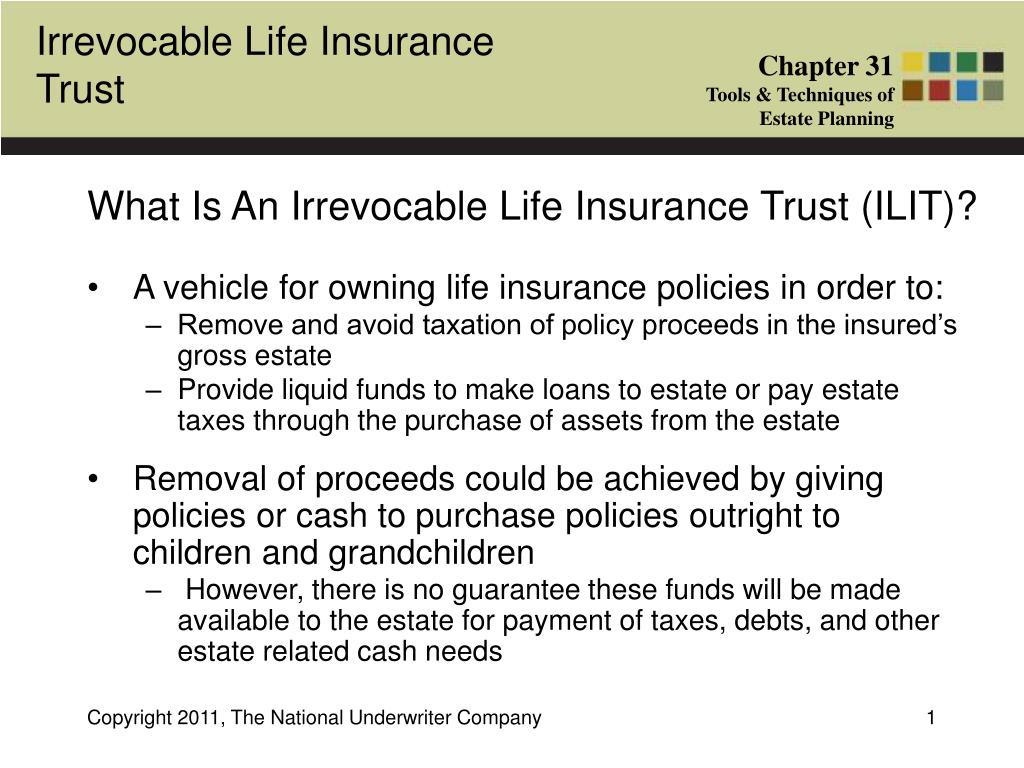
An ILIT is specifically designed to own a life insurance policy, removing the death benefit from the grantor’s taxable estate. However, changes in financial goals, rising premium costs, or the need for liquidity often lead grantors and trustees to consider "canceling" the arrangement. Because these trusts are irrevocable, the process is not as simple as closing a bank account; it involves navigating complex tax layers that can result in unexpected liabilities if not managed with precision.
The Legal and Tax Nature of an ILIT
To understand the tax implications of a cancel decision, one must first recognize that an ILIT is a separate legal entity. The grantor (the person who created the trust) no longer owns the life insurance policy; the trust does. When we speak of "canceling" an ILIT, we are usually referring to one of three actions: letting the underlying policy lapse, surrendering the policy for its cash value, or terminating the trust entity entirely.
Each of these actions is viewed differently by the IRS. The primary tax benefit of an ILIT—the exclusion of the death benefit from the gross estate under Internal Revenue Code (IRC) Section 2042—is lost the moment the trust is dissolved or the policy is transferred back to the grantor. Furthermore, if the grantor regains "incidents of ownership" within three years of a transfer before death, the IRS may still include the proceeds in the estate under the "Three-Year Rule" (IRC Section 2035).
Tax Consequences of Surrendering the Policy
One of the most common ways to "cancel" an ILIT is to have the trustee surrender the life insurance policy for its accumulated cash value. This move is often driven by a need for the trust to stop paying high premiums.
Income Tax on Gains
If a policy is surrendered, the IRS applies the "cost basis" rule. The cost basis is generally the total amount of premiums paid into the policy minus any prior tax-free withdrawals or dividends received. If the cash surrender value exceeds this basis, the excess is treated as ordinary income, not capital gains.
For example, if an ILIT has paid $200,000 in premiums over 15 years and the policy has a cash value of $250,000, surrendering the policy results in $50,000 of taxable ordinary income. Because trusts are subject to compressed tax brackets (reaching the highest marginal rate at a much lower income threshold than individuals), this tax hit can be substantial. In 2026, the threshold for the top trust tax rate remains very low, making it essential to calculate the tax liability before the trustee signs the surrender forms.
Modified Endowment Contracts (MECs)
If the policy inside the ILIT is classified as a Modified Endowment Contract (MEC) because it was funded too quickly (failing the "7-pay test"), the tax consequences are even harsher. Any distributions or surrenders from a MEC are taxed on a "gain-first" basis, and if the distribution occurs before the grantor (or in some cases, the beneficiary) reaches age 59½, a 10% federal penalty tax may apply.
Gift Tax Considerations and the Crummey Power
Most ILITs are funded through annual exclusion gifts. To ensure these gifts qualify for the annual gift tax exclusion ($18,000 per recipient in 2026, subject to inflation adjustments), trustees often issue "Crummey notices" to beneficiaries. These notices give beneficiaries a temporary right to withdraw the gifted funds, creating a "present interest."
When you decide to cancel an ILIT, you must account for the history of these gifts. If the trust is terminated and the remaining assets are distributed to beneficiaries, it generally does not trigger a new gift tax because the assets are already technically outside the grantor’s estate. However, if the trust is "canceled" by transferring the policy back to the grantor, this is a significant reversal. The beneficiaries are essentially giving up their future interest in the death benefit, which could, in rare circumstances, be construed as a gift from the beneficiaries back to the grantor, depending on the trust’s language and state law.
Methods of Canceling an ILIT and Their Tax Profiles
Since an ILIT is irrevocable, "canceling" it usually requires a strategic exit. The following table compares the most common methods used in 2026.
| Method | Description | Primary Tax Impact | Complexity |
|---|---|---|---|
| Lapsing | Ceasing premium payments until the policy expires. | No immediate tax; loss of all premiums paid. | Low |
| Surrender | Redeeming the policy for its current cash value. | Ordinary income tax on gains above basis. | Moderate |
| Decanting | Pouring assets from the old trust into a new one. | Generally tax-neutral; requires legal restructure. | High |
| Life Settlement | Selling the policy to a third party for cash. | Capital gains and ordinary income tax mix. | High |
| Distribution | Distributing the policy to beneficiaries. | Preserves policy; removes "incidents of ownership." | Moderate |
The Decanting Strategy
In 2026, "decanting" has become a preferred method for "canceling" an outdated ILIT without losing the tax benefits of the underlying assets. Decanting allows a trustee to move the life insurance policy from an old, restrictive trust into a new trust with more favorable terms. While this isn't a cancellation of the insurance, it is a cancellation of the original trust's governing rules. From a tax perspective, decanting is usually not a recognition event for income or gift tax, provided the beneficiaries' interests are not radically altered in a way that violates state statutes.
Life Settlements: A Taxable Exit
If the ILIT no longer serves its purpose, the trustee might sell the policy to a life settlement provider. This is often more lucrative than surrendering the policy back to the insurance company. However, the tax treatment is complex:
- The portion of the sale price up to the cost basis is tax-free.
- The portion from the cost basis up to the cash surrender value is taxed as ordinary income.
- Any remaining amount above the cash surrender value is taxed as capital gains.
The Estate Tax Risk of Reversion
The most significant risk in canceling an ILIT is the "re-inclusion" of assets in the grantor’s estate. If the cancel decision involves transferring the policy back into the grantor’s name (perhaps because the grantor wants to access the cash value personally), the entire death benefit will be included in their gross estate if they die within three years of the transfer.
With the 2026 estate tax exemption levels being much lower than in the previous decade, this re-inclusion could result in a 40% federal estate tax on the policy proceeds. For a $5 million policy, that is a $2 million tax bill that could have been avoided by maintaining the ILIT or using a more sophisticated termination strategy like a sale to a different defective grantor trust.
Fiduciary Responsibility and Tax Liability
The trustee of an ILIT has a fiduciary duty to the beneficiaries, not the grantor. If a trustee agrees to "cancel" a trust—for instance, by surrendering a policy—they must ensure that this action is in the best interest of the beneficiaries. If the surrender results in a large income tax bill that depletes the trust’s value, or if it robs the beneficiaries of a necessary death benefit, the trustee could be held personally liable for a breach of fiduciary duty.
Trustees must also ensure that final tax returns (Form 1041) are filed for the trust. If the trust recognized income from a policy surrender or sale, that income must be reported, and the tax must be paid either by the trust or passed through to the beneficiaries via Schedule K-1.
Frequently Asked Questions
Can I just stop paying premiums to cancel my ILIT?
Yes, letting a policy lapse is the simplest way to "cancel" the functional part of an ILIT. However, you should check if the policy has an "automatic premium loan" provision that will drain the cash value to pay premiums until the value is zero. From a tax perspective, a lapse usually does not trigger income tax unless there is an outstanding loan on the policy that exceeds the basis.
What happens to the "Crummey" gifts if the trust is canceled?
Gifts already made to the trust are irrevocable. If the trust is dissolved, those assets (or the cash from a policy surrender) must be distributed according to the trust's termination clause. You cannot simply take the money back as the grantor without creating significant gift and estate tax complications.
Is the cash surrender value of an ILIT policy taxable to the beneficiaries?
If the trustee surrenders the policy and then distributes the cash to the beneficiaries, the portion that represents the "gain" (value over premiums paid) is generally taxable. If the trust is a "Grantor Trust" for income tax purposes, the grantor might actually be responsible for paying the tax on those gains, even if they don't receive the cash.
How does the 2026 exemption change affect my cancel decision?
Because the federal estate tax exemption dropped in 2026, you may now have a taxable estate when you didn't in 2025. If you cancel your ILIT now, you are bringing those insurance proceeds back into your taxable estate. For many, 2026 is actually a year to create or keep ILITs, rather than cancel them.
Can I sell the policy from the ILIT back to myself?
Selling the policy to the grantor for its fair market value is a common strategy to "cancel" the trust arrangement while keeping the insurance. If performed correctly, this can avoid the "transfer for value" rule (IRC Section 101), which would otherwise make the death benefit taxable. However, this requires a formal valuation and a specific exception to the rule, such as a sale to the insured.
Strategic Recommendation
Before canceling an Irrevocable Life Insurance Trust in 2026, perform a "Stay vs. Go" analysis. This involves calculating the projected estate tax liability under the new $7 million exemption thresholds, evaluating the internal rate of return (IRR) on the current policy premiums, and quantifying the potential income tax hit upon surrender.
If the goal is to stop paying premiums, consider a "reduced paid-up" option within the policy, which allows the trust to keep a smaller death benefit without further payments, thereby maintaining the estate tax shelter. If termination is the only path, ensure the trustee documents that the decision is in the beneficiaries' best interest and consults with a tax professional to handle the final Form 1041 filing.
Disclaimer: This article is for informational purposes only and does not constitute legal, tax, or financial advice. Tax laws, including those involving ILITs and estate exemptions, are subject to change and vary by jurisdiction. Consult with a qualified estate attorney or CPA before making decisions regarding irrevocable trusts.
Image Gallery