Understanding the Ara Güler in Design: Principles of Visual Storytelling
Understanding the Ara Güler in design involves integrating human-centric narrative, high-contrast visual tension, and the "decisive moment" into modern creative workflows. Rather than focusing on sterile technical perfection, this appr...
Understanding the Ara Güler in design involves integrating human-centric narrative, high-contrast visual tension, and the "decisive moment" into modern creative workflows. Rather than focusing on sterile technical perfection, this approach prioritizes the "soul" of a subject, using gritty realism and contextual depth to create designs that resonate emotionally and historically with their audience.
Contents
The Legacy of the "Eye of Istanbul" in a Design Context
To understand the "Ara Güler" in design, one must first recognize the man behind the philosophy. Ara Güler (1928–2018), often hailed as the "Eye of Istanbul," was not merely a photographer; he was a visual historian and a master of atmosphere. In 2026, as digital design trends lean heavily toward AI-generated perfection and ultra-clean aesthetics, the Güler philosophy serves as a vital counterweight, emphasizing authenticity over artifice.
Güler’s work was defined by his refusal to see photography as a pure art form. To him, it was a recording of truth—a testimony of human existence. When we apply this to the field of design, we shift our focus from "making things look good" to "making things feel real." This transition is essential for brands and creators who want to build trust in an era where consumers are increasingly skeptical of overly polished, synthetic visuals.
In the design world of 2026, "the Ara Güler" represents a move toward "Humanistic Design." This methodology leverages the grit, the shadows, and the unposed reality of everyday life to create a narrative that users can see themselves in. It is about capturing the "vibe" of a place or a product through its interaction with real people, rather than showcasing it in a vacuum.
The Core Principles of the Ara Güler Aesthetic
Applying Güler’s logic to design requires a departure from traditional "rule-of-thirds" rigidity in favor of emotional composition. There are three primary pillars to this approach:
1. The Primacy of the Human Element
Güler famously stated that a landscape without a human is empty. In graphic and web design, this translates to the intentional use of human presence—not as stock-photo models, but as active participants in a story. If you are designing a travel interface, for instance, understanding the Ara Güler means avoiding the "empty beach" trope and instead focusing on the fisherman mending his nets or the local merchant in a crowded bazaar. The goal is to design around the lived experience.
2. Narrative Shadow and High Contrast
Technically, Güler’s work was characterized by deep blacks and stark highlights. In design, this isn't just about color grading; it’s about visual hierarchy. Using high contrast allows a designer to "hide" the unnecessary in the shadows while "illuminating" the core message. This creates a sense of mystery and depth that flat design often lacks. It forces the viewer to lean in and engage with the content to find the details.
3. Historical and Contextual Depth
Every design element should have a "why." Güler did not take photos for the sake of the frame; he took them to document a moment in time. When designers adopt this mindset, they move away from transient trends and toward timelessness. This involves researching the cultural and historical context of a project and reflecting those nuances in the typography, color palette, and textures.
Applying the Güler Philosophy to Modern Design Disciplines
The "Ara Güler effect" can be applied across various branches of design, from the digital realm to physical architecture.
UX/UI Design: The Decisive User Moment
In User Experience (UX) design, the "decisive moment" refers to the exact point where a user finds value or experiences an emotional connection with a product. Designing through the lens of Ara Güler involves:
- Empathy-First Layouts: Prioritizing user flows that feel natural and "lived-in" rather than technically optimized but emotionally cold.
- Authentic Imagery: Replacing generic iconography with "witness-style" photography that captures real-time usage.
- Emotional Micro-interactions: Adding small design details that acknowledge the human state, such as haptic feedback that feels "tactile" rather than robotic.
Branding and Identity: The "Anti-Corporate" Aesthetic
For brands in 2026, the Ara Güler approach is a powerful tool for differentiation. Instead of the "Blanding" trend (characterized by sans-serif fonts and pastel colors), Güler-inspired branding embraces:
- Grain and Texture: Utilizing analog textures to provide a sense of heritage and permanence.
- Documentary-Style Brand Stories: Creating marketing collateral that looks like a photo-essay rather than a sales pitch.
- Gritty Typography: Using typefaces with historical roots or "imperfect" edges that suggest a human hand was involved in the creation.
Technical Comparison: Güler-Inspired Design vs. Modern Minimalism
| Feature | Güler-Inspired Design | Modern Commercial Minimalism |
|---|---|---|
| Primary Goal | Emotional Narrative & Truth | Functional Clarity & Speed |
| Visual Tone | Gritty, High-Contrast, Moody | Clean, Low-Contrast, Bright |
| Human Role | Central, Unposed, Authentic | Peripheral, Staged, Idealized |
| Color Palette | Monochromatic or Desaturated | Vibrant or Pastel Monotones |
| Imagery | Grainy, "Leica-style" 35mm | Sharp, 8K Digital, AI-Polished |
| Perspective | Wide-angle, Contextual | Macro-focus, Product-centric |
Implementing "The Ara Güler" in Your Design Workflow
To successfully integrate these principles, designers should follow a specific set of evaluative steps during the ideation phase.
Step 1: Define the Narrative
Before opening a design tool, write down the story. If this design were a frame from a documentary, what would it be saying? Avoid generic goals like "increase conversion" and focus on "show the struggle and the triumph of the user."
Step 2: Source or Create "Witness" Imagery
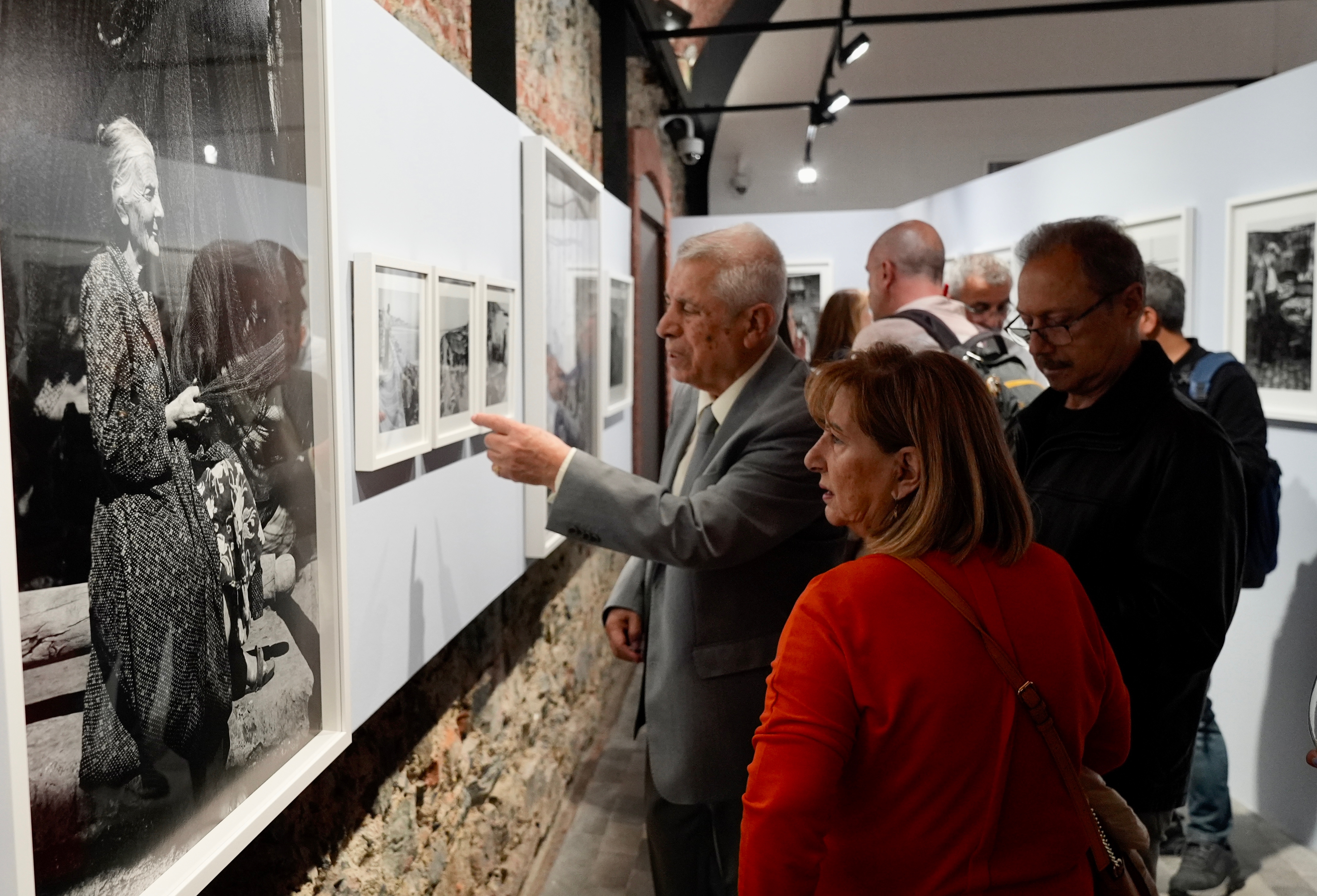
If your project requires photography, avoid the studio. The Ara Güler Museum provides extensive examples of how "witnessing" a scene creates more impact than "staging" one. Use natural light and capture subjects in their environment. If you must use stock, look for "editorial" or "unposed" categories that prioritize realism over perfection.
Step 3: Manipulate Contrast for Emotional Impact
Use shadows to guide the eye. In web design, this can be achieved through clever use of gradients, dark mode interfaces, and "lo-fi" visual filters. The goal is to create a design that feels like it has physical weight and history.
Step 4: Add Contextual "Noise"
Modern design often tries to remove all "noise." However, Güler’s work thrived on it—the smoke from a coffee house, the blur of a moving tram. In 2026, designers are using subtle grain, film-burn effects, and irregular borders to reintroduce this human "noise" into digital spaces.
Common Pitfalls and Misinterpretations
While the Ara Güler style is evocative, it is often misunderstood. One common mistake is equating "Güler design" with simply turning a photo black and white. True Güler-inspired design is about the interaction between the subject and its environment.
Another pitfall is "performative grit." Adding artificial grain to a design that is fundamentally corporate and sterile feels dishonest. The philosophy requires a foundational change in how you view the subject matter. If the brand or product doesn't value authenticity, applying a Güler-esque "mask" will result in a visual mismatch that users will intuitively sense as fake.
The Future of the Aesthetic in 2026
As we move through 2026, the "Ara Güler" in design is becoming a hallmark of luxury and high-end artisanal brands. In a world where AI can generate infinite perfect images, the "imperfectly human" becomes the new premium. Designers who can master the balance of modern utility and Güler’s timeless, gritty storytelling are finding themselves in high demand for heritage brands, high-end journalism, and ethical tech startups.
The "Eye of Istanbul" was about looking at the world with compassion and honesty. For a designer, this means looking past the pixels to the people who will actually interact with the work. It is a reminder that design is a branch of history, and every project is a chance to document the human condition.
Frequently Asked Questions
1. Is "Understanding the Ara Güler" only applicable to photography-heavy designs? No. While photography is the root of the philosophy, the principles of contrast, human-centricity, and narrative depth apply to typography, layout, and even data visualization. It is a mindset about how to present information with emotional weight.
2. How does this style fit into modern accessibility (A11y) standards? High contrast, a hallmark of Güler’s style, is actually beneficial for visual accessibility. However, designers must ensure that the "gritty" textures or shadows do not interfere with text legibility. The philosophy emphasizes "truth," and clear communication is the ultimate design truth.
3. Can I use AI to create Ara Güler-style designs? While AI can mimic the grain and contrast, it often fails at capturing the "decisive moment"—the genuine emotional spark of a human interaction. Designers in 2026 use AI for the "heavy lifting" of layout but rely on human-captured photography and manual "imperfect" touches to achieve the Güler soul.
4. Why is this style trending in 2026? After years of "Clean Tech" aesthetics, there is a global cultural pushback toward "The New Sincerity." Users are fatigued by overly sanitized digital environments and are seeking out designs that feel tactile, historical, and honest.
5. Does "understanding the Ara Güler" mean my designs must be dark and moody? Not necessarily. While his famous works are often monochromatic, the core of his philosophy is about truth. If the truth of your subject is bright and energetic, you can apply his principles of "witnessing" and "context" using a vibrant palette, provided it remains authentic.
Practical Recommendation
To start implementing the Ara Güler philosophy, begin by auditing your current projects for "honesty." Identify one area where you have used a "perfect" placeholder (like a stock photo or a generic icon) and replace it with something that shows the "process" or the "imperfection" of the real-world equivalent. Study the Magnum Photos archives—of which Güler was a member—to see how narrative is built through composition and shadow.
Image Gallery