Understanding Other States Insurance in Workers' Compensation Policies
Other States Insurance (Part Three of a standard Workers' Compensation policy) protects employers when employees temporarily travel, perform work, or face unexpected exposure in states outside their primary operating locations. It auto...
Other States Insurance (Part Three of a standard Workers' Compensation policy) protects employers when employees temporarily travel, perform work, or face unexpected exposure in states outside their primary operating locations. It automatically extends coverage to listed non-primary states, provided the employer notifies the insurer promptly once operations begin in those jurisdictions.
Contents
What Is Other States Insurance in Workers' Compensation?
Commercial Workers' Compensation insurance policies in the United States follow standardized forms established by the National Council on Compensation Insurance (NCCI) or state-specific rating bureaus. The standard policy form divided into three distinct coverage sections: Part One (Workers' Compensation), Part Two (Employers' Liability), and Part Three (Other States Insurance).
While Part One covers claims in states where an employer maintains known, ongoing operations, Other States Insurance (OSI) serves as a vital safety net for incidental, temporary, or unanticipated exposures across state lines. As business operations become increasingly mobile and remote work arrangements expand, understanding how Part Three functions is critical for preventing costly coverage gaps and statutory penalties.
| Standard Workers' Comp Policy Section | Coverage Details |
|---|---|
| Part One: Primary States (Item 3.A) | Covers Known Active States |
| Part Two: Employers' Liability | Covers Third-Party / Tort |
| Part Three: Other States (Item 3.C) | Covers Incidental / New States |
Part One (Item 3.A) vs. Part Three (Item 3.C) Explained
To understand how coverage applies, policyholders must examine the Information Page (declarations page) of their Workers' Compensation contract.
- Item 3.A (Primary States): Lists all states where the business has existing, permanent physical locations, active employees residing and working, or ongoing project operations at the start of the policy term. Part One applies statutory benefits under the laws of the states specifically named in Item 3.A.
- Item 3.C (Other States): Lists all other states where the business does not currently operate, but where work might occur during the policy period. If an employee suffers a work-related injury while working in a state listed under Item 3.C, Part Three extends coverage according to that state’s statutory workers' compensation benefits.
For Item 3.C coverage to trigger, the state must be explicitly listed on the policy declaration (often designated as "All states except those listed in Item 3.A and monopolistic state funds") and the employer must not have had existing operations in that state when the policy went into effect.
How Other States Coverage Works in Practice
When a worker leaves their home state to conduct business, attend a conference, supervise a job site, or perform remote duties in another jurisdiction, multiple state laws can simultaneously claim jurisdiction over a workplace injury.
Part Three of the policy guarantees that if an injured worker files a claim in a secondary state listed under Item 3.C, the insurer will pay the statutory benefits required by that state's legal framework. However, this coverage operates under specific contractual conditions and legal principles.
- Employer Headquarters (State A - Item 3.A)
- Temporary Business Travel / Project
- Work Activity in State B (Item 3.C Listed)
- Injury Occurs in State B
- Option 1: File in State A (Covered under Part One / Extraterritorial)
- Option 2: File in State B (Covered under Part Three / OSI)
- Injury Occurs in State B
Extraterritorial Provisions and State Reciprocity
Every state maintains its own statutory workers' compensation laws, which include "extraterritorial" provisions. Extraterritoriality determines how long a home state’s workers' compensation law applies to an employee working temporarily outside state borders.
- Temporary Out-of-State Travel: If an employee based in Pennsylvania travels to New York for a three-day meeting and sustains an injury, Pennsylvania's extraterritorial rules typically cover the claim under Part One.
- Dual Jurisdiction Claims: The injured worker often retains the right to file a claim in the state where the injury occurred (New York) or the state where they were hired and regularly employed (Pennsylvania). If the worker chooses New York, and New York offers higher indemnity benefits, Part Three ensures the policy covers the higher state-mandated payouts.
- Reciprocal Agreements: Certain neighboring states maintain formal reciprocity agreements that exempt out-of-state workers from local insurance rules during brief working periods. Where reciprocity does not exist, local statutory mandates take effect immediately upon entry.
Employer Reporting Duties and Policy Endorsements
Part Three is not a permanent substitute for registering operations in a new state. Standard NCCI policy terms mandate clear reporting obligations:
- Immediate Notification: If an employer begins work in an Item 3.C state, they must notify the insurance carrier immediately.
- Policy Endorsement: Upon notification, the insurer moves the new state from Item 3.C to Item 3.A via policy endorsement.
- Premium Adjustment: The carrier recalculates the policy premium based on the payroll earned in the newly added state, applying that state’s specific risk classifications and rate structures.
If an employer knowingly expands into a new state before the policy inception date but fails to list it in Item 3.A, Part Three will generally not protect the business. Carriers routinely deny Part Three claims if evidence shows the employer had active, ongoing operations in that state prior to the policy effective date.
The Exclusion of Monopolistic States
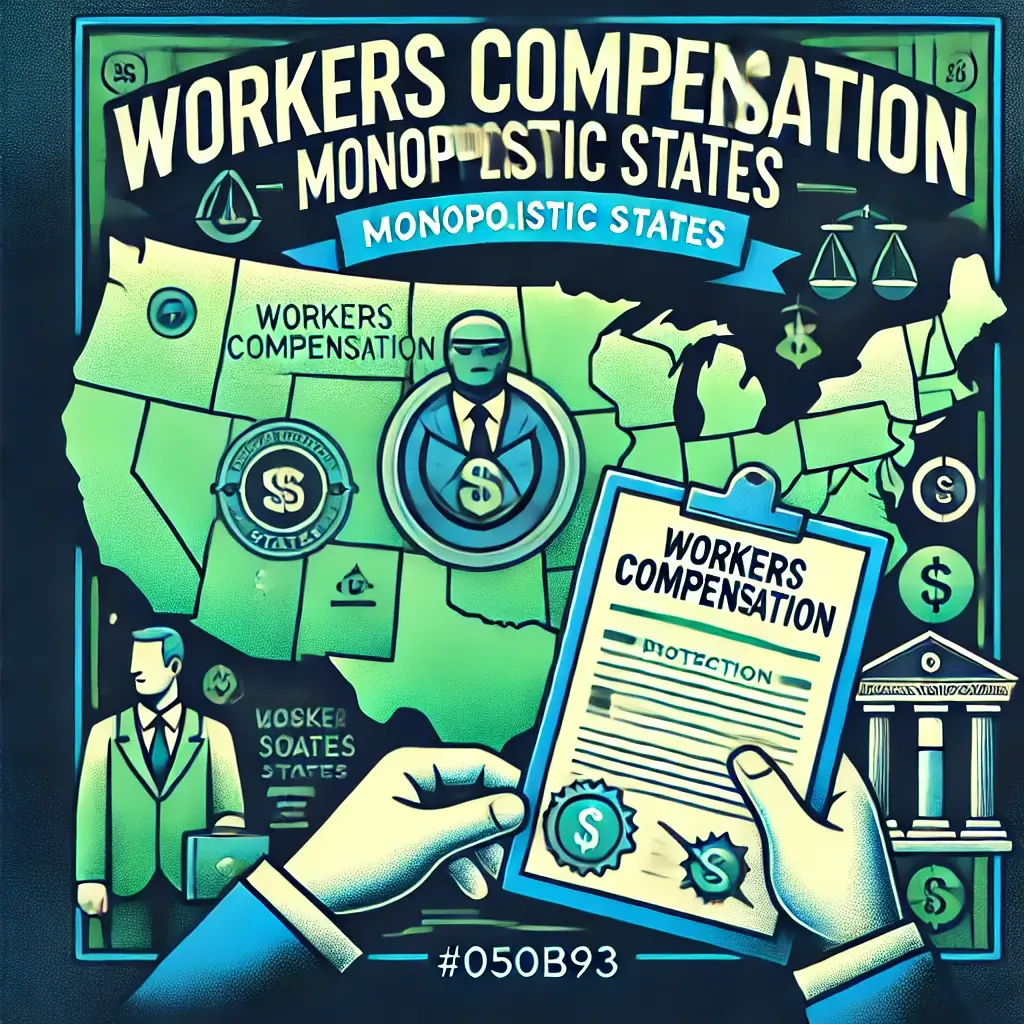
A critical limitation of standard Other States Insurance involves monopolistic state funds. In these jurisdictions, state law prohibits private insurance companies from writing statutory workers' compensation coverage.
The four monopolistic U.S. states are:
- Ohio (administered by the Ohio Bureau of Workers' Compensation)
- North Dakota (administered by Workforce Safety & Insurance)
- Washington (administered by the Washington State Department of Labor & Industries)
- Wyoming (administered by the Wyoming Department of Workforce Services)
| State | Regulating Authority |
|---|---|
| Ohio | Bureau of Workers' Compensation (BWC) |
| North Dakota | Workforce Safety & Insurance (WSI) |
| Washington | Department of Labor & Industries (L&I) |
| Wyoming | Department of Workforce Services (DWS) |
How to Cover Operations in Monopolistic Jurisdictions
Because private carriers cannot provide statutory benefits in monopolistic jurisdictions, standard Item 3.C wording explicitly excludes Ohio, North Dakota, Washington, and Wyoming.
If an employer sends workers into any of these four states, they must take specific administrative actions:
- Establish a State Account: The business must register directly with the appropriate state fund authority and purchase a separate, state-specific workers' compensation policy.
- Purchase Stop-Gap Employer's Liability: Monopolistic state funds provide statutory workers' compensation coverage (medical and wage replacement), but they rarely include Employers' Liability insurance (Part Two). To protect against third-party lawsuits or gross negligence claims, employers must purchase a Stop-Gap Endorsement through their private commercial general liability or primary workers' compensation carrier.
Comparative Breakdown: Coverage Items in Standard Policies
The following table contrasts the primary policy sections to help business owners, risk managers, and HR professionals identify where specific state exposures belong:
| Policy Feature | Part One: Primary Coverage (Item 3.A) | Part Three: Other States (Item 3.C) | Monopolistic State Coverage |
|---|---|---|---|
| Scope of Work | Known, permanent, or regular operations. | Incidental, temporary, or unexpected travel/work. | Operations occurring in OH, ND, WA, or WY. |
| State Listing Requirement | Explicitly named on policy declaration. | Covered via general language ("All states except..."). | Cannot be listed; requires separate state fund policy. |
| Pre-existing Exposure Coverage | Fully covered. | Not covered if operations existed before policy inception. | Excluded from private policies entirely. |
| Employers' Liability Included? | Yes (Part Two applies). | Yes (Part Two applies). | No (Requires a separate Stop-Gap Endorsement). |
| Audit and Payroll Impact | Regular payroll assigned to state class codes. | Payroll reconciled and shifted to Item 3.A upon audit. | Payroll reported directly to state government funds. |
Critical Risks and Common Employer Errors
Failing to configure Other States Insurance correctly exposes businesses to uninsured workers' compensation claims, statutory penalties, and compliance fines.
Common Policy Pitfalls:
- Pre-Existing Work: Starting operations in a state before policy inception without listing in Item 3.A.
- Remote Work Drift: Out-of-state remote workers setting up permanent residence without updating Item 3.A.
- Monopolistic Reliance: Assuming Item 3.C covers work in OH, ND, WA, or WY without a state fund policy.
1. The Pre-Existing Exposure Trap
The most frequent claim denial under Part Three occurs when an employer begins operations in a secondary state before the policy policy year begins, but only lists the primary headquarters state under Item 3.A. If an injury occurs on day two of the policy, the insurer will investigate when operations in that state commenced. If records show active contracts or leased space prior to the inception date, the carrier can legally deny Part Three coverage.
2. Remote Worker Relocation ("Work-from-Anywhere" Exposure)
The modern remote and hybrid workforce has introduced widespread workers' compensation non-compliance. When an employee quietly relocates from an Item 3.A state to a new state to work remotely, their home becomes a designated place of employment. If the business fails to register that state under Item 3.A once the relocation becomes permanent, the employer faces both coverage disputes and state labor board fines for failure to maintain local coverage.
3. Relying on Extraterritorial Rules Indefinitely
Extraterritorial provisions are intended for temporary travel—such as business trips, short trade shows, or temporary field service. They do not cover indefinite work assignments. Most states enforce strict timelines (e.g., 30, 60, or 90 days). Once an employee exceeds a state's temporary threshold, local law mandates full coverage under that state’s rules, requiring an Item 3.A policy update.
Managing Multi-State Payroll and Audit Compliance
Insurance carriers conduct premium audits at the conclusion of every policy term to reconcile estimated payroll against actual exposure. Managing multi-state payroll correctly ensures fair pricing and prevents unexpected audit billing adjustments.
Step-by-Step Audit and Compliance Protocol
- Maintain Location-Based Payroll Records: Track payroll by employee location rather than administrative corporate headquarters. If an employee resides and works in North Carolina for a Georgia-based company, their payroll belongs to North Carolina.
- Execute Timely Policy Change Requests: As soon as an out-of-state contract is signed or a new out-of-state worker is hired, instruct your insurance broker to issue an endorsement moving that state from Item 3.C to Item 3.A.
- Track Travel Schedules for Mobile Employees: Keep detailed logs of travel dates for field service technicians, sales representatives, and traveling managers. If an auditor questions an out-of-state injury claim, travel logs serve as proof that the exposure was temporary and appropriately covered under Part Three.
- Verify Subcontractor Coverage: When hiring out-of-state subcontractors, obtain certificates of insurance (COIs) showing valid workers' compensation coverage in the state where the work takes place. Uninsured out-of-state subcontractor payroll will be assessed against your policy during an audit at high local class code rates.
Frequently Asked Questions
What happens if an employee is injured in a state not listed under Item 3.A or Item 3.C?
If a state is omitted from both Item 3.A and Item 3.C, Part Three coverage does not apply. The employer becomes personally liable for all medical costs, disability benefits, legal fees, and administrative fines imposed by that state's workers' compensation board. To avoid this, policies should include broad 3.C wording such as "All states except those listed in Item 3.A and monopolistic funds."
Does Other States Insurance cover independent contractors traveling across state lines?
No. Workers' Compensation policies only cover statutory employees. Independent contractors are expected to carry their own commercial insurance policies. However, if a state labor board reclassifies an independent contractor as an employee following an injury, the carrier will evaluate coverage based on employment status rules, and any resulting payroll will be added during the annual audit.
How does Stop-Gap coverage work for monopolistic states?
Stop-Gap coverage is an endorsement added to an employer’s private workers' compensation or commercial general liability policy. It provides Employers' Liability (Part Two) protection for injuries occurring in monopolistic states (Ohio, North Dakota, Washington, Wyoming), filling the legal liability gap left by state-run funds, which only cover statutory benefits.
Can an employer use Other States Insurance for permanent remote employees?
No. Permanent remote employees establish ongoing, predictable business exposure in their home states. Employers must report these states to their carrier so they can be explicitly listed under Item 3.A. Other States Insurance (Part Three) is reserved exclusively for unexpected, incidental, or temporary exposures.
Are international travel and foreign work covered under Part Three?
Standard domestic Workers' Compensation policies—including Part Three—generally exclude work performed outside the United States and Canada. Employers sending workers overseas must purchase specialized Foreign Voluntary Workers' Compensation (FVWC) coverage, which includes international medical benefits, repatriation costs, and emergency evacuation coverage.
Practical Action Plan for Business Risk Managers
To ensure your organization maintains continuous, compliant workers' compensation coverage across state lines, execute the following actions:
- Review Item 3.C Wording Immediately: Open your current policy Information Page and confirm that Part Three contains broad language ("All states except Item 3.A and monopolistic states") rather than a restrictive, short list of states.
- Audit Remote Workforce Geographies: Run a payroll report categorized by employee primary residence and physical work location. Cross-reference every active state against your policy’s Item 3.A listing.
- Establish Out-of-State Travel Thresholds: Implement a corporate HR policy requiring managers to notify the risk management or finance team whenever an employee is scheduled to work out of state for more than 14 consecutive days.
- Secure Monopolistic Registration for Target States: If your business bids on projects or hires workers in Ohio, Washington, North Dakota, or Wyoming, register with the respective state agency before work begins and add a Stop-Gap endorsement to your private policy.
Disclaimer: Workers' compensation regulations, extraterritorial provisions, and policy form interpretations vary significantly by state jurisdiction and specific carrier policy language. Business owners should consult a licensed commercial insurance broker or legal professional to review specific multi-state coverage requirements.
Image Gallery