Does Pepsi Own Subway? The Truth About Ownership and the 10-Year Beverage Deal
No, PepsiCo does not own Subway. As of 2026, Subway is owned by Roark Capital Group, a private equity firm that finalized its acquisition of the sandwich chain in early 2024. The confusion regarding ownership stems from a massive 10-ye...
No, PepsiCo does not own Subway. As of 2026, Subway is owned by Roark Capital Group, a private equity firm that finalized its acquisition of the sandwich chain in early 2024. The confusion regarding ownership stems from a massive 10-year exclusive beverage agreement Subway signed with PepsiCo, which began implementation in 2025.
Contents
For decades, Subway was one of the largest privately-held restaurant chains in the world, remaining under the control of its founding families. However, recent corporate shifts, including a multi-billion dollar sale and a high-profile change in beverage suppliers, have led many consumers to wonder if the "Blue Giant" of the soda world had purchased the "Green Machine" of the sandwich world. To understand the current status of Subway, one must look at the distinction between corporate ownership and strategic brand partnerships.
The Ownership of Subway: Roark Capital Group
The most significant change in Subway’s history occurred in August 2023, when the company announced it had reached an agreement to be acquired by affiliates of Roark Capital Group. This deal, valued at approximately $9.6 billion, officially closed in April 2024 after undergoing regulatory scrutiny from the Federal Trade Commission (FTC).
Roark Capital is a private equity firm based in Atlanta, Georgia, with deep roots in the food and beverage industry. By acquiring Subway, Roark added one of the world's most ubiquitous brands to its already massive portfolio. Before this acquisition, Subway had been owned by its co-founders, Fred DeLuca and Peter Buck, and their families since its inception in 1965.
Who is Roark Capital?
Roark Capital specializes in leveraged buyout investments in middle-market companies, specifically focusing on the franchise and multi-unit business sectors. Their involvement in the fast-food industry is extensive. Roark is the primary backer of Inspire Brands, which operates several major competitors and peers to Subway, including:
- Arby’s
- Dunkin’
- Buffalo Wild Wings
- Sonic Drive-In
- Jimmy John’s
- Baskin-Robbins
While Roark Capital owns Subway, it is important to note that Subway operates as a separate entity from Inspire Brands within the Roark portfolio. This allows Subway to maintain its specific brand identity and corporate structure while benefiting from the financial backing and operational expertise of a massive private equity firm.
The PepsiCo Partnership: Why People Get Confused
If PepsiCo doesn’t own Subway, why is the association so strong? The primary reason is a landmark business deal announced in March 2024. Subway entered into a 10-year agreement with PepsiCo to become the exclusive provider of fountain beverages for all U.S. restaurants.
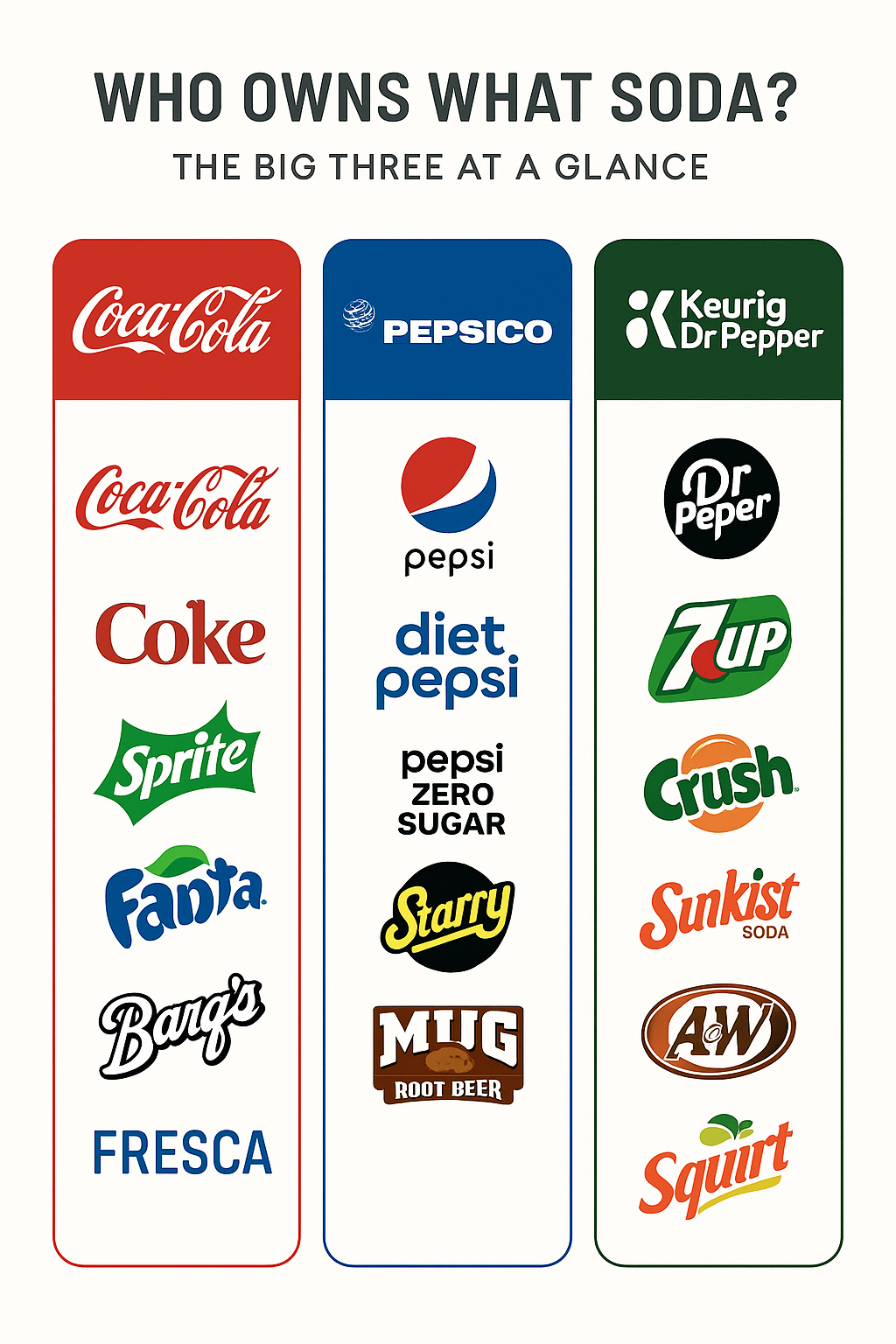
This transition began on January 1, 2025, effectively ending Subway’s nearly 20-year relationship with The Coca-Cola Company. Under the terms of this deal, Subway locations across the United States replaced Coca-Cola, Diet Coke, Sprite, and Vitamin Water with Pepsi, Diet Pepsi, Mountain Dew, Starry, and Tropicana products.
The Breadth of the PepsiCo Relationship
The partnership between Subway and PepsiCo actually goes deeper than just fountain sodas. Even before the 2025 beverage shift, Subway had a long-standing relationship with Frito-Lay, a subsidiary of PepsiCo. Since the 1990s, the chips sold at Subway—such as Lay’s, Doritos, and Baked Lay’s—have been provided by PepsiCo’s snack division.
By consolidating both snacks and beverages under the PepsiCo umbrella, Subway streamlined its supply chain. From a consumer perspective, seeing Pepsi logos on the soda fountains, Frito-Lay logos on the chip racks, and Gatorade in the refrigerated cases makes it easy to assume that PepsiCo is the parent company. In reality, this is a supplier-distributor relationship, not a parent-subsidiary one.
Comparing Subway’s Corporate Structure and Partnerships
To clarify the players involved in Subway's operations as of 2026, the following table breaks down the roles of various corporate entities.
| Entity | Role | Relationship to Subway |
|---|---|---|
| Subway IP LLC | Brand Owner | The legal entity that owns the trademarks and brand. |
| Roark Capital Group | Parent Company | The private equity firm that owns Subway IP LLC. |
| PepsiCo, Inc. | Beverage Partner | Exclusive provider of sodas and snacks (Frito-Lay). |
| Franchisees | Operators | Independent business owners who license the Subway brand. |
| Inspire Brands | Affiliate | A separate Roark-owned company (operates Jimmy John's). |
The Strategic Reason for the Switch to Pepsi
The move from Coca-Cola to Pepsi was not a decision made lightly. For a brand with over 20,000 locations in the U.S. alone, changing every fountain machine and signage is a massive logistical undertaking. There were several strategic drivers behind this shift:
- Supply Chain Integration: By having the same company provide both the chips and the drinks, Subway reduced the complexity of its vendor management.
- Marketing Synergy: PepsiCo is known for aggressive marketing and sports partnerships (such as the NFL). Subway can now more easily participate in joint promotions involving both a sub and a specific PepsiCo product.
- Financial Incentives: In the world of franchising, beverage contracts are often accompanied by significant "signing bonuses" or marketing funds provided by the beverage company to the brand. PepsiCo likely offered a more competitive financial package than Coca-Cola to secure such a massive account.
- Consistency: While the U.S. was a Coca-Cola territory for Subway for two decades, many of Subway's international markets—including Canada, the UK, and parts of Europe—were already serving Pepsi products. This move brought the U.S. market in line with many global operations.
Does Pepsi Own Other Fast Food Chains?
The idea that Pepsi owns restaurant chains is rooted in history. In the past, PepsiCo actually did own several of the world's most famous fast-food brands. In the 1970s and 80s, PepsiCo acquired Pizza Hut, Taco Bell, and KFC.
However, in 1997, PepsiCo made the strategic decision to exit the restaurant business to focus on its core strengths: snack foods and beverages. They spun off their restaurant division into a new company called Tricon Global Restaurants, which later became Yum! Brands.
While PepsiCo no longer owns these chains, they maintain long-term, exclusive beverage contracts with them. This "Legacy of Ownership" is a major reason why the public often assumes that if a restaurant serves Pepsi exclusively, PepsiCo must own it. This is rarely the case today; instead, these are almost always contractual agreements.
The Role of the Franchisee in the Pepsi Deal
It is vital to understand that Subway is a 100% franchised system. The corporate entity (owned by Roark Capital) does not own the individual stores. Instead, independent entrepreneurs own and operate the locations.
When "Subway" signs a deal with PepsiCo, it is the corporate headquarters (the franchisor) making a mandate that all franchisees must follow. This ensures brand consistency—so that a customer gets the same experience in Florida as they do in Oregon. For many franchisees, the switch to Pepsi in 2025 was a significant change that required new equipment installations and a shift in local marketing materials, all coordinated through the North American Association of Subway Franchisees (NAASF).
Impact on the Consumer Experience in 2026
By 2026, the transition to Pepsi is complete across the United States. Customers visiting a Subway today will notice:
- Fountain Selection: Pepsi, Diet Pepsi, Mountain Dew, Starry (which replaced Sierra Mist), Mug Root Beer, and Tropicana Lemonade.
- Bottled Options: Aquafina water, Gatorade, and Lipton Iced Teas.
- Combo Deals: Renewed focus on "Meal Deals" that bundle a sub, a bag of Frito-Lay chips, and a Pepsi beverage.
While some Coca-Cola loyalists may have been disappointed by the change, the operational efficiency gained by the Subway-Roark-PepsiCo trifecta has allowed the brand to remain competitive against other sandwich giants like Jersey Mike's and Firehouse Subs.
Frequently Asked Questions
Did Pepsi buy Subway in 2024?
No, Pepsi did not buy Subway. Subway was purchased by Roark Capital Group. The confusion arises because Subway signed a major 10-year contract with PepsiCo to be its exclusive beverage provider, which was announced in 2024 and implemented in 2025.
Is Subway owned by the same company that owns Jimmy John’s?
Yes, in a sense. Roark Capital Group owns Subway. Roark Capital also owns Inspire Brands, which is the parent company of Jimmy John’s. While they are owned by the same private equity firm, Subway and Jimmy John’s operate as separate corporate entities.
Why can't I get Coke at Subway anymore?
Subway ended its long-term partnership with The Coca-Cola Company in late 2024. Starting in 2025, the chain switched to PepsiCo products to align its beverage offerings with its snack offerings (Frito-Lay) and to benefit from a new 10-year strategic partnership.
Who is the CEO of Subway in 2026?
As of 2026, John Chidsey remains the CEO of Subway. He was instrumental in navigating the sale to Roark Capital and overseeing the massive "Subway Series" menu overhaul and the transition to PepsiCo products.
Does Roark Capital own McDonald's or Burger King?
No. McDonald's is a publicly traded company (NYSE: MCD), and Burger King is owned by Restaurant Brands International (RBI), which also owns Popeyes, Tim Hortons, and Firehouse Subs. Roark Capital’s primary fast-food holdings are through Subway and Inspire Brands.
Final Summary and Next Actions
To summarize, PepsiCo does not own Subway. Subway is owned by the private equity firm Roark Capital Group. The two companies share a deep and exclusive partnership where PepsiCo provides all beverages and snack chips for Subway's U.S. locations, but they remain separate corporate entities.
If you are a consumer looking for specific beverage nutritional information or a franchisee seeking information on beverage equipment maintenance, your next step should be to visit the official Subway Newsroom or the PepsiCo Partners portal. These resources provide the most current data on the products available and the technical specifications of the partnership.
Image Gallery