Ethiopian Christian Persecution: Drivers, Regional Dynamics, and Human Rights Analysis
Persecution of Christians in Ethiopia stems primarily from the intersection of militant ethnic nationalism, non-state armed group violence, localized religious extremism, and administrative friction between religious communities. While...
Persecution of Christians in Ethiopia stems primarily from the intersection of militant ethnic nationalism, non-state armed group violence, localized religious extremism, and administrative friction between religious communities. While Ethiopia's constitution guarantees religious freedom, peripheral conflict zones, institutional law enforcement vacuums, and targeted attacks by armed groups present severe safety, legal, and operational challenges for Christian populations across several regional states.
Contents
Overview and Historical Context of Religion in Ethiopia
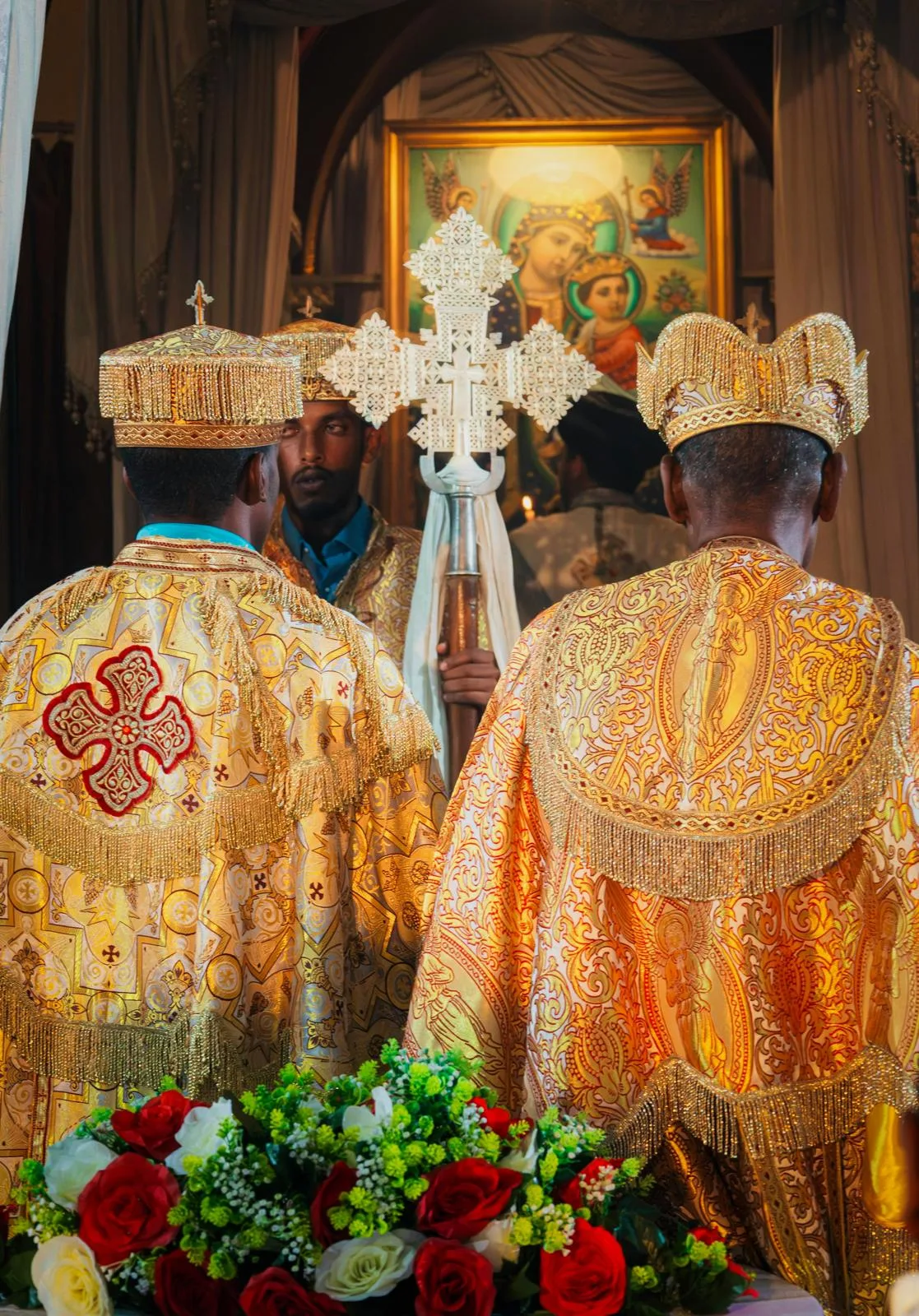
Ethiopia holds one of the longest continuous histories of Christianity in the world. The Kingdom of Aksum officially adopted Christianity in the early 4th century AD under King Ezana, making the Ethiopian Orthodox Tewahedo Church (EOTC) one of the oldest established Christian institutions globally. For centuries, the Orthodox Church played a central role in state administration, cultural identity, and governance.
During the 20th and 21st centuries, the demographic and religious landscape of Ethiopia underwent significant diversification. The rapid growth of Protestantism—locally referred to as P'ent'ay (encompassing Evangelical, Pentecostal, and Baptist traditions)—alongside a substantial Muslim population, altered traditional religious structures. Today, Ethiopia is demographically balanced, with Christians comprising approximately 60% of the population (roughly 43% Ethiopian Orthodox, 18% Protestant, and under 1% Catholic) and Muslims accounting for roughly 33% to 34%, alongside indigenous belief systems.
The political shift in 1991, followed by the adoption of the 1995 Constitution of the Federal Democratic Republic of Ethiopia, introduced ethnic federalism. This constitutional framework restructured the nation into semi-autonomous regional states based largely on ethno-linguistic boundaries. While designed to decentralized power, ethnic federalism inadvertently linked ethno-national identity with political territoriality. Consequently, religious minorities residing within specific ethnic zones frequently face socio-political marginalization, administrative discrimination, and violent targeted attacks when religious and ethnic identities intersect.
Primary Drivers of Persecution and Religious Violence
The degradation of religious freedom and physical security for Ethiopian Christians is driven by distinct political, socio-religious, and legal dynamics. Human rights monitors, including the United States Commission on International Religious Freedom (USCIRF) and Open Doors International, identify several primary catalysts:
1. Militant Ethnic Nationalism and Armed Insurgency
In regions experiencing active armed insurgency, such as parts of the Oromia Region, non-state armed groups—most notably elements associated with the Oromo Liberation Army (OLA/WBO)—have repeatedly targeted civilian communities, clergy, and places of worship. In these conflicts, religious affiliation often intersects with perceived political or ethnic alignments. Ethiopian Orthodox priests, church workers, and local congregations in rural Oromia have suffered targeted killings, kidnappings for ransom, and forced displacement.
2. Radical Religious Extremism in Peripheral Regions
In majority-Muslim peripheral regions, particularly the Somali Region and parts of eastern Oromia and Afar, Christian minorities encounter localized socio-religious pressure and violent hostility. Converts to Christianity from Islamic backgrounds face severe forms of persecution, including family abandonment, physical assault, property confiscation, and forced exile from their local communities. Extremist cells operating near border zones occasionally execute targeted attacks on church infrastructure and Christian-owned businesses.
3. Intra-Christian and Denominational Friction
Historical tensions persist between the traditional Ethiopian Orthodox Tewahedo Church and growing Evangelical/Protestant denominations. In rural areas where the Orthodox Church holds dominant historical influence, Protestant believers have faced localized social ostracization, physical disruption of worship services, denial of burial rights in communal cemeteries, and administrative refusals for church building permits. Conversely, internal institutional disputes within the Orthodox Church—such as the early 2023 schism involving breakaway synods in the Oromia region—have sparked violent confrontations, church seizures, and security force interventions.
4. Administrative Bias and Institutional Vacuums
While federal law mandates religious neutrality, local administrative structures often reflect the dominant ethnic or religious majority of a given district (woreda). Minorities routinely report institutional discrimination, including:
- Denial or protracted delays in securing land grants for church construction and burial grounds.
- Unequal law enforcement response during localized communal clashes.
- Selective prosecution or failure by municipal authorities to investigate attacks on religious facilities.
Regional Analysis of Religious Vulnerability
The nature and severity of religious persecution vary significantly across Ethiopia's federal structure.
Ethiopia Regional Security Environment
- Oromia Region: High Risk (Militant attacks, church burnings, kidnapping of clergy)
- Somali Region: High Risk for Converts (Extreme social pressure, physical violence)
- Amhara & Tigray Regions: Moderate to High Risk (Conflict collateral damage, heritage destruction)
- Urban Centers (Addis Ababa): Low Physical Risk (Administrative & land dispute friction)
Oromia Region
Oromia represents one of the most volatile areas for Christian security in recent years. Armed insurgencies and ethnic clashes in the West Welega, East Welega, and Arsi zones have resulted in substantial civilian fatalities. Orthodox and Protestant churches have been burned, congregants attacked during religious services, and church leaders targeted. The displacement of hundreds of thousands of civilians from these zones has created severe humanitarian strains.
Somali Region
In eastern Ethiopia, where Islam is the dominant religion, the Christian population remains a small minority, primarily concentrated in urban centers like Jigjiga. Evangelical Christians, particularly Muslim-background believers (MBBs), encounter acute persecution. Secret believers risk severe physical harm if their faith is disclosed. During periods of political instability, such as regional unrest in prior years, church buildings in Jigjiga and surrounding towns have been set on fire by violent mobs.
Amhara and Tigray Regions
While these northern regions are predominantly Christian (overwhelmingly Ethiopian Orthodox), ongoing regional conflicts and federal military engagements have severely impacted religious heritage and institutions. Direct religious persecution is less common here than collateral damage: historic monasteries have been damaged, ancient manuscripts looted, and local clergy caught in military crossfire or displaced by systemic violence.
Addis Ababa and Dire Dawa (Chartered Cities)
In major urban centers, direct physical violence against Christians is relatively rare. However, friction manifests through administrative channels, municipal land allocation disputes, public religious processions, and political demonstrations. Tensions periodically surface during major religious holidays (such as Timkat or Meskel) over the display of denominational or historical flags on public property.
Religious Freedom & Vulnerability Matrix
The following table summarizes the primary risk vectors across key regions in Ethiopia:
| Region / Zone | Primary Threat Actors | Nature of Violations & Persecution | Affected Religious Groups | Risk Level |
|---|---|---|---|---|
| Oromia (Welega & Arsi Zones) | Militant insurgent groups, localized ethnic militias | Targeted killings, church destruction, kidnapping for ransom, forced displacement | Ethiopian Orthodox Tewahedo, Evangelical Protestants | Critical |
| Somali Regional State | Local community networks, religious extremists, family units | Violent assault, forced re-conversion, property expulsion, social exile | Converts to Christianity (MBBs), minority church congregations | High |
| Afar & Eastern Lowlands | Local radicalized factions, tribal elders | Land confiscation, denial of water/communal access, threats of physical violence | Protestant / Evangelical convert groups | Moderate to High |
| Amhara Region | Armed conflict factions, security instability | Collateral artillery damage to churches, displacement of clergy, heritage looting | Ethiopian Orthodox Tewahedo, Protestant minorities | Moderate |
| Addis Ababa (Metropolitan) | Municipal administrative bodies, political agitators | Permit denials, property disputes, security enforcement during rallies | Denominational minorities, Orthodox schism factions | Low to Moderate |
Legal Framework and Constitutional Protections
To assess religious persecution in Ethiopia accurately, analysts must compare formal legal protections against operational enforcement mechanisms on the ground.
Constitutional Protections
Article 27 of the 1995 Constitution of the Federal Democratic Republic of Ethiopia explicitly guarantees freedom of religion, belief, and opinion:
"Everyone has the right to freedom of thought, conscience, and religion. This right includes the freedom to hold or to adopt a religion or belief of his choice, and the freedom to manifest his religion or belief in worship, observance, practice, and teaching, either individually or in community with others, and in public or private."
Furthermore, Article 11 establishes the separation of state and religion, declaring that there shall be no state religion and that the state shall not interfere in religious affairs, nor shall religion interfere in state affairs.
International Human Rights Commitments
Ethiopia is a state party to major international human rights treaties that protect religious liberty, including:
- The International Covenant on Civil and Political Rights (ICCPR) (Article 18).
- The African Charter on Human and Peoples' Rights (ACHPR) (Article 8).
The Enforcement Deficit
The core issue in Ethiopia is not the absence of legal protections, but the enforcement deficit. Factors contributing to this gap include:
- Security Vacuums: In rural zones where state authority is weak, federal and regional security forces often fail to prevent or intervene during attacks on religious communities.
- Judicial Impunity: Perpetrators of church burnings, kidnappings, and extrajudicial killings of religious personnel are rarely prosecuted, creating a culture of impunity.
- Local Municipal Corruption: Regional administrative officials frequently execute local land and registration laws in a discriminatory manner that favors the local dominant demographic over minority religious communities.
Human Rights Documentation and Verification Standards
For international human rights organizations, immigration lawyers, and policy analysts evaluating claims of religious persecution in Ethiopia, standard verification procedures must be applied.
1. Documenting Physical Abuses and Property Destruction
Claims of targeted persecution require corroboration through independent evidence, such as:
- Reports from international monitoring bodies including the United States Commission on International Religious Freedom (USCIRF) and the UN Office of the High Commissioner for Human Rights (OHCHR).
- Detailed incident reporting by credible organizations such as Open Doors International and local civil society bodies like the Ethiopian Human Rights Commission (EHRC).
- Police reports, local administrative correspondence, and hospital records verifying injuries or property destruction.
2. Evaluating Asylum and Protection Claims
When assessing refugee or asylum applications based on religious persecution in Ethiopia, adjudicators examine:
- Specific Regional Origin: An applicant from an urban center like Addis Ababa faces different security realities than an applicant from rural West Welega or the Somali region.
- Convert Status: Converts from Islam in majority-Muslim regions face documented societal and familial persecutions that meet international criteria for severe harm.
- Leadership Roles: Clergy, youth ministers, and active church leaders face demonstrably higher threat profiles in conflict-affected zones.
Actionable Steps for Humanitarian and Policy Stakeholders
Addressing religious persecution and protecting vulnerable Christian communities in Ethiopia requires coordinated local and international initiatives:
- Strengthening National Human Rights Oversight: The Ethiopian Human Rights Commission (EHRC) must be provided with unhindered access to investigate religious and ethnic-based violent incidents across all regional states.
- Decoupling Ethnicity from Regional Governance: Federal policy reforms should address the structural flaws of ethnic federalism that turn religious minorities into socio-political targets in peripheral regions.
- Establishing Local Conflict Resolution Mechanisms: Inter-religious councils at the woreda (district) level must be empowered with mediation training to resolve land disputes, burial ground access, and inter-denominational friction before conflicts escalate into violence.
- Targeted Humanitarian Aid for Displaced Congregations: International aid agencies must ensure that internally displaced persons (IDPs)—including those displaced due to church attacks and regional violence—receive non-discriminatory relief services, shelter, and medical support.
Frequently Asked Questions
What is the primary cause of Christian persecution in Ethiopia?
Persecution is primarily driven by a combination of militant ethnic nationalism, non-state armed group violence (such as attacks by the OLA in Oromia), localized Islamic radicalism in peripheral eastern regions, and administrative discrimination in land allocation and municipal services.
Are all Christian denominations targeted equally in Ethiopia?
No. The nature of targeting varies by region and denomination. Ethiopian Orthodox Tewahedo Christians are frequently targeted in conflict areas like Oromia due to the intersection of political, ethnic, and historic factors. Evangelical Protestants face acute persecution in majority-Muslim regions (such as the Somali region) and occasionally experience localized friction with Orthodox communities in rural highlands.
Is the Ethiopian government directly persecuting Christians?
The federal government does not have an official policy of persecuting Christians; the constitution explicitly guarantees religious freedom. However, persecution occurs due to government failure to maintain security in rural conflict zones, local administrative bias by district officials, and occasional state heavy-handedness during public religious demonstrations or church schisms.
How does the status of Christian converts differ from traditional Christians?
Converts from Islam to Christianity (particularly in the Somali, Afar, and eastern Oromia regions) face much severe persecution, including physical violence, family rejection, property confiscation, and forced expulsion from their communities. Traditional Christians living in urban centers face significantly lower risks of personal violence.
What regions in Ethiopia are most dangerous for Christian communities?
The highest risk levels are found in rural zones of the Oromia Region (such as West and East Welega, Arsi) due to armed insurgencies, and the Somali Regional State for Christian converts facing severe local and familial persecution.
Strategic Guidance and Recommended Next Steps
For legal professionals, human rights advocates, and non-governmental organizations working on religious freedom issues in Ethiopia, actionable next steps include:
- For International Donors and NGO Directors: Direct resources toward local inter-faith peacebuilding initiatives and fund legal aid clinics in regional capitals (such as Hawassa, Adama, and Jigjiga) that assist minority religious groups in securing land rights and legal protection.
- For Asylum Advocates and Immigration Practitioners: Ensure refugee claims differentiate clearly between general country conditions and specific regional risk profiles, documenting convert status or leadership involvement with official letters from recognized ecclesiastical bodies in Ethiopia.
- For Human Rights Monitors: Systematically log incidents using standardized protocols that record the precise GPS location, actor attribution (distinguishing state forces, non-state militias, and mob violence), and underlying socio-political triggers of religious freedom violations.
Image Gallery