Mastering B Minor Chord Shapes: A Guide for Guitarists
B minor chord shapes are various finger configurations used to produce the B minor triad (B, D, F#) on the guitar fretboard, enabling players to navigate this essential chord across different positions and tonal contexts. Understanding...
B minor chord shapes are various finger configurations used to produce the B minor triad (B, D, F#) on the guitar fretboard, enabling players to navigate this essential chord across different positions and tonal contexts. Understanding these shapes is fundamental for playing in the keys of D major or G major, as well as for executing minor-key progressions that rely on the naturally melancholic quality of the B minor chord.
Contents
The Foundation of B Minor
The B minor chord is a natural minor triad consisting of the root note (B), the minor third (D), and the perfect fifth (F#). In standard tuning (E-A-D-G-B-E), the guitar’s layout requires specific fingerings to group these three notes together effectively. Because the guitar has multiple octaves available across its strings, you can play the same chord in various locations, known as "shapes."
Mastering these shapes allows you to move fluidly between chords without jumping across the entire fretboard. Whether you are playing folk, rock, or jazz, the B minor chord is a cornerstone of musical structure, often appearing as the "vi" chord in D Major or the "iii" chord in G Major.
Common B Minor Chord Shapes
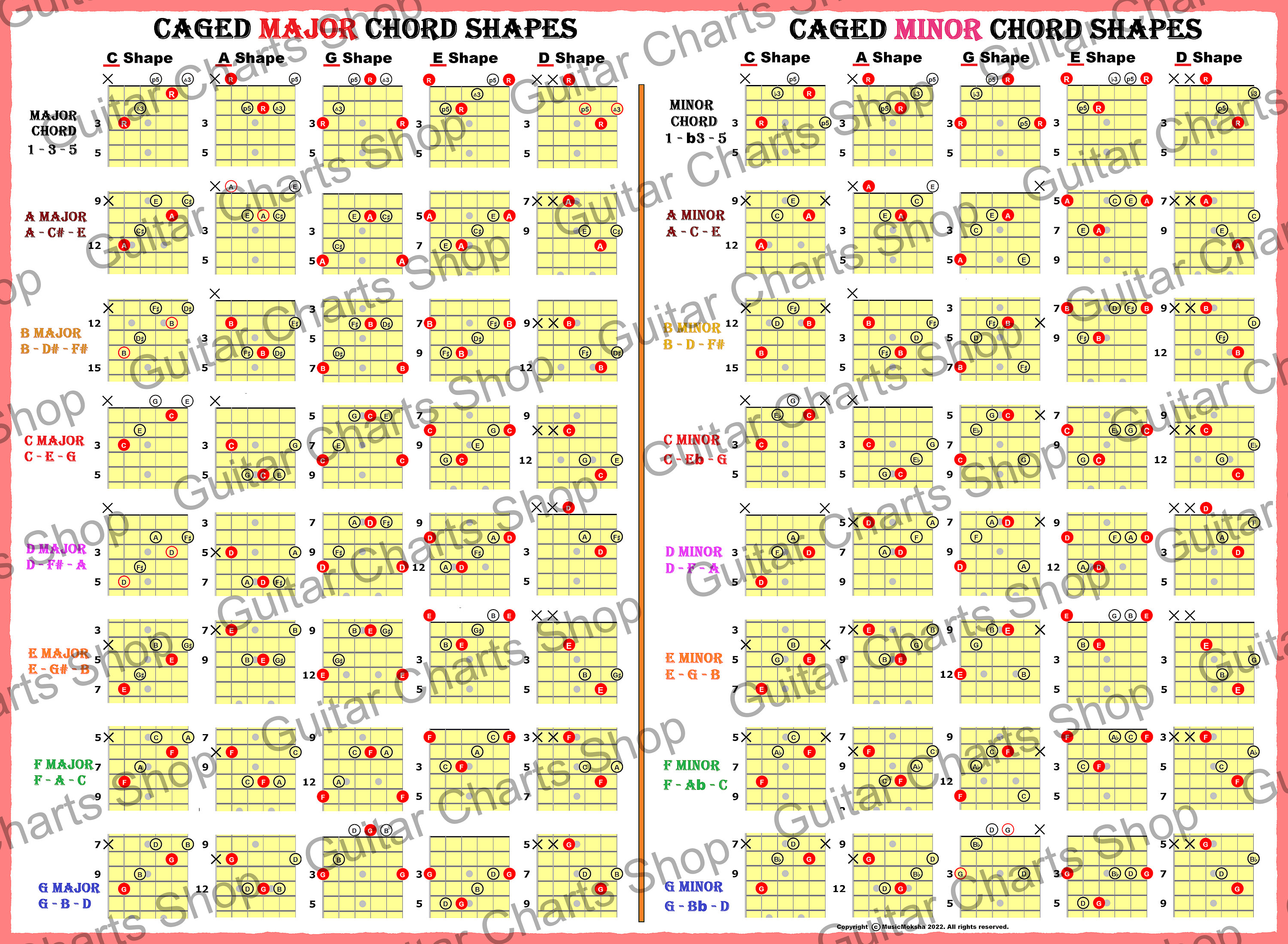
The most effective way to learn B minor is to categorize shapes by their root note location. This system helps you visualize the fretboard as a connected grid rather than isolated dots.
The A-Minor Shape (Root on the A String)
This is arguably the most common way to play B minor for intermediate players. By taking a standard A minor chord and moving the entire shape up two frets, you create a B minor chord.
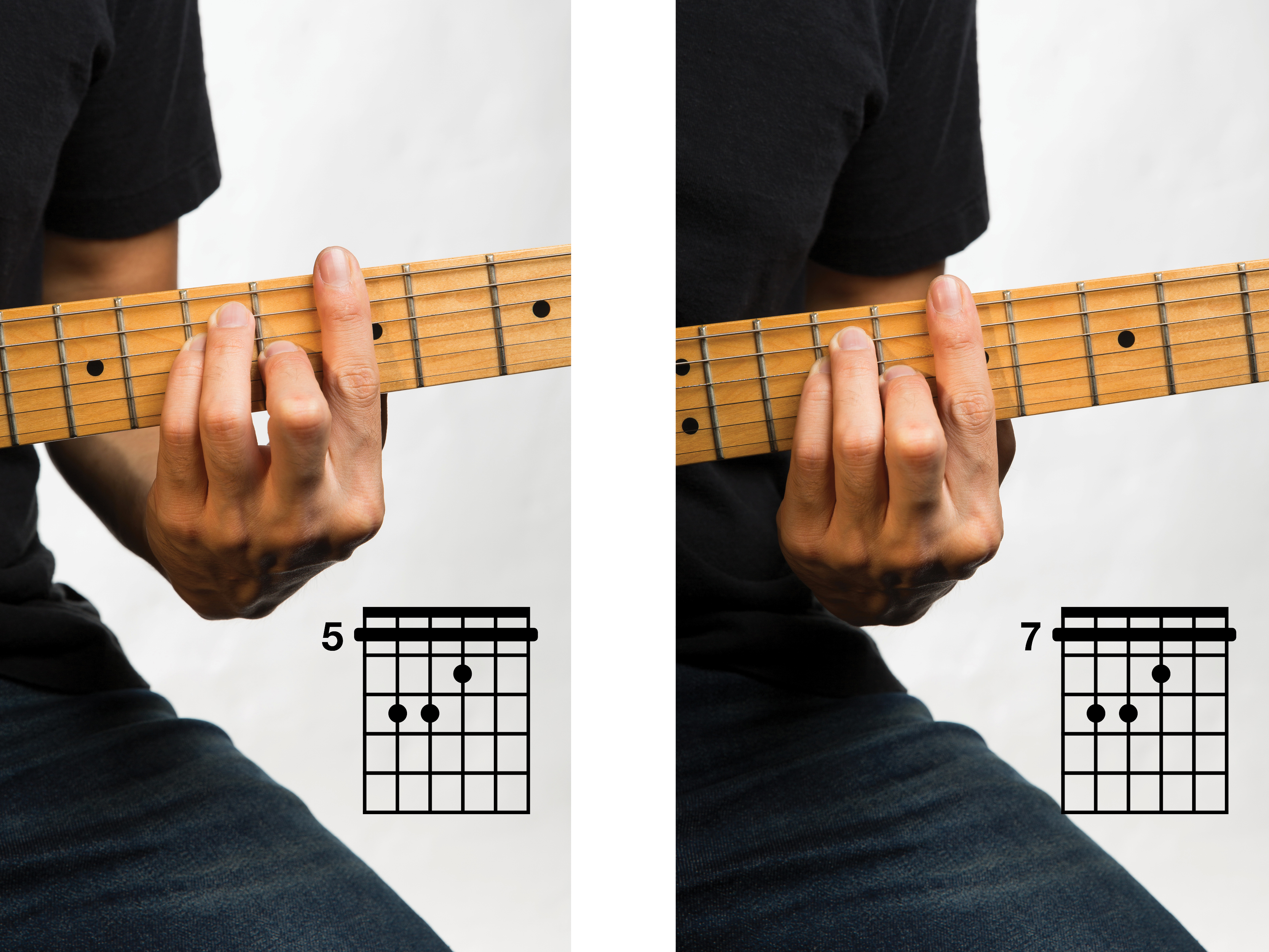
- The Barre Approach: Place your index finger across the 2nd fret of the A, D, G, B, and high E strings. Your ring finger presses the 4th fret of the D string, your pinky the 4th fret of the G string, and your middle finger the 3rd fret of the B string.
- The Partial Approach: If you prefer to avoid the full barre, you can omit the high E string, though this limits the resonance of the chord.
The E-Minor Shape (Root on the Low E String)
This shape is derived from the open E minor chord, transposed up to the 7th fret. This is a common "movable" shape because it utilizes the entire neck.
- Fingering: Barre your index finger across the 7th fret of all six strings. Place your ring finger on the 9th fret of the A string and your pinky on the 9th fret of the D string. This creates a full, rich sound that carries significant weight in a mix.
The D-Minor Shape (Root on the D String)
For higher-register playing or lead-rhythm transitions, the D-minor shape is excellent.
- Fingering: With this shape, your root note (B) is located on the 9th fret of the G string. While more restricted in terms of bass response, it is ideal for funk or pop styles where you want the chord to "sit" on top of the mix without clashing with the bass player.
Comparative Analysis of B Minor Shapes
| Shape Type | Root Location | Difficulty | Best For |
|---|---|---|---|
| A-Minor Form | 2nd Fret (A String) | Moderate | Strumming and rhythm |
| E-Minor Form | 7th Fret (Low E String) | High | Full, power-chord feel |
| D-Minor Form | 9th Fret (G String) | Low | Lead lines and embellishments |
| Triad Shape | Various | Low | Clean, minimalist arrangements |
The Role of Triads
If you are playing in a band setting or recording, you may find that full, five- or six-string barre chords create too much "mud" in the low-end frequencies. In these cases, professional guitarists often switch to "triad shapes." A B minor triad consists of only three notes played on adjacent strings.
By focusing on the G, B, and high E strings, you can play a B minor triad at the 4th fret (G string) and 3rd/2nd frets (B/E strings). These smaller shapes are highly effective for cutting through a dense mix and provide more room for other instruments to occupy the sonic space.
Common Mistakes and Troubleshooting
When learning to transition between B minor shapes, guitarists frequently encounter the following issues:
- Muted Strings: This usually happens when the index finger (used for the barre) does not apply uniform pressure across the fret. Ensure your thumb is placed firmly on the back of the neck, roughly opposite your middle finger, to create leverage.
- Buzzing: If the notes buzz, it is often due to placing the fingers too far behind the fret wire. Aim to place your fingers as close to the metal fret wire as possible without being directly on top of it.
- Tension: Players often "death grip" the neck when learning barre chords. If your hand cramps, practice moving to the shape, pressing down, then releasing entirely. This helps develop muscle memory without unnecessary fatigue.
Practical Guidance for Progression
To effectively integrate these shapes into your repertoire, do not try to learn them all at once. Start by mastering the A-minor shape at the 2nd fret. Once you can switch to this shape cleanly from an open G or D major chord, begin experimenting with the E-minor shape at the 7th fret.
Practice by creating a simple loop: Play a D major chord, move to your B minor shape, transition to a G major, and finish on an A major. This movement mimics common pop and rock progressions, allowing you to hear the chords in a musical context rather than just as isolated physical exercises.
Frequently Asked Questions
Why is the B minor chord considered difficult for beginners? The difficulty stems primarily from the requirement of a "barre"—using one finger to depress multiple strings. This requires significant grip strength and precise hand positioning, which take time to develop.
Can I play B minor without a barre? Yes, you can use "triad shapes," which involve only three strings. These are often easier to play and are frequently used in modern music to provide a cleaner, more focused sound.
How often should I practice barre chords? Practice in short bursts of 10–15 minutes. Consistent, daily practice is more effective for building hand strength and muscle memory than long, infrequent sessions that lead to strain.
Is there a difference in sound between the A-minor and E-minor shapes of B minor? Yes. The A-minor shape (2nd fret) emphasizes a lower frequency range, while the E-minor shape (7th fret) features higher strings and a different internal voicing, resulting in a slightly brighter, more cutting tone.
Does my guitar setup affect how hard it is to play B minor? Absolutely. If your "action"—the distance between the strings and the fretboard—is too high, you will need to exert much more force to produce a clear sound. If you struggle despite correct technique, consider having your instrument adjusted by a professional.
Next Action
To take your progress to the next level, identify one song in your library that uses a B minor chord. Attempt to play it using only the A-minor shape (the 2nd fret barre) for one week. By forcing yourself to use the shape in a real-world musical context, you will solidify your technique faster than through rote memorization alone.
Image Gallery