Small Incision Lenticule Extraction Explained: A Comprehensive Guide
Small incision lenticule extraction, commonly known as SMILE, is an advanced, minimally invasive laser vision correction procedure used primarily to treat myopia (nearsightedness) and astigmatism by reshaping the cornea through a tiny,...
Small incision lenticule extraction, commonly known as SMILE, is an advanced, minimally invasive laser vision correction procedure used primarily to treat myopia (nearsightedness) and astigmatism by reshaping the cornea through a tiny, precise opening without creating a traditional corneal flap.
Contents
Introduction to Modern Refractive Surgery
Vision correction surgery has evolved significantly over the past few decades, moving from surface ablations like photorefractive keratectomy (PRK) to flap-based procedures like laser-assisted in situ keratomileusis (LASIK). While LASIK remains a dominant and highly successful procedure, technological innovations continue to introduce alternatives designed to preserve greater corneal biomechanical strength and reduce dry-eye symptoms.
Small incision lenticule extraction represents one of the most notable advancements in this field. Approved by the U.S. Food and Drug Administration (FDA) in 2016 for myopia and later expanded for astigmatism, this procedure utilizes a specialized femtosecond laser to perform the entire correction inside the intact cornea. Understanding how this technique works, who qualifies for it, and how it compares to other procedures is essential for anyone considering refractive surgery.
What is SMILE and How Does It Work?
To understand small incision lenticule extraction, it helps to examine the fundamental anatomy of the eye. The cornea—the clear, dome-shaped front surface of the eye—accounts for a significant portion of the eye's focusing power. Refractive errors occur when the shape of the cornea does not bend light correctly onto the retina.
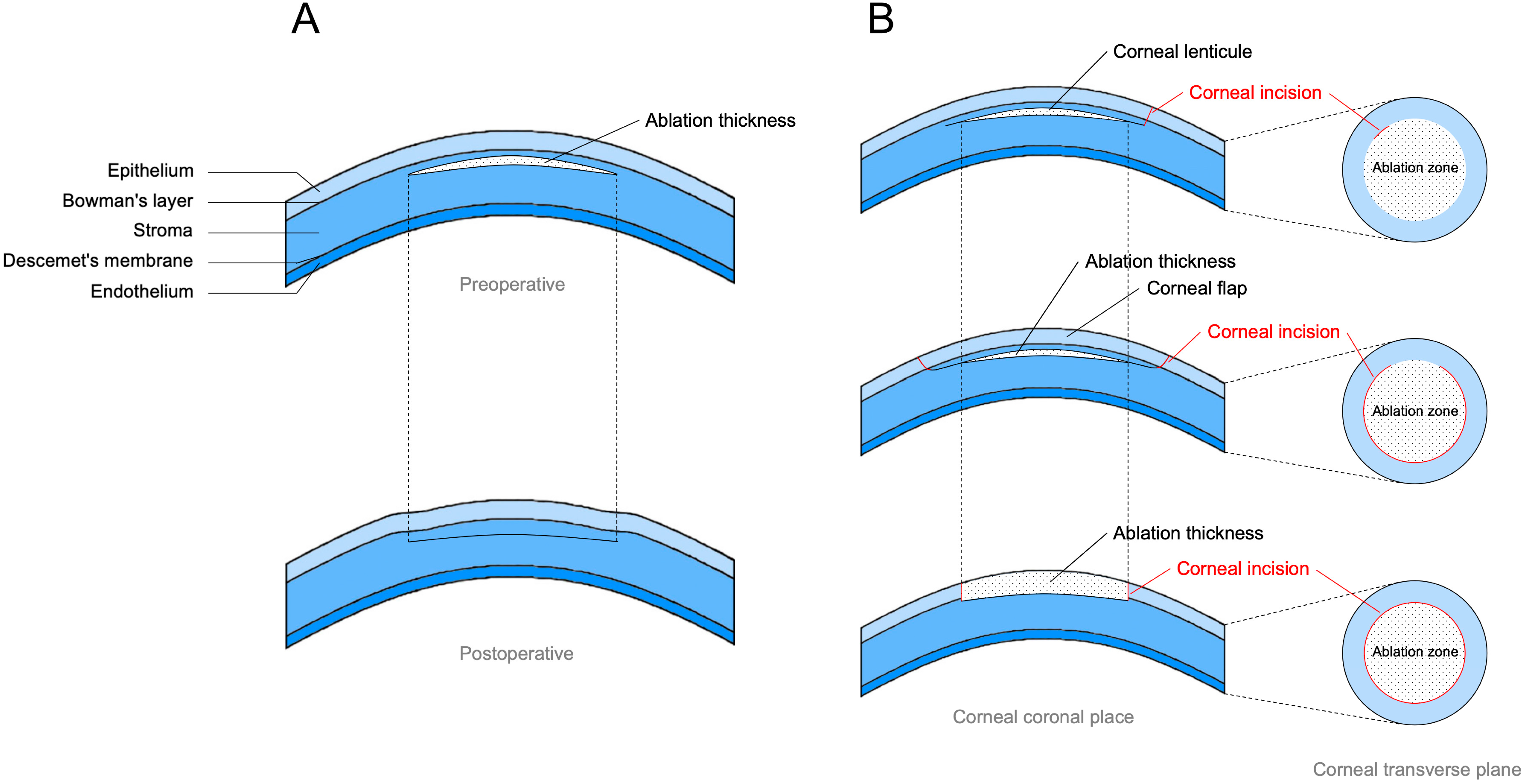
In traditional laser procedures, a surgeon creates a hinged flap on the outer layer of the cornea, lifts it, and uses an excimer laser to vaporize tissue from the underlying stromal bed before repositioning the flap. In contrast, SMILE is a flapless procedure.
The Lenticule Concept
The core mechanism of SMILE relies on the creation of a tiny, precise piece of corneal tissue inside the cornea, known as a lenticule. The dimensions and thickness of this lenticule are calculated based on the patient's specific prescription.
- Femtosecond Laser Precision: A high-precision femtosecond laser passes harmlessly through the upper layers of the cornea to create two interfaces within the stromal tissue: the back surface of the lenticule and the front surface of the lenticule, along with a tiny peripheral access incision measuring less than 4 millimeters.
- Lenticule Separation: The surgeon uses a specialized instrument to access the incision, gently separating and releasing the micro-thin lenticule from the surrounding corneal tissue.
- Extraction: The surgeon removes the lenticule entirely through the small incision.
- Reshaping: Removing the tissue alters the curvature of the cornea, changing its refractive power and allowing light to focus properly on the retina.
Because the superficial corneal nerves and upper layers remain largely undisturbed, the structural integrity of the cornea is preserved to a higher degree compared to flap-based procedures.
Candidate Eligibility and Pre-Operative Requirements
Not every patient seeking vision correction is an ideal candidate for small incision lenticule extraction. Strict screening protocols ensure safety and optimal visual outcomes. An ophthalmologist or refractive surgeon must conduct a comprehensive eye examination to determine suitability.
General Eligibility Criteria
- Age and Stability: Patients should generally be at least 18 years old (often 21 depending on the clinic guidelines) with a stable vision prescription that has not changed significantly for at least 12 months.
- Refractive Error Range: The procedure is primarily designed for individuals with myopia (nearsightedness) ranging from -1.00 to -10.00 diopters, and astigmatism up to a specific limit, depending on the approved software parameters of the laser platform used (such as the Carl Zeiss Meditec VisuMax system).
- Corneal Health: The cornea must be thick enough and regular in shape to safely accommodate the creation and extraction of the lenticule. Conditions such as keratoconus or severe corneal dystrophies rule out the procedure.
- General Eye Health: Absence of active ocular diseases, severe dry eye syndrome, uncontrolled glaucoma, or cataracts.
Pre-Operative Evaluation Steps
Before scheduling the procedure, patients undergo a series of diagnostic scans:
- Corneal Topography and Tomography: Maps the contour, thickness, and elevation of the cornea to detect irregularities.
- Pupilometry: Measures pupil size in varying lighting conditions.
- Wavefront Analysis: Assesses higher-order aberrations of the eye's optical system.
- Pachymetry: Measures precise corneal thickness across multiple points.
The Procedure: Step-by-Step Experience
Knowing what to happen during the procedure can significantly reduce anxiety. The actual laser time is remarkably short, though patients should expect to spend a couple of hours at the clinic on the day of surgery.
Before the Laser Suite
- Anesthetic Drops: Numbing drops are applied to the surface of the eye to ensure the procedure is painless. No injections or general anesthesia are required.
- Eyelid Holder: An instrument called a lid speculum is placed gently on the eye to prevent blinking.
During the Laser Treatment
- Fixation Target: The patient is asked to look at a blinking green or flashing target light inside the laser microscope. Maintaining steady fixation is crucial.
- Laser Application: The VisuMax femtosecond laser gently contacts the front surface of the eye. The laser application takes approximately 20 to 30 seconds per eye. During this phase, patients may feel slight pressure, and vision may temporarily dim or go dark.
- Manual Extraction: Once the laser completes its programmed pattern, the patient moves to an adjacent bed where the surgeon manually separates and extracts the lenticule through the small side-cut incision. This step typically takes a couple of minutes per eye.
Immediate Post-Operative Period
- Initial Checks: The surgeon examines the eye immediately after extraction to ensure the incision is clean and the cornea is stable.
- Protective Eyewear: Clear shields or glasses are provided to protect the eyes, especially during sleep to prevent accidental rubbing.
- Transportation: Patients must arrange for someone else to drive them home, as vision is typically hazy or blurry immediately following the procedure.
Comparison: SMILE vs. LASIK vs. PRK
Choosing the right vision correction procedure involves evaluating trade-offs regarding recovery time, side effects, and structural preservation.
| Feature | SMILE (Small Incision Lenticule Extraction) | LASIK (Laser-Assisted In Situ Keratomileusis) | PRK (Photorefractive Keratectomy) |
|---|---|---|---|
| Incision Type | Micro-incision (< 4 mm) | 20 mm circular hinged flap | No flap or incision (surface ablation) |
| Laser Type Used | Femtosecond only | Femtosecond + Excimer | Excimer only |
| Primary Range | Myopia and Astigmatism | Myopia, Hyperopia, and Astigmatism | Myopia, Hyperopia, and Astigmatism |
| Dry Eye Risk | Lower (preserves corneal nerves) | Moderate | Lowest long-term risk, but slower initial healing |
| Visual Recovery | Rapid (functional within 24-48 hours) | Immediate to 24 hours | Slower (days to weeks for functional vision) |
| Retreatment Options | Can be converted to PRK if enhancement is needed | Flap can be lifted for enhancement | Simple surface re-treatment |
Recovery, Healing, and Aftercare Guidelines
While recovery from small incision lenticule extraction is relatively fast, following post-operative care instructions carefully is vital for achieving optimal visual acuity and avoiding complications.
The Healing Timeline
- Day 1: Most patients notice an immediate improvement in vision the morning after surgery, though mild blurriness, haziness, or fluctuating vision is normal and can persist for several days.
- First Week: Visual clarity continues to stabilize. Patients are typically cleared to return to work, drive, and resume light activities within 24 to 48 hours, depending on individual healing rates.
- First Month: Mild dryness or glare at night may occur, but these symptoms generally diminish steadily. Full stabilization of vision can take anywhere from four to twelve weeks.
Essential Aftercare Instructions
- Medication Compliance: Use prescribed antibiotic and anti-inflammatory eye drops precisely as directed by the surgeon to prevent infection and control inflammation.
- No Eye Rubbing: Absolutely avoid rubbing the eyes, particularly during the first week, to prevent irritation or displacement of the incision site.
- Hygiene and Cosmetics: Avoid applying eye makeup, lotions, or creams around the eyes for at least one week. Refrain from swimming in pools, hot tubs, or natural bodies of water for at least two to four weeks.
- Sun Protection: Wear sunglasses with ultraviolet (UV) protection outdoors to protect healing ocular tissues from bright sunlight.
Potential Risks and Complications
Like any surgical intervention, small incision lenticule extraction carries potential risks. While serious complications are rare, patients should be fully informed during consultations.
- Transient Dry Eye: Although the risk of dry eye is lower than with LASIK due to fewer severed corneal nerves, temporary dryness can still occur during the initial healing phase and is managed effectively with lubricating artificial tears.
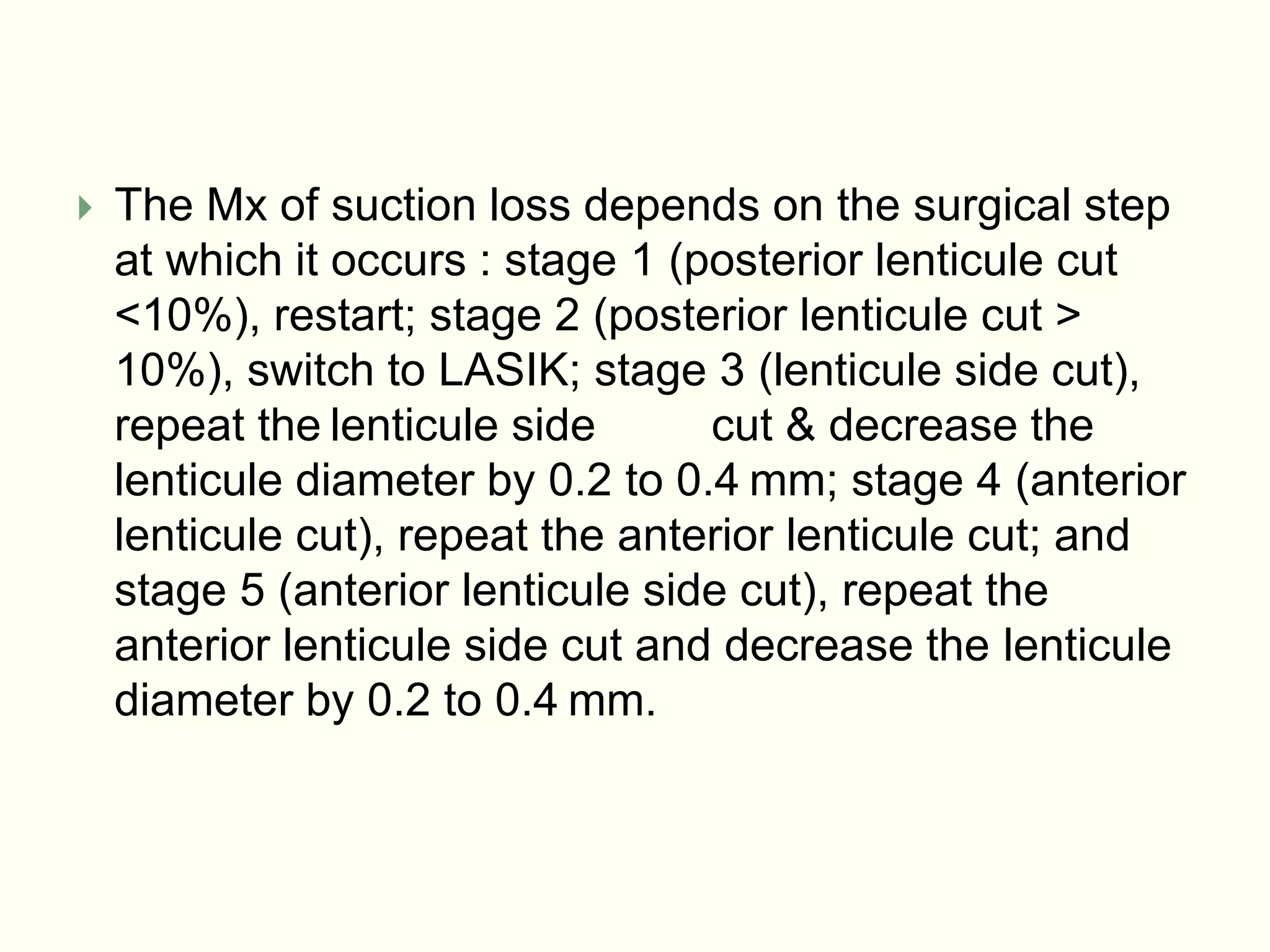
- Suction Loss: During the laser phase, if the patient moves abruptly or loses proper eye fixation, suction between the laser and the cornea can break, requiring the surgeon to pause and restart or convert to an alternative procedure.
- Incision Tear or Difficult Extraction: Rarely, the small incision can tear, or a difficult lenticule extraction can extend healing time.
- Undercorrection or Overcorrection: If the eye does not heal precisely as predicted, a residual refractive error may remain, which can sometimes be addressed with a secondary enhancement procedure, usually performed via PRK.
- Halos and Glare: Some patients report nighttime visual disturbances, such as halos around lights or starbursts, which typically resolve as the cornea heals completely.
Cost Considerations and Insurance
Refractive surgeries like small incision lenticule extraction are generally classified as elective procedures by health insurance providers and vision care plans. Consequently, standard health insurance policies do not cover the cost.
- Out-of-Pocket Expenses: Patients should expect to pay out of pocket, with pricing reflecting surgeon expertise, advanced laser technology, and post-operative care packages.
- Flexible Spending Accounts (FSAs) and Health Savings Accounts (HSAs): Many patients utilize pre-tax dollars through employer-sponsored FSAs or HSAs to help finance the procedure, reducing the overall net financial impact.
- Financing Plans: Most refractive surgery centers offer third-party medical financing plans with structured monthly payment options, sometimes featuring promotional zero-interest periods for qualified applicants.
Frequently Asked Questions
Is small incision lenticule extraction painful?
No, the procedure itself is not painful. Numbing eye drops are applied prior to treatment to ensure comfort. Patients may feel a mild sensation of pressure or touch when the laser contacts the eye or when the surgeon extracts the lenticule, but sharp pain is absent. Mild irritation or a gritty feeling may occur during the first few hours after the anesthetic wears off.
Can SMILE treat farsightedness (hyperopia)?
Currently, standard SMILE procedures are primarily approved and optimized for treating nearsightedness (myopia) and associated astigmatism. Clinical research and technological developments continue to explore broader applications, but patients with hyperopia are typically evaluated for LASIK, PRK, or clear lens exchange instead.
What happens if I blink or move during the laser treatment?
The VisuMax femtosecond laser system features an integrated eye-fixation mechanism that helps keep the eye steady. Furthermore, the laser treatment takes only a fraction of a minute. If minor movement occurs, the system or surgeon can manage it, but patients are thoroughly coached beforehand on how to fixate on the target light.
How long does the SMILE procedure take?
While the actual laser emission time takes approximately 20 to 30 seconds per eye, the total time spent in the laser suite is about 15 minutes. Patients should plan to be at the clinic for approximately two hours on surgery day to account for pre-operative drops, final checks, and post-operative instructions.
Are the results of SMILE permanent?
Yes, the reshaping of the corneal tissue performed during small incision lenticule extraction is permanent. Once the cornea heals and the prescription stabilizes, the visual correction lasts. However, natural age-related changes to the eye's internal lens, such as presbyopia (the need for reading glasses around middle age), can still occur independently of the corneal procedure.
Conclusion and Next Action
Small incision lenticule extraction offers a flapless, highly precise alternative for individuals seeking correction for myopia and astigmatism while preserving optimal corneal biomechanics. To determine if you are a suitable candidate, schedule a comprehensive consultation with a board-certified ophthalmologist or refractive surgeon who specializes in advanced laser vision correction. Ensure you discuss your visual goals, lifestyle requirements, and medical history in detail before making an informed decision.
Image Gallery