Should You Apply for a New Zealand Skilled Worker Visa?
Decining to apply for a New Zealand skilled worker visa depends on your ability to meet the 6-point threshold for residency or your eligibility for the Green List. If you possess high-demand technical skills, a job offer from an accred...
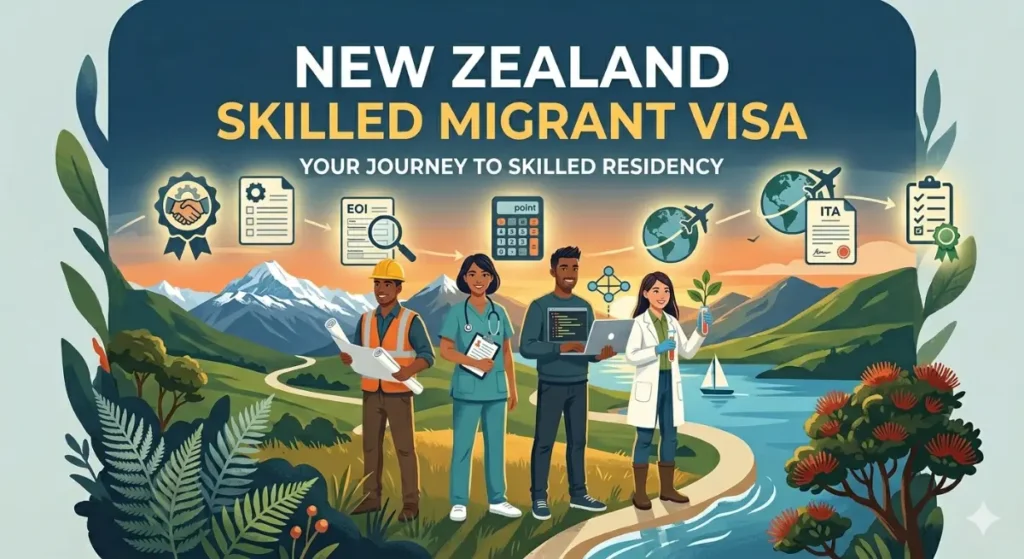
Decining to apply for a New Zealand skilled worker visa depends on your ability to meet the 6-point threshold for residency or your eligibility for the Green List. If you possess high-demand technical skills, a job offer from an accredited employer, and meet the health and character requirements, the 2026 immigration landscape offers several streamlined pathways to permanent residency.
Contents
New Zealand’s immigration system has undergone significant shifts in recent years, moving away from a broad points-based "lottery" to a more targeted, high-skill recruitment model. By 2026, the focus has solidified around two primary pillars: the Skilled Migrant Category (SMC) and the Green List. For prospective migrants, the question of whether to apply is no longer just about wanting to live in New Zealand, but about demonstrating a specific, measurable value to the national economy.
Understanding the 2026 Visa Landscape
The term "skilled worker visa" is often used broadly, but it usually refers to one of three specific pathways. Understanding which one applies to you is the first step in determining if you should move forward with an application.
The Accredited Employer Work Visa (AEWV)
For most migrants, the journey begins with the AEWV. This is a temporary work visa that allows you to live and work in New Zealand for up to five years, depending on your skill level and salary. To apply for this, you must have a job offer from an employer that has been accredited by Immigration New Zealand (INZ). In 2026, accreditation requirements are strict, ensuring that employers are financially viable and have a history of fair labor practices.
The Skilled Migrant Category (SMC) Resident Visa
This is the "gold standard" for those seeking a permanent move. The SMC uses a simplified 6-point system introduced in late 2023 and refined through 2025. Unlike the temporary AEWV, the SMC grants residency, meaning you can stay indefinitely, access most publicly funded services, and eventually apply for citizenship.
The Green List Pathways
The Green List targets specific roles in high-demand sectors such as healthcare, engineering, construction, and ICT. It is divided into two tiers:
- Tier 1 (Straight to Residence): Allows you to apply for residency immediately upon securing a job offer.
- Tier 2 (Work to Residence): Requires you to work in a Green List role for two years before you can apply for residency.
The 6-Point System: Determining Your Eligibility
As of 2026, the SMC Resident Visa requires exactly 6 points to qualify. These points are derived from a combination of professional attributes and New Zealand-based work experience. You cannot "stack" points from different professional categories; you must choose the one that gives you the highest score.
Professional Points (Choose ONE)
- Occupational Registration: If your job requires New Zealand registration (like a doctor, lawyer, or registered teacher), you can claim between 3 and 6 points based on the level of training required for that registration.
- Recognized Qualifications: A Bachelor’s degree typically earns 3 points, a Master’s degree 4 points, and a Doctorate (PhD) 6 points. The qualification must be recognized by the New Zealand Qualifications Authority (NZQA).
- Income: Earning a high salary relative to the New Zealand median wage can also grant points. Earning 1.5 times the median wage grants 3 points, while earning 3 times the median wage grants 6 points.
New Zealand Work Experience Points
If your professional category only gives you 3, 4, or 5 points, you must make up the remainder with skilled work experience in New Zealand. You earn 1 point for each year of full-time skilled work completed in the country, up to a maximum of 3 points.
Should you apply based on points? If you already have a PhD (6 points) and a job offer, or if you have a Bachelor’s degree (3 points) and have already worked in New Zealand for three years, your path is relatively clear. If you are currently offshore with only a Bachelor's degree and no NZ experience, you will likely need to enter on an AEWV first to "earn" your remaining points before applying for residency.
The Green List: The Fast-Track Option
If your occupation is on the Green List, the 6-point system is often bypassed entirely. This is the most advantageous route for skilled migrants.
Tier 1 Occupations
Tier 1 roles include specialist doctors, surgeons, civil engineers, and senior software developers. If you have a job offer in one of these categories that meets the specific requirements (such as minimum salary or specific registration), you can apply for residency before you even move to New Zealand.
Tier 2 Occupations
Tier 2 roles include teachers, tradespeople (like plumbers and electricians), and certain healthcare workers. You must work in New Zealand in that specific role for 24 months before you can transition to a resident visa.
| Visa Type | Primary Benefit | Points Required | Path to Residency |
|---|---|---|---|
| AEWV | Immediate entry to work | N/A | Indirect (via SMC or Green List) |
| SMC Resident Visa | Permanent residency | 6 Points | Direct or after 1-3 years in NZ |
| Green List Tier 1 | Fast-track residency | N/A | Immediate upon job offer |
| Green List Tier 2 | Guaranteed residency path | N/A | After 2 years of NZ work |
Critical Prerequisites for All Applicants
Regardless of your points or Green List status, there are non-negotiable hurdles that every applicant must clear. Failure to meet these is the most common reason for visa rejection.
1. The Job Offer
You almost certainly cannot get a skilled worker visa without a job offer. The employer must be accredited, and the job must be full-time (at least 30 hours per week). The salary must usually meet the current New Zealand median wage, which is updated annually. By 2026, the median wage requirements have stabilized, but they remain high to ensure that "skilled" truly means high-value labor.
2. English Language Proficiency
Most applicants must prove their English ability. This is typically done through a recognized test like IELTS (General or Academic) or PTE Academic. For the SMC, a minimum IELTS score of 6.5 is generally required. Some applicants are exempt if they have a qualification from or citizenship in an English-speaking country like the UK, USA, or Canada.
3. Health and Character
New Zealand is rigorous about protecting its public health system. You will need to undergo a full medical examination and provide chest X-rays. If you have a chronic condition that is likely to impose a significant cost on the New Zealand health service (estimated at over $50,000 NZD over five years), your visa may be declined. Similarly, you must provide police certificates from every country where you have lived for five years or more since the age of 17.
Financial Realities: The Cost of Applying
Applying for a New Zealand visa is a significant financial commitment. As of 2026, the costs are not just limited to the application fee itself.
- Application Fees & Levies: Expect to pay between $4,000 and $6,000 NZD for a residency application, covering the primary applicant, partner, and children.
- Medical and Police Checks: These can cost between $500 and $1,000 NZD per person depending on your location.
- Qualification Assessment: If the NZQA needs to assess your degree (International Qualification Assessment or IQA), this costs approximately $450–$750 NZD.
- Relocation Costs: While not a "visa fee," having at least $10,000 to $20,000 NZD in savings is highly recommended to cover flights, initial housing, and shipping.
Common Pitfalls to Avoid
Even with a high-demand skill set, many applicants fail due to technicalities.
Job Title Mismatch: The job title on your offer letter must align with the Australia and New Zealand Standard Classification of Occupations (ANZSCO). If you are hired as a "Project Coordinator" but your duties are those of a "Project Manager," INZ may determine you do not meet the skill level for the visa you are seeking.
Employer Non-Compliance: Your visa is tied to the employer's accreditation. If your employer loses their accreditation due to a breach of employment law during your application process, your visa application will likely be stalled or cancelled. Always verify an employer's status before signing a contract.
Omission of Facts: Failing to disclose a minor medical issue or a decades-old traffic conviction is considered "providing false or misleading information." This can lead to a character waiver requirement or an outright ban from applying for several years.
FAQ: Frequently Asked Questions
Can I include my family in my skilled worker visa application?
Yes, New Zealand’s skilled worker pathways generally allow you to include a partner and dependent children under the age of 24. Partners are often eligible for open work visas, which allow them to work for any employer, while children can attend primary and secondary schools as domestic students (avoiding international tuition fees).
How long does the processing take in 2026?
Processing times vary by visa type. Green List Tier 1 applications are prioritized and often processed within 3 to 5 months. The Skilled Migrant Category (SMC) typically takes between 6 and 12 months. Standard AEWV (work visa) applications are usually decided within 4 to 8 weeks, assuming all documentation is complete.
Do I need a recruitment agent or an immigration adviser?
You are not required to use an adviser, but it is highly recommended if your case is complex (e.g., medical issues, non-standard qualifications, or if your occupation is on the border of a skill level). If you do hire someone, they must be a Licensed Immigration Adviser (LIA) or an exempt lawyer. You can verify their status on the Immigration Advisers Authority (IAA) website.
What happens if I lose my job while on an AEWV?
Your AEWV is tied to a specific employer. If you lose your job, you have a limited time (usually 90 days) to find a new accredited employer and apply for a "Variation of Conditions" or a new visa. If you cannot secure another skilled role within that timeframe, you may be required to leave the country.
Is there an age limit for the skilled worker visa?
Yes, for the Skilled Migrant Category (SMC) and Green List residency pathways, you must be 55 years of age or younger at the time of application. There is generally no age limit for temporary work visas like the AEWV, though older applicants may face more scrutiny regarding health requirements.
Final Recommendation
You should apply for a New Zealand skilled worker visa if you have a job offer in a Green List role or can clearly demonstrate a path to 6 points under the SMC. The 2026 system is designed to reward certainty; if your qualifications and job offer align perfectly with the ANZSCO codes and the Green List requirements, your chances of success are high. However, if you are short on points or your occupation is not on the Green List, your best strategy is to first secure an Accredited Employer Work Visa to gain the necessary New Zealand work experience to qualify for residency later.
Disclaimer: Immigration policies are subject to change. This guide reflects the regulatory environment of 2026. For specific legal advice, consult a Licensed Immigration Adviser or the official Immigration New Zealand website.
Image Gallery