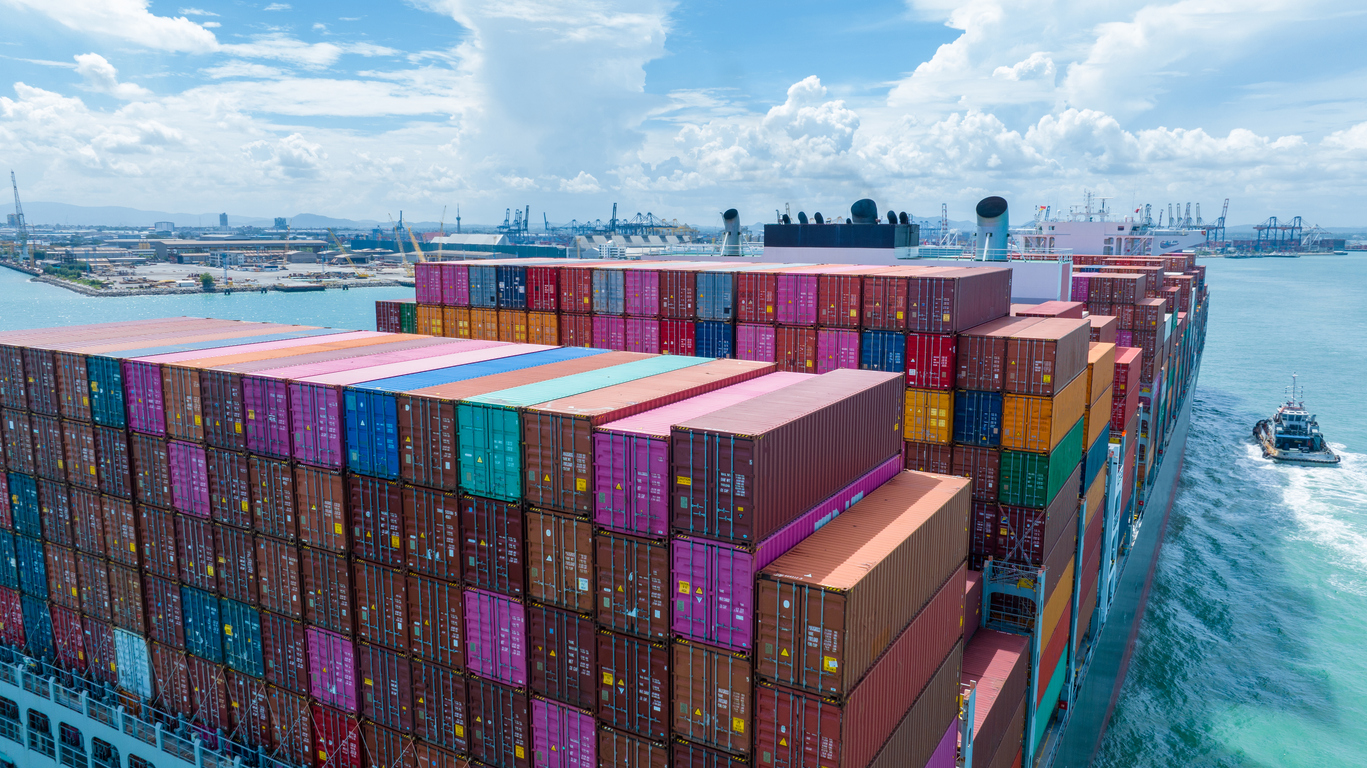
Why Customs in Nigeria Matter for Your Trade: A Strategic Compliance Guide
Customs in Nigeria serve as the ultimate gatekeeper for international commerce, dictating the speed, cost, and legality of every transaction. Navigating the Nigeria Customs Service (NCS) requirements is critical because non-compliance...
Customs in Nigeria serve as the ultimate gatekeeper for international commerce, dictating the speed, cost, and legality of every transaction. Navigating the Nigeria Customs Service (NCS) requirements is critical because non-compliance results in heavy fines, cargo seizures, and indefinite supply chain delays that can cripple a business's market entry and long-term viability in Africa's largest economy.
Contents
The Strategic Role of the Nigeria Customs Service (NCS) in 2026
As of 2026, the Nigeria Customs Service (NCS) has undergone a significant digital transformation under the Trade Modernization Project (TMP). While the primary roles of revenue collection and border protection remain, the emphasis has shifted toward trade facilitation through "e-customs" infrastructure. Understanding this evolution is vital for any trader because the NCS is no longer just a checkpoint; it is a data-driven agency that monitors the entire lifecycle of a shipment.
The NCS operates under a dual mandate. First, it is a major revenue generator for the Federal Government, often second only to oil and gas. This means that valuation and duty assessments are scrutinized with extreme precision. Second, it serves a national security function, intercepting illicit goods and ensuring that imports meet the standards set by agencies like the Standards Organisation of Nigeria (SON) and the National Agency for Food and Drug Administration and Control (NAFDAC). For a trader, this dual mandate means that your documentation must satisfy both fiscal accuracy and safety compliance simultaneously.
The Legal Foundation: The Nigeria Customs Act of 2023
In 2026, the operational landscape is governed by the Nigeria Customs Act 2023, which replaced the outdated Customs and Excise Management Act (CEMA) of 1958. This legislative shift is why customs matters more than ever; the 2023 Act granted the NCS expanded powers for auditing, investigation, and the imposition of much stiffer penalties for infractions.
Under this Act, the "Post-Clearance Audit" (PCA) has become a formidable tool. The NCS can now audit a company’s books up to several years after goods have been cleared and sold. This means that "getting the goods out of the port" is no longer the finish line. If an audit reveals underpayment or misclassification years later, the financial repercussions can be devastating. Traders must maintain meticulous records and ensure that their initial declarations are defensible under the scrutiny of future audits.
Why Customs Compliance is the Foundation of Your Nigerian Trade Strategy
Financial Predictability and Profitability
The most immediate reason customs matters is the impact on your bottom line. Nigeria utilizes the ECOWAS Common External Tariff (CET), but there are numerous additional levies, such as the Comprehensive Import Supervision Scheme (CISS), ECOWAS Trade Liberalization Scheme (ETLS) levies, and various port charges. Failure to accurately forecast these costs during the landed-cost calculation phase can turn a projected profit into a loss.
Risk Mitigation and Asset Protection
Non-compliance in Nigeria often leads to the "seizure and forfeiture" of goods. Once a "Notice of Seizure" is issued, the legal process to recover those goods is lengthy and expensive. Furthermore, the 2023 Act introduced personal liability for corporate officers in cases of deliberate fraud or gross negligence. For international firms, this introduces a level of reputational risk that exceeds mere financial loss.
Supply Chain Velocity
Nigeria’s ports, particularly in Lagos (Apapa and Tin Can Island) and the newer Lekki Deep Sea Port, are high-traffic environments. Customs is often the primary variable in "dwell time"—the duration cargo stays at the port. Efficient interaction with the NCS, facilitated by the Pre-Arrival Assessment Report (PAAR) system, allows for faster clearance. Conversely, a single error on a Form M or a Bill of Lading can trigger a 100% physical examination, adding weeks to your delivery timeline.
Critical Documentation: Form M and PAAR
To trade successfully in Nigeria, you must master the digital document flow. The process begins with the Form M, which is a mandatory statutory document to be completed by all importers for goods imported into Nigeria. It is registered through the Trade Monitoring System (TRMS) operated by the Central Bank of Nigeria (CBN).
Once the Form M is validated and the goods are shipped, the next critical document is the Pre-Arrival Assessment Report (PAAR). The PAAR is generated by the NCS and serves as the official document for duty payment. It is based on the Final Invoice, Transport Document (Bill of Lading/Airway Bill), and the Packing List.
The accuracy of these documents is non-negotiable. Discrepancies between the PAAR and the physical goods found during examination are the leading cause of "Demand Notices" (DN), which are additional payment orders issued by customs to rectify underpayments.
Essential Costs: Understanding Levies and Taxes
Trade in Nigeria involves a layered cost structure. While the basic duty might appear manageable, the cumulative effect of levies must be accounted for.
| Charge Type | Rate/Basis | Purpose |
|---|---|---|
| Surface Duty | 0% – 35% (based on HS Code) | Primary import tax based on the ECOWAS CET. |
| VAT | 7.5% (on CIF + Duty + Levies) | Value Added Tax applied to most imported goods. |
| CISS | 1% of FOB value | Comprehensive Import Supervision Scheme levy. |
| ETLS Levy | 0.5% of CIF value | ECOWAS Trade Liberalization Scheme for regional integration. |
| Sugar Levy | Variable (usually 10% - 60%) | Protectionist levy on imported sugar/sweetened products. |
| Automotive Levy | Variable (up to 35%) | Applied to new and used vehicles to support local assembly. |
Note: CIF refers to Cost, Insurance, and Freight. FOB refers to Free on Board.
Leveraging Trade Incentives: Inward and Outward Processing
Customs in Nigeria also matters because of the incentives it offers to savvy traders. The NCS manages various "suspensive regimes" designed to encourage local manufacturing.
- Inward Processing: This allows raw materials or semi-finished goods to be imported duty-free for processing or manufacturing, provided the finished products are eventually exported.
- Bonded Warehousing: Traders can store goods in a government-approved warehouse and defer the payment of duties until the goods are actually removed for local sale. This is a vital tool for managing cash flow.
- Drawback Schemes: If you pay duty on raw materials and later export the finished product, you may be eligible for a refund of the duties paid.
Understanding these mechanisms can provide a significant competitive advantage by reducing the amount of working capital tied up in tax payments.
Common Pitfalls and How to Avoid Them
The most common mistake traders make is misclassification of goods. Every item has a specific Harmonized System (HS) Code. Choosing a code with a lower duty rate might seem tempting, but the NCS uses sophisticated risk profiling to flag such attempts. If caught, you face a "General Penalty" and a Demand Notice for the difference, plus interest.
Another pitfall is the failure to account for Import Prohibition Lists. Nigeria maintains a list of items that cannot be imported to protect local industries (e.g., certain agricultural products or specific textiles). Attempting to import these items results in absolute forfeiture and potential criminal prosecution. Always verify your HS code against the latest version of the Nigeria Customs Integrated Tariff System (NICIS).
The Role of the Licensed Customs Representative
In Nigeria, the law requires that most customs declarations be handled by a Licensed Customs Agent. This agent acts as the intermediary between the trader and the NCS. Choosing the right agent is a critical business decision. A professional agent does more than file paperwork; they provide "classification advice" and represent your interests during physical examinations.
However, the trader remains legally responsible for the accuracy of the information provided. It is essential to conduct due diligence on your agent and ensure they are properly licensed for the 2026 calendar year by the Nigeria Customs Service.
Practical Recommendation for 2026 Traders
Before shipping any goods to Nigeria, perform a Pre-Shipment Compliance Audit. Ensure that your HS Code classification is correct, your Form M is valid, and your NAFDAC or SONCAP certificates are in order. Utilizing the "Single Window" portal for all applications will reduce manual errors and provide a transparent audit trail. In 2026, transparency is your best defense against delays.
FAQs
1. What is the current VAT rate for imports in Nigeria in 2026? The Value Added Tax (VAT) remains at 7.5% for most imported goods. It is calculated on the sum of the CIF value, the import duty, and all other applicable levies. Some items, such as basic food products and medical equipment, may be exempt, but this must be verified against the current Finance Act.
2. Can I clear my goods myself without a customs agent? Technically, individuals can clear personal effects, but for commercial trade, the Nigeria Customs Service requires the use of a Licensed Customs Clearing Agent. These agents are linked to the NCS digital EDI (Electronic Data Interchange) system, which is necessary for submitting declarations.
3. What happens if my goods are undervalued on the invoice? The NCS utilizes a "Value Database" to check the prices of similar goods globally. If your invoice is significantly lower than the database average, customs will issue a "Value Query." You will be required to provide proof of payment (such as a bank transfer record) or pay the difference based on the customs-assessed value.
4. How long does the customs clearance process take in Nigeria? With the Trade Modernization Project fully active in 2026, the goal for compliant traders is "Fast Track" clearance within 24–48 hours. However, if your cargo is flagged for physical examination or if there are documentation discrepancies, the process can take 10 to 21 days depending on port congestion.
5. What is the "Green Channel" in Nigeria Customs? The Green Channel is part of the NCS Risk Management system where low-risk cargo from reputable, compliant importers is released without physical examination or extensive documentary checks. Gaining "Authorized Economic Operator" (AEO) status is the best way to ensure your goods stay in the Green Channel.
6. Is the Form M required for air freight? Yes, the Form M is a mandatory requirement for all commercial imports into Nigeria, regardless of the mode of transport (Sea, Air, or Land). It must be processed through an authorized dealer bank before the shipment departs the country of origin.
Image Gallery