UX Research Interview Questions for Ethical Design: A 2026 Guide
Ethical design in 2026 requires moving beyond simple usability to examine the long-term impact of technology on human autonomy and societal health. To conduct effective UX research for ethical design, interviewers must ask targeted que...
Ethical design in 2026 requires moving beyond simple usability to examine the long-term impact of technology on human autonomy and societal health. To conduct effective UX research for ethical design, interviewers must ask targeted questions about data transparency, psychological triggers, algorithmic bias, and digital well-being to ensure products respect user agency.
Contents
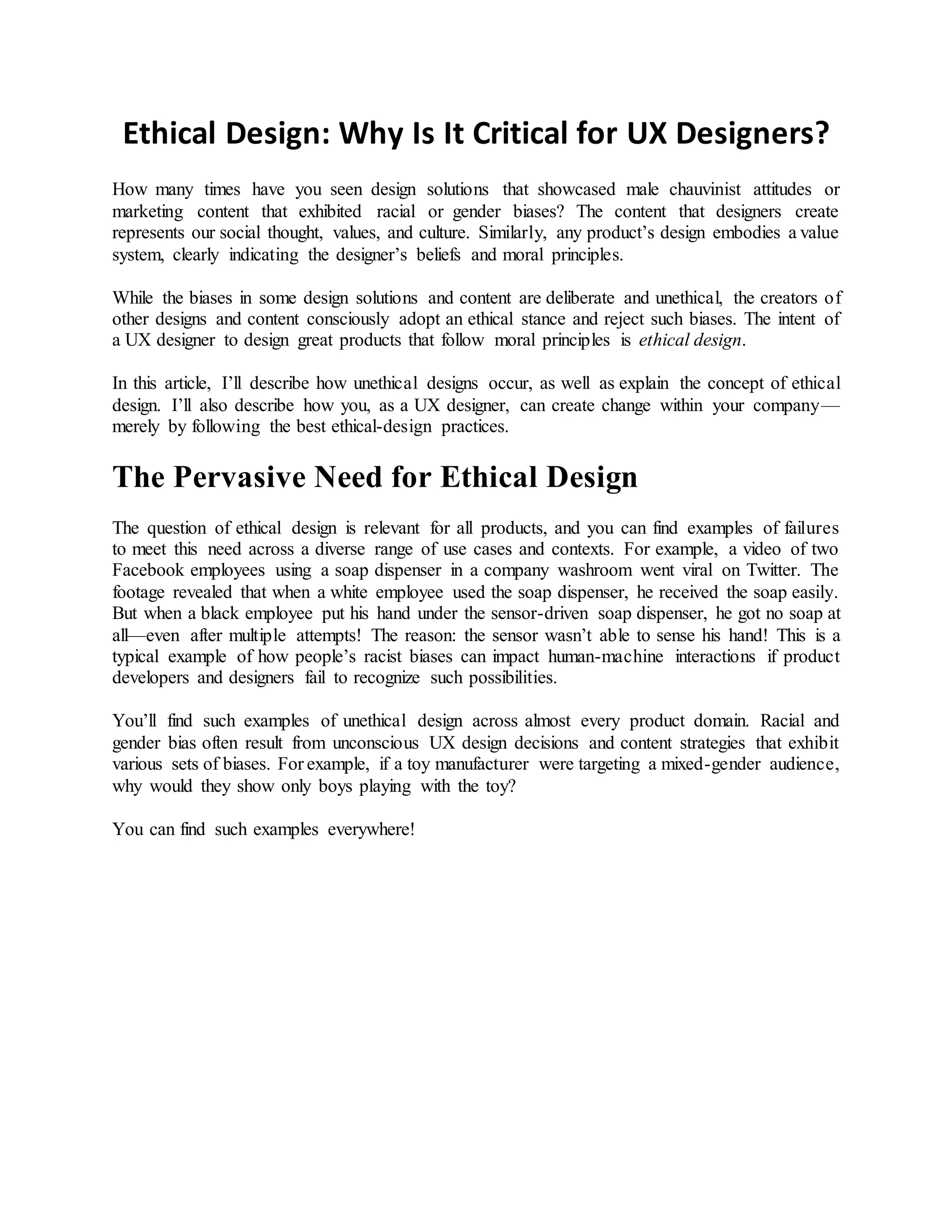
The landscape of user experience research has undergone a radical shift. In 2026, designers and researchers are no longer solely focused on "delight" or "frictionless" experiences. Instead, the industry has pivoted toward Humane Technology, where the success of a product is measured by its contribution to the user’s life rather than the minutes spent on the platform. Ethical design is now a regulatory and commercial necessity, driven by updated global standards such as the AI Act and revised digital privacy frameworks.
Implementing an ethical design framework requires a specialized set of UX research interview questions. These questions are designed to uncover the hidden harms, unintended consequences, and subtle manipulations that standard usability testing often misses.
The Core Principles of Ethical UX Research in 2026
Before deploying specific questions, researchers must understand the three pillars of ethical design as they stand today: Autonomy, Transparency, and Equity.
- Autonomy: Does the user feel in control of their actions, or is the interface nudging them toward a choice that benefits the business at their expense?
- Transparency: Is the system’s logic, especially regarding data usage and AI decision-making, clear and understandable to a layperson?
- Equity: Does the product provide a consistent, high-quality experience for all users, regardless of their socio-economic status, physical ability, or cultural background?
When preparing for a research session, the goal is to shift the conversation from "Can you do this?" to "Should you be asked to do this, and how does it make you feel?"
Interview Questions for Data Privacy and Transparency
In 2026, data privacy is no longer just about compliance; it is about Data Sovereignty. Users are more aware than ever of how their data is harvested. Your interview questions should probe whether the user feels safe and informed.
- "When you first interacted with this feature, how clear was the explanation of what happens to your data?" This question seeks to identify if "informed consent" is actually informed. If the user cannot explain where their data goes, the design has failed its ethical obligation.
- "Do you feel you have a clear 'way out' if you decide you no longer want this service to store your personal information?" Ethical design requires easy off-boarding. This question identifies "roach motels"—designs that make it easy to get in but nearly impossible to get out.
- "If you had to explain to a friend why the app is asking for this specific permission, what would you say?" This is a comprehension test. If the user’s explanation doesn't match the actual technical requirement, the transparency layer is insufficient.
Questions Targeting Psychological Impact and Well-being
With the rise of "Attention Economy" awareness, researchers must investigate whether a product is habit-forming in a way that is detrimental to the user’s mental health.
- "How do you feel immediately after using this app for more than 15 minutes?" Instead of asking about "satisfaction," ask about emotional residue. Do they feel productive, or do they feel drained and anxious?
- "Are there moments where you find yourself using this product without a specific goal in mind? If so, what triggered that session?" This helps identify addictive loops and "dark patterns" designed to exploit boredom or FOMO (Fear Of Missing Out).
- "Do the notifications you receive feel like helpful reminders or interruptions that you cannot control?" This probes the intrusive nature of the design. In 2026, ethical products respect the user's "deep work" and focus time.
Uncovering Algorithmic Bias and Inclusivity
As AI-driven interfaces become the standard, the risk of "encoded bias" is a primary concern for ethical UX. Research must proactively look for these gaps.
- "Looking at the recommendations or results provided by this system, do you feel they represent your personal identity and values?" This allows the user to speak to whether the algorithm is stereotyping them or failing to recognize their unique context.
- "Have you encountered any language, imagery, or logic in this interface that felt exclusionary or made you feel like 'this wasn't built for me'?" This is a direct probe into inclusivity. It encourages users to point out cultural or linguistic insensitivity.
- "Imagine this product was used by someone with significantly less technical experience or a different physical ability than yours. Where would they struggle most?" This prompts the user to think empathetically, often revealing accessibility flaws that the primary participant might overlook because they have the "privilege" of high literacy or full physical mobility.
Comparing Ethical Frameworks in UX Research
To choose the right questions, it helps to know which framework your organization follows. The table below compares the dominant ethical design frameworks utilized in 2026.
| Framework | Primary Focus | Key Research Goal |
|---|---|---|
| Value Sensitive Design (VSD) | Human Values | Integrating moral values into the design process from the start. |
| The Ethical OS | Risk Mitigation | Identifying "nightmare scenarios" and unintended social consequences. |
| Human-Centered AI (HCAI) | Control & Trust | Ensuring AI systems are reliable, transparent, and under human control. |
| Sustainable Interaction Design | Environmental Impact | Reducing the digital carbon footprint and hardware obsolescence. |
Questions for Environmental and Long-term Impact
In 2026, the "S" in ESG (Environmental, Social, and Governance) has become a major part of UX. Users are increasingly concerned with the "Digital Carbon Footprint" of their interactions.
- "Does this product encourage you to upgrade your hardware more often than you feel is necessary?" This addresses "planned obsolescence," a major ethical concern in sustainable design.
- "Are you aware of the energy consumption associated with the high-resolution features of this app?" While this seems technical, in 2026, many apps offer "Low-Carbon Modes." This question gauges the user’s desire for such ethical alternatives.
- "If this service disappeared tomorrow, what would be the most significant positive and negative changes to your daily life?" This "Pre-Mortem" style question helps the researcher understand the product’s true utility versus its "filler" or "distraction" value.
Methodology: How to Ask Without Leading
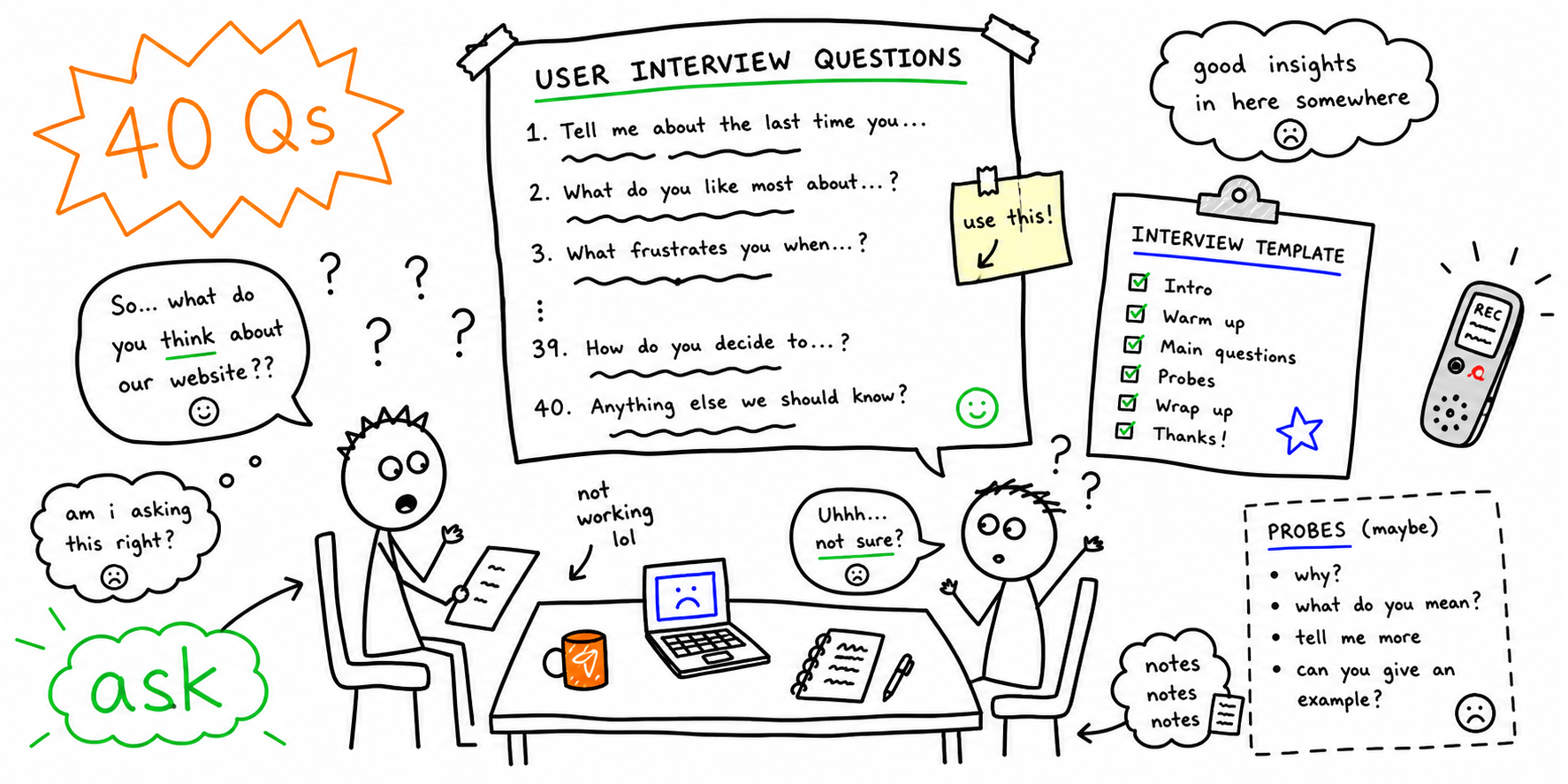
Asking ethical questions requires a neutral stance. If you ask, "Don't you think this feature is intrusive?" you are leading the user. Instead, use open-ended, non-judgmental prompts.
- The "Why" Laddering Technique: When a user expresses discomfort, ask "Why?" five times to get to the root of the ethical concern. It often moves from "I don't like this button" to "I feel like I'm being forced to share my location."
- Scenario-Based Prompting: Instead of asking abstract questions, give the user a scenario. "Imagine you are in a rush and this pop-up appears. How does that change your perception of the brand?"
- The "Red Team" Approach: Ask the user to play the role of a "critic" or "adversary." Ask, "How could a bad actor use this feature to cause harm?" This empowers users to think about the broader safety implications of the design.
Common Pitfalls in Ethical UX Interviews
Researchers often fall into the trap of "Ethics Washing," where they ask the questions but don't have the power to implement changes.
- Avoiding "Yes/No" Questions: Ethical concerns are nuanced. A "Yes" to "Do you trust us?" doesn't tell you why or under what conditions that trust might break.
- Ignoring the "Quiet" Users: In 2026, it is vital to recruit participants from marginalized groups. If your research pool is homogenous, your "ethical" design is inherently flawed.
- The "Compliance" Mindset: Do not treat these questions as a checklist for legal teams. The goal is to improve the human experience, not just avoid a lawsuit.
Frequently Asked Questions
What is the difference between "User-Centered" and "Ethical" design?
User-centered design focuses on the user's immediate needs and ease of use. Ethical design takes a broader view, considering the long-term impact on the user's life, their community, and the environment. A product can be very easy to use (user-centered) while being incredibly addictive or privacy-invasive (unethical).
How do I handle a situation where business goals conflict with ethical findings?
This is the most common challenge in 2026. The best approach is to quantify the risk of "Trust Erosion." Research shows that users who feel manipulated have lower long-term retention. Use your interview data to show that while an unethical design might boost short-term metrics (like clicks), it damages the brand's "Trust Equity" and leads to higher churn and potential regulatory fines.
When is the best time to ask these questions in the design cycle?
Ethical questions should be asked during the Discovery Phase to set a baseline and during Iterative Testing to see if new features have introduced unintended harms. Waiting until the end of the project (the "Audit Phase") is often too late to make meaningful architectural changes.
Do I need a special consent form for ethical UX research?
Yes. In 2026, standard consent forms are often supplemented with a "Participant Rights" document. This explicitly states that they can refuse to answer any question that makes them uncomfortable and that their data will be handled according to the highest privacy standards, often involving decentralized identity protocols or immediate anonymization.
Can ethical design interview questions be automated?
While AI tools in 2026 can analyze sentiment and detect patterns in user feedback, the nuance of ethical concern often requires a human interviewer. AI can flag that a user is frustrated, but it takes a skilled researcher to dig into the moral reasoning behind that frustration.
Next Actions for UX Researchers
To begin integrating these practices, start by auditing your current interview scripts. Identify three areas where you can swap a standard usability question for an ethical one. For example, instead of asking "Was it easy to find the checkout button?", ask "Did you feel pressured at any point during the checkout process to add items you didn't originally intend to buy?"
Finally, ensure that your findings are presented to stakeholders not just as "user feedback," but as "Risk and Trust Indicators." In the digital economy of 2026, trust is the most valuable currency, and ethical UX research is the primary tool for protecting it.
Image Gallery