Why Harold Shipman Ranks Above Other Prolific Serial Killers in Criminal History
Harold Shipman is considered the most prolific serial killer in modern history because of his confirmed victim count of 215 and his systematic exploitation of the doctor-patient relationship. Unlike other "top five" killers who relied...
Harold Shipman is considered the most prolific serial killer in modern history because of his confirmed victim count of 215 and his systematic exploitation of the doctor-patient relationship. Unlike other "top five" killers who relied on physical force or abduction, Shipman utilized his professional authority to kill with impunity for over two decades, fundamentally altering global medical oversight.
Contents
Defining the "Top Five" and the Statistical Magnitude of Shipman
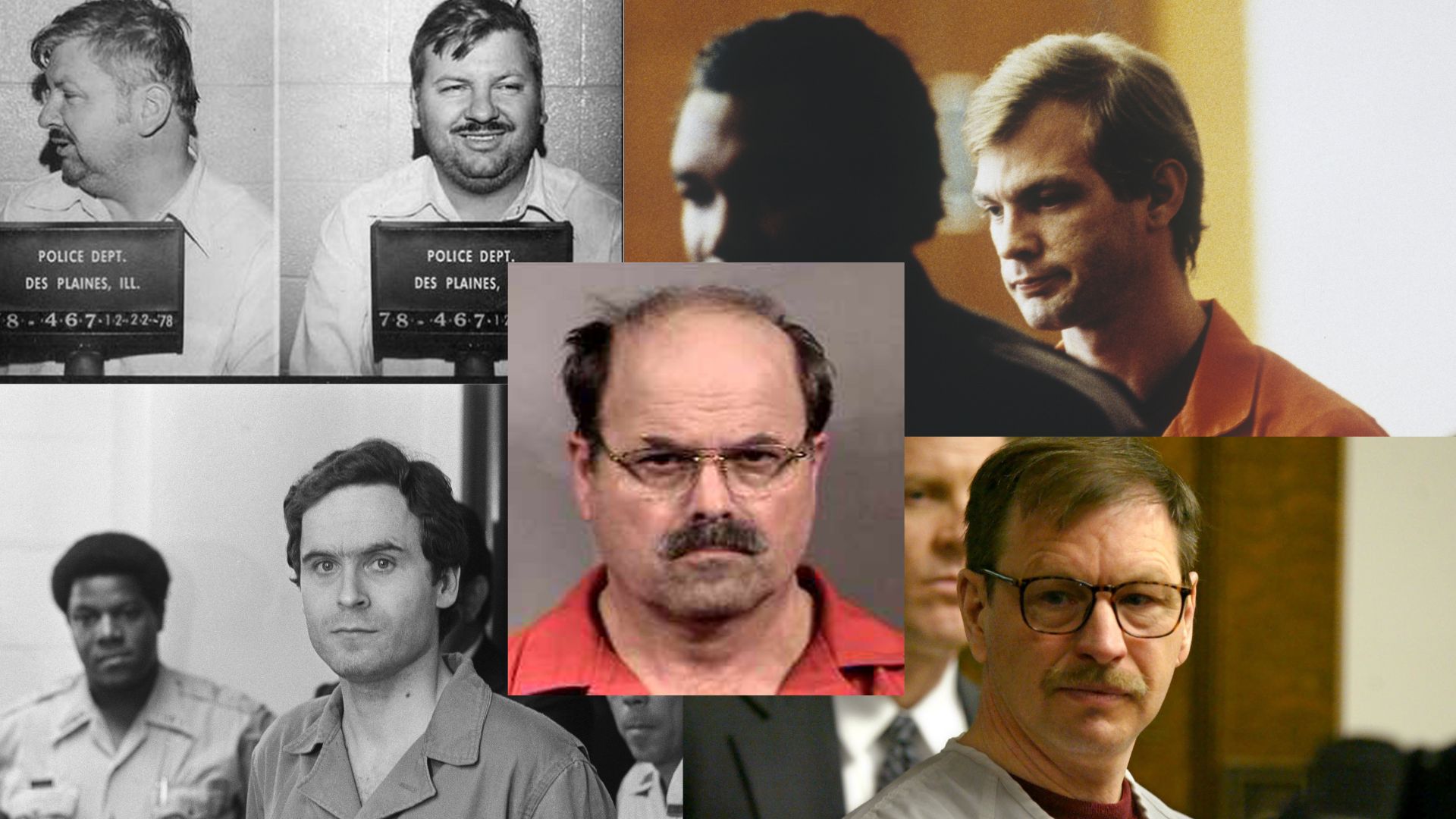
When discussing the most notorious serial killers, names like Ted Bundy, John Wayne Gacy, Jeffrey Dahmer, and Gary Ridgway typically dominate the conversation. However, Harold Shipman—often referred to as "The Good Doctor"—occupies a tier of his own. In the annals of criminology, the "worst" is often categorized by victim count, the duration of the killing spree, and the breach of societal trust.
As of 2026, criminal historians and forensic psychologists continue to use Shipman as the primary case study for "angel of death" archetypes. While Gary Ridgway (the Green River Killer) was convicted of 49 murders, and Ted Bundy confessed to 30, Shipman’s numbers are staggering. The official Shipman Inquiry, chaired by Dame Janet Smith, concluded that there was "real suspicion" he had killed 250 people, with 215 being positively identified.
Comparison of Notorious Serial Killers
| Name | Primary Location | Active Years | Confirmed Victims | Estimated Victims | Primary Method |
|---|---|---|---|---|---|
| Harold Shipman | United Kingdom | 1975–1998 | 215 | 250+ | Lethal injection (Diamorphine) |
| Gary Ridgway | United States | 1982–1998 | 49 | 71–90+ | Strangulation |
| Ted Bundy | United States | 1974–1978 | 30 | 100+ | Bludgeoning/Strangulation |
| John Wayne Gacy | United States | 1972–1978 | 33 | 33+ | Asphyxiation |
| Jeffrey Dahmer | United States | 1978–1991 | 17 | 17 | Strangulation/Dismemberment |
The Breach of Absolute Trust: A Doctor’s Authority
The primary reason Shipman "beats" other serial killers in terms of his impact on society is the nature of his access. Most serial killers are "hunters" who must stalk, kidnap, or lure their victims into a controlled environment. Shipman’s victims invited him into their homes.
As a General Practitioner (GP) in Hyde, Greater Manchester, Shipman held a position of near-total authority. In the 1970s, 80s, and 90s, the local family doctor was a pillar of the community. When Shipman suggested a patient needed a "preventative" injection or a check-up, there was no resistance. He did not need to hide his victims in crawl spaces or forests; he left them in their own armchairs, often "discovering" the bodies himself or being the first person called by the family.
This breach of the Hippocratic Oath—"First, do no harm"—is what makes his crimes more chilling than those committed by social outcasts like Dahmer or Gacy. Shipman operated within the heart of the establishment, protected by the very institution designed to preserve life.
The "Invisible" Victim Pool and the Weaponization of Age
One of the logistical reasons Shipman was able to kill hundreds more than his "competitors" in the top five was his target demographic. While Bundy targeted young women and Gacy targeted young men—disappearances that triggered immediate police investigations—Shipman targeted the elderly and the vulnerable.
By selecting victims who were already of an age where death was socially expected, Shipman effectively neutralized the suspicion of the authorities. If an 80-year-old woman died suddenly in her sleep, it was rarely treated as a crime scene. Shipman would simply certify the cause of death as "old age" or "bronchopneumonia."
Furthermore, he was an expert at gaslighting the families. He would often tell relatives that the deceased had been "feeling poorly" or had a "weak heart" during a visit only hours prior, creating a false medical history that justified the sudden passing. This "hiding in plain sight" allowed his spree to continue for 23 years, whereas most high-profile killers are caught within five to ten years once patterns emerge.
The Clinical Method: Murder Without a Struggle
Forensically, Shipman's crimes were distinct because they lacked the traditional markers of violence. Serial killers like Ridgway or Bundy left behind evidence of struggle, DNA, or trauma. Shipman used diamorphine (pharmaceutical-grade heroin).
He would administer a lethal dose under the guise of medical treatment. The patient would feel a sense of euphoria followed by respiratory depression and a peaceful-looking death. Because there was no "mess," no blood, and no signs of a struggle, there was no reason for a coroner to suspect foul play.
Shipman also manipulated the administrative side of death. In the UK at the time, a second doctor’s signature was required for a cremation, but this was often a "rubber-stamp" exercise where the second doctor simply trusted the primary GP's assessment. Shipman’s efficiency was his greatest shield; he managed the death, the certification, and the disposal (often recommending cremation to destroy toxicological evidence) with industrial precision.
The Downfall: Arrogance and the Kathleen Grundy Forgery
What eventually separated Shipman from his peers was the transition from a "pure" serial killer (motivated by the act of killing) to a common criminal. For decades, Shipman's motive appeared to be a "God Complex"—the power of life and death over his patients. However, in 1998, he murdered Kathleen Grundy and attempted to forge her will to leave him £386,000.
This was a massive tactical error. Unlike his previous victims, Grundy was a former Mayoress and highly active in the community. Her daughter, a lawyer named Angela Woodruff, immediately recognized that the "clumsy" will, allegedly typed on Shipman’s office typewriter, was a fraud.
Once the police began investigating the forgery, they exhumed Grundy’s body and found lethal levels of diamorphine. This thread unravelled decades of deception. When police seized Shipman’s computer, they found he had been backdating medical records to make his victims appear sicker than they were, but he had failed to change the computer's internal timestamp, proving the records were altered after the deaths.
The Legacy of the Shipman Inquiry
The reason Harold Shipman remains at the top of the "worst" list in 2026 is the sheer scale of the legislative changes required to ensure no one like him could ever operate again. The Shipman Inquiry resulted in over 5,000 pages of findings and led to:
- Coroner Reform: A total overhaul of how deaths are certified in the UK.
- Controlled Drug Monitoring: Much stricter regulations on how doctors access and transport drugs like diamorphine.
- Governance of GPs: The end of "single-handed" practices where a doctor could operate without any peer oversight.
- The Medical Certificate of Cause of Death (MCCD) Changes: Stricter requirements for the involvement of medical examiners.
Psychological Profile: Power vs. Perversion
While Bundy and Dahmer were driven by complex sexual deviance and necrophilia, Shipman’s psychological makeup was focused on control. Criminologists believe Shipman derived pleasure not from the suffering of the victim, but from the realization that he was the absolute arbiter of their existence.
He was notoriously arrogant, often berating colleagues and patients’ families if they questioned his expertise. This arrogance made him a "successful" killer for 23 years, but it also became his Achilles' heel. He believed he was smarter than the forensic investigators, the lawyers, and the technology that eventually caught him.
Summary of Findings
To understand why Shipman "beats" others in the top five, one must look past the gruesome details of "traditional" serial killers and look at the structural impact.
- Longevity: 23 years of active killing.
- Victim Count: At least four times higher than most "famous" US serial killers.
- Systemic Damage: He didn't just kill people; he killed the public’s trust in the medical profession.
- Methodology: He used the tools of healing as the tools of execution.
Frequently Asked Questions
How was Harold Shipman caught? Shipman was caught after he forged the will of his last victim, Kathleen Grundy. Her daughter, a solicitor, noticed the forgery and alerted the police. Subsequent toxicological tests on Grundy's exhumed body revealed lethal amounts of diamorphine, leading to a broader investigation of his past patients.
Did Harold Shipman ever admit to his crimes? No. Shipman maintained his innocence throughout his trial and his subsequent imprisonment. He took his secrets to the grave, committing suicide in Wakefield Prison in 2004, a day before his 58th birthday.
Why did Shipman kill so many people without being noticed? He targeted elderly patients whose deaths were not considered suspicious by the authorities or the community. He also exploited a loophole in the British death certification process where he, as the attending GP, had almost total control over the paperwork required for burial or cremation.
How many victims did Harold Shipman have exactly? The official Shipman Inquiry identified 215 victims with certainty, but the chair, Dame Janet Smith, stated that the true number was likely closer to 250. Some estimates by investigators suggest it could be even higher, as records from his early career in the 1970s were incomplete.
What was Shipman's motive? Unlike many serial killers, there was no evidence of sexual motivation. Experts believe his primary motive was a "God Complex"—the need for absolute power and control over life and death—potentially stemming from the trauma of watching his own mother die of cancer when he was a teenager.
Final Recommendation for Further Research: For those looking to understand the technical failures of the medical system during this era, the Third Report of the Shipman Inquiry (Death Certification and the Investigation of Deaths) remains the definitive document on how professional authority can be weaponized.
Image Gallery