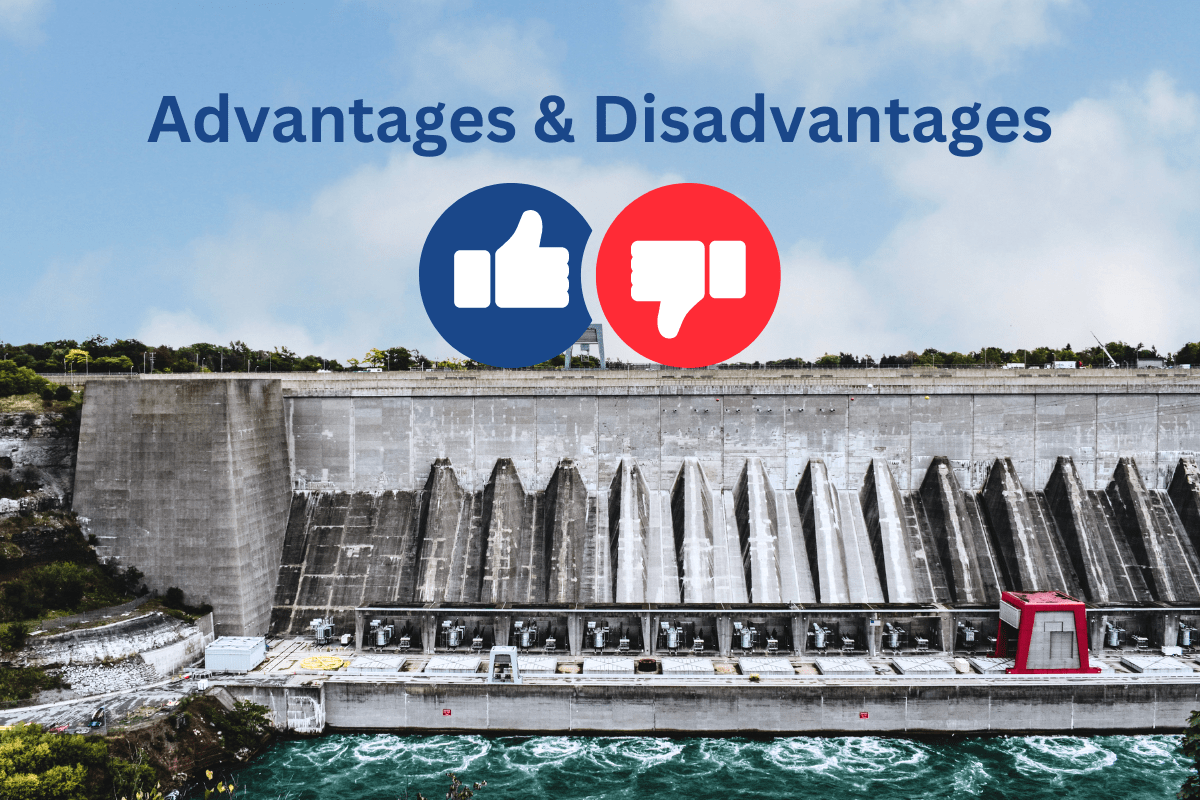
The Advantages and Disadvantages of Hydroelectric Energy: A Balanced Technical Analysis
Hydroelectric energy harnesses the kinetic power of flowing or falling water to generate electricity. Its chief advantages include continuous dispatchable power, high operational reliability, low long-term operating costs, and grid-sca...
Hydroelectric energy harnesses the kinetic power of flowing or falling water to generate electricity. Its chief advantages include continuous dispatchable power, high operational reliability, low long-term operating costs, and grid-scale storage capabilities. However, its primary disadvantages center on severe aquatic ecosystem disruption, substantial initial capital requirements, community displacement, and vulnerability to climate-driven droughts.
Contents
Understanding Hydroelectric Energy: System Configurations and Mechanics
Hydroelectric power is one of the oldest and largest sources of renewable electricity globally. The fundamental physics of hydropower rely on capturing the gravitational potential energy of water stored at an elevation (the head) and converting it into mechanical energy via hydraulic turbines, which then drive electrical generators. The theoretical power output ($P$) of a hydroelectric system is directly proportional to the hydraulic head ($H$), the volumetric flow rate ($Q$), fluid density ($\rho$), gravitational acceleration ($g$), and system efficiency ($\eta$):
$$P = \eta \cdot \rho \cdot g \cdot Q \cdot H$$
Understanding the advantages and disadvantages of hydroelectric power requires examining the three primary structural configurations used in modern energy infrastructure:
1. Impoundment Systems (Conventional Reservoir Hydro)
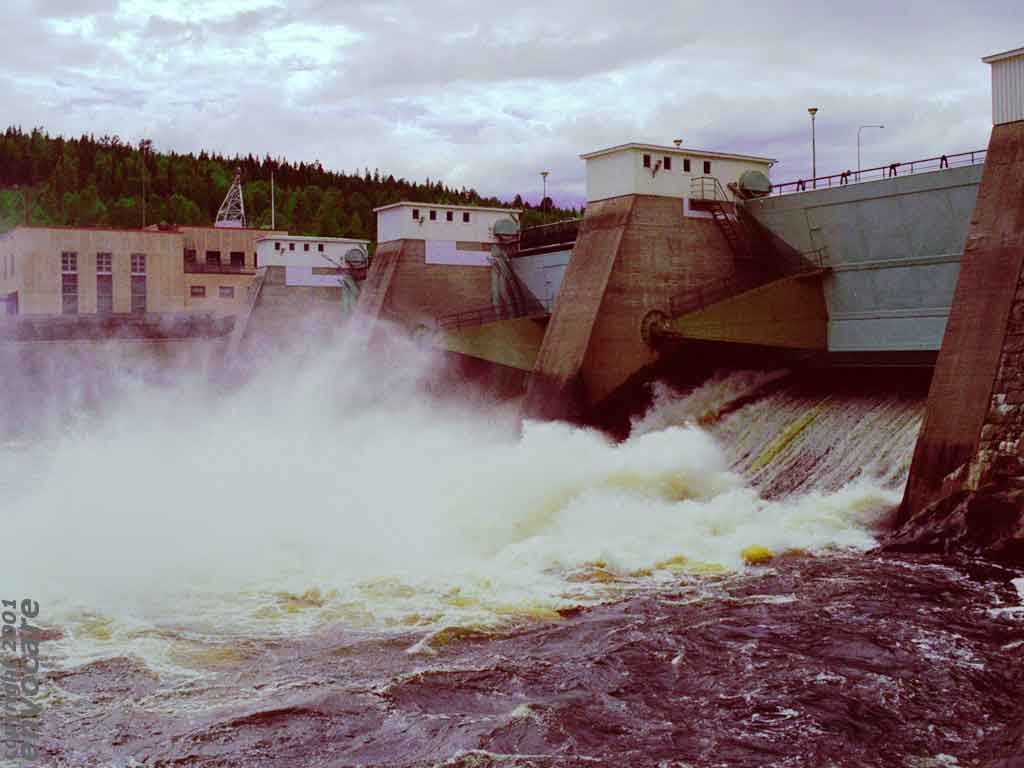
Impoundment facilities rely on a dam to store river water in a reservoir. When energy is needed, water is released through intake gates into penstocks, flowing downward to turn hydraulic turbines (such as Francis, Kaplan, or Pelton turbines). Impoundment systems offer massive energy storage capacities and high dispatchability, but they alter natural river ecosystems and flood substantial areas of upstream land.
2. Run-of-River Systems (Diversion Hydro)
Run-of-River (ROR) facilities channel a portion of a river's natural flow through a canal or penstock directly to turbines, returning the water downstream. Because ROR plants typically maintain minimal or no reservoir storage, they feature a significantly reduced land-use footprint compared to impoundment dams. However, their power output depends entirely on seasonal river flows, making them non-dispatchable during dry periods.
3. Pumped-Storage Hydropower (PSH)
Pumped-storage facilities function as utility-scale water batteries. PSH systems utilize two water reservoirs at different elevations. During periods of low electricity demand or surplus generation from variable renewables (such as solar and wind), electricity is consumed to pump water from the lower reservoir to the upper reservoir. During peak energy demand, water is released back to the lower reservoir through reversible pump-turbines, delivering rapid-response electrical power to the grid.
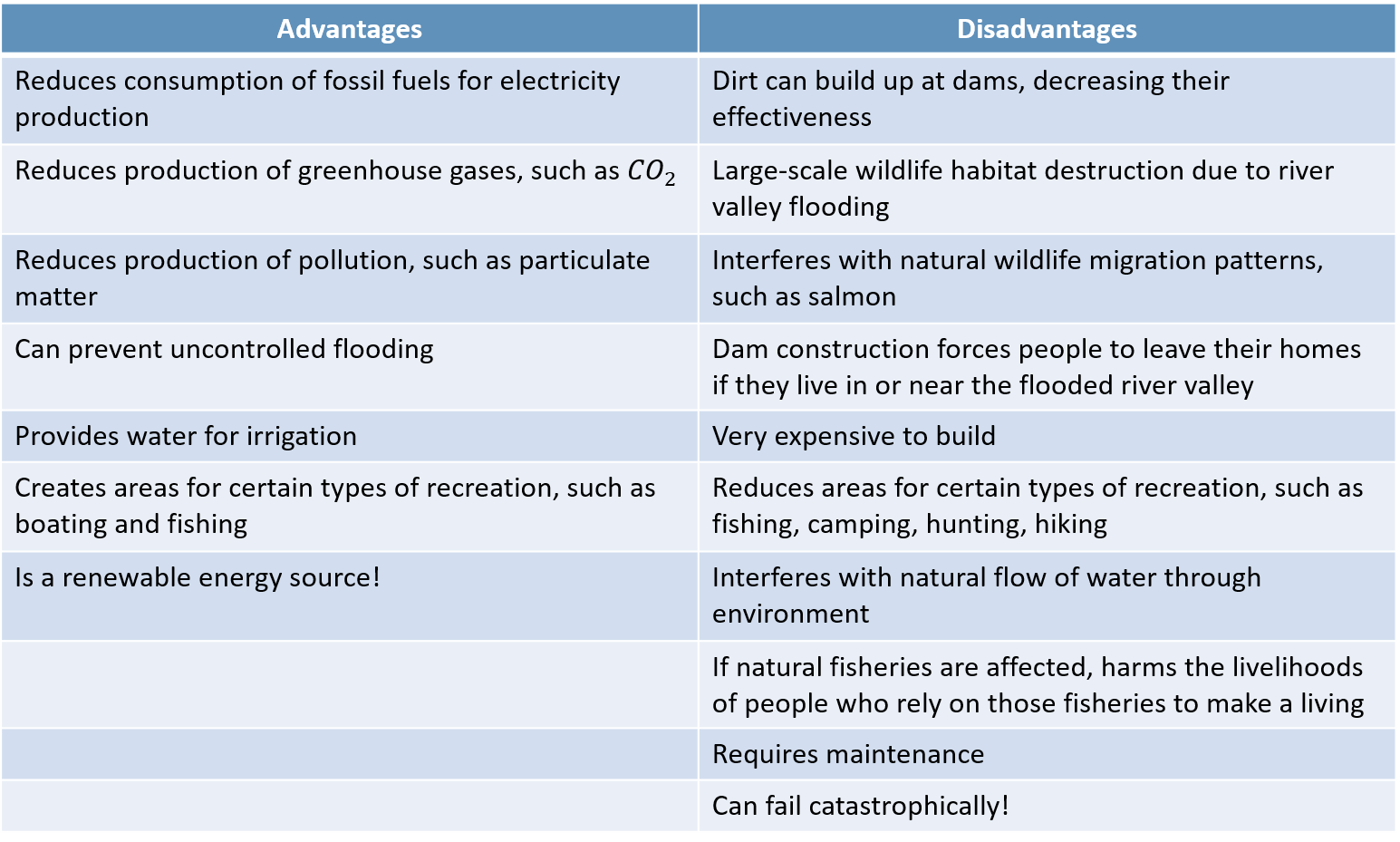
The Primary Advantages of Hydroelectric Energy
Hydroelectric power remains a foundational component of global renewable energy networks due to its unique technical, economic, and operational characteristics.
- Renewable & Zero-Direct Emissions during Operation
- Grid-Scale Storage & Fast-Response Dispatchability
- High Operational Efficiency & 50-100+ Year Lifespan
- Minimal Variable Operating & Maintenance (O&M) Costs
- Multi-Use Benefits (Flood Mitigation, Irrigation, Water Supply)
1. Renewable and Clean Operational Generation
Unlike fossil fuel combustion plants, hydroelectric generation releases zero direct carbon dioxide ($\text{CO}_2$), sulfur dioxide ($\text{SO}_2$), or nitrogen oxides ($\text{NO}_x$) into the atmosphere during operation. Water is an infinitely circulating resource driven by the solar-powered hydrological cycle. According to data compiled by the U.S. Department of Energy, hydropower continues to provide a major share of low-carbon electricity worldwide, avoiding gigatons of carbon emissions annually when replacing coal or natural gas generation.
2. Exceptional Grid Dispatchability and Flexibility
Unlike solar photovoltaics and wind turbines, which depend on weather conditions, impoundment and pumped-storage hydropower facilities are dispatchable. Grid operators can adjust water flow through penstocks in seconds or minutes to match fluctuating consumer demand. Hydropower provides essential ancillary grid services, including:
- Frequency Regulation: Maintaining grid frequency within narrow operating limits.
- Spinning Reserves: Providing immediate emergency generation capability if another plant trips offline.
- Black-Start Capability: The ability to restart regional power grids independently during widespread blackout events without relying on external electricity supplies.
3. Long Operational Lifespan and Low Operating Costs
While constructing a hydropower plant requires massive initial capital, once operational, its ongoing fuel cost is zero. Dams and hydraulic civil works are designed to last between 50 and 100 years, with periodic turbine retrofits and automation upgrades extending service lives even further. Over its operational lifetime, hydroelectric power achieves one of the lowest levelized costs of electricity (LCOE) among utility-scale generation technologies.
4. Utility-Scale Energy Storage (Pumped Hydro)
Grid stability relies heavily on balancing supply and demand in real time. Pumped-Storage Hydropower represents over 90% of installed global grid-scale energy storage capacity. As intermittent solar and wind capacity expands across modern power grids, PSH acts as a buffer by soaking up midday solar overgeneration and discharging during peak evening demand hours.
5. Multipurpose Infrastructure Benefits
Hydroelectric reservoirs frequently deliver substantial benefits beyond electricity production. Engineered impoundments provide:
- Flood Mitigation: Regulating seasonal flood surges to protect downstream communities.
- Agricultural Irrigation: Storing large volumes of fresh water for crop irrigation during dry seasons.
- Municipal Water Supply: Serving as steady water reservoirs for urban populations.
- Navigational Locks & Recreation: Facilitating inland barge transport and supporting commercial and recreational boating.
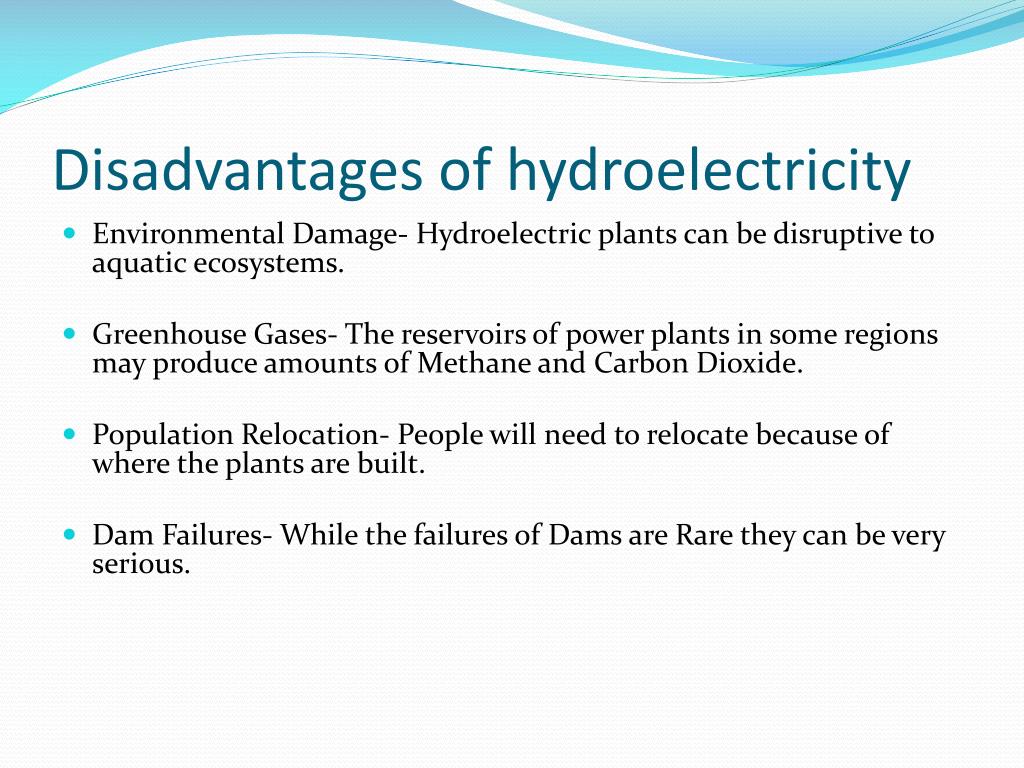
Major Disadvantages and Environmental Challenges
Despite its operational benefits, hydroelectric development presents substantial ecological, social, and financial drawbacks that require careful mitigation.
- Severe Aquatic Ecosystem Disruption & Blocked Migration
- High Upfront Capital Costs & Long Construction Lead Times
- Human Displacement & Loss of Cultural / Arable Land
- Climate Vulnerability (Severe Droughts & Reduced Snowpack)
- Methane Emissions from Anaerobic Reservoir Biomass Decay
1. Aquatic Ecosystem Disruption and Biodiversity Loss
Building dams fundamentally alters natural hydrodynamics. Impoundments turn fast-flowing river habitats into stagnant reservoir ecosystems, changing water temperatures, oxygen levels, and nutrient transport.
- Fish Migration Barriers: Structures block migratory fish species (such as salmon, shad, and sturgeon) from reaching spawning grounds upstream.
- Sediment Trapping: Dams trap river silt, depriving downstream channels and coastal deltas of essential nutrients, leading to accelerated riverbed and coastline erosion.
- Thermal Stratification: Reservoirs can release cold, oxygen-depleted water from lower depths, harming downstream aquatic life.
2. High Initial Capital Costs and Protracted Timelines
Hydroelectric projects require capital investments reaching billions of dollars for dam construction, land acquisition, environmental reviews, transmission line installation, and heavy civil engineering works. Construction timelines often stretch from 5 to 15 years, exposing developers to severe financial risks, interest rate changes, and regulatory delays.
3. Human Displacement and Land Submergence
Creating large reservoirs requires flooding vast areas of upstream land. Historically, mega-hydroelectric developments have displaced hundreds of thousands of residents, submerging agricultural land, towns, historical monuments, and indigenous territories. Managing human relocation and compensating affected communities remain major ethical and socio-economic hurdles.
4. Vulnerability to Droughts and Climate Variability
Hydropower generation depends entirely on hydrological inputs. Extended droughts, shrinking glaciers, and reduced seasonal snowpacks directly degrade generating capacity. Research and monitoring from the U.S. Geological Survey highlight how severe drought cycles in regions like the American West or Southern Europe can reduce annual hydroelectric generation by 20% to 50%, forcing utilities to rely on natural gas or emergency power purchases.
5. Methane Emissions from Decaying Reservoir Biomass
Although hydroelectric plants generate zero direct combustion emissions, flooded reservoirs—particularly in tropical climates—can emit greenhouse gases. Submerged vegetation and organic matter decompose anaerobically (without oxygen) at the bottom of reservoirs, producing methane ($\text{CH}_4$), a potent greenhouse gas. In shallow tropical impoundments, lifecycle methane emissions can sometimes rival those of natural gas power facilities during the early decades of impoundment.
Comparative Analysis: Hydropower vs. Alternative Power Sources
To evaluate the overall role of hydroelectric energy in modern power systems, it must be compared directly against alternative generation technologies across key metrics:
| Technical Parameter | Impoundment Hydropower | Pumped-Storage Hydro (PSH) | Utility-Scale Solar (PV) | Onshore Wind Power | Combined-Cycle Natural Gas |
|---|---|---|---|---|---|
| Primary Fuel Source | Kinetic Water Flow | Stored Hydraulic Head | Solar Irradiance | Kinetic Wind | Natural Gas ($\text{CH}_4$) |
| Fuel Cost | Zero | Zero (Pumping Energy Cost) | Zero | Zero | Market-Dependent |
| Dispatchability | High (Controllable) | High (Rapid Response) | Non-Dispatchable | Non-Dispatchable | High (Fully Dispatchable) |
| Operational Lifespan | 50 – 100+ Years | 50 – 100+ Years | 25 – 30 Years | 20 – 25 Years | 30 – 40 Years |
| Capacity Factor Range | 35% – 60% | N/A (Storage Efficiency ~75-80%) | 15% – 30% | 30% – 50% | 50% – 85% |
| Lifecycle GHG Footprint | Low (Varies by climate) | Low | Low to Moderate | Low | High |
| Initial CapEx per kW | Very High | High | Low to Moderate | Moderate | Moderate |
| Land Use Impact | High (Flooded Footprint) | Moderate | Moderate to High | High (Distributed) | Low |
Modern Technological Innovations and Mitigation Strategies
Engineers and environmental scientists have developed advanced technologies and operational frameworks to maximize the benefits of hydropower while minimizing its ecological footprint:
Fish Passage Systems and Eco-Friendly Turbines
To maintain connectivity for migratory aquatic species, modern dams incorporate advanced fish ladders, fish elevators, and specialized acoustic deterrents. Additionally, new fish-friendly turbines (such as low-shear, wide-gap Kaplan designs and Alden turbines) lower fish mortality rates during passage to less than 2%, compared to historical mortality rates exceeding 20% in older high-head systems.
| Technology / Strategy | Operational Benefit |
|---|---|
| Fish-Friendly Turbines | Reduces fish passage mortality to <2% |
| Environmental Flows | Maintains seasonal downstream ecology |
| Non-Powered Dam Retrofit | Adds generation with zero new land loss |
| Floating Solar (FPV) | Cuts evaporation & increases solar output |
Environmental Flow (E-Flow) Regulations
Modern regulatory standards require dam operators to release tailored downstream water volumes—known as environmental flows or e-flows. E-flows mimic natural seasonal variations in flow volume and temperature, protecting downstream spawning beds, maintaining riparian ecosystems, and reducing riverbank erosion.
Non-Powered Dam (NPD) Retrofitting
Building entirely new dams is increasingly restricted due to environmental regulations. However, thousands of existing dams designed solely for navigation, flood control, or irrigation lack hydroelectric turbines. Retrofitting non-powered dams allows developers to add clean power capacity without creating new reservoir impoundments or flooding additional land.
Floating Photovoltaic Systems ("Floatovoltaics")
Deploying floating solar panels across the surface of hydroelectric reservoirs creates a beneficial hybrid system. Solar panels shade the water, reducing evaporation losses in drought-prone regions. In turn, the cooling effect of the reservoir water boosts solar panel electrical efficiency, while both systems share existing high-voltage grid connections.
Frequently Asked Questions
Is hydroelectric energy completely carbon-free?
Hydroelectric power generates zero direct carbon emissions during electricity production. However, lifecycle emissions arise from raw materials, dam construction, and the anaerobic decomposition of submerged organic material in reservoirs. While most hydropower plants emit far less carbon over their lifecycle than fossil-fuel generation, shallow tropical reservoirs can emit significant amounts of methane during their early decades of operation.
How does pumped-storage hydropower act as a "water battery"?
Pumped-storage hydropower uses two reservoirs situated at different elevations. During periods of low electricity demand or surplus generation from solar and wind farms, excess grid electricity is used to pump water from the lower reservoir to the upper reservoir. When grid demand surges, water flows back down through reversible turbines, generating electricity on demand with round-trip energy efficiencies between 75% and 80%.
What is the main operational difference between run-of-river and reservoir dams?
Reservoir dams store large volumes of water behind an impoundment, enabling dispatchable power generation independent of immediate river inflows. Run-of-river facilities divert a portion of a river's natural flow directly through turbines with minimal or no storage. Consequently, run-of-river facilities have a smaller land footprint, but their generation output fluctuates with seasonal rainfall and river conditions.
Can hydroelectric power replace coal and natural gas entirely?
Hydroelectric power serves as an excellent baseload and dispatchable peaking resource. However, its geographic expansion is constrained by regional topography, available water resources, high capital costs, and environmental protection laws. In regions rich in water resources (such as Norway, Brazil, or Quebec), hydropower supplies nearly all grid power. In flatter or drier regions, hydropower must be integrated alongside solar, wind, battery storage, and geothermal resources to phase out fossil fuels completely.
What are environmental flows, and why are they important?
Environmental flows (e-flows) are scheduled water releases from dams designed to simulate the natural flow patterns, water temperature, and sediment transfer of an un-dammed river system. Implementing e-flows prevents downstream habitat degradation, supports aquatic biodiversity, and preserves downstream riverbanks and agricultural zones.
Conclusion and Strategic Outlook
Hydroelectric energy remains a vital component of the clean energy transition, delivering dispatchable renewable power, long-term economic utility, and utility-scale energy storage. Its capability to stabilize power grids alongside variable solar and wind power makes existing hydropower assets more valuable than ever.
Maximizing the benefits of hydroelectric energy while minimizing its negative impacts requires strategic development policies:
- Prioritize Refurbishment and Retrofitting: Upgrade existing turbines, replace aging civil infrastructure, and convert non-powered dams into power-generating facilities before pursuing greenfield dam construction.
- Mandate Advanced Environmental Mitigations: Require fish-friendly turbines, continuous downstream environmental flow releases, and aeration systems on all operational facilities.
- Expand Pumped Hydro Storage: Invest in closed-loop pumped-storage projects, which utilize off-river reservoirs to provide grid storage while minimizing aquatic ecosystem disruption.
- Deploy Hybrid Renewables: Combine solar photovoltaics with existing hydroelectric reservoirs through floatovoltaics to reduce reservoir evaporation and optimize transmission line usage.
For energy developers, grid operators, and policymakers, future success depends on balancing the grid stability advantages of hydropower against local ecological and social considerations.
Image Gallery