What the Carson City Courts Actually Do: Jurisdiction, Operations, and Legal Functions
The Carson City court system operates a multi-tiered judicial hierarchy responsible for resolving local municipal violations, civil disputes, criminal prosecutions, and complex family law matters. As Nevada’s state capital, Carson City...
The Carson City court system operates a multi-tiered judicial hierarchy responsible for resolving local municipal violations, civil disputes, criminal prosecutions, and complex family law matters. As Nevada’s state capital, Carson City houses both local trial courts—the First Judicial District Court, Justice Court, and Municipal Court—and the state's highest appellate bodies, managing everything from minor traffic citations to statewide constitutional appeals.
Contents
Understanding how the Carson City courts function requires looking past a single courthouse door. Because Carson City operates as a consolidated municipality (serving as both a city and an independent county-level entity), its judicial system balances routine municipal enforcement with broad district-level trial jurisdiction. Furthermore, its role as the seat of state government makes it the primary forum for administrative law challenges involving Nevada state agencies.
Disclaimer: This guide is provided for educational and informational purposes only and does not constitute formal legal advice. For specific legal representation or advice regarding Nevada law, consult a licensed attorney.
The Structural Framework of Carson City’s Judicial System
The court system in Carson City is divided into three distinct levels of authority: limited jurisdiction trial courts, general jurisdiction trial courts, and appellate courts. Each court operates under specific statutory boundaries defined by the Nevada Revised Statutes (NRS) and local court rules.
- Nevada Supreme Court & Nevada Court of Appeals (Statewide Appellate Review - Carson City)
- Receives Appeals from First Judicial District Court
- First Judicial District Court (General Jurisdiction: Carson City & Storey County)
- Felonies & Gross Misdemeanors
- Civil Claims > $15,000
- Family Law & Divorce
- Probate & Guardianship
- Receives Appeals / Bindovers from Justice Court & Municipal Court
- Carson City Justice Court & Municipal Court (Limited Jurisdiction)
- Misdemeanors & Traffic
- Small Claims (≤ $10,000)
- Preliminary Felony Hearings
- Civil Claims (≤ $15,000)
- City Code Violations
- Evictions & Protection Orders
Understanding which court has jurisdiction over a legal matter depends on the nature of the offense, the dollar amount in dispute, or the administrative remedy sought.
Carson City Justice Court and Municipal Court: Limited Jurisdiction Operations
The Carson City Justice Court and Carson City Municipal Court represent the entry point for most individuals entering the local legal system. Although physically located within the same judicial facility at the Carson City Public Safety Complex (885 E. Musser Street), they are distinct legal entities governed by separate statutory authorities.
In practice, the elected Justices of the Peace in Carson City frequently serve dual roles as Municipal Court Judges. This consolidated administrative structure streamlines local judicial resources while keeping court dockets moving efficiently.
Primary Functions of the Justice Court
The Justice Court is a court of limited jurisdiction created under NRS Chapter 4. Its daily operations include:
- Misdemeanor Prosecutions: The Justice Court conducts arraignments, bench trials, and sentencings for misdemeanor criminal offenses occurring within Carson City limits, including first- and second-offense Driving Under the Influence (DUI), petty larceny, simple battery, and trespass.
- Felony and Gross Misdemeanor Preliminary Hearings: While the Justice Court cannot conduct final jury trials for felonies or gross misdemeanors, it acts as the screening venue. The court conducts preliminary hearings to determine whether sufficient probable cause exists to bind the defendant over to the District Court for trial.
- Civil Litigation Up to $15,000: The Justice Court hears general civil claims where the amount in dispute does not exceed $15,000.
- Small Claims Court: Operating as an informal division of the Justice Court, Small Claims handles monetary disputes up to $10,000. The procedures are streamlined, rules of evidence are relaxed, and parties frequently represent themselves without attorneys.
- Summary Evictions: The Justice Court processes landlord-tenant dispute filings, holds eviction hearings, and issues orders for summary evictions under Nevada residential and commercial landlord-tenant laws.
- Protective Orders: Citizens apply to the Justice Court for Temporary Protection Orders (TPOs) and Extended Protection Orders against domestic violence, stalking, harassment, or workplace violence.
Primary Functions of the Municipal Court
The Municipal Court is established under NRS Chapter 5 to handle enforcement of Carson City’s municipal code and city-specific regulations:
- Traffic Infractions and Violations: Processing moving violations, parking citations, and non-criminal traffic infractions issued by the Carson City Sheriff’s Office or the Nevada Highway Patrol within city boundaries.
- City Code Enforcement: Prosecuting local ordinance violations, such as building code breaches, animal control citations, zoning non-compliance, and business licensing infractions.
- Specialty Courts: Operating problem-solving court dockets, such as Mental Health Court or Misdemeanor Drug Court, designed to offer rehabilitation programs as an alternative to incarceration for eligible misdemeanor offenders.
First Judicial District Court: General Jurisdiction Powers
The First Judicial District Court of Nevada serves as the trial court of general jurisdiction for both Carson City and neighboring Storey County. Operating out of the Carson City Courthouse, the District Court handles high-stakes criminal trials, major civil lawsuits, domestic relations, and specialized equity matters.
District Judges are constitutional officers elected to six-year terms. They possess broad judicial authority over cases that fall outside the limited statutory caps of the Justice and Municipal courts.
- First Judicial District Court (General Jurisdiction)
- Criminal Division
- Felony Trials
- Gross Misdem.
- State Agency Appeals
- Civil Division
- Claims > $15,000
- Injunctions
- Constitutional Writs
- Family Division
- Divorce & Custody
- Adoption & Paternity
- Child Support & Dependency
- Probate & Specialty
- Estate Settlement
- Guardianships
- Juvenile Matters
- Criminal Division
1. Serious Criminal Cases
The District Court handles all felony and gross misdemeanor prosecutions from arraignment through trial and sentencing. When a defendant is bound over from Justice Court, the case is assigned to a District Court judge.
Types of criminal proceedings handled include:
- Category A through Category E felonies (e.g., homicide, sexual assault, robbery, grand larceny, drug trafficking, and third-offense DUI).
- Gross misdemeanors (e.g., unlawful use of a credit card, stalking, or child abuse without substantial bodily harm).
- Jury trials, pre-trial evidentiary hearings, and post-conviction relief petitions.
2. Major Civil Litigation
The District Court has jurisdiction over civil controversies where the monetary demand exceeds $15,000. These cases typically involve complex contract disputes, personal injury lawsuits, corporate litigation, property boundary conflicts, and medical malpractice actions.
Additionally, because Carson City is the state capital, the First Judicial District Court holds exclusive original jurisdiction over administrative law petitions for judicial review. When an individual or business challenges a decision made by a Nevada state administrative agency (such as the Department of Motor Vehicles, the Department of Taxation, or the Nevada Real Estate Division), the appeal is routinely litigated in the Carson City District Court.
3. Family Law Division
The Family Division of the First Judicial District Court resolves sensitive domestic relations cases. Specialized dockets ensure domestic matters are handled with confidentiality and focus on the best interests of involved minors:
- Divorce and Annulment: Resolving marital dissolution, community property division, and spousal support obligations.
- Child Custody and Support: Establishing parental rights, visitation schedules, and child support calculations under Nevada statutory guidelines.
- Guardianship: Appointing legal guardians for incapacitated adults or minor children.
- Adoption and Termination of Parental Rights: Processing legal adoptions and terminating parental rights when necessary.
4. Juvenile Court Operations
The Juvenile Division handles cases involving minors under age 18. This includes juvenile delinquency proceedings (offenses that would be criminal if committed by an adult) and child abuse and neglect matters (CHIPS cases) investigated by child protective services. The focus of the Juvenile Court is predominantly intervention, rehabilitation, and family reunification.
5. Probate and Estate Administration
The District Court oversees the validation of last wills and testaments, administration of decedents' estates, distribution of assets to heirs, and resolution of trust disputes.
Statewide Appellate Courts Headquartered in Carson City
Beyond local municipal and district jurisdiction, Carson City serves as the constitutional center of Nevada's judicial branch. The appellate courts of Nevada do not conduct trials, hear witness testimony, or review new evidence; instead, they review trial records from district courts across the state to determine whether errors of law occurred.
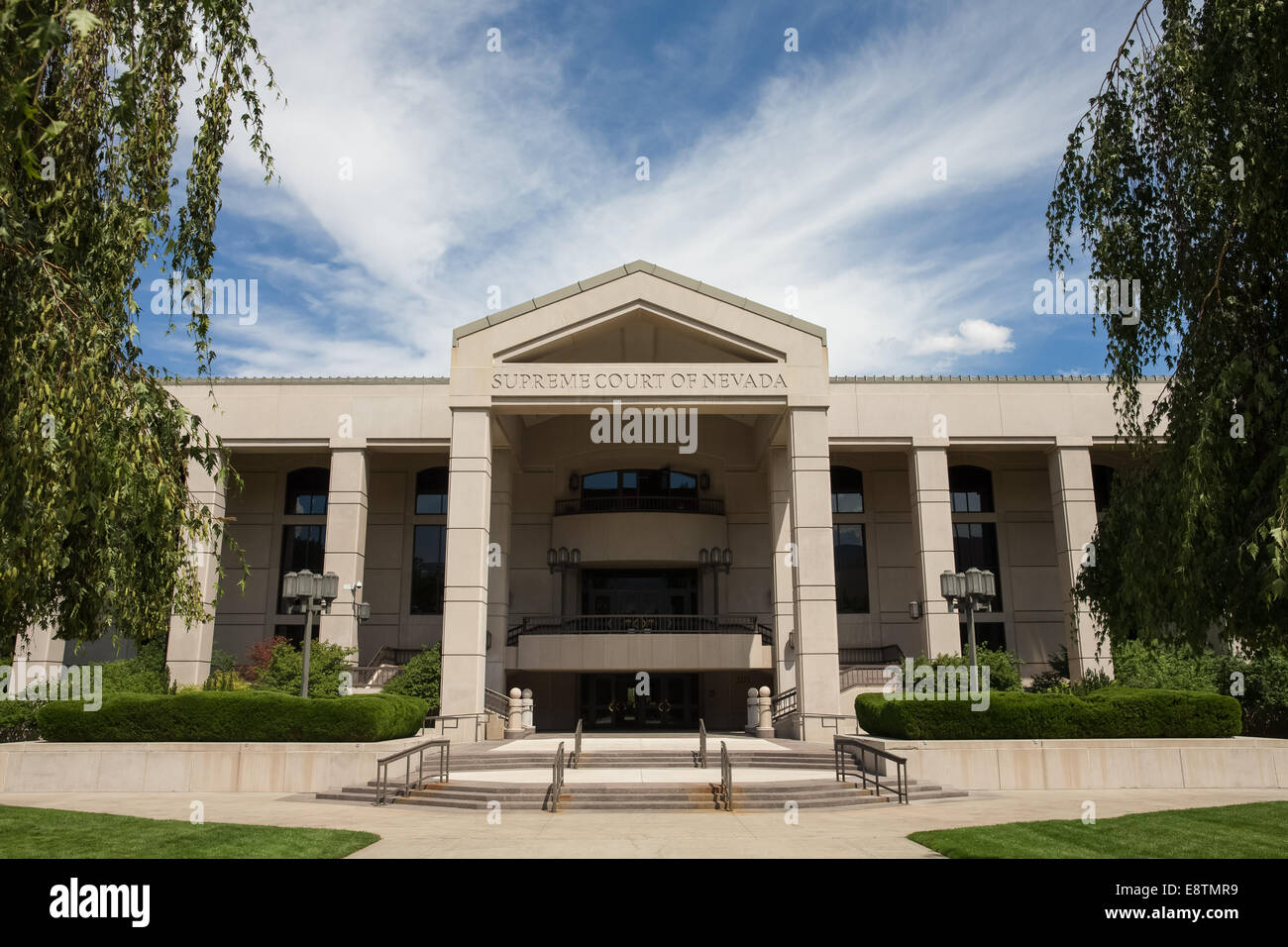
The headquarters for Nevada's appellate courts is located at the Supreme Court Building (201 S. Carson Street, Carson City, NV).
Nevada Supreme Court
The Nevada Judiciary Supreme Court portal details the court's role as the state's highest judicial authority. Composed of seven justices, the Supreme Court hears constitutional challenges, direct appeals in major criminal cases (including capital punishment cases), and significant civil matters. It also regulates the practice of law in Nevada through the State Bar and establishes uniform procedural rules for all state courts.
Nevada Court of Appeals
Nevada operates a "deflection model" appellate structure. All appeals from district courts across Nevada are initially filed with the Supreme Court. The Supreme Court then assigns a portion of these cases to the Nevada Court of Appeals. The three-judge Court of Appeals processes routine appellate cases—such as standard criminal convictions, straightforward domestic relations disputes, and civil judgment appeals—allowing the Supreme Court to focus on complex legal issues and constitutional questions.
Comparison of Carson City Court Divisions
The following table summarizes the jurisdictional limits, primary functions, and case types across the Carson City court system:
| Court Division | Primary Jurisdiction Level | Financial or Penalty Threshold | Case Types Handled | Appeals Process |
|---|---|---|---|---|
| Carson City Municipal Court | Limited (Local Ordinance) | Fine-only or local misdemeanor penalties | Traffic citations, city code violations, animal control, municipal infractions | Appealed to First Judicial District Court |
| Carson City Justice Court | Limited (County/State Law) | Civil $\le $15,000$; Small Claims $\le $10,000$; Misdemeanors ($< 1$ yr jail) | Misdemeanor trials, preliminary felony hearings, summary evictions, TPOs | Appealed to First Judicial District Court |
| First Judicial District Court | General (Trial Court) | Civil $> $15,000$; Felonies & Gross Misdemeanors | Felony trials, civil litigation, divorce, custody, probate, state agency reviews | Appealed to Supreme Court of Nevada |
| Nevada Court of Appeals | Intermediate Appellate | Appellate review only (Deflected from Supreme Court) | Routine criminal, civil, and family law appeals assigned by Supreme Court | Petition for review to Nevada Supreme Court |
| Nevada Supreme Court | Highest Appellate Court | Final state judicial authority | Constitutional challenges, major civil appeals, administrative reviews | Appealed to U.S. Supreme Court (federal questions only) |
Public Services, Filings, and Court Administration
Carson City courts provide public services designed to grant citizens access to judicial records, dispute resolution, and administrative filings.
Accessing Court Records and Calendars
Public records for the Carson City Justice Court and the First Judicial District Court are maintained by the Carson City Clerk-Recorder's office and judicial court clerks. Interested parties can verify case dockets, check upcoming court calendars, or request certified record copies online through the official Carson City Consolidated Municipality Website or by visiting the court clerk’s counter in person.
Self-Help and Pro Se Resources
For individuals navigating legal matters without an attorney (pro se litigants), the court system offers standardized legal forms, filing guides, and access to self-help resources. The First Judicial District Court Law Library provides access to Nevada statutory legal codes, municipal regulations, legal research databases, and procedural instruction packets for routine filings like uncontested divorces, name changes, and summary evictions.
Bail, Fines, and Fee Payments
Fines for traffic violations, court fees, and misdemeanor assessments issued by the Carson City Justice or Municipal Courts can typically be paid online, by mail, or in person at the court clerk’s cashier window. The court system provides payment plan arrangements and community service alternatives for qualified individuals who demonstrate financial hardship.
Frequently Asked Questions
What happens if I get a traffic ticket in Carson City?
If you receive a traffic ticket in Carson City, it is processed through the Carson City Municipal Court or Justice Court. The citation will outline a deadline to pay the fine or contest the charge. If you choose to contest the citation, you must request a court hearing date, where a judge or hearing officer will review the officer's report, listen to your testimony, and render a decision.
How do small claims proceedings work in Carson City?
Small claims cases in Carson City are handled by the Justice Court for monetary disputes up to $10,000. To initiate a claim, the plaintiff files an affidavit detailing the debt or damages owed. The court issues a order for the defendant to appear. Hearings are relatively informal, attorneys are generally discouraged from participating directly unless granted permission, and the judge issues a binding judgment based on presented evidence.
Where do I file for divorce in Carson City?
Divorce petitions in Carson City are filed with the Family Division of the First Judicial District Court located at 885 E. Musser Street. To file in Carson City, at least one spouse must have resided in Nevada for at least six weeks prior to filing the complaint, verified by a resident witness affidavit.
How do I check if I have an active court case or warrant in Carson City?
You can search active court calendars, hearing dockets, and public records using the case search tools on the official Carson City municipal website. If you suspect an outstanding bench warrant has been issued due to a missed court date or unpaid fine, contact the Carson City Justice Court clerk's office directly to determine how to clear the warrant.
What is the difference between Justice Court and District Court in Carson City?
The core differences are jurisdiction and case severity. Carson City Justice Court handles limited civil matters (up to $15,000), small claims, evictions, traffic citations, and misdemeanor crimes. The First Judicial District Court handles high-value civil lawsuits (over $15,000), felony criminal trials, divorce, child custody, probate matters, and appeals of decisions made by state administrative agencies.
Practical Recommendations for Interacting with Carson City Courts
Whether attending court as a witness, litigant, or defendant, following established judicial protocols helps ensure your matter is resolved efficiently:
- Verify Court Location and Department: Confirm whether your hearing is scheduled in the Carson City Justice Court or the First Judicial District Court. While both are situated in the downtown government complex on East Musser Street, they operate out of separate courtroom departments and clerk windows.
- Review Procedural Requirements Early: If you are representing yourself in small claims, eviction proceedings, or a family law matter, obtain legal packets from the District Court Law Library or self-help center prior to your filing deadline. Ensure all documents are properly notarized where required.
- Comply with Courtroom Etiquette: Dress professionally, arrive at least 20 minutes prior to scheduled calendar calls to pass through courthouse security screening, and silence all electronic devices before entering judicial chambers.
- Consult Legal Counsel for Complex Matters: While self-representation is common in small claims and routine traffic court, felony charges, contested family law proceedings, and general civil litigation over $15,000 carry significant legal risks. Consult a licensed Nevada attorney to ensure your constitutional and procedural rights are protected.
Image Gallery