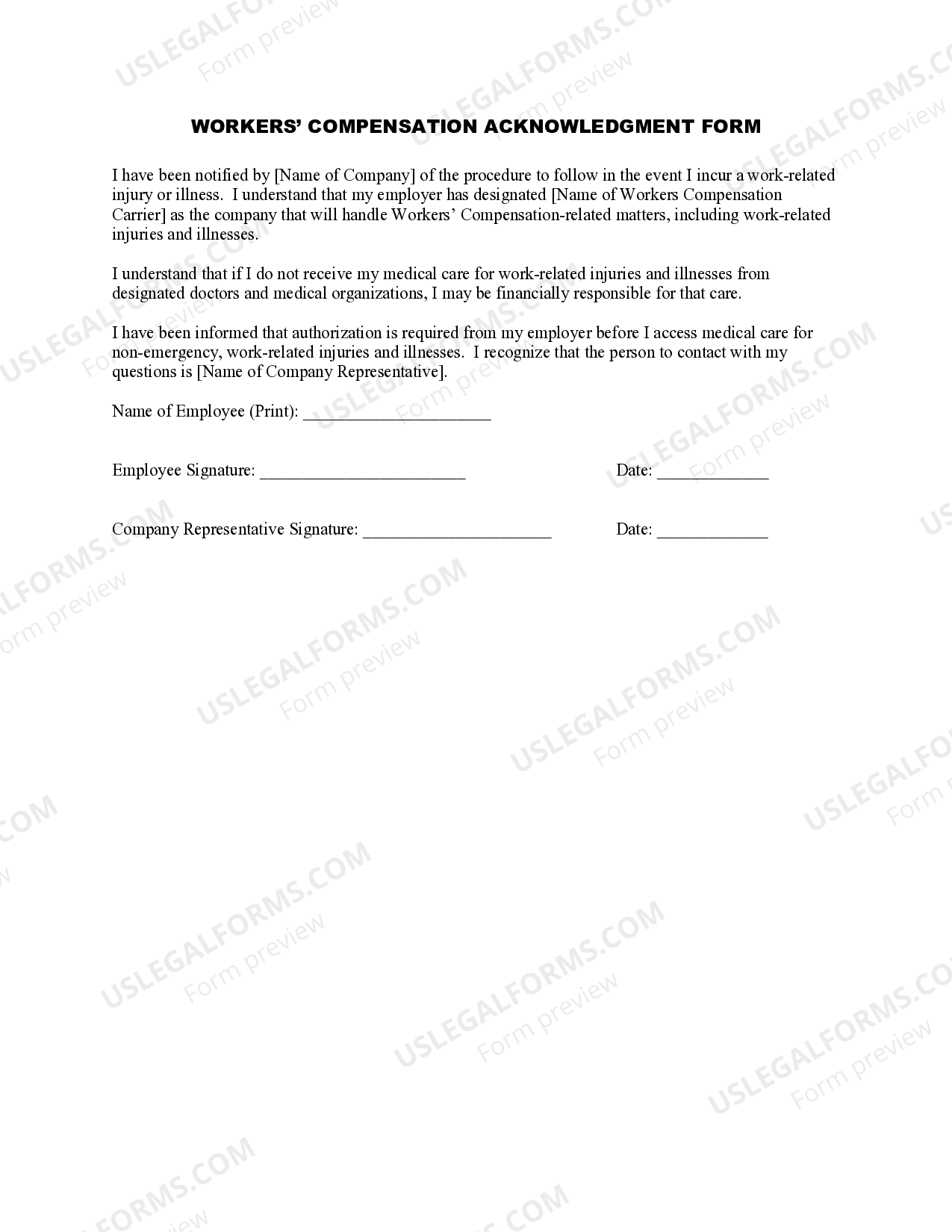
Understanding the Workers Compensation Waiver for Independent Contractors in New York State
In New York State, there is no formal "waiver" that allows an independent contractor to opt out of workers' compensation requirements if they are legally classified as an employee. If you are a business owner or a contractor, you canno...
In New York State, there is no formal "waiver" that allows an independent contractor to opt out of workers' compensation requirements if they are legally classified as an employee. If you are a business owner or a contractor, you cannot simply sign a document to waive mandatory coverage. Instead, you must verify your status through the New York State Workers’ Compensation Board (WCB) using specific exemption forms like the CE-200 to prove you are exempt from carrying a policy based on your business structure.
Contents
Clarifying the Misconception of the "Waiver"
Many independent contractors and business owners search for a "workers' compensation waiver form" under the mistaken impression that they can sign a contract with a client to release the hiring entity from liability. In the jurisdiction of New York, workers' compensation is not a voluntary agreement that can be waived through private contracts.
The New York State Workers’ Compensation Law is designed to provide mandatory protection for workers. Because it is a social insurance program, the state does not allow entities to circumvent these requirements through a waiver. If a worker is legally considered an employee, the employer must provide coverage. If a worker is truly an independent contractor, the responsibility for coverage—or exemption—lies with the contractor’s own business entity.
The Role of Form CE-200
The closest document to a "waiver" in the New York system is the Certificate of Attestation of Exemption (Form CE-200). This form is not a contract waiver, but rather an official statement filed with the New York State Workers’ Compensation Board.
The CE-200 is used by sole proprietors, partners in a partnership, or executive officers of a corporation who do not have employees and wish to certify that they are not required to maintain a workers' compensation insurance policy. When you obtain this certificate, you are essentially notifying the state that you fall outside the mandatory coverage requirements for your specific business activities.
Eligibility and Prerequisites for Exemption
To legally qualify for an exemption in New York, you must meet specific structural criteria. You cannot obtain a CE-200 simply because you prefer not to pay for insurance; the exemption is based on the legal status of your business and the absence of employees.
- Sole Proprietors: If you have no employees, you are not required to provide coverage for yourself. You may file for an exemption.
- Partnerships: If all partners are also the only people performing the work for the partnership, the partnership may be exempt.
- Corporations: If a corporation has no employees and the executive officers are the only individuals performing the work, they may qualify for an exemption.
Important Note: The moment you hire an employee—even part-time or seasonal—you are no longer eligible for the exemption, and you must obtain a standard workers' compensation insurance policy immediately.
Comparing Coverage Requirements
| Entity Status | Requirement | Action Required |
|---|---|---|
| Sole Proprietor (No Employees) | Exempt | File Form CE-200 |
| Partnership (No Employees) | Exempt | File Form CE-200 |
| Corporation (Officers Only) | Exempt | File Form CE-200 |
| Employer (Any Employees) | Mandatory | Purchase Workers' Comp Policy |
| Independent Contractor | Depends on Status | Verify via WCB standards |
How to Obtain the CE-200 Exemption
The New York State Workers’ Compensation Board mandates that the CE-200 must be filed electronically through their official online portal. Physical or paper versions of the form are generally not accepted for new filings.
- Access the WCB Website: Navigate to the official New York State Workers’ Compensation Board portal.
- Create an Account: You will need to create a user profile if you have not done so previously.
- Complete the Application: Provide accurate details regarding your business structure, FEIN (Federal Employer Identification Number), and the nature of your work.
- Review and Submit: Ensure all data matches your business registration records with the state.
- Print the Certificate: Once approved, you must print the certificate and provide it to any entity that requires proof of your exemption, such as a general contractor or a government agency issuing a permit.
Risks of Misclassification
A significant danger for independent contractors in New York is the misclassification of employment status. If a business hires you and treats you like an independent contractor to avoid paying workers' compensation, but the state later determines you are actually an employee, the penalties can be severe.
The New York State Workers' Compensation Board applies the "Direction and Control" test to determine if someone is an employee or an independent contractor. If the hiring entity dictates your hours, provides your equipment, controls your methods of work, and pays you a regular salary, you are likely an employee. An exemption form (CE-200) cannot protect a business that misclassifies its staff. If you are an employee, you are entitled to benefits, and any "waiver" signed to the contrary is legally void.
Common Mistakes to Avoid
- Assuming a Contract Replaces Insurance: Never rely on a clause in a service agreement that states "the contractor waives workers' compensation." Such clauses have no legal standing against New York State law.
- Failing to Renew the CE-200: The Certificate of Attestation of Exemption is valid only for the duration of the project or for a specific period as dictated by the board. Check the expiration date on your document.
- Ignoring Subcontractors: If you are a general contractor, simply obtaining an exemption form from a subcontractor does not automatically absolve you of liability if that subcontractor is later found to be an employee. Always verify their status through the WCB’s proof-of-coverage database.
Troubleshooting and Support
If you have trouble navigating the WCB portal, the board provides a dedicated customer service line for inquiries regarding coverage and exemptions. Technical issues with the online filing system can be addressed by the WCB’s IT help desk.
If you receive a notice of non-compliance, do not ignore it. This usually indicates that the WCB’s records show you have employees, but no policy on file. You must respond promptly with the appropriate documentation or by securing the necessary insurance to avoid hefty fines, which can accrue on a daily basis.
When to Consult Legal Counsel
While the process for obtaining an exemption is administrative, the underlying laws regarding employment classification are complex. If your business model involves hiring multiple subcontractors, or if you are working in a highly regulated industry such as construction, consider consulting with a New York attorney specializing in labor and employment law. They can ensure your business structure aligns with current statutes and that your exemption status is legally sound.
Frequently Asked Questions
1. Is there a paper form I can sign to waive workers' compensation? No. There is no private document that can legally waive the requirement for workers' compensation insurance in New York State. You must comply with the WCB’s official electronic filing process for exemptions.
2. Can I use a CE-200 if I have part-time employees? No. The CE-200 is only for businesses with zero employees. If you have any employees, even part-time or seasonal, you are required to purchase a workers' compensation policy.
3. Does an independent contractor need their own workers' comp policy? Generally, if you are a true independent contractor with no employees, you do not need a policy for yourself, but you must demonstrate this status via the CE-200. However, some project owners may require you to carry your own policy as part of their risk management requirements.
4. How long is the CE-200 certificate valid? The certificate is valid for the specific project or application for which it was issued, and it typically expires one year from the date of issuance or upon the expiration of your business license, whichever comes first.
5. What happens if I misclassify an employee as an independent contractor? Misclassification is a serious offense in New York. The business owner can face significant fines, stop-work orders, and in severe cases, criminal charges. If an injury occurs while you are improperly classified, you remain liable for medical costs and lost wages.
Final Recommendation
If you are operating as an independent contractor in New York, visit the New York State Workers’ Compensation Board’s online portal to verify your requirements. If you do not have employees, prioritize filing for your CE-200 Certificate of Attestation of Exemption. Keep a digital and physical copy of your certificate available for all contracts, as most clients will require it before starting work. If your business grows to include even one employee, immediately transition to a standard workers' compensation policy to ensure your business remains compliant and protected.
Image Gallery