Why Pride Can Be Political: History, Rights Advocacy, and Legal Impact
Pride is inherently political because its origins lie in direct civil rights protests against systemic oppression, police brutality, and legal discrimination. Beyond community celebration, Pride functions as a vital public mechanism fo...
Pride is inherently political because its origins lie in direct civil rights protests against systemic oppression, police brutality, and legal discrimination. Beyond community celebration, Pride functions as a vital public mechanism for policy advocacy, demanding equal protection under the law, bodily autonomy, statutory non-discrimination protections, and international human rights recognition for LGBTQ+ individuals.
Contents
The Historical Foundation: From Civil Rights Resistance to Recognized Movement
To understand why Pride carries continuous political significance, one must examine its origins as an explicit resistance movement. Before organized public parades existed, marginalized communities engaged in direct civil disobedience to challenge discriminatory legal frameworks and state enforcement.
In the mid-20th century, homosexual acts were criminalized across almost every U.S. jurisdiction, sodomy laws were strictly enforced, and state agencies routinely revoked liquor licenses from establishments catering to LGBTQ+ patrons. Police raids on gay bars were standard practice, often accompanied by public shaming, physical violence, and arbitrary arrests under cross-dressing and vagrancy statutes.
Key Historical Milestones in Pride Activism:
- 1966: Compton's Cafeteria Riot (San Francisco)
- Direct response to police harassment of transgender women and drag queens.
- 1969: Stonewall Riots (New York City)
- Multi-day uprising sparking modern LGBTQ+ civil rights organizations.
- 1970: Christopher Street Liberation Day
- The first official Pride march, structured around explicit policy demands.
- 1980s–1990s: ACT UP & HIV/AIDS Activism
- Pride marches shifted to demand federal healthcare funding and drug approval reform.
The 1966 Compton’s Cafeteria Riot in San Francisco and the 1969 Stonewall Riots in New York City marked critical turning points. Led largely by transgender women of color, drag queens, gay youth, and lesbians, these uprisings transformed passive endurance of institutional harassment into collective political defiance.
When the first Christopher Street Liberation Day march was organized in June 1970 to mark the one-year anniversary of Stonewall, it was conceived not as a festival, but as an explicit political demonstration. Activists marched up Fifth Avenue to demand:
- The repeal of anti-sodomy laws.
- The passage of federal, state, and municipal non-discrimination statutes.
- An end to employment discrimination in government agencies and private enterprise.
- Equal protection under the Fourteenth Amendment of the U.S. Constitution.
During the 1980s and 1990s, the HIV/AIDS epidemic reinjected urgent political activism into annual Pride gatherings. Organizations like the AIDS Coalition to Unleash Power (ACT UP) utilized Pride events to conduct die-ins and public demonstrations, pressuring the government for accelerated drug approval processes, expanded research funding, and anti-discrimination protections for individuals living with HIV/AIDS.
Core Legal and Political Dimensions of Modern Pride
While modern Pride events often feature celebratory elements, the underlying structural issues surrounding legal equity ensure that Pride remains fundamentally political. The core political dimensions of contemporary Pride center on several key statutory, constitutional, and policy challenges.
Statutory Non-Discrimination Protections
In many jurisdictions globally, LGBTQ+ individuals continue to face legal vulnerability in employment, housing, public accommodations, and access to credit. Pride demonstrations serve as an operational platform to lobby for comprehensive statutory protections.
In the United States, the legal landscape shifted significantly with the landmark Supreme Court decision in Bostock v. Clayton County (2020), which ruled that Title VII of the Civil Rights Act of 1964 prohibits employment discrimination based on sexual orientation and gender identity. However, federal protections across non-employment sectors remain uneven. Advocates utilize Pride events to pressure lawmakers to enact federal legislation, such as the Equality Act, which would explicitly codify non-discrimination protections across:
- Housing and real estate transactions.
- Jury service and public accommodations.
- Federally funded programs and educational institutions.
- Credit access and financial services.
Bodily Autonomy, Healthcare Access, and Transgender Rights
Legislative activity targeting transgender and nonbinary individuals has elevated bodily autonomy to the forefront of Pride's political mandate. State legislatures have introduced and enacted laws restricting gender-affirming medical care, regulating public facility access, limiting participation in athletics, and altering gender marker update procedures on state-issued identification.
Pride gatherings function as dynamic political rallies where legal defense funds, civil rights organizations, and advocacy groups organize public opposition to these legislative initiatives. Through coordinated public assemblies during Pride, organizations mobilize voters, launch legal challenges under the Equal Protection Clause, and provide resource networks for affected families and individuals.
Global Human Rights and International Law
The political nature of Pride extends beyond national borders. According to data monitored by human rights organizations and the United Nations High Commissioner for Human Rights (OHCHR), dozens of UN member states continue to criminalize same-sex acts, with penalties ranging from imprisonment to the death penalty.
In countries where state-sanctioned anti-LGBTQ+ laws exist or where "anti-propaganda" statutes forbid public discussion of LGBTQ+ topics, organizing a Pride march is a direct illegal act of political resistance. In these international contexts, Pride marches face police suppression, state bans, and extremist violence. For the global diplomatic community, monitoring international Pride events provides vital evidence of a nation's adherence to universal human rights standards and freedom of assembly guidelines.
Public Assembly as an Exercise of Constitutional Rights
Under constitutional law frameworks, public demonstrations are protected exercises of fundamental rights. In the United States, organizing and participating in a Pride march relies directly on First Amendment guarantees regarding freedom of speech, freedom of assembly, and the right to petition the government for a redress of grievances.
When municipal governments attempt to deny parade permits, impose excessive policing fees, or restrict march routes to out-of-the-way locations, civil liberties groups routinely litigate these actions in federal court. Courts consistently evaluate these restrictions under strict legal scrutiny standards:
- Content Neutrality: Municipalities cannot deny permits or alter conditions based on the political or social message of the event.
- Narrow Tailoring: Restrictions must serve a compelling governmental interest (such as public safety) using the least restrictive means possible.
- Alternative Channels: Organizers must be left with reasonable alternative avenues to communicate their message to the public.
Because Pride marches regularly challenge state authority, test the limits of public space regulation, and demand constitutional enforcement, the physical act of marching remains a direct exercise of political rights.
The Tension Between Commercialization and Grassroots Activism
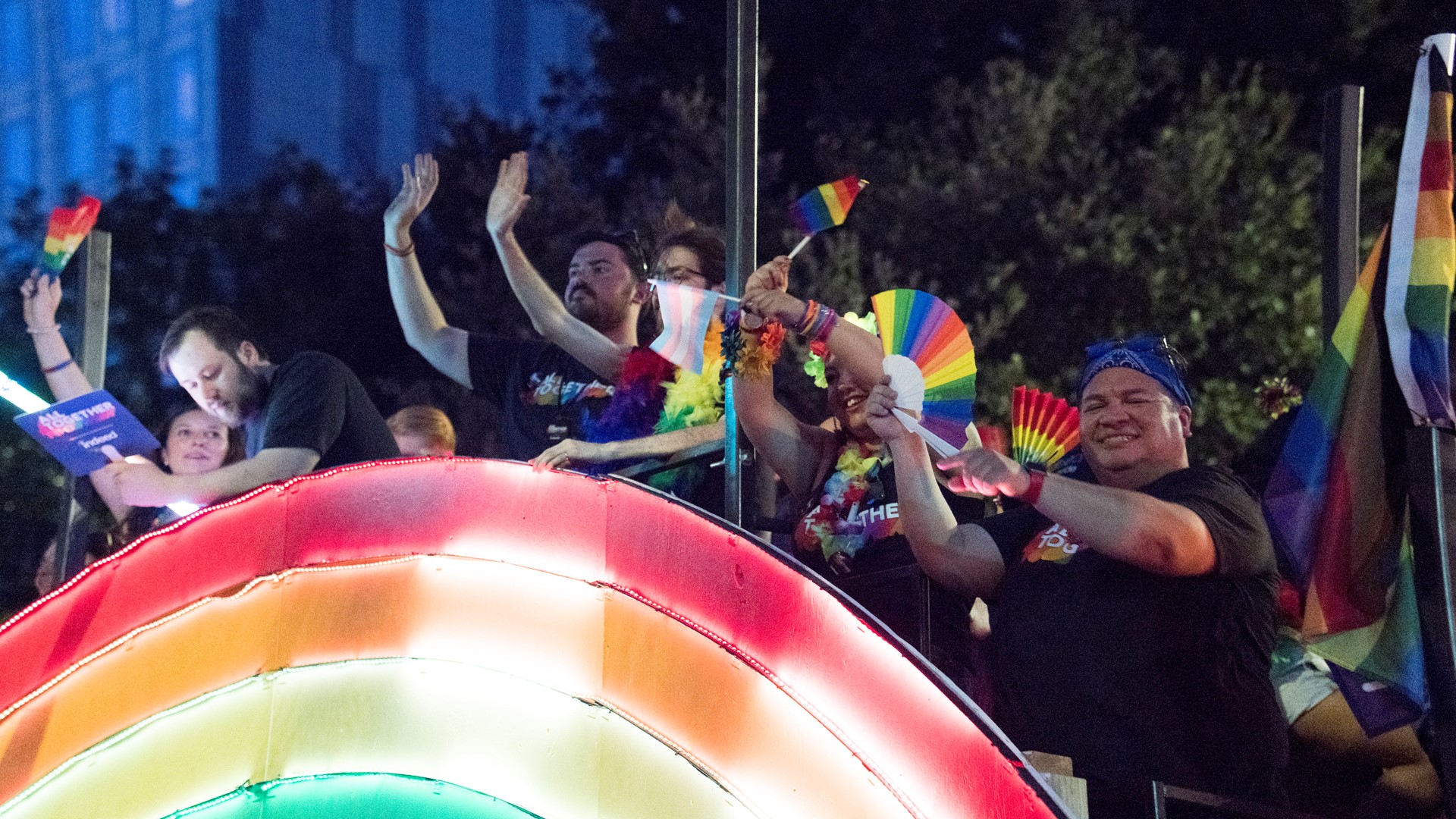
As social acceptance of LGBTQ+ individuals increased in Western nations throughout the late 2010s and 2020s, corporate participation in Pride parades grew dramatically. Major corporations, financial institutions, and consumer brands routinely sponsor floats, market seasonal merchandise, and participate in parade contingents.
This commercial integration has generated intense debate within the LGBTQ+ community, exposing a central political tension between institutional inclusion and radical grassroots advocacy.
Criticisms of Corporate Engagement ("Pinkwashing")
Critics argue that heavy corporate sponsorship sanitizes Pride, converting a political civil rights demonstration into a commercial marketing opportunity. Key concerns include:
- Performative Support: Companies presenting rainbow-themed branding during June while contributing corporate PAC funds to politicians who sponsor anti-LGBTQ+ legislation.
- Depoliticization: The dilution of explicit policy demands—such as housing reform, police accountability, and healthcare expansion—in favor of broad, non-controversial messaging.
- Pricing Out Grassroots Groups: Escalating municipal permit costs and festival fees driven by large corporate budgets, which can price out local non-profit activist groups and mutual aid funds.
Defenders of Institutional Integration
Conversely, legal and corporate policy experts argue that corporate participation reflects tangible legislative and policy progress. Proponents highlight that:
- Internal Workplace Policies: Corporate sponsorship often reflects high scores on metrics like the Human Rights Campaign Corporate Equality Index, indicating robust internal non-discrimination rules, inclusive health insurance coverage, and supplier diversity programs.
- Economic Leverage: Major corporations frequently file amicus curiae (friend-of-the-court) briefs in significant civil rights litigation, leveraging their economic weight to oppose state-level discriminatory legislation.
- Financial Sustainability: Corporate sponsorship funding subsidizes large-scale public safety infrastructure, legal permitting, and accessibility accommodations for massive civic gatherings.
To address these tensions, alternative grassroots movements—such as Queer Liberation Marches—have emerged in major cities. These events deliberately decline corporate sponsorships, refuse police escorts, and prohibit corporate floats, returning the event's focus strictly to civil rights protests, intersectional political activism, and systemic policy reform.
Comparative Analysis: Civic vs. Political Dimensions of Pride
Understanding how Pride operates requires evaluating its various operational components across political, legal, and community domains.
| Pillar of Pride | Primary Focus Area | Legal & Policy Impact | Strategic Challenges |
|---|---|---|---|
| Civil Rights Protest | Public assembly, free speech, police accountability | Drives statutory repeals (e.g., sodomy laws, cross-dressing statutes) | Preventing political co-optation; ensuring inclusivity for marginalized subgroups |
| Legislative Advocacy | Statutory non-discrimination protections | Advances comprehensive civil rights legislation (e.g., federal/state Equality Acts) | Overcoming legislative gridlock, partisan polarization, and veto threats |
| Healthcare & Identity Protections | Bodily autonomy, gender-affirming care, identity documentation | Secures judicial injunctions and regulatory protections for healthcare access | Countering targeted state-level legislative prohibitions and restrictions |
| Global Human Rights Advocacy | International decriminalization and refugee assistance | Leverages international diplomatic pressure and foreign policy sanctions | Navigating authoritarian bans on public assembly and censorship statutes |
| Corporate & Institutional Engagement | Workplace inclusion, commercial sponsorship, benefits equality | Drives corporate non-discrimination standards and inclusive insurance policies | Mitigating "pinkwashing" and ensuring political donation alignment |
Frequently Asked Questions
Why is Pride considered political if it is also a celebration?
Pride is political because its core existence is rooted in civil rights advocacy and legal protest. While celebrating community identity and progress is a major component, the event continues to serve as an active platform for demanding statutory equal rights, challenging discriminatory public policies, and exercising constitutional rights to public assembly.
What landmark legal cases are connected to LGBTQ+ rights and Pride?
Key landmark U.S. legal rulings include:
- One, Inc. v. Olesen (1958): Established First Amendment protections for LGBTQ+ publications.
- Lawrence v. Texas (2003): Struck down state sodomy laws nationwide under the Due Process Clause.
- Obergefell v. Hodges (2015): Constitutionalized same-sex marriage nationwide under the Fourteenth Amendment.
- Bostock v. Clayton County (2020): Confirmed that Title VII protects employees from discrimination based on sexual orientation and gender identity.
How do non-discrimination laws relate directly to Pride activism?
Pride marches provide public visibility and advocacy momentum necessary to pass non-discrimination legislation. While high court decisions address specific constitutional questions, comprehensive protections in housing, credit, public accommodations, and federally funded programs require legislative action by municipal, state, and federal lawmakers.
Is organizing a Pride march protected under international law?
Yes. Freedom of peaceful assembly and freedom of expression are protected under international human rights instruments, including Article 20 of the Universal Declaration of Human Rights and Article 21 of the International Covenant on Civil and Political Rights (ICCPR). International bodies repeatedly affirm that peaceful Pride marches are protected activities regardless of domestic prohibitions.
How does "pinkwashing" affect the political efficacy of Pride?
Pinkwashing occurs when corporations or political entities use Pride messaging to project a progressive image while simultaneously supporting policies or candidates that harm LGBTQ+ individuals. Activists argue this practice depoliticizes Pride by replacing concrete policy demands with marketing campaigns, leading many grassroots organizers to demand strict sponsorship criteria.
Practical Next Steps for Organizations and Advocates
For legal professionals, community organizers, and corporate leaders seeking to maintain the substantive impact of Pride, actionable civic engagement requires moving beyond surface-level participation:
- Audit Corporate Political Contributions: Organizations participating in Pride should conduct annual audits of their political action committee (PAC) spending to ensure corporate donations do not contradict internal anti-discrimination policies or fund anti-LGBTQ+ legislation.
- Support Pro Bono Legal Frameworks: Legal professionals can partner with organizations such as Lambda Legal, the American Civil Liberties Union (ACLU), or the Transgender Legal Defense & Education Fund to offer pro bono support for asylum claims, name and gender marker changes, and non-discrimination litigation.
- Engage in Legislative Advocacy: Use the platform provided by Pride Month to coordinate voter registration campaigns, submit public comments on federal administrative rulemaking, and contact local and state representatives regarding pending civil rights legislation.
- Fund Grassroots Mutual Aid: Direct institutional resources toward local community organizations, legal defense funds, and youth housing initiatives that operate continuously throughout the year, ensuring support extends beyond seasonal public events.
Image Gallery