The Economic and Legal Impact of Seized Russian Oligarch Yachts in 2026
The seizure of superyachts belonging to Russian oligarchs has evolved from a symbolic geopolitical gesture into a complex, multi-billion-dollar administrative and legal quagmire. Since 2022, the immobilization of these vessels has burd...
The seizure of superyachts belonging to Russian oligarchs has evolved from a symbolic geopolitical gesture into a complex, multi-billion-dollar administrative and legal quagmire. Since 2022, the immobilization of these vessels has burdened host nations with massive maintenance costs, triggered landmark international forfeiture cases, and fundamentally restructured the global luxury maritime industry.
Contents
The Evolution of Yacht Seizures and the REPO Task Force
In the years following the 2022 invasion of Ukraine, the global community witnessed an unprecedented coordination of financial sanctions. Central to this effort was the Russian Elites, Proxies, and Oligarchs (REPO) Task Force, a multilateral initiative involving the United States, the European Union, the United Kingdom, Canada, Australia, and Japan. The primary objective was to isolate sanctioned individuals from their assets, with superyachts serving as the most visible symbols of offshore wealth.
By 2026, the "shock and awe" phase of these seizures has transitioned into a protracted period of litigation and asset management. Initially, yachts were "frozen," meaning the owners could not move, sell, or charter them, but the title remained with the oligarch. However, as the conflict persisted, Western governments shifted their strategy toward permanent civil asset forfeiture. This transition requires proving that the vessel was not merely owned by a sanctioned person but was an instrument of, or purchased with the proceeds of, criminal activity—such as money laundering or sanctions evasion.
The impact of this shift is profound. It has moved the conversation from temporary diplomatic pressure to a permanent redistribution of assets, with many nations passing legislation to funnel the proceeds of yacht sales into Ukrainian reconstruction funds.
The Financial Burden: Maintenance Costs and Taxpayer Impact
One of the most immediate and contentious impacts of these seizures is the cost of "upkeep." A superyacht is not a static asset like a piece of real estate; it is a highly complex machine that requires constant maintenance to prevent rapid deterioration. The industry standard for annual maintenance is approximately 10% of the vessel’s original purchase price.
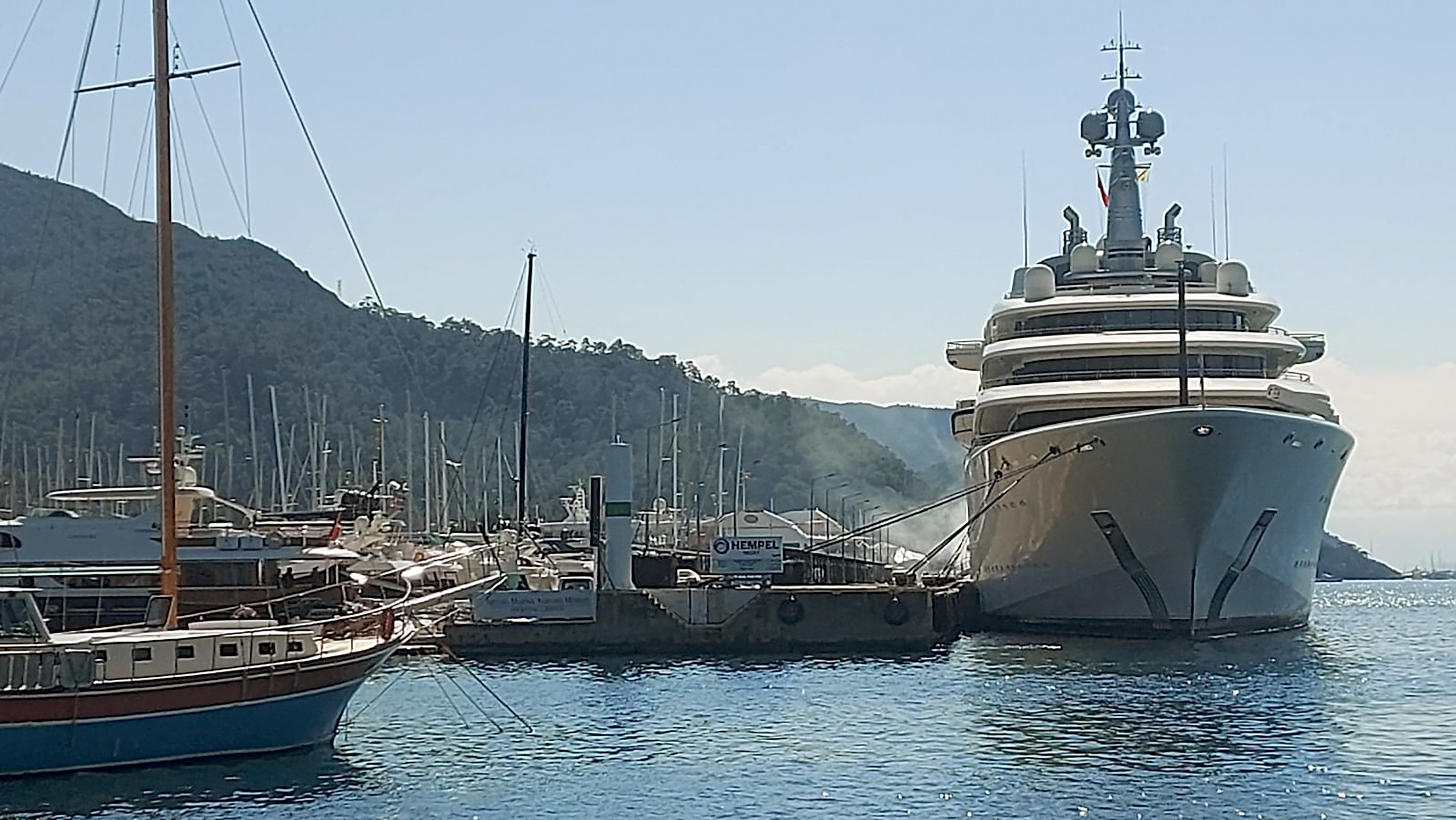
For a $500 million vessel like the Suleiman Kerimov’s Amadea or the Alisher Usmanov’s Dilbar, the annual cost to maintain the hull, run generators, pay a skeleton crew, and cover insurance can exceed $50 million. When a vessel is seized, the seizing government becomes responsible for these costs to preserve the asset's value for a future sale.
The "White Elephant" Dilemma
Governments have found themselves in a "white elephant" scenario. If they fail to maintain the yacht, the asset's value plummets, making any eventual sale less effective for recovery efforts. If they do maintain it, they are effectively spending millions in taxpayer funds on luxury assets that may be tied up in court for a decade.
In 2026, several jurisdictions have implemented "interlocutory sales"—auctions that occur before a final court judgment—to mitigate these costs. Under this legal framework, the vessel is sold, and the cash proceeds are held in an escrow account until the legal dispute over ownership is resolved. This prevents the physical asset from rotting in a harbor while legal teams argue over shell company structures.
Legal Precedents and Challenges in Forfeiture
The seizure of these yachts has tested the limits of international maritime and property law. Most oligarchs do not own their yachts directly; instead, the vessels are held through layers of offshore companies in jurisdictions like the British Virgin Islands, the Cayman Islands, or Malta.
Civil vs. Criminal Forfeiture
The impact on the legal system has been a surge in civil asset forfeiture proceedings. Unlike criminal forfeiture, which requires a conviction of the owner, civil forfeiture acts against the property itself. The government must prove by a "preponderance of the evidence" that the yacht is linked to a crime.
- Ownership Transparency: The seizures have forced a massive cleanup of maritime registries. In 2026, the push for "Beneficial Ownership" transparency is at an all-time high, making it significantly harder to hide assets behind nominee directors.
- Due Process Debates: High-profile cases, such as the fight over the $700 million Scheherazade in Italy, have centered on whether freezing an asset indefinitely without a criminal charge violates fundamental property rights protected under European law.
The legal fallout has created a new niche for maritime law firms, focusing on "sanctions compliance and asset recovery." It has also set a precedent for how Western nations might handle assets of other non-aligned states in future geopolitical conflicts.
Impact on the Superyacht Industry and Global Markets
The superyacht industry, once a secretive and booming sector, has undergone a structural realignment. The removal of Russian buyers—who previously accounted for nearly 20% of the global superyacht fleet by value—initially sent shockwaves through shipyards in the Netherlands and Germany.
Shift in Market Demographics
By 2026, the market has pivoted toward American and Middle Eastern buyers to fill the void. However, the secondary market is currently flooded with "distressed" or "sanctioned" assets, which has suppressed prices for older vessels.
| Impact Category | Effect on Industry | Long-term Outlook |
|---|---|---|
| New Build Orders | Initial decline in 100m+ orders from Russian clients. | Recovery driven by US tech wealth and Middle Eastern expansion. |
| Charter Market | High-end inventory reduced as many "top-tier" boats are seized. | Increased demand for compliant, transparently owned vessels. |
| Crew Employment | Thousands of specialized crew members lost jobs on Russian vessels. | Re-skilling and migration to the commercial maritime sector. |
| Insurance Premiums | Significant rise due to the "war risk" and legal uncertainty of seized boats. | New "Sanction Clauses" are now standard in all maritime hull insurance. |
Operational Stigma
There is now a significant "stigma" attached to vessels that have even a tangential link to sanctioned entities. Refit yards and marinas are now conducting exhaustive "Know Your Customer" (KYC) checks before allowing a vessel to dock. The risk for a marina is high; if they provide services to a sanctioned vessel, they themselves could face secondary sanctions or have their bank accounts frozen.
Environmental and Safety Risks of Frozen Vessels
An often-overlooked impact of the yacht seizures is the environmental hazard posed by neglected vessels. Superyachts carry hundreds of thousands of gallons of fuel, hydraulic fluid, and various chemicals.
In 2026, several "frozen" vessels held in European ports have faced "safety of life at sea" (SOLAS) violations. When a crew is reduced to a minimum or replaced by government-contracted security guards who lack technical expertise, the risk of fire, sinking, or oil spills increases. This has forced port authorities to develop new protocols for "Sanctioned Vessel Management," treating these yachts more like hazardous industrial sites than luxury playthings.
The International Maritime Organization (IMO) has had to address the status of these vessels, particularly regarding their AIS (Automatic Identification System) tracking. Some seized yachts had their registrations revoked by flag states (like the Cayman Islands or Liberia), rendering them "stateless" vessels and creating a legal vacuum regarding who is responsible if they break free of their moorings during a storm.
Case Studies: High-Profile Forfeitures
The Amadea (Fiji to San Diego)
The Amadea, linked to Suleiman Kerimov, became the poster child for the REPO Task Force's reach. Seized in Fiji and sailed to San Diego by the US Marshals, it became the subject of a fierce legal battle. The impact of this case was the clarification of how the US could use the "KleptoCapture" task force to seize assets far from American shores. By 2026, the sale of the Amadea has provided a roadmap for how to move from seizure to auction while navigating international "mutual legal assistance treaties" (MLATs).
The Axioma (Gibraltar)
The Axioma was the first of the sanctioned yachts to be sold at auction. Its sale was unique because it was triggered by a commercial bank (JPMorgan) rather than a government. The bank argued that the sanctions made it impossible for the owner to pay the mortgage. This case highlighted the impact on the financial sector: banks can use existing loan defaults as a faster way to liquidate sanctioned assets than government forfeiture laws.
Frequently Asked Questions
What happens to the money when a seized yacht is sold?
Under modern "Asset Forfeiture" laws, particularly the US Department of Justice's KleptoCapture guidelines, the proceeds are typically used to cover the costs of the seizure and sale first. Remaining funds are often designated for aid to Ukraine or deposited into the Seized Assets Fund for law enforcement use.
Can an oligarch ever get their yacht back?
It is possible but increasingly difficult. To reclaim a vessel, the owner must successfully challenge the sanctions listing in court or prove that the vessel was not connected to any illegal activity. In the EU, several oligarchs have had their individual sanctions overturned by the European Court of Justice, but reclaiming the physical asset often requires further litigation against the seizing country's domestic laws.
Who pays for the crew and fuel while a yacht is seized?
Initially, the seizing government pays for a minimal "caretaker" crew to ensure the vessel's safety and basic operations. These costs are recorded as a lien against the vessel. If the yacht is eventually sold, the government recoups these expenses from the sale price.
Are these seizures effective in stopping the conflict?
The impact is largely considered symbolic and financial rather than a direct military deterrent. By seizing yachts, Western nations signal that there is no "safe harbor" for the wealth of those supporting the Russian state. It disrupts the mobility and lifestyle of the elite, though its direct impact on frontline military operations is minimal.
Can a seized yacht be used as a public museum or housing?
While some activists have proposed using these "palaces on water" for public good, the operational costs make this impractical. The fuel and maintenance requirements for a 100-meter yacht are too high for non-profit or government agencies to sustain. Most are destined for private auction to the highest compliant bidder.
Summary of Next Actions and Industry Recommendations
For maritime professionals and legal observers, the impact of these seizures remains a developing field. Stakeholders should focus on the following:
- Enhanced Due Diligence: Shipyards, marinas, and brokerage houses must implement robust KYC protocols that look past the "owner of record" to the Ultimate Beneficial Owner (UBO).
- Legal Monitoring: Follow the precedents set by the US District Court for the District of Columbia and the European Court of Justice regarding property rights and sanctions.
- Financial Risk Management: Banks and insurers should ensure all maritime contracts include "Sanction Termination" clauses that allow for the immediate freezing or sale of assets in the event of new listings.
As we move through 2026, the "Yacht Sanctions" era will be remembered as the moment the luxury maritime world lost its status as a "stateless" financial sanctuary, becoming instead a primary frontier for international law enforcement.
Image Gallery