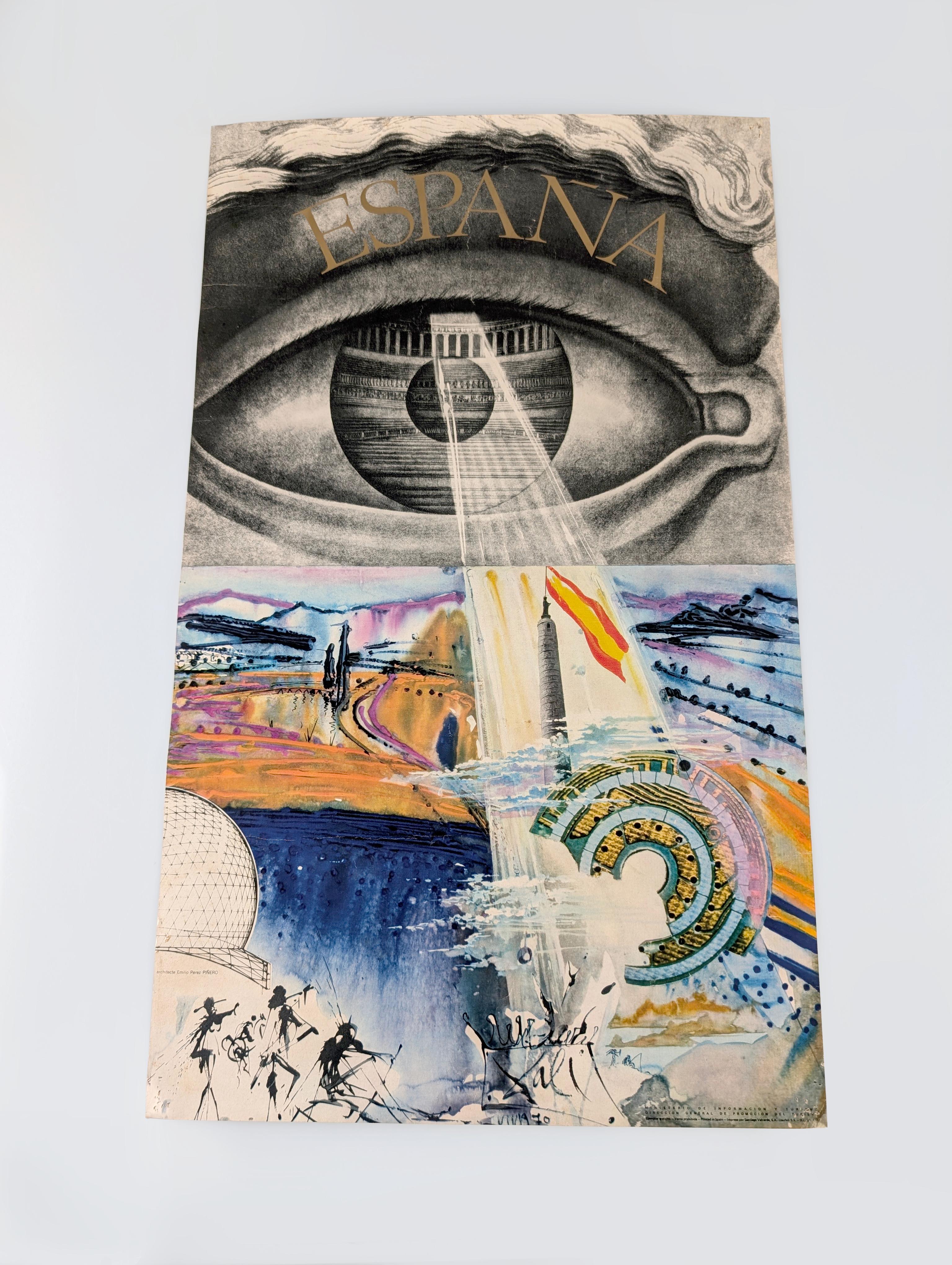
The Legacy of Salvador Dalí in Spain: A Cultural and Artistic Map
The legacy of Salvador Dalí in Spain is primarily preserved through the "Dalí Triangle" in Catalonia, managed by the Gala-Salvador Dalí Foundation. This heritage encompasses three major sites—Figueres, Portlligat, and Púbol—alongside s...
The legacy of Salvador Dalí in Spain is primarily preserved through the "Dalí Triangle" in Catalonia, managed by the Gala-Salvador Dalí Foundation. This heritage encompasses three major sites—Figueres, Portlligat, and Púbol—alongside significant collections at the Reina Sofía Museum in Madrid, securing his status as a pillar of Spanish identity and global Surrealism.
Contents
The Institutional Foundation: Managing a Surrealist Heritage
The enduring nature of Salvador Dalí’s influence in Spain is not a matter of historical accident but the result of meticulous legal and institutional planning. At the heart of this legacy is the Gala-Salvador Dalí Foundation, created by the artist himself in 1983. Based in his hometown of Figueres, the Foundation was established to promote, protect, and defend his artistic, intellectual, and cultural work.
A pivotal moment in the history of Spanish art occurred in 1982 when Dalí revised his will. In a move that surprised many at the time, he named the Spanish State as his "universal and residuary heir." This decision ensured that his vast personal collection, including finished masterpieces, sketches, and personal archives, remained under public protection rather than being fragmented in private auctions. Consequently, the Spanish Ministry of Culture and the Foundation work in a unique partnership to manage the intellectual property rights and the physical preservation of thousands of items.
In 2026, the Foundation continues to play a critical role in authenticating works and regulating the use of Dalí’s image. This institutional oversight prevents the dilution of his brand while funding scholarly research and large-scale restoration projects. The Foundation’s archives serve as a primary resource for international academics, ensuring that Spain remains the global epicenter for Surrealist studies.
The Dalí Triangle: Geographic Anchors of Influence
To understand Dalí’s legacy in Spain, one must traverse the "Dalí Triangle," a geographic circuit in the Alt Empordà region of Catalonia. These three sites represent the biographical and creative lifecycle of the artist.
The Dalí Theatre-Museum in Figueres
The Dalí Theatre-Museum is often described as the world’s largest Surrealist object. Built upon the ruins of the former Municipal Theatre, which was destroyed during the Spanish Civil War, the museum was inaugurated in 1974. Dalí chose this site specifically because he was baptized in the church across the street and held his first exhibition in the original theatre's lobby.
The structure itself is a manifestation of Dalí’s obsession with the "total work of art." From the giant eggs and bread rolls decorating the exterior walls to the geodesic dome designed by Emilio Pérez Piñero, every architectural detail is intentional. Inside, the collection follows no chronological order; instead, it is organized to provoke a sensory experience. Notable installations include the Mae West Lips Sofa and the Rainy Taxi. For Spain, this museum is more than a gallery; it is a major economic engine, attracting hundreds of thousands of international visitors annually to a town that would otherwise remain a quiet provincial hub.
The House-Museum in Portlligat
If Figueres represents Dalí's public persona, Portlligat represents his private creative sanctuary. Located in a small bay near Cadaqués, this site was Dalí’s only stable residence and workshop from 1930 until 1982. The house is a labyrinthine structure evolved from a series of fisherman’s huts.
The legacy here is one of landscape and light. Dalí famously stated that he was "inseparable from this sky, this sea, and these rocks." The preservation of the Portlligat house allows visitors to see the specific geological formations that appear in masterpieces like The Great Masturbator. The site is managed with strict capacity limits to preserve its intimate atmosphere, requiring visitors in 2026 to book months in advance. It offers a rare look at the artist's library, his studio where many of his most famous canvases were painted, and the eccentric outdoor spaces reflecting his obsession with classicism and kitsch.
The Gala Dalí Castle in Púbol
The third point of the triangle is the Castle of Púbol, a medieval building Dalí purchased for his wife and muse, Gala, in 1969. The castle represents a fascinating chapter of Dalí’s legacy: the intersection of courtly love and Surrealist interior design. Dalí was only allowed to visit the castle upon Gala's written invitation, reinforcing the "chivalric" dynamic of their relationship.
After Gala's death in 1982, Dalí moved to the castle and was later named the Marquis of Dalí de Púbol by King Juan Carlos I. The castle houses a significant collection of Gala’s haute couture dresses and the "Elephants" in the garden, which have become iconic symbols of Dalí’s sculptural legacy. Gala is buried in the crypt here, making it a site of pilgrimage for those exploring the personal mythology of the couple.
Artistic Footprint in National Museums
While the heart of the legacy resides in Catalonia, the Museo Nacional Centro de Arte Reina Sofía in Madrid holds some of the artist's most historically significant works. Following the 1982 will, the Spanish state distributed the inherited works between the Foundation and the Reina Sofía.
The Madrid collection is essential for understanding Dalí’s relationship with the Spanish avant-garde. Works such as The Great Masturbator (1929), The Enigma of William Tell (1933), and Girl at the Window (1925) provide a narrative of his evolution from a precocious student at the San Fernando Academy to the leader of the Surrealist movement. The presence of these works in the nation’s premier contemporary art museum ensures that Dalí is positioned alongside Picasso and Miró as a defining figure of 20th-century Spanish culture.
Comparative Overview of Key Dalí Sites in Spain
The following table compares the primary locations where Dalí’s legacy is most visible to the public, highlighting their specific focus and visitor requirements.
| Site Location | Primary Focus | Notable Features | Access Requirements (2026) |
|---|---|---|---|
| Theatre-Museum (Figueres) | The Public Spectacle | Geodesic dome, Dalí’s tomb, Jewels collection | High capacity; advance digital booking recommended |
| House-Museum (Portlligat) | The Creative Process | Studio, Mediterranean views, private quarters | Extremely limited; mandatory booking weeks/months ahead |
| Gala Castle (Púbol) | Personal Mythology | Gala’s tomb, couture collection, garden sculptures | Moderate capacity; seasonal closures often apply |
| Reina Sofía (Madrid) | Art History & Evolution | The Great Masturbator, early paintings | General museum admission; central location access |
Economic and Social Impact on Contemporary Spain
By 2026, the "Dalí brand" has become synonymous with Spanish cultural tourism. The integration of his art into the regional identity of the Empordà has created a sustainable ecosystem of hospitality and education. Local businesses, from wineries to hotels, utilize the Surrealist aesthetic to attract a demographic that values "slow travel" and intellectual engagement.
Furthermore, Dalí’s legacy has paved the way for modern digital art experiences in Spain. The Foundation has embraced immersive technologies, using high-resolution scans of Dalí’s works to create educational programs that tour major Spanish cities. This digital legacy ensures that younger generations, who may not have the opportunity to travel to rural Catalonia, can still engage with his theories on the "paranoiac-critical method."
The artist's influence also extends to Spanish fashion and cinema. Contemporary Spanish designers frequently cite Dalí’s collaborations with Elsa Schiaparelli as a foundational influence. His legacy is not a static museum piece but a living language that continues to inform how Spanish creatives approach the boundaries between reality and the subconscious.
Legal Status and Intellectual Property
A significant part of the legacy involves the Spanish Ministry of Finance and Public Function, which oversees the commercial rights of the Dalí estate. Because Dalí died without direct descendants and named the state as his heir, the management of his image and copyright is a matter of national interest.
This legal framework prevents the unauthorized commercialization of Dalí’s likeness, a problem that plagued the artist during the latter years of his life (the "Avida Dollars" period). The Foundation actively monitors international markets to ensure that reproductions of his work meet specific quality standards, thereby maintaining the prestige of his name. This rigorous control has been instrumental in keeping Dalí’s market value high and his reputation as a "Old Master" of modernism intact.
Practical Information for Visitors and Researchers
For those looking to engage with Dalí’s legacy in 2026, planning is essential. The sites in the Dalí Triangle are physically separated by the rugged terrain of the Costa Brava, and visiting all three requires at least two full days.
- Transport: While Figueres is accessible via high-speed train (AVE) from Barcelona, Portlligat and Púbol are best reached by car or regional bus services.
- Ticketing: The Gala-Salvador Dalí Foundation provides a unified portal for all three sites. In 2026, paper tickets have been largely phased out in favor of mobile-entry codes.
- Research Access: The Centre for Dalínian Studies in Figueres is open to accredited researchers by appointment. It contains over 10,000 documents and a vast library of Surrealist publications.
- Madrid Connection: When visiting the Reina Sofía, it is advisable to check the current rotation of the permanent collection, as some Dalí works are frequently loaned to international exhibitions.
FAQ
Who owns the rights to Salvador Dalí's work in Spain?
The Spanish State owns the intellectual property and material rights to Dalí's works as per his 1982 will. These rights are managed by the Gala-Salvador Dalí Foundation in conjunction with the Spanish Ministry of Culture.
Where is Salvador Dalí buried?
Salvador Dalí is buried in a crypt beneath the stage of the Dalí Theatre-Museum in Figueres. This remains a point of interest, especially after the brief exhumation in 2017 for a paternity test, which subsequently confirmed he had no biological heirs.
Is the Dalí Triangle doable in a single day?
It is not recommended. The distance between Figueres, Portlligat, and Púbol, combined with the time required to properly experience each site, makes a one-day trip rushed and physically taxing. A two-day itinerary with a stay in Cadaqués is the standard recommendation.
Are photography and filming allowed in the Dalí museums?
In 2026, non-commercial photography without flash is generally permitted in most areas of the Theatre-Museum and the Púbol Castle. However, Portlligat has stricter regulations due to the narrow spaces and the fragility of the personal items on display.
Why did Dalí leave his estate to the Spanish State instead of Catalonia?
While the reasons remain a subject of historical debate, most scholars agree that Dalí sought the broadest possible protection and prestige for his work. By naming the Spanish State, he ensured that his legacy would be a matter of national priority, transcending regional political shifts.
Practical Recommendation
For the most comprehensive understanding of Dalí's legacy, begin your journey at the Dalí Theatre-Museum in Figueres to grasp his public persona, then travel to Portlligat to understand his connection to the Spanish landscape. If you are a serious researcher or art enthusiast, follow this with a visit to the Reina Sofía in Madrid to see his technical mastery in a broader European art-historical context. Always book entry slots for the Portlligat house at least six weeks in advance, as it remains one of the most capacity-restricted cultural sites in Spain.
Image Gallery