Understanding Buddha Avalokiteshvara: The Bodhisattva of Infinite Compassion
Buddha Avalokiteshvara is the supreme personification of the compassion of all enlightened beings. In Mahayana and Vajrayana Buddhism, he is the most revered Bodhisattva, known for his sacred vow to postpone his own final entry into Ni...
Buddha Avalokiteshvara is the supreme personification of the compassion of all enlightened beings. In Mahayana and Vajrayana Buddhism, he is the most revered Bodhisattva, known for his sacred vow to postpone his own final entry into Nirvana until he has assisted every sentient being in achieving liberation from the cycle of suffering.
Contents
The Origins and Philosophical Nature of Avalokiteshvara
The name Avalokiteshvara is derived from the Sanskrit roots ava (down), lokita (to look/behold), and ishvara (lord or master). Combined, the name is most frequently translated as "The Lord Who Looks Down in Pity" or "The One Who Hears the Cries of the World." Within the Buddhist pantheon, he is not merely a historical figure but a cosmic principle of mercy and active intervention.
While technically classified as a Bodhisattva—an enlightened being who remains in the realm of cyclic existence (Samsara) to help others—Avalokiteshvara is often addressed as "Buddha Avalokiteshvara." This title reflects the belief in many traditions, particularly within Tibetan Buddhism, that he attained full enlightenment aeons ago but emanates as a Bodhisattva to remain accessible to those in need. He is considered the "spiritual son" of Amitabha Buddha, the Buddha of Infinite Light, and is said to reside in the Pure Land of Potalaka, a mythical mountain sanctuary.
The philosophical importance of Avalokiteshvara lies in the union of Karuna (compassion) and Prajna (wisdom). In the Buddhist view, compassion without wisdom is blind, and wisdom without compassion is sterile. Avalokiteshvara represents the perfect equilibrium where the realization of the emptiness of all phenomena (Sunyata) leads naturally to an overwhelming desire to alleviate the suffering of those who do not yet perceive this truth.
Iconography and Sacred Symbolism
The visual representations of Avalokiteshvara are among the most diverse in religious art, reflecting his ability to manifest in whatever form is most beneficial to the practitioner. Understanding these symbols is essential for proper meditation and identification.
Common Attributes and Their Meanings
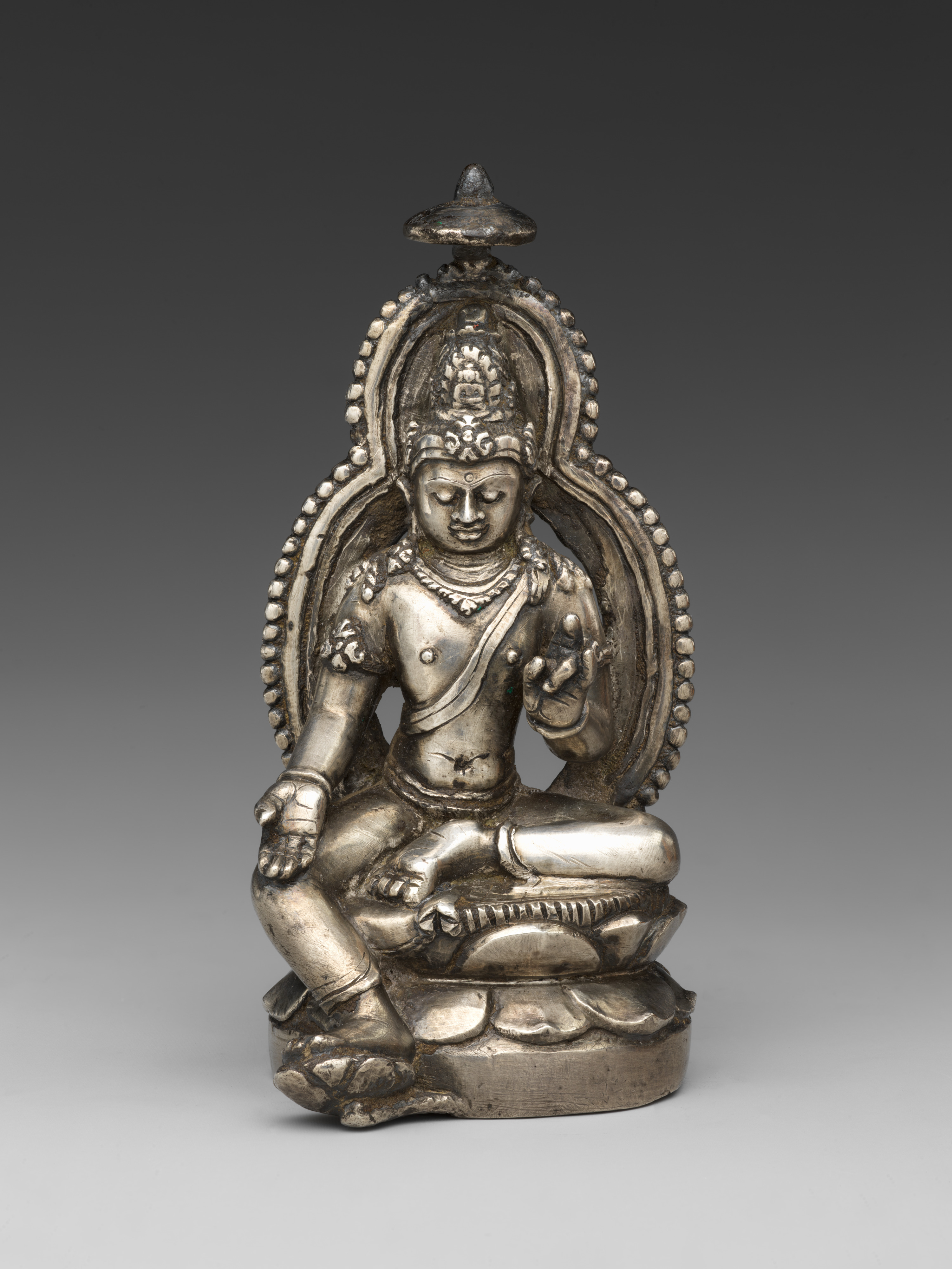
- The Lotus Flower: Usually held in the left hand, the lotus represents purity. Just as a lotus grows from the mud but remains unstained by it, Avalokiteshvara operates within the "mud" of Samsara while remaining perfectly pure and enlightened.
- The Crystal Mala (Prayer Beads): Held in the right hand, these symbolize the continuous cycle of liberation and the commitment to reciting mantras for the benefit of all beings.
- The Wish-Fulfilling Jewel: Often held between two palms at the heart center, this represents the Bodhicitta (the mind of enlightenment) and the ability to grant the spiritual needs of practitioners.
- The Deer Skin: In many depictions, a deerskin is draped over his shoulder, symbolizing his gentle nature and his refusal to harm any living creature.
The Eleven-Headed and Thousand-Armed Form
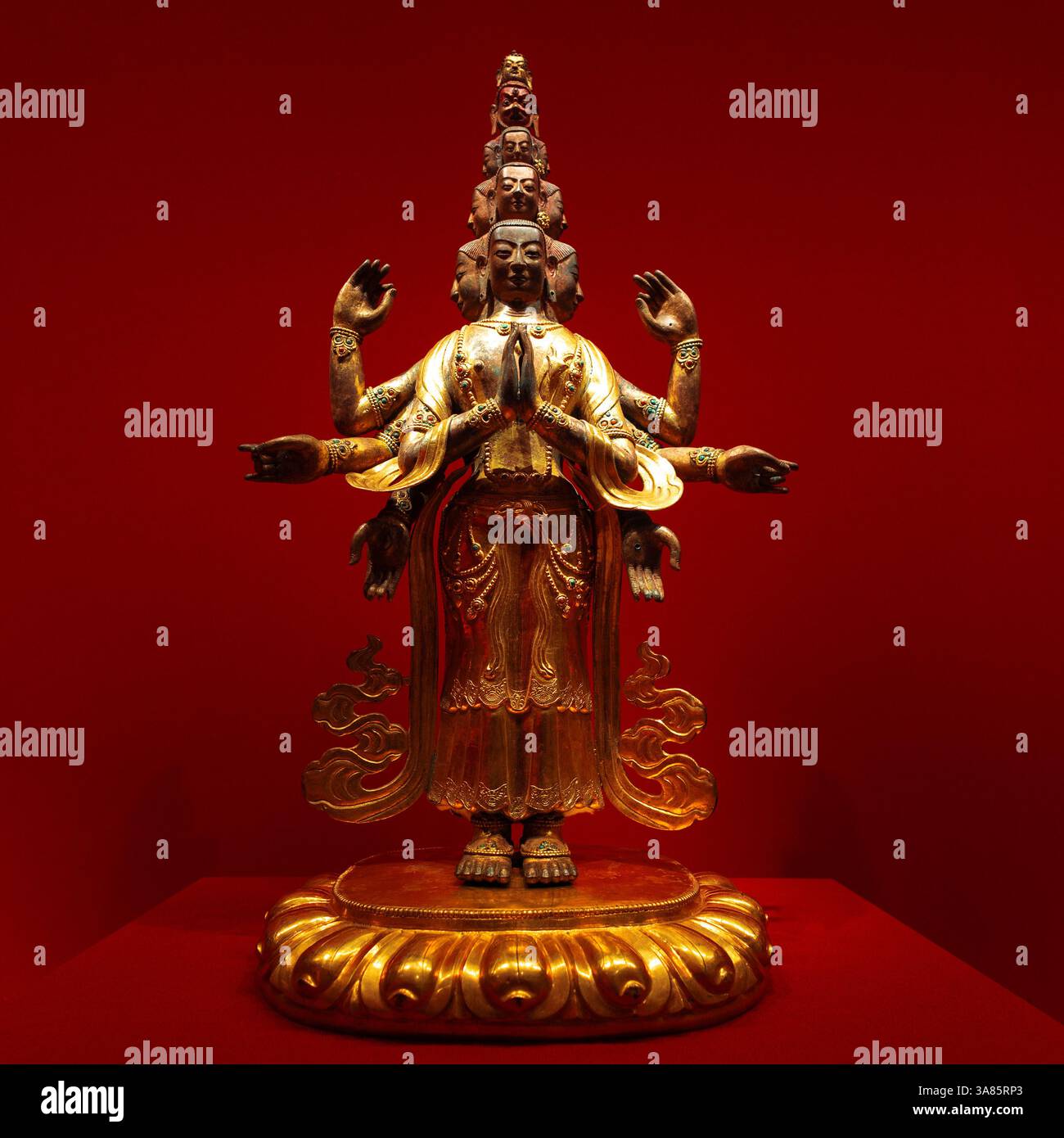
One of the most striking depictions is the Sahasrabhuja (Thousand-Armed) Avalokiteshvara. According to sacred legend, Avalokiteshvara once looked upon the hell realms and was so overwhelmed by the sheer number of suffering beings that his head shattered into eleven pieces from grief. Amitabha Buddha, seeing his distress, reconstituted the pieces into eleven heads—allowing him to hear and see in all directions—and granted him a thousand arms.
Each palm of these thousand hands contains an eye, symbolizing that his compassion is not just a feeling, but an active, seeing force that identifies and reaches out to help in every corner of the universe.
Textual Foundations: The Heart and Lotus Sutras
The significance of Avalokiteshvara is codified in several primary Buddhist scriptures. These texts provide the theological framework for his veneration and describe the specific benefits of his practice.
The Heart Sutra (Prajnaparamita Hridaya)
Perhaps the most famous text in Mahayana Buddhism, the Heart Sutra, features Avalokiteshvara as the central figure. In this text, he provides a profound teaching to the disciple Shariputra regarding the nature of reality. He explains that "form is emptiness, and emptiness is form." This teaching is critical because it establishes that Avalokiteshvara’s compassion is rooted in the deep understanding that all things are interconnected and lack a permanent, independent self.
The Lotus Sutra (Saddharma Pundarika Sutra)
Chapter 25 of the Lotus Sutra, often titled the "Universal Gate of Avalokiteshvara Bodhisattva," is dedicated entirely to his powers. It claims that if a person in danger calls upon his name, he will manifest in an appropriate form to save them. The text lists 33 distinct manifestations, ranging from a monk or a king to a woman or a child, illustrating the doctrine of Upaya (Skillful Means).
Regional Variations: From Chenrezig to Guanyin
As Buddhism spread across Asia, the identity of Avalokiteshvara adapted to local cultures, leading to some of the most significant regional variations in Buddhist practice.
| Region | Primary Name | Gender Representation | Key Characteristics |
|---|---|---|---|
| Tibet | Chenrezig | Masculine | Patron deity of Tibet; central to the Dalai Lama lineage. |
| China | Guanyin | Feminine (mostly) | Known as the "Goddess of Mercy"; associated with fertility and protection. |
| Japan | Kannon | Masculine/Androgynous | Revered in Zen and Pure Land; often depicted as "Eleven-Headed Kannon." |
| Vietnam | Quan Am | Feminine | Central figure in folk religion and formal Buddhist liturgy. |
| Sri Lanka | Natha | Masculine | Integrated with local guardian deity traditions. |
In East Asia, the transition of Avalokiteshvara from a masculine figure to the feminine Guanyin occurred around the 10th to 12th centuries. This shift emphasizes the "motherly" aspect of compassion—unconditional, nurturing, and universally accessible. In Tibet, however, he remains Chenrezig, the patron deity of the Land of Snows, and it is believed that the Dalai Lamas are successive earthly emanations of this Bodhisattva.
The Mantra of Compassion: Om Mani Padme Hum
The most famous mantra in the world, Om Mani Padme Hum, is directly associated with Avalokiteshvara. In the year 2026, it remains the most frequently recited prayer in Buddhist communities globally.
The mantra is a six-syllable invocation that purifies the six realms of existence:
- Om: Purifies pride and the realm of the gods.
- Ma: Purifies jealousy and the realm of the demi-gods.
- Ni: Purifies passion/desire and the human realm.
- Pad: Purifies ignorance and the animal realm.
- Me: Purifies greed and the realm of the hungry ghosts.
- Hum: Purifies hatred and the hell realm.
The literal translation, "The Jewel is in the Lotus," refers to the potential for enlightenment (the jewel) existing within the ordinary mind (the lotus). Practitioners believe that reciting this mantra invokes the immediate presence and protection of Avalokiteshvara.
Practical Cultivation and Meditation in 2026
Engaging with the energy of Buddha Avalokiteshvara is not limited to monastic life. In contemporary practice, several methods are used to integrate his qualities into daily life.
Visualization Practice
In Vajrayana traditions, practitioners engage in Sadhana, where they visualize themselves as Avalokiteshvara. This is not an act of ego, but a psychological and spiritual exercise to dissolve the ordinary "self" and replace it with a "divine pride" rooted in universal compassion. By visualizing the white light of the Bodhisattva entering their body, practitioners aim to transform their speech, mind, and actions.
Ethics of Compassion
The "Next Action" for any student of Avalokiteshvara is the practice of Tonglen (Giving and Taking). This meditation involves breathing in the suffering of others (visualized as dark smoke) and breathing out happiness and relief (visualized as bright light). In a world facing complex socio-economic and environmental challenges in 2026, this practice serves as a radical mental training to overcome selfishness and build emotional resilience.
Verification of Lineage
For those seeking formal initiation into Avalokiteshvara practices, it is vital to verify the authenticity of the teacher. Reputable organizations such as the Foundation for the Preservation of the Mahayana Tradition (FPMT) or the Office of His Holiness the Dalai Lama provide vetted resources on the lineage and requirements for advanced deity yoga.
Frequently Asked Questions
Is Avalokiteshvara a god?
In the Western sense of an omnipotent creator, no. In the Buddhist sense, he is an enlightened being or a "Wisdom Deity." He does not judge or create the world but acts as a mirror and a catalyst for a practitioner's own innate compassion.
Why is Avalokiteshvara sometimes male and sometimes female?
Enlightened beings are considered to be beyond biological gender. The shift from male to female (especially in China) reflects the cultural association of compassion with maternal energy. The Lotus Sutra explicitly states that the Bodhisattva can appear in any form necessary to help a specific individual.
What is the difference between Avalokiteshvara and the Dalai Lama?
Tibetan Buddhists believe that the Dalai Lama is the Tulku (reincarnation) or earthly manifestation of Avalokiteshvara. While Avalokiteshvara is the celestial source, the Dalai Lama is the human office through which that compassion is channeled into the world.
Can I practice Avalokiteshvara meditation without being a Buddhist?
Yes. The qualities of compassion, patience, and kindness are universal. Many people use the mantra "Om Mani Padme Hum" as a mindfulness tool to calm the mind and cultivate empathy without formal conversion to Buddhism.
What does the "eleventh head" on the Sahasrabhuja form represent?
The topmost head is usually that of Amitabha Buddha. This signifies that Avalokiteshvara's compassion is always guided by the supreme wisdom of his spiritual teacher and that he remains connected to the ultimate source of enlightenment.
Summary of Next Actions
To deepen your connection with Buddha Avalokiteshvara, consider the following steps:
- Study: Read Chapter 25 of the Lotus Sutra to understand the "Universal Gate" of his activities.
- Recitation: Begin a daily practice of reciting the mantra Om Mani Padme Hum (108 times) to cultivate a peaceful and compassionate mindset.
- Ethical Living: Identify one area of your life where you can replace judgment with the "looking down in pity" (compassionate observation) that defines Avalokiteshvara.
- Artistic Reflection: Observe a traditional Thangka or statue of Avalokiteshvara, focusing on the serenity of the facial expression as a model for your own emotional state.
Image Gallery