The Role of the Bob Ross Producer in Shaping a Painting Show
The role of the Bob Ross producer was instrumental in translating a minimalist, highly efficient public television studio format into a globally recognized masterclass in relaxation and painting instruction. Far beyond standard televis...
The role of the Bob Ross producer was instrumental in translating a minimalist, highly efficient public television studio format into a globally recognized masterclass in relaxation and painting instruction. Far beyond standard television management, the producer maintained the strict logistical discipline, budget parameters, and pacing required to keep The Joy of Painting running smoothly across decades of production.
Contents
The Genesis of Public Television Production and Low-Budget Constraints
When The Joy of Painting first went into production in the early 1980s, it operated under constraints that would baffle modern streaming creators. Public television stations, specifically in the United States, functioned with microscopic budgets, tiny crews, and intense scheduling demands. The producer of a show like Bob Ross's had to design a workflow that maximized every minute of studio time while minimizing overhead.
Unlike commercial networks that could afford extensive retakes, elaborate set rebuilds, or multiple camera passes, public broadcasting stations required extreme precision. The producer acted as the operational gatekeeper, ensuring that pre-production, principal recording, and post-production stayed precisely aligned with station funding limitations. This meant managing a skeletal crew consisting of floor managers, audio engineers, and camera operators who had to capture the entire half-hour episode in a single, continuous take.
The low-budget reality forced producers to develop a lean production style. Every asset—from the easel and the black canvas background to the specific titanium white paint used by Ross—was meticulously cataloged and budgeted. The producer ensured that supplies were reliably sourced, often relying on corporate partnerships and donations of art supplies in exchange for on-air credit, keeping the production solvent without breaking the strict advertising rules of public broadcasting.
Crafting the Visual and Audio Aesthetic
While Bob Ross provided the creative vision and the soothing persona, the producer orchestrated the technical environment that allowed that persona to thrive. Television is a medium of illusion, and the producer shaped the intimate, living-room atmosphere that made viewers feel as though Ross was painting exclusively for them.
The audio environment of The Joy of Painting is a primary example of producer-led formatting. The distinct sounds—the gentle scraping of the palette knife, the wet-on-wet blending of oil paints, and the vigorous rhythmic slapping of the two-inch brush against the easel—were not accidental byproducts of recording. Producers worked closely with audio engineers to position sensitive microphones that captured these ASMR-like acoustic triggers long before the term existed. This sonic landscape became a signature trademark of the show, specifically engineered to soothe the audience.
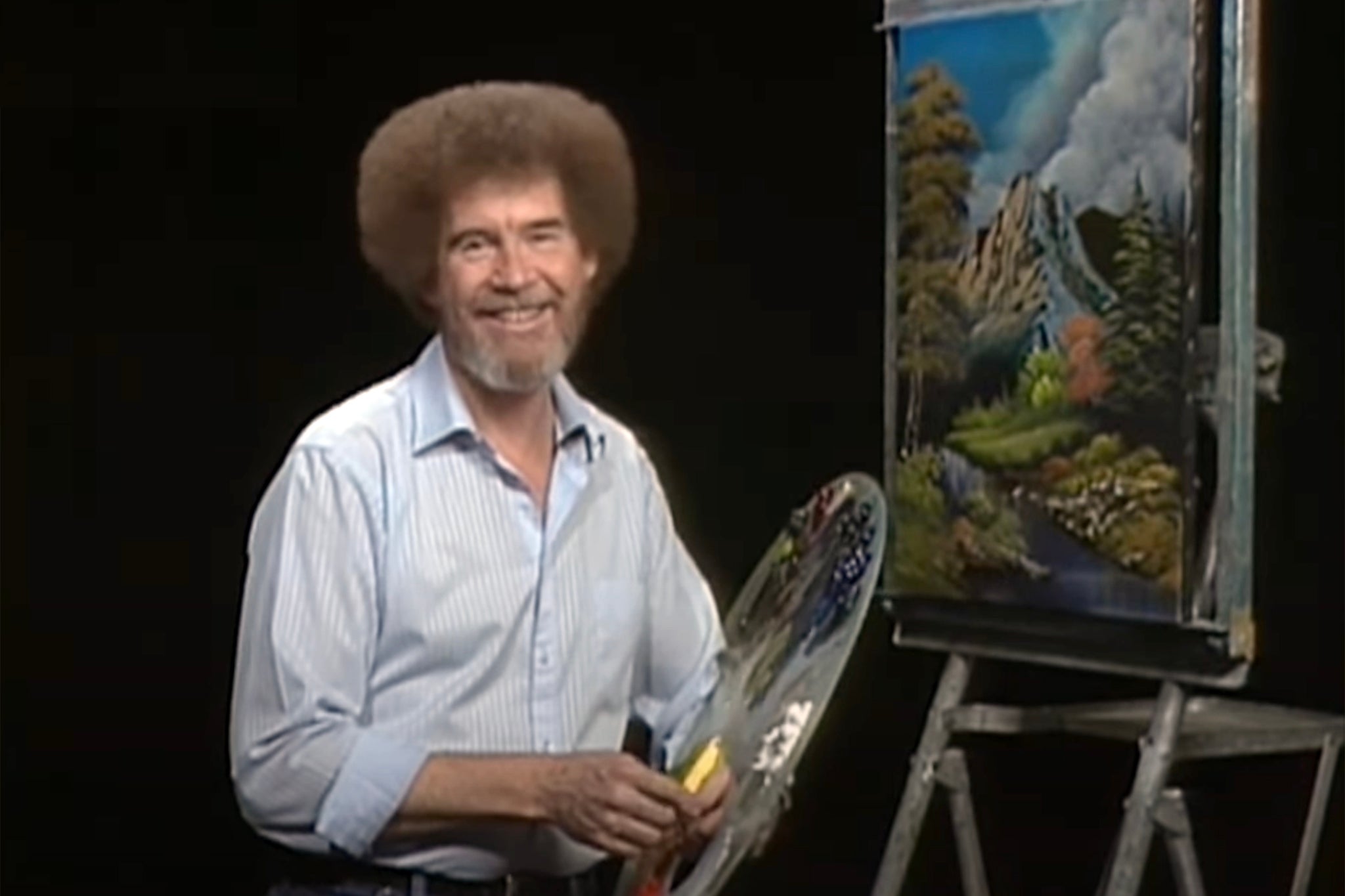
Visually, the producer enforced strict framing standards. The camera operators, under the producer’s direction, maintained two primary shots: a wide shot showing Ross and his entire canvas, and a tight close-up focusing strictly on his hands, the palette, and the canvas texture. The producer choreographed these transitions in real-time, signaling the camera switch without cutting the recording. Because there was no budget for post-production editing, the entire thirty-minute episode had to be recorded live-to-tape. If Ross made a mistake, he had to fix it live—a high-stakes environment where the producer served as the ultimate safety net and timing director.
Pacing, Time Management, and the Live-to-Tape Reality
The greatest logistical challenge of The Joy of Painting was time. Public television broadcast slots were rigidly fixed at thirty minutes, leaving approximately twenty-six to twenty-seven minutes of actual content after commercial breaks and station identification bumpers. Bob Ross had to complete a full oil painting—from a blank white canvas to "happy little trees," distant mountains, and peaceful water—in less than thirty minutes.
The producer was the timekeeper who enforced this unforgiving window. Using floor cues and countdowns, the producer monitored every phase of the painting process:
- The Setup (Minutes 1–3): Introducing the color palette, priming the canvas with liquid white or liquid black, and outlining the basic composition.
- The Background (Minutes 4–12): Blocking in skies, mountains, and atmospheric depth using broad, sweeping brushstrokes.
- The Midground (Minutes 13–20): Introducing foliage, distant cabins, and secondary elements.
- The Foreground and Details (Minutes 21–26): Adding highlights, signature waterlines, finishing touches, and the final sign-off.
If Ross spent too much time detailing a mountain ridge, the producer had to signal him to accelerate his pace so the painting could reach its natural conclusion without rushing the final signature. This collaborative timing ensured that every episode maintained a consistent, hypnotic rhythm that viewers could rely upon.
Production Workflow Comparison
| Production Element | Standard Commercial TV | The Joy of Painting (Public TV) |
|---|---|---|
| Recording Method | Multi-camera setups with extensive post-production edits | Live-to-tape, single continuous take |
| Crew Size | 20 to 50+ specialized technicians | 3 to 5 multi-role crew members |
| Budget Scale | High, variable, supported by ads or major subscriptions | Ultra-low, grant- and pledge-supported |
| Error Correction | Re-shooting scenes and digital editing | Incorporating mistakes as "happy accidents" |
Scaling the Brand Beyond the Studio
As the popularity of The Joy of Painting exploded through syndication on public television stations across North America, the role of the producer expanded from studio management to brand stewardship. Annette Kowalski, who alongside her husband Walt Kowalski worked closely with Bob Ross as producer, manager, and business partner, helped transform a local public access painting instruction segment into a massive multi-media enterprise.
The producer navigated the delicate balance between maintaining the calm, non-commercial ethos of public broadcasting and scaling a commercial enterprise that sold instructional books, pre-mixed oil paints, and instructional videos. This involved coordinating with distributors, managing licensing agreements for certified Bob Ross instructors, and protecting the intellectual property of the brand. By keeping the television show pure and free of direct product placement—complying with Federal Communications Commission (FCC) guidelines for non-commercial educational broadcasting—the producers preserved the authentic trust that audiences placed in Ross.
Frequently Asked Questions
Did Bob Ross ever edit out mistakes during the recording of the show?
No. Every episode of The Joy of Painting was recorded live-to-tape in a single continuous take without edits. If Ross made an error or strayed from his plan, the producer allowed the recording to continue, which gave rise to his famous philosophy of embracing "happy little accidents."
How long did it take to film a single episode of the show?
An entire half-hour episode was filmed in approximately twenty-seven minutes to match the exact runtime required for public television broadcast slots, mirroring the real-time creation of the artwork.
Who owned the rights to The Joy of Painting and managed its production?
The show was primarily produced and managed through Bob Ross Inc., a company co-founded by Bob Ross, Annette Kowalski, and Walt Kowalski, which oversaw both the television production logistics and the associated merchandise.
Why did the show look so simple compared to other television programs?
The minimalist studio setup was a deliberate production choice dictated by low public television budgets, a small crew, and the need to keep the viewer's focus entirely on the canvas and Ross's instruction rather than elaborate set designs.
What was the producer's main responsibility during active recording?
The producer managed real-time floor cues, monitored the strict twenty-seven-minute broadcast clock, directed camera transitions between wide shots and close-ups, and ensured the audio captured the distinct sounds of the brushes and palette knives.
Conclusion and Next Actions
The producer of a classic painting show was far more than an administrative coordinator; they were the invisible architect of an enduring cultural phenomenon. By enforcing rigorous time management, shaping a soothing acoustic and visual environment, and protecting the non-commercial integrity of public broadcasting, the production team enabled Bob Ross to connect intimately with millions of viewers. For media creators studying historical television formats, analyzing the constraints and triumphs of The Joy of Painting offers a masterclass in how strict operational limits can foster unique creative authenticity. When reviewing vintage television production models, look closely at how technical constraints dictate artistic choices, and examine how low-budget formats can achieve massive cultural longevity through discipline and focus.
Image Gallery