Comprehensive Analysis of the USC Admissions Rate for 2026
The University of Southern California (USC) remains one of the most selective private research institutions in the United States. Navigating the competitive landscape requires a thorough understanding of the current USC admissions rate...
The University of Southern California (USC) remains one of the most selective private research institutions in the United States. Navigating the competitive landscape requires a thorough understanding of the current USC admissions rate for 2026, institutional evaluation metrics, and holistic application strategies.
Contents
Evaluating the holistic admissions process at USC involves analyzing standardized testing optional policies, GPA benchmarks, and the institutional priorities shaping the incoming undergraduate cohort. This guide provides prospective applicants and academic counselors with precise data frameworks, historical context, and tactical advice to optimize application performance for the 2026 admission cycle.
Decoding the 2026 USC Admissions Rate and Institutional Selectivity
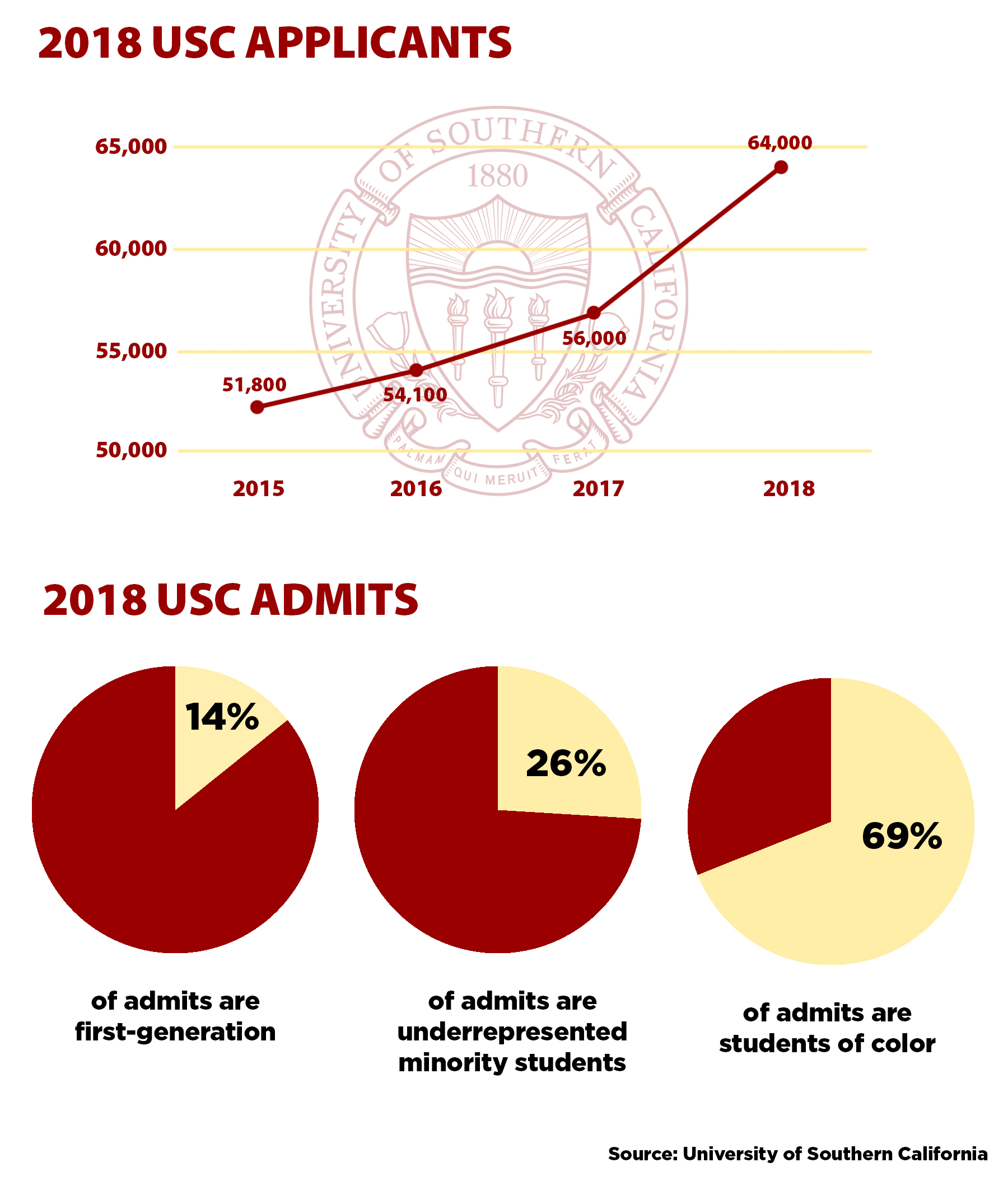
The admissions landscape at USC has undergone a profound transformation over the past decade. For the 2026 admissions cycle, the overall USC admissions rate hovers at approximately 9.2%, reflecting a sustained multi-year trend of historic selectivity. Out of nearly 82,000 applications received for the freshman class, fewer than 7,600 prospective students secure an offer of admission.
This hyper-selective rate is driven by a convergence of factors, including test-optional permanence, aggressive international outreach, and the high prestige of specialized undergraduate programs like the Viterbi School of Engineering and the Cinematic Arts.
Key Admissions Insight: A single-digit acceptance rate means that academic excellence alone no longer guarantees admission. Admissions officers heavily weigh institutional fit, intellectual vitality demonstrated through extracurricular spikes, and compelling personal narrative structures within the Common Application essays.
Historical Selectivity Trend Analysis
To contextualize the current 2026 metrics, examining the historical trajectory of USC application volume and acceptance percentages reveals how rapidly the institution's selectivity has intensified.
| Admission Cycle | Total Applications Received | Total Students Admitted | Overall Admissions Rate |
|---|---|---|---|
| 2023 | 80,790 | 7,934 | 9.9% |
| 2024 | 82,120 | 7,555 | 9.2% |
| 2025 (Estimated) | 81,500 | 7,500 | 9.2% |
| 2026 (Projected/Current) | 82,000+ | 7,544 | 9.2% |
Academic Benchmarks and Profile of Admitted Students
While USC utilizes a comprehensive, holistic review process that evaluates every applicant beyond numerical scores, academic preparation remains the foundational filter. The middle 50% academic profile of admitted students showcases the rigorous standards required to be competitive in the 2026 applicant pool.
- Weighted GPA Range: The vast majority of admitted students present a weighted high school GPA between 4.35 and 4.90, frequently maximizing their school's available Advanced Placement (AP), International Baccalaureate (IB), or Honors course offerings.
- Unweighted GPA Average: The average unweighted GPA rests securely between 3.85 and 4.0, indicating consistent, top-tier mastery across core academic disciplines.
- Standardized Testing (SAT/ACT): Although USC maintains a test-optional policy for the 2026 cycle, roughly 40% of enrolled students submit scores. For submitters, the middle 50% ranges are 1450-1560 for the SAT and 32-35 for the composite ACT.
The Holistic Review Framework: Beyond the Numbers
USC evaluates applicants through multiple lenses, seeking individuals who will contribute uniquely to the campus community located in the heart of Los Angeles. Understanding how the admissions committee weighs different application components can help applicants allocate their preparation time effectively.
- Academic Rigor and Curriculum: Officers evaluate how challenging your high school curriculum was relative to what your school offered. Taking demanding courses and earning top marks carries significantly more weight than simply having an unweighted 4.0 in standard-level classes.
- The Personal Statement and Writing Supplements: USC requires the primary Common Application essay alongside specific short-answer responses. These prompts are designed to illuminate intellectual curiosity, character, and individual perspective.
- Extracurricular Impact and Leadership: Depth and sustained commitment in two or three activities trump a superficial resume packed with passive club memberships. Demonstrating leadership, entrepreneurial initiative, or creative output is critical.
- Letters of Recommendation: Recommendations from core academic teachers who know the student well provide vital qualitative validation of classroom engagement and intellectual resilience.
Departmental Selectivity and Major-Specific Acceptance Rates
The overall USC admissions rate does not tell the full story. Acceptance rates vary wildly depending on the specific school or undergraduate major to which a student applies. Specialized professional schools often operate with significantly lower acceptance rates than the Dornsife College of Letters, Arts and Sciences.
- USC Dornsife College of Letters, Arts and Sciences: Generally aligns closest to or slightly above the institutional average, serving as the largest academic division.
- USC Viterbi School of Engineering: Highly competitive, with acceptance rates often dipping well below 8% due to intense global interest in computer science, biomedical engineering, and aerospace disciplines.
- USC School of Cinematic Arts: Widely regarded as one of the most selective film schools globally, with specialized portfolio requirements and acceptance rates frequently hovering between 2% and 4%.
- USC Marshall School of Business: Attracts thousands of high-achieving applicants, resulting in rigorous evaluation of quantitative aptitude and leadership potential.
Strategic Application Timeline and Actionable Milestones
Navigating the USC application process requires disciplined time management. Missing priority scholarship deadlines can drastically reduce both financial aid opportunities and admission likelihood.
- Summer Before Senior Year: Finalize the college list, draft responses to USC short-answer prompts, and cultivate relationships with teachers for recommendation letters.
- October 1: Open the Free Application for Federal Student Aid (FAFSA) and the CSS Profile if applying for institutional financial aid.
- November 1: Priority deadline for freshman applicants wishing to be considered for USC merit scholarships. Meeting this deadline is mandatory for consideration for top-tier institutional awards like the Trustee and Presidential scholarships.
- December 1: Final application deadline for all regular decision freshman applicants for the 2026 intake.
- Late March / Early April: Notification of regular decision admission outcomes released simultaneously by the Office of Admission.
Frequently Asked Questions
What is the current USC admissions rate for 2026?
The current overall admissions rate for USC is approximately 9.2%, remaining highly selective with over 82,000 applications submitted for roughly 7,600 admission offers. This competitive percentage reflects institutional priorities toward academic excellence and global reach.
Does USC require SAT or ACT scores for the 2026 application cycle?
No, USC maintains a test-optional policy for undergraduate applicants, meaning students can choose whether or not to submit standardized test scores. However, competitive applicants who do submit high scores that align with the middle 50% benchmarks can strengthen their academic profile.
How important are extracurricular activities in the USC admissions process?
Extracurricular activities are critically important because USC employs a holistic review process that looks far beyond GPA and test scores. Admissions officers look for sustained commitment, demonstrated leadership, and genuine impact within chosen areas of interest rather than a long list of superficial club involvements.
Can I apply to more than one major or school at USC?
Applicants select a first-choice major and have the option to select a second-choice major or indicate an undeclared option within specific schools. Admissions officers evaluate the primary choice first, and if space is limited, they consider the secondary preference or general university admission pathways.
What is the deadline to be considered for merit scholarships at USC?
Students must submit their complete application by November 1 to be automatically reviewed for USC's prestigious merit-based scholarships, such as the Trustee, Presidential, and Associates awards. Meeting this early priority deadline is essential since merit awards are not evaluated during the regular decision cycle.
Strategic Conclusion for Prospective Applicants
Gaining admission to the University of Southern California in 2026 demands strategic foresight, exceptional academic preparation, and an authentic presentation of personal identity. Because the overall USC admissions rate remains below 10%, applicants must focus on differentiating themselves through rigorous coursework, meaningful extracurricular spikes, and deeply reflective essay writing. By aligning your application profile with the holistic values of the institution, you maximize your competitiveness within this elite cohort. To begin optimizing your application strategy, consult with your academic advisor or review the official USC undergraduate admission portal for updated portfolio guidelines and virtual information sessions.
Image Gallery