The Average Presidential Net Worth Explained: Wealth, Power, and American Politics
The average presidential net worth of a United States commander-in-chief is significantly higher than that of the typical American citizen, driven largely by post-presidential book deals, speaking fees, real estate holdings, and pre-ex...
The average presidential net worth of a United States commander-in-chief is significantly higher than that of the typical American citizen, driven largely by post-presidential book deals, speaking fees, real estate holdings, and pre-existing generational wealth. While a small number of executives entered office with modest assets or lived virtually debt-free, the vast majority of modern presidents belonged to the upper class, with modern leaders frequently accumulating tens or hundreds of millions of dollars through private-sector ventures.
Contents
Analyzing the financial standing of U.S. presidents requires looking past partisan rhetoric and examining historical records, inheritance laws, economic shifts, and post-office monetization. Evaluating presidential wealth reveals how executive compensation, entrepreneurial success, and post-presidential careers shape the personal fortunes of those who hold the nation's highest office.
Historical Context: From Landowners to Modern Multimillionaires
The evolution of presidential wealth mirrors the broader economic history of the United States. In the early eras of the republic, wealth was primarily measured in land ownership, agricultural output, and enslaved labor.
The Founding Era and Agrarian Wealth
Early presidents, particularly those from Virginia such as George Washington, Thomas Jefferson, and James Madison, were among the wealthiest men of their time, primarily due to vast tracts of land and agricultural operations. George Washington was notably affluent, owning tens of thousands of acres of land across multiple states and operating a sophisticated commercial farming enterprise at Mount Vernon.
However, land wealth did not always equate to liquid cash. Thomas Jefferson, despite owning extensive property and maintaining a lavish lifestyle, died deeply in debt due to economic downturns, poor agricultural yields, and personal spending habits. Other early executives, such as Andrew Jackson, built wealth through land speculation, cotton planting, and legal practices.
The Industrial Age and Business Tycoons
As the United States industrialized in the late 19th and early 20th centuries, presidential wealth shifted from agrarian estates to industrial investments, railroads, and corporate enterprise. Figures like Ulysses S. Grant struggled financially after leaving office—compelled to write his famous memoirs while dying of throat cancer to provide for his family—while later figures like Herbert Hoover amassed personal fortunes through successful international mining engineering before entering public service.
Franklin D. Roosevelt, though a consummate patrician born into generational wealth from New York real estate and maritime commerce, famously championed policies targeting economic elites, demonstrating that personal background did not always dictate political platform.
How Modern Presidential Fortunes Are Built
In the contemporary political landscape, a candidate's net worth is heavily scrutinized during campaigns, regulated by federal disclosure laws, and significantly expanded after leaving the White House. Modern presidential wealth typically accumulates through three distinct phases: pre-presidency, the presidential salary, and post-presidency monetization.
Pre-Presidency Earnings
Most modern presidents entered office having already achieved financial success in law, business, real estate, or military leadership.
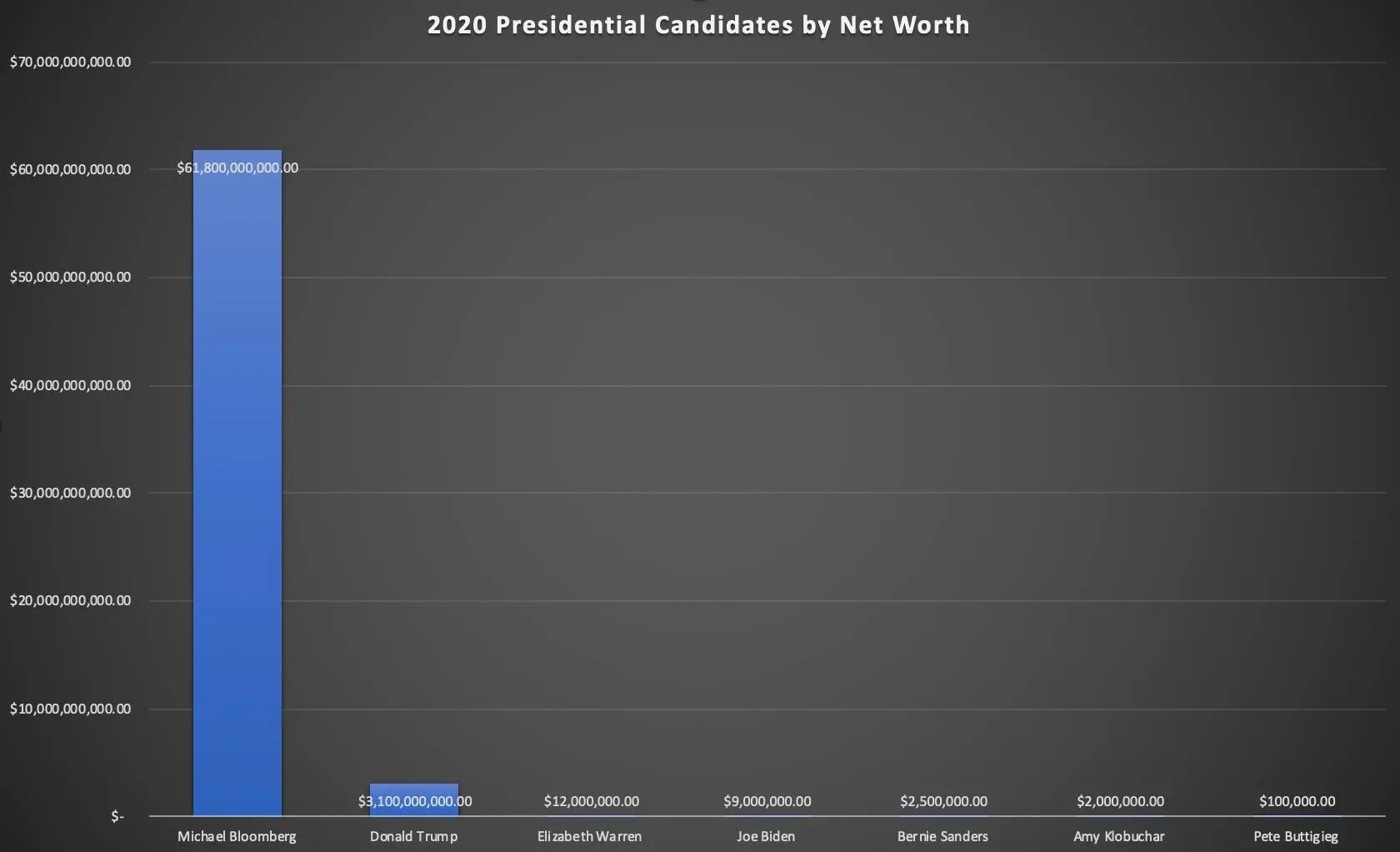
- Real Estate and Corporate Business: Donald Trump entered office as a billionaire with a sprawling portfolio of commercial real estate, licensing agreements, and hospitality ventures.
- Law and Investments: Bill Clinton and Barack Obama built substantial wealth primarily through successful legal careers, high-advance memoir contracts, and targeted stock and bond investments before securing the presidency.
- Corporate Leadership: George W. Bush accumulated wealth through the oil and gas industry and partial ownership of the Texas Rangers baseball franchise, supplemented by his family's established political and financial network.
The Presidential Salary
While holding office, the president receives a fixed federal salary, which has been set at $400,000 per year since 2001, alongside a $50,000 annual expense allowance, a $100,000 non-taxable travel account, and $19,000 for entertainment. While substantial for the average worker, this salary represents a fraction of the total net worth of most modern executives and is often insufficient to cover the lifestyle maintenance and security expectations of a former head of state.
Post-Presidency Monetization
The most dramatic surge in presidential net worth frequently occurs after leaving the Oval Office. Former presidents command massive financial returns through several primary channels:
- Book Deals: Multi-million-dollar advances for presidential memoirs are standard. Barack and Michelle Obama signed joint book deals reportedly valued at over $60 million.
- Paid Speaking Engagements: Former commanders-in-chief regularly command upwards of $100,000 to $400,000 per speech for corporate clients, international conferences, and banking institutions.
- Media Production and Foundations: Establishing production companies with streaming services (such as Higher Ground Productions by the Obamas) and directing massive philanthropic foundations expand both political influence and financial portfolios.
Comparative Breakdown of Select Presidential Net Worths
To understand the spectrum of presidential wealth, it is helpful to examine estimates from historians, financial journalists, and public disclosures. Because historical valuations are difficult to adjust accurately for modern inflation, figures are traditionally expressed in estimated contemporary equivalent dollars.
| President | Estimated Net Worth (Approximate / Adjusted) | Primary Source of Wealth |
|---|---|---|
| George Washington | $587 million | Land ownership, agriculture, real estate |
| Donald Trump | $2.5 billion - $3+ billion | Commercial real estate, licensing, hospitality |
| Thomas Jefferson | $212 million | Land, inherited estate, agriculture |
| Theodore Roosevelt | $125 million | Generational inheritance, investments |
| Barack Obama | $70 million | Book sales, speaking fees, media production |
| Bill Clinton | $75 million | Speaking fees, memoirs, legal consulting |
| Harry S. Truman | $1 million | Modest salary savings, inherited family farm land |
| Abraham Lincoln | $1 million | Law practice, real estate, inheritance |
Note: Historical net worth estimates involve significant variance due to difficulties in valuing land, slaves, and businesses across centuries. Modern figures rely on mandatory financial disclosures and investigative reporting.
The Ethics and Disclosure Regulations of Presidential Wealth
The intersection of executive power and personal wealth is strictly governed by federal law, primarily through the Ethics in Government Act of 1978. This legislation requires executive branch officials, including the president and vice president, to file public financial disclosure reports detailing their assets, liabilities, income sources, and outside positions.
Blind Trusts and Divestiture
To mitigate potential conflicts of interest between executive decision-making and private financial holdings, presidents often utilize blind trusts. A true blind trust involves placing assets under the management of an independent trustee who liquidates and reinvests holdings without the knowledge or control of the officeholder.
However, compliance varies. While some executives completely divest from operating businesses and place liquid assets into diversified index funds or Treasury bonds, others retain complex business structures, leading to ongoing debates regarding the constitutional Emoluments Clauses and executive accountability.
Common Misconceptions Regarding Presidential Fortunes
Several persistent myths surround the financial realities of the United States presidency. Addressing these misconceptions provides a clearer picture of how executive wealth actually operates.
- Myth: Being president instantly makes every leader wealthy. In reality, several historical presidents suffered financial ruin either during or after their terms due to the high costs of maintaining appearances, legal expenses, or poor business ventures outside of executive oversight. Harry S. Truman faced such financial strain upon leaving office that Congress subsequently passed the Former Presidents Act of 1958 to provide a lifetime pension and staff assistance.
- Myth: Presidential salaries represent their primary income. For modern leaders, the official government salary is largely incidental compared to pre-existing private wealth or post-presidency earning potential.
- Myth: Financial disclosures reveal exact, real-time net worth. Federal disclosure forms utilize broad financial brackets (e.g., assets valued between $1,000,000 and $5,000,000) rather than exact figures, making precise net worth calculations an estimate rather than an exact accounting.
Frequently Asked Questions
What is the average net worth of a U.S. president?
Calculating a strict mathematical average is skewed by outliers like George Washington and Donald Trump, whose fortunes reach into the hundreds of millions or billions. However, if calculated using a median baseline, the typical modern president enters office as an upper-middle-class or multi-millionaire professional, frequently ranking within the top one percent of American earners.
Do former presidents receive a government pension?
Yes. Under the Former Presidents Act, former commanders-in-chief receive a lifetime annual pension equal to the salary of a cabinet secretary (Executive Level I, which is $246,400 as of recent federal adjustments). They also receive funding for office space, staff, medical care at military facilities, and Secret Service protection for life.
Are presidents required to release their tax returns?
There is no constitutional or statutory requirement for presidential candidates or sitting presidents to release their tax returns. However, releasing tax returns became a bipartisan political custom following the Watergate scandal until recent election cycles, where practices have varied among candidates.
Can a president run a private business while in office?
While federal conflict-of-interest statutes that apply to executive branch employees generally exempt the president and vice president to prevent obstruction of governance, constitutional norms, historical precedent, and public scrutiny strongly encourage divestiture or the placement of business assets into independent blind trusts.
Conclusion and Next Actions
Understanding the average presidential net worth requires looking beyond simple salary figures and examining a lifetime of enterprise, inheritance, and post-office monetization. For researchers, voters, and policy analysts, evaluating executive finances involves examining public financial disclosures, tracking post-presidency publishing and speaking contracts, and monitoring adherence to federal ethics frameworks. To dive deeper into government transparency, citizens can review individual financial disclosures directly through the Office of Government Ethics (OGE) public portal or examine historical financial analyses published by non-partisan presidential libraries.
Image Gallery