Who is the Parent Company of Grammarly? Understanding the Ownership Structure in 2026
Grammarly is owned and operated by Grammarly Inc., a privately held technology company headquartered in San Francisco, California. Unlike many prominent software-as-a-service (SaaS) platforms that have been acquired by giants like Goog...
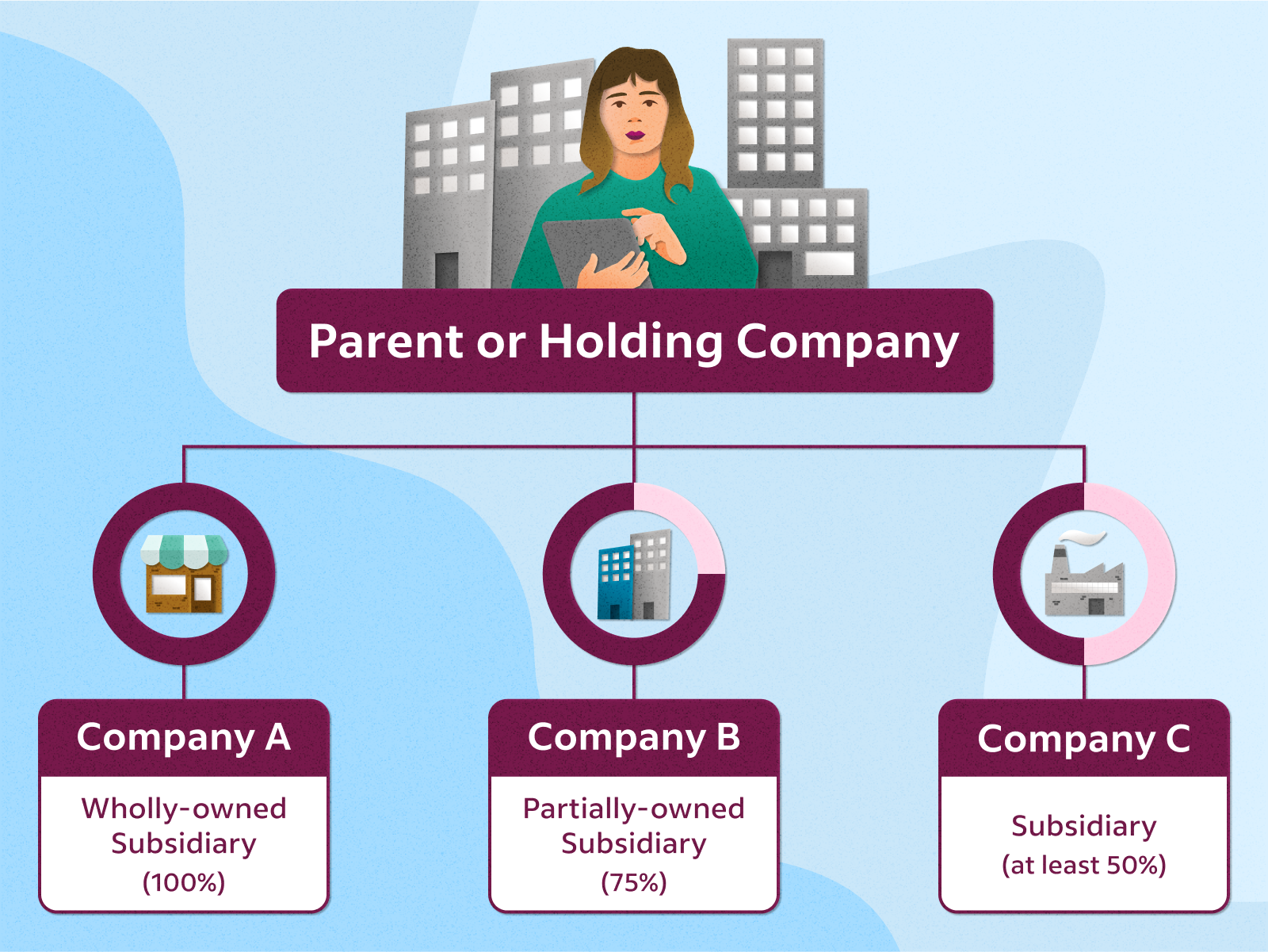
Grammarly is owned and operated by Grammarly Inc., a privately held technology company headquartered in San Francisco, California. Unlike many prominent software-as-a-service (SaaS) platforms that have been acquired by giants like Google, Microsoft, or Adobe, Grammarly remains an independent entity. It is not a subsidiary of a larger conglomerate, and it continues to operate under its original corporate umbrella.
Contents
The Corporate Identity of Grammarly Inc.
In the current landscape of 2026, Grammarly Inc. stands as one of the most successful examples of a "platform-agnostic" technology company. Its status as a private corporation means that its shares are not traded on public stock exchanges like the New York Stock Exchange (NYSE) or NASDAQ. Instead, the company is owned by its founders and a group of private venture capital investors.
The decision to remain independent has been a strategic cornerstone for the organization. By not being a part of a larger ecosystem—such as Microsoft 365 or Google Workspace—Grammarly has been able to maintain a unique position where its tools function seamlessly across different browsers, operating systems, and competing document editors. This independence is what allows the Grammarly browser extension to work just as effectively in a Chrome window as it does in a desktop version of Microsoft Word or a Slack channel.
The corporate structure is designed to support rapid iteration in artificial intelligence (AI) and machine learning. As a private entity, Grammarly Inc. does not have to answer to the quarterly earnings pressures that often drive public companies to prioritize short-term profits over long-term research and development. This has enabled the company to pivot deeply into generative AI and large language models (LLMs) over the past several years without losing its core focus on communication assistance.
The Founders: The Vision Behind the Brand
To understand the parent company, one must look at the individuals who established it. Grammarly was founded in 2009 by three Ukrainian entrepreneurs: Alex Shevchenko, Max Lytvyn, and Dmytro Lider.
The trio originally launched the service as a tool to help students with grammar and spelling, but it quickly evolved into a sophisticated communication assistant. The founders remain deeply involved in the company's trajectory, though the day-to-day operations transitioned to professional executive leadership as the company scaled globally. In 2023, Rahul Roy-Chowdhury took over as CEO from Brad Hoover, who had led the company for over a decade.
The founders' influence is still felt in the company's commitment to "ethical AI." Because they retain significant ownership stakes, they have been able to steer the company through various geopolitical and technological shifts while maintaining a focus on user privacy—a commitment that is often harder to sustain after a massive corporate acquisition.
Financial History and Major Investors
While Grammarly Inc. is the parent company, it has received substantial backing from some of the most influential venture capital firms in the world. These investors do not "own" Grammarly in the sense of a parent-subsidiary relationship, but they hold significant equity and often have representation on the company's board of directors.
Significant Funding Rounds
Grammarly’s path to its multi-billion-dollar valuation was marked by several high-profile funding rounds:
- Series A (2017): The company raised $110 million, led by General Catalyst. This was an unusually large Series A, signaling the market's high confidence in the product's growth potential.
- Series B (2019): A $90 million round led by returning investor General Catalyst, along with IVP. This round officially propelled Grammarly to "unicorn" status (a valuation over $1 billion).
- 2021 Funding Round: Grammarly raised $200 million from investors including Baillie Gifford and funds managed by BlackRock. This round valued the company at roughly $13 billion, making it one of the most valuable private software companies in the world at that time.
Current Investment Landscape
As of 2026, the list of institutional investors with a stake in Grammarly Inc. includes:
- General Catalyst: A firm known for backing long-term "enduring" companies.
- IVP (Institutional Venture Partners): Specialized in late-stage high-growth tech.
- Baillie Gifford: An investment firm that often takes stakes in companies with significant technological moats.
- BlackRock: One of the world’s largest asset managers, typically investing in companies with strong paths toward a potential IPO.
These investors provide the capital necessary for Grammarly to compete with the AI divisions of trillion-dollar tech giants. This financial backing is why Grammarly has been able to avoid being swallowed by a larger parent company.
Why Grammarly Has Not Been Acquired
In the tech industry, a company of Grammarly's size and utility is often a prime target for acquisition. There has been frequent speculation regarding potential buyouts by companies like Salesforce, Adobe, or even Apple. However, several factors explain why Grammarly Inc. remains its own parent.
1. Platform Neutrality
If Google were to acquire Grammarly, Microsoft might restrict Grammarly's access to Word and Outlook to promote its own "Microsoft Editor." By staying independent, Grammarly ensures it can be the "connective tissue" between all the different apps a professional uses throughout their day.
2. High Valuation
At a valuation exceeding $10 billion, the number of companies that could afford to buy Grammarly is small. Furthermore, an acquisition of this size would likely trigger intense antitrust scrutiny from regulators in the United States and Europe, particularly given Grammarly’s dominant position in the AI writing assistant market.
3. Profitable Business Model
Unlike many startups that burn through cash to grow, Grammarly established a sustainable "freemium" revenue model early on. With millions of individual subscribers and a rapidly growing enterprise division (Grammarly for Business), the company has the cash flow to fund its own operations without needing a corporate parent's deep pockets.
Ownership and Enterprise Structure Comparison
The following table illustrates how Grammarly's ownership compares to other major players in the digital writing and productivity space in 2026:
| Service | Parent Company | Ownership Type | Primary Business Focus |
|---|---|---|---|
| Grammarly | Grammarly Inc. | Private | AI Communication Assistance |
| Microsoft Editor | Microsoft Corporation | Public (MSFT) | Software & Cloud Ecosystem |
| Google Help Me Write | Alphabet Inc. | Public (GOOGL) | Search, Advertising & Cloud |
| ProWritingAid | Orpheus Technology | Private | Creative & Academic Writing |
| QuillBot | Course Hero (Learneo) | Private (Subsidiary) | Learning & Writing Tools |
| Hemingway Editor | Hemingway Ltd. | Private | Style & Readability Tools |
Global Presence and Operational Hubs
Although Grammarly Inc. is a U.S.-based corporation, its operational structure is global. This distribution is a key part of its identity as a modern tech parent company.
- San Francisco (Headquarters): Focuses on global strategy, marketing, and executive leadership.
- Kyiv, Ukraine: Historically the primary engineering and research hub. Despite regional challenges, Grammarly has maintained its commitment to its Ukrainian roots, which remains a core part of its corporate culture.
- Vancouver, Canada: A significant hub for product development and engineering.
- Berlin, Germany: Serves as a base for expanding its footprint in the European market and tapping into the EU's tech talent pool.
This decentralized yet unified structure allows the parent company to navigate different regulatory environments, particularly regarding the European Union's stringent AI and data protection laws (such as the AI Act and GDPR).
Security, Privacy, and Data Governance
As the parent company, Grammarly Inc. is the legal entity responsible for the vast amounts of text data processed by its algorithms. In 2026, data sovereignty is a major concern for enterprise clients. Grammarly has addressed this by maintaining high-level security certifications that are managed directly by its internal compliance teams rather than a third-party parent company.
Grammarly Inc. maintains SOC 2 (Type 2) compliance, as well as HIPAA and FERPA readiness. Because it is not owned by an advertising-focused company like Alphabet (Google) or Meta, Grammarly often argues that its incentives are better aligned with user privacy. Their business model is based on subscriptions, not selling user data or training third-party advertising profiles, which is a distinction the company frequently highlights in its corporate communications.
Frequently Asked Questions
Is Grammarly owned by Google?
No, Grammarly is not owned by Google (Alphabet Inc.). While Grammarly offers a popular Chrome extension and integrates with Google Docs, it is an independent company that competes directly with some of Google’s built-in AI writing features.
Is Grammarly a Chinese-owned company?
No. Grammarly was founded by Ukrainian entrepreneurs and is headquartered in the United States. It does not have Chinese ownership or a parent company based in China.
Who is the current CEO of the parent company?
As of 2026, Rahul Roy-Chowdhury serves as the CEO of Grammarly Inc. He joined the company from Google and took over the CEO role to lead Grammarly's transition into a "lead-with-AI" era.
Can I buy stock in Grammarly Inc.?
Currently, you cannot buy stock in Grammarly on public exchanges. It remains a privately held company. Any "shares" are owned by employees, founders, and private venture capital firms.
Does Grammarly have any subsidiary companies?
Grammarly Inc. operates primarily as a single brand, though it has various international legal entities (such as Grammarly Lithuania or Grammarly Canada) to manage payroll and local regulations in the regions where it has offices.
Summary of Next Actions for Users and Businesses
For individual users and enterprise decision-makers, understanding that Grammarly Inc. is an independent parent company is vital for assessing long-term stability and data privacy.
If you are a business looking to implement Grammarly, your next step should be to review their "Enterprise" documentation, which outlines how the parent company handles data isolation and security. Because they are not part of a larger conglomerate, their terms of service are generally more focused and easier to audit for compliance purposes. For individuals, knowing the company is independent provides assurance that the tool will likely remain available across all your favorite platforms, regardless of which browser or word processor you choose to use.
Image Gallery