Warrants versus Options: A Comprehensive Comparison for Modern Investors
Warrants and options both provide the right to purchase stock at a set price, but they differ fundamentally in origin. Options are standardized contracts traded between investors on public exchanges. In contrast, warrants are issued di...
Warrants and options both provide the right to purchase stock at a set price, but they differ fundamentally in origin. Options are standardized contracts traded between investors on public exchanges. In contrast, warrants are issued directly by the corporation, resulting in share dilution and providing the company with fresh capital upon exercise.
Contents
Understanding the Mechanics of Stock Options
In the 2026 financial landscape, stock options remain one of the most versatile tools for retail and institutional investors alike. An option is a derivative contract that gives the buyer the right, but not the obligation, to buy (a call) or sell (a put) an underlying asset at a specified price (the strike price) on or before a certain date (the expiration).
Exchange Standardization and the OCC
The defining characteristic of options is their standardization. Most equity options are traded on regulated exchanges, such as the CBOE (Chicago Board Options Exchange). Because these contracts are standardized, they have uniform expiration dates (often the third Friday of the month) and predetermined strike price intervals.
This standardization is facilitated by the Options Clearing Corporation (OCC), which acts as the central counterparty for all trades. When you buy a call option, you are not buying it from the company itself; you are buying it from another investor or a market maker. The OCC guarantees the performance of the contract, virtually eliminating counterparty credit risk for the individual trader.
The Zero-Sum Nature of Options Trading
Options are essentially a "zero-sum" game between two market participants. When an investor exercises a call option, the seller (or "writer") of that option must deliver existing shares of the stock to the buyer. This transaction occurs entirely within the secondary market. No new shares are created, and the company whose stock is being traded receives no financial benefit from the transaction. The total number of shares outstanding for the company remains exactly the same.
Understanding the Mechanics of Stock Warrants
While they share some DNA with options, stock warrants are distinct corporate instruments. A warrant is a security issued directly by a company that gives the holder the right to purchase the company’s stock at a specific price within a specific timeframe.
Corporate Issuance and Capital Raising
Unlike options, which are created by traders, warrants are "written" by the company itself. Companies often issue warrants as "sweeteners" to make a debt offering or a preferred stock issue more attractive to investors. For example, a corporation might issue bonds with a lower interest rate by attaching warrants to the deal. If the company’s stock price rises, the bondholders can exercise their warrants to share in the equity upside.
When a warrant is exercised, the holder pays the strike price directly to the company. In exchange, the company issues new shares of stock. This provides the company with an immediate influx of cash, which can be used for research and development, debt repayment, or capital expenditures.
Common Use Cases: SPACs and Private Placements
In recent years, leading up to 2026, warrants have been a staple of Special Purpose Acquisition Companies (SPACs). During a SPAC’s Initial Public Offering (IPO), investors often receive "units" consisting of one share of common stock and a fraction of a warrant. These warrants allow early investors to leverage their position if the SPAC successfully merges with a high-growth private company.
Warrants are also prevalent in private equity and venture capital deals. Startups may issue warrants to banks as part of a venture debt package or to early-stage investors to provide additional incentive beyond the initial equity stake.
Key Differences: Warrants versus Options
While the basic goal of both instruments—profiting from stock price movement—is the same, the structural differences have significant implications for valuation and portfolio management.
Dilution and the Balance Sheet
The most critical technical difference is dilution. Because options involve the transfer of existing shares between investors, they have no impact on a company's capital structure.
Warrants, however, are dilutive. When warrants are exercised and new shares are issued, the total number of shares outstanding increases. This means that each existing share now represents a smaller percentage of ownership in the company. For analysts, this requires calculating "fully diluted" earnings per share (EPS), which accounts for the potential impact of all outstanding warrants being exercised.
Maturity and Expiration Profiles
Options are generally short-to-medium-term instruments. Standard equity options typically expire within months, though Long-Term Equity Anticipation Securities (LEAPS) can extend up to two or three years.
Warrants are designed for the long haul. It is common for corporate warrants to have expiration dates five, seven, or even ten years into the future. This extended timeframe makes them highly sensitive to long-term volatility and provides a much longer window for the underlying stock to reach the strike price.
Trading Venues and Liquidity
As noted, options trade on centralized exchanges with high transparency and often significant liquidity. Investors can see the "bid-ask" spread and the "open interest" (the total number of outstanding contracts) easily through most brokerage platforms.
Warrants can be more difficult to trade. While some warrants are listed on major exchanges like the NYSE or NASDAQ, many trade "over-the-counter" (OTC). Liquidity in the warrant market is often much lower than in the options market. An investor holding a large block of warrants might find it difficult to sell their position without significantly moving the market price, whereas the same sized position in standardized options might be absorbed easily.
Technical Comparison Table
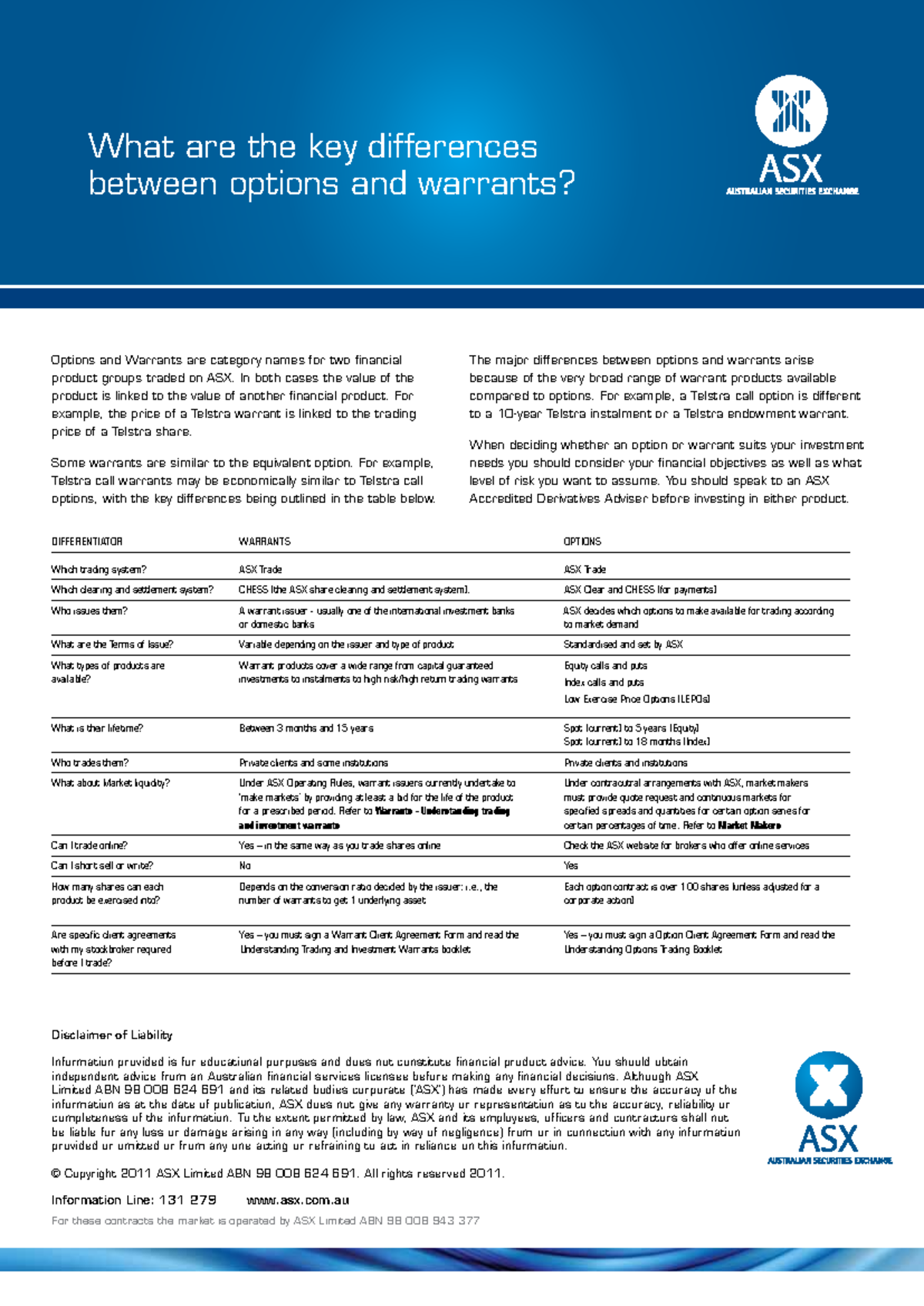
The following table summarizes the primary distinctions between warrants and options as they stand in 2026.
| Feature | Stock Options | Stock Warrants |
|---|---|---|
| Issuer | Other investors (via exchanges) | The company itself |
| Share Creation | No new shares; shares are transferred | Yes; new shares are issued |
| Dilution | None | Potential for equity dilution |
| Counterparty | The OCC (Options Clearing Corp) | The issuing corporation |
| Lifespan | Short-term (days to ~2.5 years) | Long-term (often 5 to 10 years) |
| Capital Impact | None for the company | Provides cash to the company |
| Standardization | High (standard strikes/dates) | Low (terms set by the company) |
| Trading Venue | Public Options Exchanges | Exchanges or Over-the-Counter |
Strategic Considerations for Investors
Choosing between warrants and options depends heavily on your investment horizon and your tolerance for liquidity risk.
Investors seeking to hedge a position or speculate on a quarterly earnings report will almost always prefer options. The high liquidity and narrow spreads allow for precise entry and exit points. Furthermore, the availability of "put" options allows investors to profit from a declining market, whereas "put warrants" are exceedingly rare in the corporate world.
On the other hand, an investor who is extremely bullish on a company’s five-year outlook might find warrants more attractive. The long expiration provides "time value" that is unavailable in the standard options market. However, one must carefully read the warrant agreement. Many warrants include "call provisions," which allow the company to force exercise if the stock price stays above a certain level for a specific period. This can cut short the investor’s anticipated timeframe.
Valuation Nuances
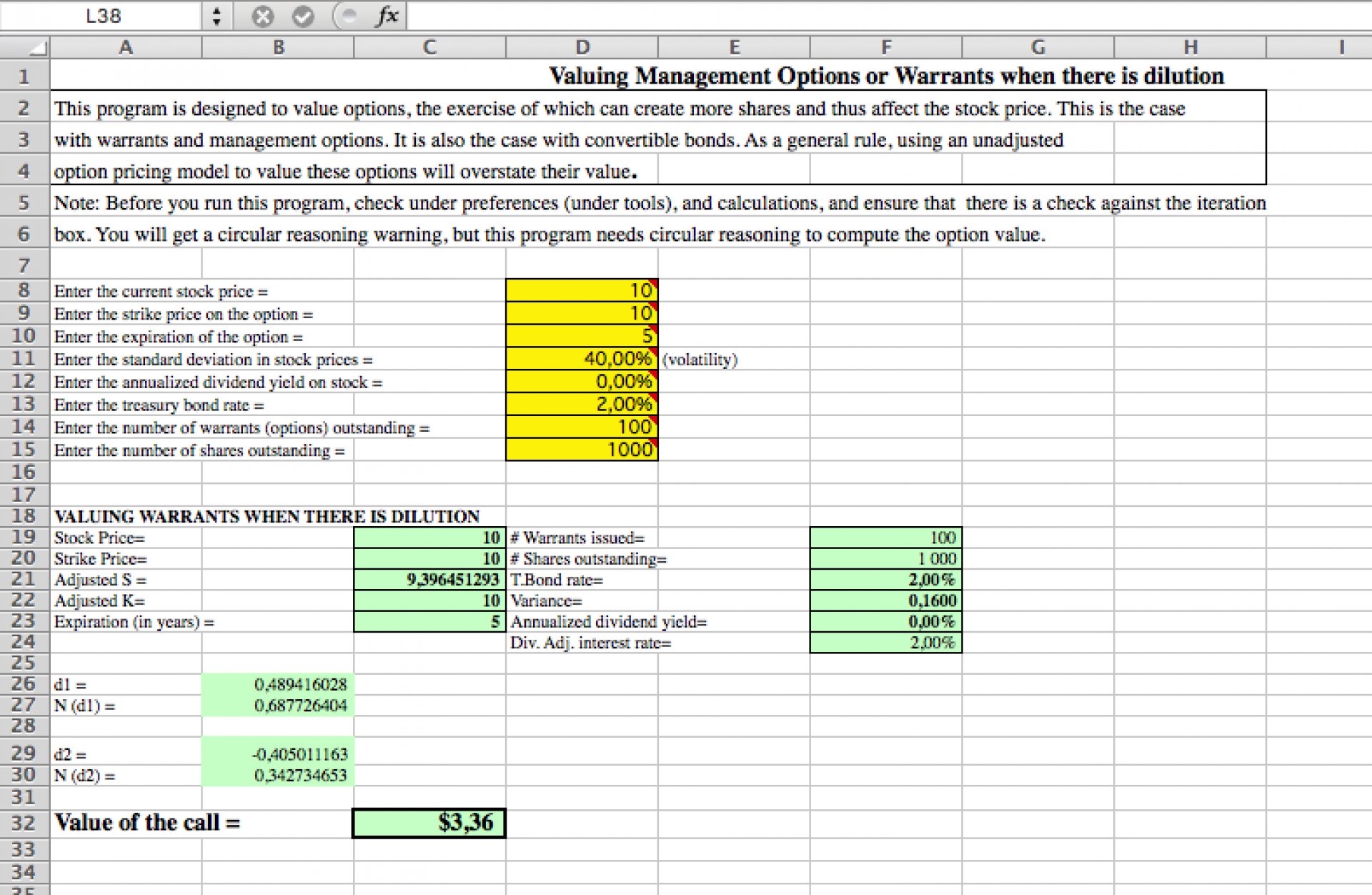
Valuing these instruments also requires different approaches. While the Black-Scholes model is the standard for options, valuing warrants requires a "dilution adjustment." Because the exercise of a warrant increases the total number of shares, the value of the underlying stock is technically reduced by the issuance. Professional traders use a modified Black-Scholes formula that incorporates the total number of outstanding warrants to arrive at a fair market price.
FAQ
Can a warrant expire worthless?
Yes. Like options, warrants have a strike price. If the underlying stock price remains below the strike price (for a call warrant) until the expiration date, the warrant loses all intrinsic value and expires worthless. This is known as "out-of-the-money" expiration.
How do I find the ticker symbol for a warrant?
Warrant ticker symbols vary by brokerage but often include a suffix. For example, if a company has the ticker "ABC," its warrants might be listed as "ABCWS," "ABC.W," or "ABC+." It is essential to check with your specific trading platform or the SEC's EDGAR database to verify the correct symbol and terms in the prospectus.
Are warrants taxed differently than options?
Generally, both are treated as capital assets in many jurisdictions, but the specific tax treatment can vary based on whether the warrants were compensatory (granted to employees) or investment-based. In the United States, the exercise of a warrant is typically not a taxable event, but the subsequent sale of the shares is. Investors should consult a tax professional regarding their specific 2026 tax obligations.
Why would a company choose to issue warrants instead of more stock?
Issuing warrants allows a company to raise capital in the future at a price that is usually higher than the current market price. It also acts as an incentive for investors to participate in debt or preferred stock offerings, effectively lowering the immediate cost of borrowing for the corporation.
Can I sell a warrant before it expires?
Yes, provided there is a secondary market for the warrant. If the warrant is listed on an exchange or traded OTC, you can sell it to another investor just like a stock or an option. However, be mindful that low trading volume can lead to wider bid-ask spreads, making it more expensive to exit the position.
Practical Recommendations
Before engaging with either warrants or options, investors should perform two critical actions:
- Review the Prospectus: For warrants, the terms are not standardized. You must read the specific warrant agreement or the company’s SEC filings (specifically the 424B3 or S-1 forms) to understand the expiration date, the strike price, and any "acceleration" or "call" clauses that allow the company to force an early exercise.
- Assess Liquidity: Check the average daily trading volume. If you are trading options, look at the open interest. If you are trading warrants, ensure there is enough volume to allow you to exit the position without incurring a significant "liquidity haircut."
For most retail participants, the standardized options market provides a safer, more transparent environment. Warrants should be reserved for those who have a deep understanding of a company's long-term capital structure and are comfortable with the specific risks of dilutive, long-dated securities.
Image Gallery