How a Double Header Game Reshapes Major League Baseball Strategy
A double header reshapes baseball strategy by expanding a team’s operational workload from 9 to 18 innings in a single day, turning roster management into a zero-sum resource allocation problem. Managers must balance bullpen conservati...
A double header reshapes baseball strategy by expanding a team’s operational workload from 9 to 18 innings in a single day, turning roster management into a zero-sum resource allocation problem. Managers must balance bullpen conservation, catchers' physical limits, and lineup rotation across both games, forcing fundamental adjustments to pitch counts, reliever leverage, and bench utilization.
Contents
The 18-Inning Problem: Resource Allocation Over Single-Game Optimization
In a standard Major League Baseball (MLB) game, a manager optimizes every tactical decision around winning that specific nine-inning contest. High-leverage relievers are deployed at the first sign of trouble in the seventh or eighth inning, pinch-hitters are burned early for incremental run expectancy gains, and starting pitchers are pulled as soon as their efficiency drops during their third trip through the batting order.
A double header completely dismantles this single-game isolation model. Playing 18 innings—or more, if extra innings are required—within an eight-to-ten-hour window forces a front office and field staff to manage two games as a singular 18-inning continuum.
- Standard Game Day:
- Game 1: 9 Innings
- 24 Hours Rest
- Game 2: 9 Innings
- Double Header Day:
- Game 1: 9 Innings
- 30-45 Min Rest
- Game 2: 9 Innings
The fundamental bottleneck in a double header is not positional depth; it is available pitching arms and strike-zone output. An MLB bullpen typically carries seven to eight relievers. If a starter pitches only four innings in Game 1, the bullpen must cover five innings immediately, leaving the team extremely vulnerable for Game 2 and the subsequent series days. Consequently, decision-making shifts from maximizing win probability in the current inning to mitigating total roster exhaustion across 48 hours.
Roster Mechanics: Deconstructing the 27th-Man Rule
To alleviate the strain of scheduled or split-ticket double headers, Major League Baseball allows teams to add a temporary 27th player to the active roster under MLB Roster Rules. While this rule provides brief relief, its operational usage reveals a team's underlying organizational strategy.
The Pitcher vs. Position Player Dilemma
Front offices almost universally use the 27th-man spot on a pitcher—typically a starting pitcher from Triple-A or a fresh multi-inning reliever.
- Spot Starter Strategy: Calling up a starting pitcher allows the team to preserve its regular five-man rotation without pushing every starter back on short rest. The 27th man takes the mound for one of the two games, tasked primarily with eating 80 to 100 pitches regardless of immediate performance.
- Bulk Reliever Strategy: If both regular starters are taking the mound, the 27th man acts as an insurance policy. If Game 1 degenerates into an early blowout, this reliever absorbs three to five low-leverage innings, keeping the core bullpen intact for Game 2.
Because the 27th player must be optioned or returned to the minor league affiliate immediately after the second game finishes, teams evaluate these players on durability and immediate availability rather than long-term high-leverage projection.
Pitching Dynamics: Starters, Relievers, and Leverage Index Shifts
Pitching deployment during a double header undergoes the most dramatic strategic shift seen in modern baseball. The concept of the Leverage Index (LI)—which measures the critical nature of a game situation—is fundamentally recalculated by managerial staffs during twin bills.
- Game 1 Starter
- Long Outing (6+ IP): Standard High-Leverage Bullpen Split
- Short Outing (<4 IP): High-Leverage Shutdown for Game 1
- Mop-Up Arms Used / "Sacrifice Game 1"
Extending the Starter's Leash
In a single game, a manager might pull a starter at 85 pitches in the fifth inning to prevent the opponent’s middle-of-the-order hitters from seeing the pitcher for a third time. In a double header, pulling that starter early creates a dangerous compound effect.
Managers are forced to leave starting pitchers in the game much longer, absorbing higher damage risks:
- Accepting Higher Run Expectations: A manager may allow a struggling starter to surrender two or three extra runs in the fifth and sixth innings if it saves three bullpen arms for Game 2.
- Pitch Count Extensions: Starters who normally cap out at 90 pitches may be pushed to 105–110 pitches if their efficiency allows them to record crucial extra outs.
The "Sacrifice Game" Phenomenon
One of the most drastic strategic outcomes of a double header is the calculated sacrifice. If Game 1 becomes a five-run deficit by the fourth inning, the manager will deliberately refrain from using high-leverage or mid-leverage relievers. Instead, the team will run low-leverage arms or bulk relievers out to finish the game, effectively lowering the win probability of Game 1 to near zero in order to protect an 80% to 90% optimal state for Game 2.
Lineup Construction and Position Player Load Management
Pitchers are not the only players whose workloads must be carefully managed. Modern sports science and biomechanical tracking dictate how fielders are rotated across 18 innings. Catchers, in particular, face extreme physical demands during double headers.
The Catching Split
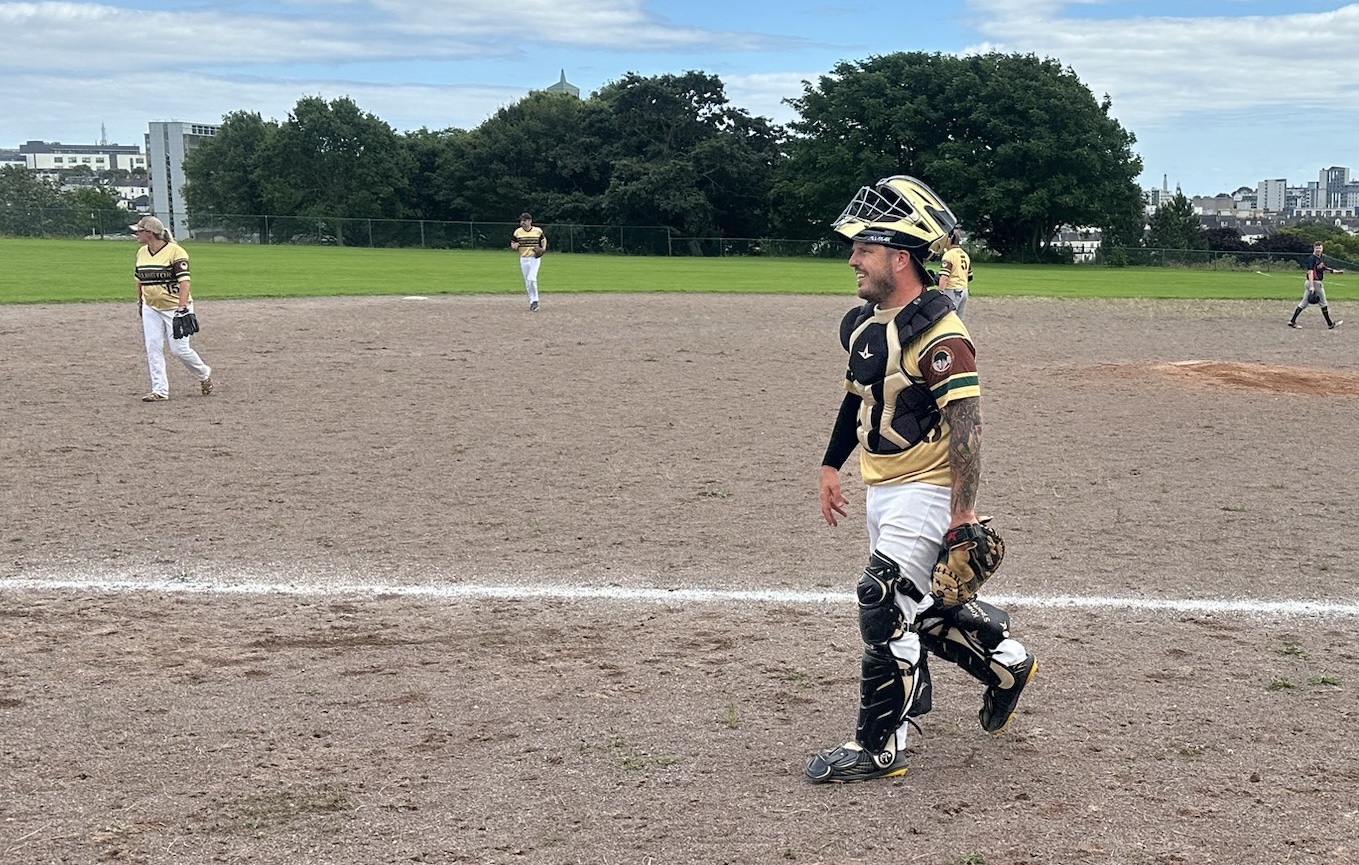
It is virtually unheard of in modern MLB for a catcher to start behind the plate for both ends of a double header. The physical stress of squatting, blocking, and framing over 300+ pitches in a six-to-eight-hour period leads to severe fatigue, elevated injury risk, and diminished offensive performance.
- Game 1: Primary Catcher (Defensive Priority)
- Game 2: Secondary Catcher / Primary DH
Managers handle catching rotations through two standard setups:
- Complete Swap: Backup catcher starts Game 1; primary catcher starts Game 2 (or vice versa).
- Catch-and-DH Rotation: The primary catcher catches Game 1, takes a short rest, and serves as the Designated Hitter (DH) in Game 2. This keeps his bat in the lineup while removing the physical toll of catching.
Mid-Game Defensive Replacements and Bench Depth
Bench management in a double header requires restraint. In a single game, double-swaps, pinch-running specialists, and defensive replacements are deployed aggressively from the seventh inning onward. In a double header, burning two bench players in Game 1 leaves the manager with limited tactical flexibility for Game 2.
If a starting outfielder suffers a minor cramp or tightness in Game 1, a manager must decide whether to use a bench asset immediately or preserve that player to start Game 2. Consequently, everyday regulars are frequently asked to play through minor fatigue in Game 1 so the bench remains fully stocked for lategame high-leverage situations in Game 2.
Strategic Comparison: Single Game vs. Double Header Dynamics
The operational differences between managing a standard individual game and managing a double header are outlined in the matrix below:
| Strategic Vector | Standard Single Game | Double Header (Game 1 & Game 2 Combined) |
|---|---|---|
| Starter Hook Aggressiveness | High (Pulled early at signs of fatigue or 3rd time through order) | Low (Extended to eat innings and protect bullpen capacity) |
| Bullpen Deployment | Matched strictly by leverage index and matchup advantage | Rationed based on cumulative 18-inning projection |
| 27th-Man Activation | N/A | Active (Typically a starter or multi-inning relief arm) |
| Catcher Utilization | Primary catcher plays full game | Split between two catchers or Catcher/DH rotation |
| Bench/Pinch Hitting | Aggressive (Burned early for high win-expectancy swings) | Conservative (Preserved to maintain coverage across both games) |
| Blowout Strategy | Rest key starters late; use standard low-leverage relievers | Consume maximum innings with lowest-tier arm or position player |
| Extra-Inning Tactics | Deploy top leverage arms immediately | Conserve remaining bullpen; sacrifice runs to avoid arm depletion |
The Influence of Modern MLB Rules on Double Header Tactics
The tactical landscape of MLB double headers has shifted considerably alongside recent rule updates. Understanding these changes clarifies how modern managers approach twin bills.
The Return to 9-Inning Standards
During the 2020 and 2021 seasons, MLB temporarily instituted seven-inning games for double headers to reduce player exposure during condensed schedules. This drastically favored teams with top-heavy, elite bullpens, as starters only needed to cover four or five innings before short-relievers closed out the game.
Under the current Collective Bargaining Agreement (CBA), double headers returned to the traditional nine-inning format. This change reinstated the massive endurance requirement on pitching staffs and re-elevated the strategic value of long-relievers and durable starting pitchers.
The Pitch Clock and Accelerated Fatigue
The introduction of the pitch clock has reduced real-time downtime between pitches. While this shortens the overall elapsed time of a double header (often finishing both games in under six total hours of field play), it increases the pacing intensity on players.
Pitchers have less time to recover between high-stress pitches, and catchers have less time to catch their breath between innings. As a result, managers must monitor fatigue metrics closely, as velocity dips and mechanical breakdowns happen faster under continuous pitch-clock conditions.
Extra-Innings Runner on Second ("Ghost Runner")
In regular-season double headers, the extra-inning rule places an automatic runner on second base starting in the 10th inning (governed under MLB Extra-Inning Rules). In a double header, this rule drastically changes home-vs-away decision making:
- Away Team Top 10th: Plays for Big Inning (Bunt rare, hitting for power)
- Home Team Bottom 10th: Plays for Single Run (Bunt runner to 3rd, sacrifice fly)
Because extended extra-inning games (12+ innings) can ruin a team's bullpen for an entire week, managers in double headers act with extreme aggression in extra innings—often walking the lead hitter intentionally to set up double plays or playing the infield in immediately to resolve the game as quickly as possible.
Tactical Asynchrony: How Game 1 Directly Dictates Game 2
A double header is rarely two symmetric events. Strategic decisions made in the first three hours dictate the constraints of the next three hours.
- GAME 1 OUTCOME
- Game 1: Early Lead / Smooth Win
- Primary bullpen rested
- Game 2 managed aggressively
- High leverage arms available
- Game 1: Extra Innings / Blowout Loss
- Bullpen exhausted / burned
- Game 2 managed defensively
- 27th man / mop-up arms forced to pitch
- Game 1: Early Lead / Smooth Win
Scenario A: The Clean Game 1 Win
If a team's Game 1 starter pitches seven strong innings and the offense builds a comfortable early lead, the manager can win Game 1 using only one setup man and a closer.
- Strategic Advantage for Game 2: The manager enters the second game with six fresh relievers, full bench flexibility, and the ability to use aggressive pinch-hitting or early bullpen hooks. The team operates from a position of tactical strength.
Scenario B: The Game 1 Emergency
If the Game 1 starter suffers an injury or gives up six runs in the second inning, the entire tactical structure collapses.
- Strategic Disadvantage for Game 2: The manager must burn four relievers just to complete Game 1. Heading into Game 2, the team has zero room for error. The Game 2 starter must pitch deep into the contest, regardless of how many runs he surrenders, because the bullpen simply does not have enough fresh arms left to pitch five more innings.
Practical Application for Analysts and Bettors
Evaluating baseball teams during a double header requires looking beyond simple season-long statistics. When analyzing team odds, player prop projections, or tactical performance during double headers, evaluate these three key indicators:
- Bullpen Usage over the Preceding 72 Hours: A team entering a double header with an already taxed bullpen will be forced to leave struggling starters in games much longer, drastically increasing opponent run totals late in games.
- The 27th Man Identity: Identify who the team called up. A fresh, high-velocity Triple-A starter signals that the team intends to treat Game 1 normally. A low-tier mop-up reliever indicates the front office expects to rely heavily on its primary rotation and is merely covering for a potential disaster.
- Catcher Defensive Splitting: Check which game features the backup catcher. Teams often experience significant drops in framing rates, passed-ball prevention, and stolen-base suppression when starting secondary catchers, directly impacting run environments.
Frequently Asked Questions
Why do MLB teams rarely let catchers play both games of a double header?
Catching 18 innings in a single day imposes severe physical strain on a player's knees, back, and cardiovascular system. The physical fatigue degrades blocking, pitch framing, and pop time behind the plate, while drastically lowering the catcher's offensive performance at the plate.
How does the 27th-man rule work in an MLB double header?
Teams are allowed to temporarily expand their active roster from 26 to 27 players for the day of a scheduled or split double header. This 27th player—usually a pitcher—is added specifically for that day and must be optioned back down to the minor leagues immediately after the second game concludes.
Are double headers still 7 innings in MLB?
No. MLB used seven-inning double headers temporarily during the 2020 and 2021 seasons under pandemic protocol rules. Beginning in the 2022 season and continuing under current CBA rules, all regular-season double header games returned to the standard nine-inning format.
How does a pitch clock affect double header strategy?
The pitch clock accelerates game pacing, reducing real-time rest between pitches and innings. While it shortens the real-world time spent at the ballpark, it increases physical fatigue rates for pitchers and catchers, forcing managers to monitor velocity drops and fatigue metrics more closely across both games.
Is it better to use your best starter in Game 1 or Game 2 of a double header?
Managers generally prefer starting their stronger, more durable pitcher in Game 1. A deep outing from a top starter in Game 1 protects the bullpen early, leaving the team with maximum operational flexibility and fresh leverage arms to navigate Game 2.
Practical Next Actions
When evaluating team performance or betting markets for an upcoming double header, follow this execution sequence:
- Check the Active Roster Transaction Log: Verify the identity and recent workload of the activated 27th man via the official team transactions portal before first pitch.
- Audit 3-Day Reliever Availability: Count the pitch loads of the team's top three high-leverage relievers over the preceding three days to determine if they are available for both games or capped at one.
- Review Lineup Cards at Game 1 Release: Confirm which game features the primary catcher and how the Designated Hitter slot is being used to protect core offensive starters from full defensive fatigue.
Image Gallery