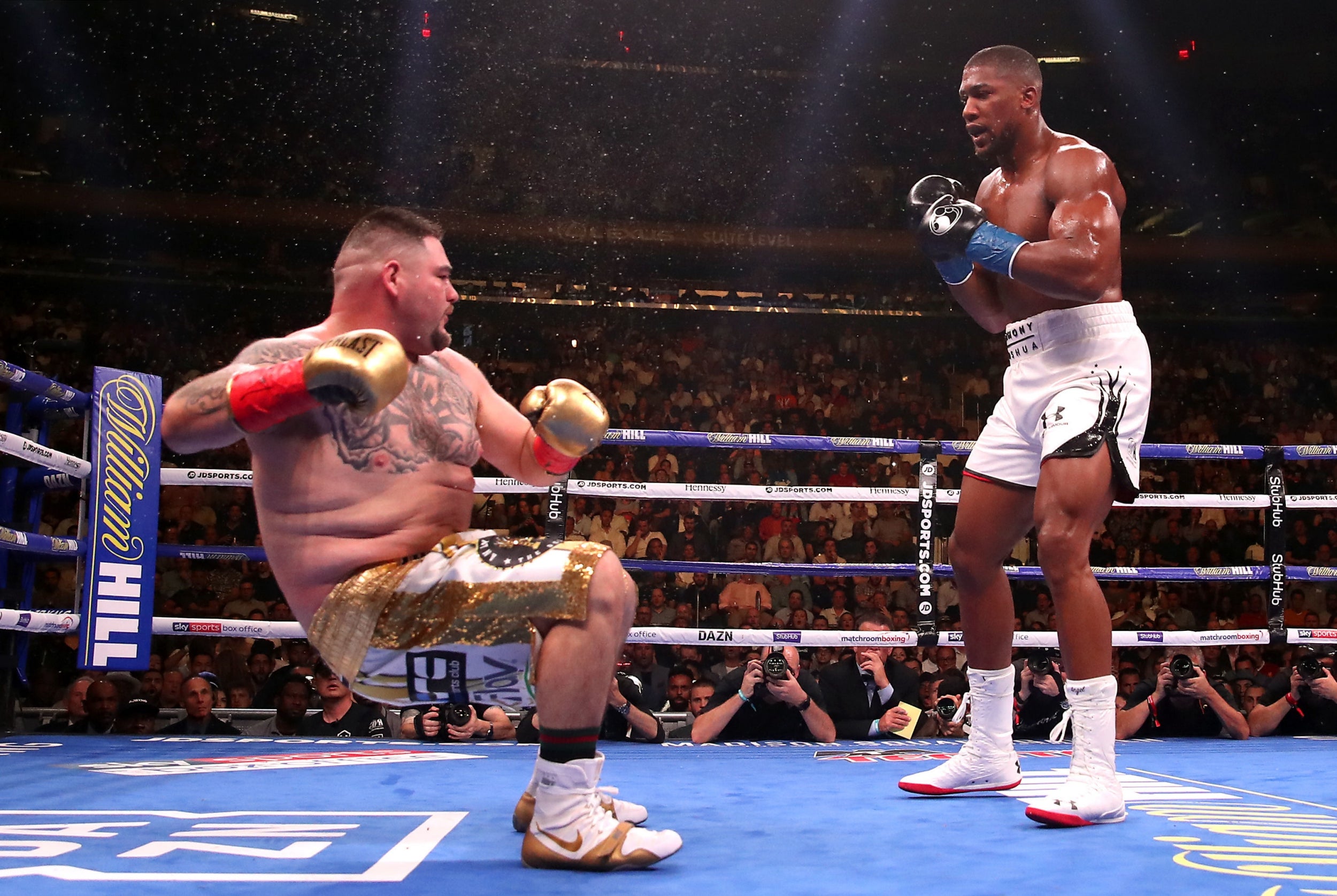
AJ vs Ruiz Rematch December 2019 Decision: Official Scorecards and Fight Analysis
In the December 7, 2019 rematch titled "Clash on the Dunes" in Diriyah, Saudi Arabia, Anthony Joshua defeated Andy Ruiz Jr. via a clear unanimous decision after 12 rounds. Judges Steve Gray and Benoit Roussel scored the fight 118–110,...
In the December 7, 2019 rematch titled "Clash on the Dunes" in Diriyah, Saudi Arabia, Anthony Joshua defeated Andy Ruiz Jr. via a clear unanimous decision after 12 rounds. Judges Steve Gray and Benoit Roussel scored the fight 118–110, while judge Glenn Feldman scored it 119–109, allowing Joshua to officially regain his unified WBA (Super), IBF, WBO, and IBO heavyweight titles.
Contents
Official Decision and Judges' Scorecards
The December 2019 rematch between British heavyweight contender Anthony Joshua and Mexican-American champion Andy Ruiz Jr. concluded without a knockout, contrasting sharply with their dramatic first fight. After 12 full rounds of technical ringcraft, referee Michael Alexander gathered both fighters in the center of the ring to read the official judges' scorecards:
- Judge Steve Gray (United Kingdom): 118–110 for Anthony Joshua (10 rounds to 2)
- Judge Benoit Roussel (Canada): 118–110 for Anthony Joshua (10 rounds to 2)
- Judge Glenn Feldman (United States): 119–109 for Anthony Joshua (11 rounds to 1)
All three judges awarded the victory comfortably to Joshua. On two scorecards, Ruiz was credited with winning only two rounds (typically rounds 4 and 8, where he managed to land short inside combinations). On the third scorecard, Ruiz received credit for just a single round.
Official Result: Anthony Joshua def. Andy Ruiz Jr. via Unanimous Decision (118-110, 118-110, 119-109)
The verdict restored Joshua as a two-time unified world heavyweight champion, enabling him to join an elite group of heavyweights who successfully reclaimed lost titles in immediate rematches, such as Muhammad Ali, Lennox Lewis, and Evander Holyfield.
Context of the Rematch: From New York Upset to Saudi Arabia
To understand the weight of the December 2019 decision, one must look at the precedent set six months prior. On June 1, 2019, at Madison Square Garden in New York City, Andy Ruiz Jr. stepped in as a late replacement for Jarrell Miller. Entering as a 15-to-1 underdog, Ruiz shocked the combat sports world by surviving a third-round knockdown, flooring Joshua four times in return, and stopping him via seventh-round technical knockout (TKO).
That initial fight disrupted the heavyweight division, handing Joshua the first professional defeat of his career and costing him four world titles. Joshua immediately exercised his contractual rematch clause.
Matchroom Boxing secured Diriyah, Saudi Arabia, as the neutral venue for the return bout, constructing a purpose-built 15,000-seat outdoor stadium known as the Diriyah Arena specifically for the event. Promoted as the "Clash on the Dunes," the rematch presented high-stakes pressure: another loss for Joshua would have severely damaged his status at the top tier of world boxing, while a victory for Ruiz would have consolidated his position as a primary heavyweight champion.
Tactical Breakdown: How Anthony Joshua Reclaimed the Belts
The outcome of the December 2019 decision was shaped by stark differences in physical preparation, tactical discipline, and distance control between the two fighters.
AJ vs. Ruiz II Tactical Dynamics
- Anthony Joshua
- Trimmed down to 237lb
- Out-gamed with lead jab
- Maintained distance
- Clinched inside range
- Andy Ruiz Jr.
- Weighed in at 283.7lb
- Struggled to cut ring
- Depended on counters
- Slowed foot mobility
1. Weight and Physical Conditioning
At the official weigh-in preceding the December 7 bout, both fighters displayed contrasting physical directions:
- Anthony Joshua: Weighed in at 237 lbs (107.5 kg), which was 10.75 lbs lighter than his weight in the first fight (247.75 lbs) and his lightest fighting weight since 2014. Trimming down enhanced his cardiovascular capacity and lateral foot movement over 12 full rounds.
- Andy Ruiz Jr.: Weighed in at 283.7 lbs (128.7 kg), roughly 15 lbs heavier than his weight in the first match (268 lbs). The additional weight compromised his stamina, hand speed, and ability to close spatial gaps inside the ring.
2. Distance Control and Use of the Lead Jab
In the first fight, Joshua engaged Ruiz in high-risk, mid-range brawls, exposing himself to Ruiz’s quick hand-speed counterpunches. In the rematch, Joshua and head trainer Rob McCracken adopted a mobile, jab-centric strategy modelled after classic box-and-move champions.
Joshua used his superior 82-inch reach to keep the 74-inch reach of Ruiz at maximum distance. By pumping a hard, double-lead jab throughout the contest, Joshua constantly reset Ruiz's feet, prevented linear entries, and established control over the tempo of the fight.
3. Ring Generalship and Lateral Movement
Instead of backing up in straight lines—which allowed Ruiz to catch him at Madison Square Garden—Joshua circled continuously to his left and right, staying off the center line. When Ruiz attempted to press forward, Joshua stepped laterally, cutting angles and forcing Ruiz to turn his heavy body around, draining the champion's energy reserves.
4. Tactical Clinching Inside Range
Whenever Ruiz managed to navigate inside Joshua's lead jab, Joshua immediately tied up Ruiz's arms in an upper-body clinch, neutralizing Ruiz's dangerous hooks on the inside. Referee Michael Alexander allowed standard inside work before breaking the fighters, preventing Ruiz from working effectively in close quarters.
Statistical Breakdown: Official Fight Data
The official fight metrics recorded by CompuBox demonstrate how effectively Joshua limited Ruiz's offensive output compared to their initial June meeting.
| Statistical Metric | Anthony Joshua | Andy Ruiz Jr. |
|---|---|---|
| Official Result | Won via Unanimous Decision | Lost via Unanimous Decision |
| Judge Steve Gray Scorecard | 118 | 110 |
| Judge Benoit Roussel Scorecard | 118 | 110 |
| Judge Glenn Feldman Scorecard | 119 | 109 |
| Official Weigh-In Weight | 237.0 lbs (107.5 kg) | 283.7 lbs (128.7 kg) |
| Height / Reach | 6'6" (198 cm) / 82" (208 cm) | 6'2" (188 cm) / 74" (188 cm) |
| Total Punches Landed / Thrown | 107 / 373 (28.7%) | 60 / 261 (23.0%) |
| Jabs Landed / Thrown | 65 / 270 (24.1%) | 23 / 130 (17.7%) |
| Power Punches Landed / Thrown | 42 / 103 (40.8%) | 37 / 131 (28.2%) |
| Titles Impacted | Reclaimed WBA, IBF, WBO, IBO | Conceded WBA, IBF, WBO, IBO |
Data source: Official CompuBox match compilation records.
Round-by-Round Progression
- Round 1-3: Out-Boxing
- Sharp straight right
- Cuts open early
- Round 4-8: Mid-Game Control
- Controlled distance
- Neutralized inside hooks
- Round 9-12: Championship Closure
- Maintained cardiovascular pace
- Avoided dangerous exchanges
Rounds 1 to 3: Establishing the Range
Joshua opened the bout with strict tactical discipline. In Round 1, he connected with a sharp straight right hand near the end of the frame that opened a cut above Ruiz’s left eye. Ruiz landed his own right hand in Round 2 that caused a minor cut above Joshua’s left eye, but Joshua quickly re-established jab range, refusing to engage in wild exchanges.
Rounds 4 to 8: Neutralizing the Champion
Ruiz had his most competitive moments in Rounds 4 and 8, briefly catching Joshua with short hooks during rare breaks in distance. However, Joshua remained calm, clinching immediately whenever Ruiz closed space. By Round 6, Joshua was systematically controlling the ring center with his left jab and occasional right cross, while Ruiz began to show signs of fatigue due to his elevated ring weight.
Rounds 9 to 12: Closing Out the Victory
In the championship rounds, Ruiz urged Joshua to stand and fight in the middle of the ring. Remaining disciplined, Joshua refused to take the bait. He stayed on the outside, firing long jabs and left hooks off the back foot. By the end of the 12th round, Joshua had safely coasted to a definitive points decision without suffering any significant knockdowns or heavy damage.
Post-Fight Admissions and Career Trajectory
The post-fight reactions underscored two distinct narratives regarding preparation and execution:
Andy Ruiz Jr.'s Admission
During the post-fight press conference, Ruiz was transparent about his lack of conditioning and flawed training camp:
"I didn't prepare the way I should have. I gained too much weight. I don't want to give excuses, but three months of partying and celebrating affected me. I should have taken it more seriously."
Ruiz acknowledged that carrying 283 lbs made him sluggish, leaving him unable to cut off the ring or throw his trademark combinations against a moving opponent.
Anthony Joshua's Tactical Realignment
For Joshua, the victory was a validation of strategic boxing over raw knockout hunting:
"I stayed disciplined. I know the fans wanted to see a knockout, but sweet science is about hitting and not getting hit. I proved to myself that I can outbox world-class fighters."
The win restored stability to Joshua's career, paving the way for mandatory title defenses against Kubrat Pulev in late 2020 and subsequent heavyweight clashes against Oleksandr Usyk.
Frequently Asked Questions
Who won the AJ vs Ruiz rematch in December 2019?
Anthony Joshua won the rematch by unanimous decision after 12 rounds, regaining the WBA (Super), IBF, WBO, and IBO heavyweight world titles.
What were the official scorecards for Joshua vs Ruiz 2?
The three ringside judges scored the fight as follows: Steve Gray scored it 118–110, Benoit Roussel scored it 118–110, and Glenn Feldman scored it 119–109, all in favor of Anthony Joshua.
How much did both fighters weigh for the December 2019 rematch?
Anthony Joshua weighed in at 237 lbs (107.5 kg), trimming down nearly 11 lbs from their first bout. Andy Ruiz Jr. weighed in at 283.7 lbs (128.7 kg), coming in roughly 15 lbs heavier than he was in the first fight.
Why did Andy Ruiz lose the decision in the rematch?
Ruiz lost primarily due to his inability to cut off the ring against Joshua's lateral movement and stiff jab. Carrying excess weight reduced Ruiz's foot speed and stamina, making it difficult for him to land multi-punch combinations inside.
Where was the AJ vs Ruiz 2 fight located?
The rematch took place at the custom-built, temporary 15,000-seat Diriyah Arena in Diriyah, Saudi Arabia, on December 7, 2019.
Key Takeaways for Combat Sports Analysts
The December 2019 decision between Anthony Joshua and Andy Ruiz Jr. remains a classic study in tactical adaptations for heavyweight boxing:
- Preparation and Conditioning Beat Raw Power: Joshua lowered his body mass to improve his cardiovascular endurance over 12 rounds, while Ruiz's lack of conditioning restricted his offensive output.
- Distance Management Controls Outcomes: A well-executed lead jab coupled with lateral footwork can neutralize a dangerous inside puncher, preventing high-risk brawls.
- Strategic Discipline: Adapting to an opponent's strengths by making tactical adjustments—rather than repeating previous mistakes—is essential when reclaiming world championship titles.
Image Gallery