Why Virginia is a Blue State: The Demographic and Political Shift
Virginia’s transition into a blue state is primarily driven by the massive population growth and demographic diversification of Northern Virginia (NoVa), the Richmond metropolitan area, and Hampton Roads. High levels of educational att...
Virginia’s transition into a blue state is primarily driven by the massive population growth and demographic diversification of Northern Virginia (NoVa), the Richmond metropolitan area, and Hampton Roads. High levels of educational attainment, a burgeoning federal workforce, and a shift in suburban voting patterns have created a consistent Democratic advantage in statewide and federal elections.
Contents
For decades, the Commonwealth of Virginia was a reliable pillar of the Republican Party’s "Solid South." From 1952 to 2004, Virginia voted for the Republican presidential candidate in every election except for Lyndon B. Johnson’s 1964 landslide. However, the dawn of the 21st century brought a seismic shift. By 2026, Virginia has solidified its status as a Democratic-leaning state in federal contests, even as it maintains a competitive "purple" streak in internal state-level politics. Understanding this transformation requires an analysis of geography, economics, and the changing face of the American voter.
The Engine of Change: Northern Virginia (NoVa)
The most significant factor in Virginia’s political realignment is the explosive growth of Northern Virginia. Counties such as Fairfax, Loudoun, and Prince William, along with the cities of Alexandria and Arlington, have transformed from sleepy DC suburbs into a massive, high-tech economic engine.
In the mid-20th century, these areas were far less populated and leaned conservative. Today, Fairfax County alone has more than 1.1 million residents, making it more populous than several U.S. states. The political behavior of this region is overwhelmingly Democratic. As the federal government expanded and the technology sector (anchored by "Data Center Alley" in Loudoun County) boomed, the region attracted a highly mobile, diverse, and educated workforce.
This "NoVa effect" often offsets the Republican margins produced in the state’s rural South and West. In modern elections, a Democratic candidate who carries Northern Virginia by significant margins—often exceeding 60% or 70% in certain jurisdictions—creates a mathematical hurdle that is nearly impossible for Republican candidates to overcome without significant suburban outreach elsewhere.
The Demographic Diversification of the Commonwealth
Virginia’s blue shift is inextricably linked to its changing racial and ethnic composition. The state has moved from a largely biracial society (Black and White) to a multi-ethnic one. According to U.S. Census Bureau data, the Hispanic and Asian American populations in Virginia have grown at rates far outpacing the national average over the last twenty years.
- Asian American Growth: Concentrated largely in Northern Virginia, the Asian American community has become a decisive voting bloc. This demographic frequently prioritizes education, healthcare, and immigration reform—issues where the modern Democratic platform often finds more resonance.
- Hispanic/Latino Population: Growth in Prince William and Chesterfield counties has introduced a significant Latino vote that has trended Democratic in recent federal cycles, though it remains a key "persuadable" group that both parties contest.
- The Black Vote: Historically, Virginia’s Black population has been the backbone of the Democratic Party. As Black professionals have moved into suburban areas like Henrico County (outside Richmond) and Chesapeake (in Hampton Roads), they have turned previously "red" or "purple" districts into Democratic strongholds.
The Education Gap and Professional Realignment
One of the most reliable predictors of voting behavior in the 2020s is educational attainment. Virginia is one of the most highly educated states in the Union. The presence of major research universities, the Pentagon, and high-tech hubs like the Dulles Technology Corridor means that a large percentage of the population holds at least a bachelor’s degree.
Data from the University of Virginia Center for Politics indicates a widening "diploma divide." College-educated voters, particularly women in suburban environments, have moved away from the Republican Party since 2016. In Virginia, this shift was visible in the 2017 and 2019 state legislative elections, where Democrats flipped dozens of seats in suburban districts that were once comfortably Republican. These voters tend to favor social liberalism, environmental protections, and robust public funding for infrastructure—priorities that align with the current Democratic agenda.
The "Urban Crescent" vs. Rural Virginia
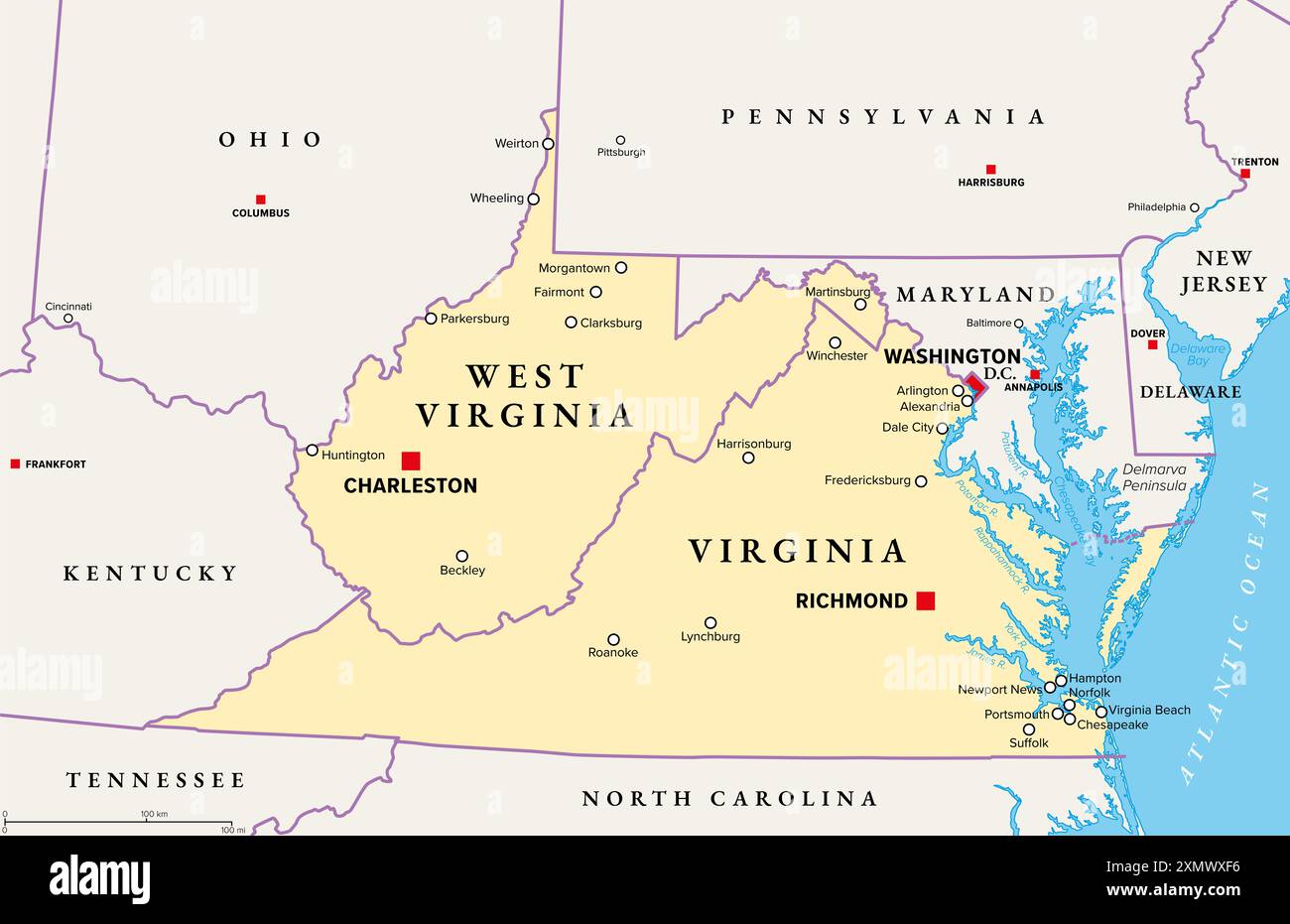
To understand Virginia's "blue" status, one must look at the "Urban Crescent." This geographic arc runs from Northern Virginia down through Fredericksburg to Richmond, and then east to the Hampton Roads area (Norfolk, Virginia Beach, Newport News).
| Region | Primary Political Lean | Economic Drivers | Key Jurisdictions |
|---|---|---|---|
| Northern Virginia | Deep Blue | Federal Govt, Tech, Defense | Fairfax, Loudoun, Arlington |
| Richmond Metro | Blue / Lean Blue | Finance, Government, Arts | Richmond City, Henrico, Chesterfield |
| Hampton Roads | Lean Blue | Military, Shipbuilding, Tourism | Norfolk, Newport News, Hampton |
| Southside / Southwest | Deep Red | Agriculture, Manufacturing, Energy | Roanoke (County), Lynchburg, Abingdon |
| Shenandoah Valley | Red | Agriculture, Education, Tourism | Rockingham, Augusta, Frederick |
The Urban Crescent contains the vast majority of the state’s population and wealth. While rural Virginia remains staunchly Republican—often delivering 70% to 80% of the vote to GOP candidates—the sheer volume of voters in the Crescent allows Democrats to win statewide even if they lose 70 out of Virginia’s 95 counties. By 2026, the concentration of population in these urban/suburban hubs has only intensified, further insulating the Democratic advantage in statewide "winner-take-all" contests like the presidency.
The Federal Workforce and Economic Stability
Virginia’s economy is uniquely tied to the federal government. With the Pentagon, the CIA, and countless federal agencies headquartered in the state, Virginia is a top recipient of federal procurement spending. This creates a workforce that is generally more supportive of government stability and federal investment.
When the national Republican Party emphasizes government shutdowns or significant cuts to federal agencies, it often alienates Virginia voters whose livelihoods depend on those agencies or the contractors that support them. The Democratic Party’s traditional support for civil service protections and federal funding has made it a "safer" choice for the hundreds of thousands of Virginians employed by or through the U.S. government.
Policy Shifts and Legislative Control
The transition to a blue state isn't just about how people vote for President; it's about the laws that have been passed. When Democrats gained full control of the state government in 2020 (the "trifecta" of the House of Delegates, State Senate, and Governor), they passed a series of landmark bills that reflected the state’s new political identity. These included:
- The Virginia Clean Economy Act: Transitioning the state toward 100% carbon-free energy.
- Voting Rights Expansion: Implementing no-excuse absentee voting and making Election Day a state holiday.
- Healthcare Expansion: Codifying protections for reproductive rights and expanding Medicaid.
- Gun Control: Implementing "red flag" laws and universal background checks.
Even when Republicans regained the Governorship in 2021 with Glenn Youngkin, the legislative math remained difficult for the GOP, as the state’s shifting demographics continued to favor Democratic candidates in the Senate. As of 2026, these policy shifts have become normalized within the state's legal framework, making it difficult for the GOP to move the state back to its former conservative roots without alienating the suburban middle.
Frequently Asked Questions
Is Virginia still considered a swing state?
In presidential elections, Virginia is no longer considered a "toss-up" swing state. It is classified as "Lean Blue." While it is not as solidly Democratic as Maryland or Massachusetts, the Republican path to victory in Virginia requires a specific set of circumstances—such as high rural turnout and a significant decline in suburban Democratic enthusiasm—that have not occurred in a federal election since 2004.
How did Glenn Youngkin win in 2021 if Virginia is blue?
Republican Glenn Youngkin won the 2021 gubernatorial race by focusing on state-specific issues like education and the economy, while distancing himself slightly from the national GOP brand. His victory showed that Virginia remains "purple" at the state level, where voters are more willing to split their tickets based on local concerns, even if they vote Democratic for President.
What role does the military play in Virginia's politics?
Virginia has one of the highest concentrations of active-duty military and veterans in the country, particularly in the Hampton Roads region. Historically, this group leaned Republican. However, the military vote has become more split in recent years, with younger service members and diverse military families increasingly voting for Democratic candidates, contributing to the shift in Norfolk and Virginia Beach.
Will redistricting change Virginia's blue status?
Virginia adopted an independent redistricting commission to prevent extreme gerrymandering. While this ensures more competitive districts, it does not change the fundamental reality that Democratic voters are concentrated in the most populous parts of the state. Redistricting has generally made the House of Delegates more reflective of the state's 50/50 or 55/45 Democratic lean.
Does the "Trump Effect" impact Virginia's lean?
Yes. The political style and policies associated with Donald Trump were particularly unpopular in the affluent, highly educated suburbs of Northern Virginia. This accelerated the exit of "Moderate Republicans" from the party, many of whom have become reliable Democratic voters or independents who lean blue.
Practical Recommendations for Analysts and Voters
For those tracking Virginia’s political trajectory toward the late 2020s, focus on suburban turnout metrics in Chesterfield and Henrico counties. These areas are the "tipping point" of the state; if Republicans are winning here, the state is in play. If Democrats maintain double-digit leads in these Richmond suburbs while dominating NoVa, the state will remain firmly in the blue column for federal contests.
Observers should also monitor the Virginia Department of Elections for updated registration data, as the influx of new residents continues to reshape the electorate. For voters, understanding that Virginia's influence now comes from its status as a suburban powerhouse rather than a rural stronghold is key to navigating the Commonwealth's modern political landscape.
Image Gallery