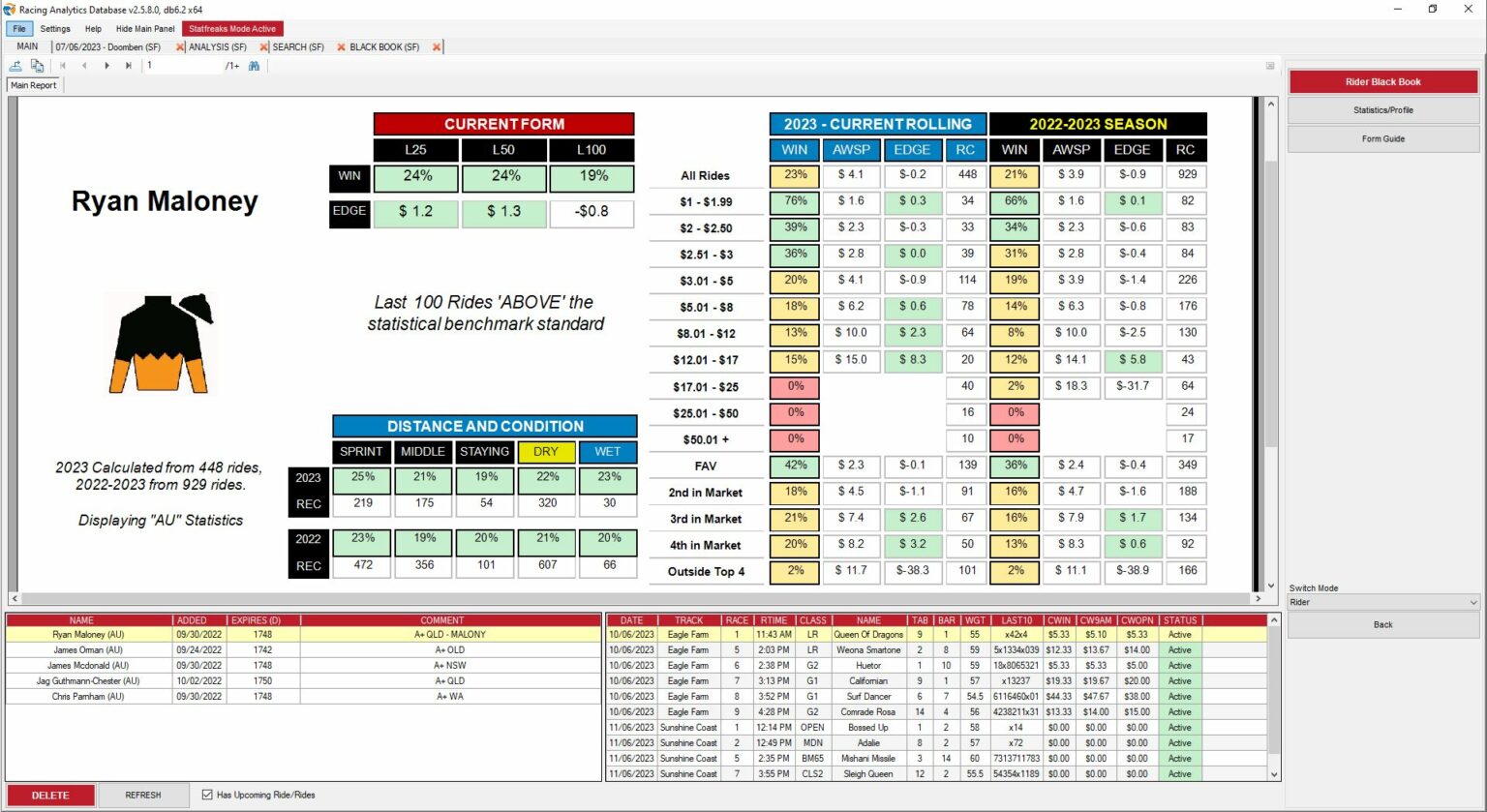
The Ultimate Guide to Horse Racing Stats Databases in 2026
Evaluating equine performance data requires moving past basic past performances to leverage a comprehensive horse racing stats database. Modern handicappers, bloodstock agents, and turf researchers demand granular historical metrics, a...
Evaluating equine performance data requires moving past basic past performances to leverage a comprehensive horse racing stats database. Modern handicappers, bloodstock agents, and turf researchers demand granular historical metrics, automated modeling capabilities, and real-time biometric feeds to maintain an edge in 2026.
Contents
Anatomy of a Modern Equine Analytics Repository
A professional-grade horse racing stats database goes far beyond simple finishing positions and race times. It functions as a complex relational database architecture linking pedigree analytics, track condition modifiers, trainer/jockey combinations, and raw sectional timing.
Core Data Layers
- Pedigree and Conformation Metrics: Tracks sire and dam production statistics, turf versus dirt breeding coefficients, auction purchase prices, and physical auction inspection notes.
- Biomechanical and Speed Figures: Integrates proprietary speed ratings, energy distribution figures, late-pace acceleration numbers, and stride-length telemetry gathered from GPS saddlecloths.
- Environmental and Surface Variables: Records moisture content readings from Turf-Trax systems, rail movements, wind velocity, and ambient barometric pressure at the exact post time.
- Financial and Wagering Liquidity Logs: Stores historical pool distributions, exacta/trifecta carryovers, fixed-odds fluctuations, and syndicate betting volumes.
Comparative Overview of Major Data Providers
Choosing the right database depends on whether your workflow prioritizes global race analysis, North American daily handicapping, or high-frequency algorithmic wagering. The market features several distinct platforms tailored to different user requirements.
| Database Platform | Primary Geographical Focus | Key Technical Feature | Best Suited For |
|---|---|---|---|
| Equibase Advanced Analytics | North America | Official regulatory chart integration and raw XML feeds | Professional handicappers and statisticians |
| Racing Post Pro Data | UK & Ireland | Comprehensive sectional times and historic tissue prices | European turf analysts and bloodstock investors |
| Trackmaster Equine Cloud | Global | Customizable query builders and API connectivity | Algorithmic model builders and syndicate managers |
| Formulator Pro Suite | North America | Fully interactive past performances with custom filtering | Daily racebook bettors and speed-figure makers |
Constructing Custom Queries for Handicapping Edge
Raw data storage yields little value without precise query formulation. Advanced users utilize SQL-based interfaces or platform-specific filtering tools to isolate situational anomalies that public morning-line odds often miss.
Isolating Trainer Angle Efficiencies Query Parameters: Filter trainers starting horses on dirt-to-turf routes for the first time, specifically following a layoff of 90 to 180 days, while operating at a circuit where they maintain a 15% or higher win rate over the past calendar year. Operational Insight: Databases allowing multi-variable conditional filtering expose overpriced public favorites and unearth live longshots whose conditioning patterns match historical profit zones.
Evaluating Speed Figures and Sectional Fractions
Understanding how different databases process raw race times prevents costly handicapping errors. A standard time is never truly standard; it must be adjusted for track variant, wind drag, and energy distribution.
The Mathematics of Pace Integration
- Initial Energy Expenditure: Measuring the first two furlongs against the overall race par to determine if a speed horse faces pressure.
- Mid-Race Lull Analysis: Calculating deceleration rates through the middle markers to isolate stamina reserves.
- Late-Pace Kick Extraction: Comparing final sectional fractions against the race average to highlight closers that finished with significant momentum despite ground loss.
Pros and Cons of Cloud-Based Versus Local Databases
Maintaining your own local PostgreSQL or MySQL instance loaded with raw data files offers ultimate flexibility, whereas cloud-hosted subscription platforms provide convenience and pre-calculated figures.
Cloud-Hosted Solutions
- Pros: Automatic updates, zero maintenance overhead, instant API access, and cloud-backed historical archives.
- Cons: Recurring monthly subscription fees, restrictive API rate limits, and limited ability to alter proprietary underlying algorithms.
Self-Hosted Local Archives
- Pros: Complete ownership of data, zero recurring extraction costs, and infinite capability to build custom machine-learning prediction models.
- Cons: Demands advanced database administration skills, requires manual downloading of daily chart files, and needs significant local storage architecture.
Step-by-Step Guide to Integrating API Data Feeds
Building an automated handicapping model requires continuous data ingestion from a reliable statistical provider. Follow this workflow to establish a secure, automated data pipeline.
- Establish API Authentication: Secure your developer keys, configure OAuth 2.0 tokens, and set up secure environment variables within your application framework.
- Schedule Daily Batch Pulls: Program cron jobs or cloud functions to ingest race cards, morning-line odds, and scratch reports approximately 24 hours prior to post time.
- Execute Data Normalization: Run automated cleaning scripts to standardize track condition codes, distance abbreviations, and medication statuses across different racing jurisdictions.
- Trigger Predictive Models: Feed the cleaned matrix into your statistical algorithms to generate value ratings and automated wagering alerts.
Frequently Asked Questions
What is the most reliable horse racing stats database for North American racing?
Equibase remains the official and most comprehensive database for North American racing, providing direct access to regulatory charts, workouts, and historical results. Professional handicappers often pair Equibase raw data feeds with specialized analytical software for custom modeling.
How do modern databases account for track variant changes?
Modern platforms calculate variant changes by comparing the raw times of every race on a specific card against historical track benchmarks, adjusting for track moisture and maintenance profile shifts throughout the day.
Can I access historical sectional timing through these databases?
Yes, premium database tiers provide access to micro-sectional data, GPS tracking metrics, and point-of-call positional tracking for major racing circuits globally.
Are cloud-based racing databases suitable for automated betting bots?
Cloud-based options with robust API endpoints are ideal for automated betting systems, provided the platform guarantees low-latency data delivery during peak wagering windows.
What technical skills are required to build a custom handicapping database?
Building a local database requires proficiency in SQL, experience with Python or R for data parsing, and familiarity with JSON or XML data structures used by racing data vendors.
Conclusion
Mastering a horse racing stats database transforms handicapping from a guessing game into a rigorous exercise in quantitative analysis. By selecting the right data provider, leveraging precise situational queries, and maintaining clean data pipelines, turf researchers can consistently uncover market inefficiencies and optimize their wagering strategies.
Image Gallery