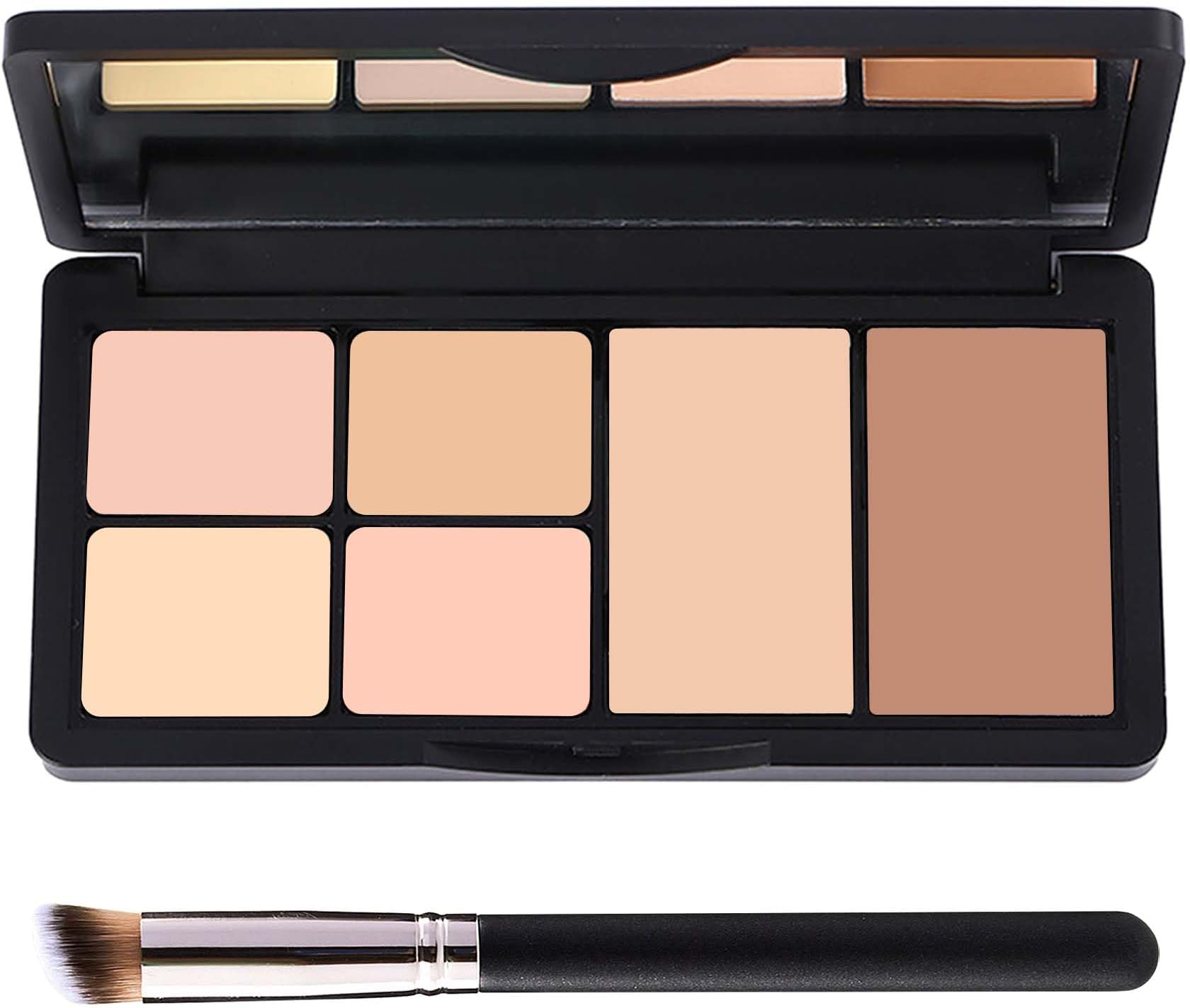
How to Choose a Professional Contour Palette
To choose a professional contour palette, prioritize formula versatility, pigment density, and a comprehensive range of cool-toned shadows and neutral highlights. A professional-grade selection must offer high blendability, minimal fal...
To choose a professional contour palette, prioritize formula versatility, pigment density, and a comprehensive range of cool-toned shadows and neutral highlights. A professional-grade selection must offer high blendability, minimal fallout, and shades that accommodate diverse skin undertones—ranging from very fair to deep rich—while ensuring the product performs under high-definition 8K camera lenses.
Contents
Selecting a professional contour palette in 2026 requires a deeper understanding of cosmetic chemistry and color theory than ever before. For professional makeup artists (MUAs) and advanced enthusiasts, a palette is not merely a collection of brown powders; it is a technical tool designed to manipulate light and shadow to reshape the architecture of the face. Unlike consumer-grade products that often lean too warm or "orangey," professional palettes focus on the mimicry of natural shadows, which are inherently cool or neutral.
Understanding the Medium: Cream vs. Powder Formulas
The first decision in selecting a professional palette is the formula. In 2026, the lines between cream and powder have blurred due to advanced micronization techniques, but their fundamental applications remain distinct.
The Case for Cream Palettes
Cream contour palettes are favored for editorial photography and "no-makeup" makeup looks. They offer a skin-like finish because the emollient nature of the product allows it to meld with the foundation rather than sitting on top of it. When choosing a cream palette, look for "high-viscosity" formulas that provide enough "slip" for blending but set to a "budge-proof" finish.
Pro-level creams should be highly pigmented so that a small amount of product achieves the desired depth. This prevents the heavy, "cakey" buildup that can occur when layering. In a professional setting, cream palettes are also more hygienic when used with stainless steel palettes and spatulas, as the product can be scooped out without cross-contaminating the primary well.
The Case for Powder Palettes
Powder palettes remain the industry standard for longevity, especially in bridal, red carpet, and broadcast environments where the subject may be under hot lights for extended periods. A professional powder should be triple-milled or "micronized." This ensures that the particles are fine enough to disappear into the skin, preventing the "muddy" appearance often associated with lower-quality powders.
Powders are also more efficient for quick adjustments. If a shadow needs to be deepened or a highlight brightened mid-shoot, a powder can be swept on quickly without disturbing the underlying layers of cream or liquid foundation.
Analyzing Pigmentation and Formula Stability
A professional palette is defined by its pigment-to-binder ratio. Consumer products often contain high levels of fillers (like talc or cornstarch) and lower levels of pigment, which requires the artist to use more product to see a result. In contrast, professional palettes utilize high concentrations of iron oxides and ultramarines.
Buildability vs. Instant Opacity
While high pigment is essential, a professional palette must also offer "buildability." If a contour shade is too opaque upon the first touch, it becomes difficult to blend, leading to harsh lines that are nearly impossible to buff out without ruining the base. The ideal palette allows you to start with a sheer wash of shadow and build to a deep, sculpted finish.
Ingredient Integrity and 2026 Standards
By 2026, the industry has largely shifted toward "clean-tech" formulations. When reviewing ingredients, look for:
- Squalane or Hyaluronic Acid: Often found in modern cream palettes to maintain skin hydration.
- Silica (Spherical): Provides a "soft-focus" effect that is essential for high-definition (HD) digital photography.
- Absence of Bismuth Oxychloride: A common filler that can cause skin irritation and an unwanted "frosty" sheen.
The Importance of Undertones and Color Theory
One of the most common mistakes in choosing a contour palette is confusing "bronzing" with "contouring." Bronzing adds warmth to the skin (mimicking a sun-kissed glow), while contouring creates shadow (mimicking bone structure).
Identifying Cool and Neutral Shadows
Natural shadows on the human face are never orange; they are shades of grey, taupe, and cool brown. A professional palette must include these "cool" shades. For fair skin, this might look like a pale lavender-grey; for deep skin, it looks like a rich, cool-toned espresso.
Corrective Undertones
Advanced professional palettes often include "corrective" shades—muted yellows, peaches, or greens. These are used to neutralize discoloration before the contouring process begins. For example, a yellow-based highlight can brighten dullness under the eyes, while a peach-tinted contour can prevent the shadow from looking "ashy" on medium-to-deep skin tones.
Versatility and Inclusivity: Why Range Matters
A palette that only works for one skin tone is not a professional tool; it is a personal one. A true professional palette should provide a spectrum of shades that allow the artist to work on any client who walks through the door.
The Depth Spectrum
In the past, palettes were often "Universal," which usually meant they only worked for light-to-medium skin. In 2026, inclusivity is a technical requirement. A professional palette should have:
- Highlighters: Ranging from stark white/champagne to deep gold/bronze.
- Transition Shades: Muted browns that bridge the gap between the skin tone and the deepest shadow.
- Deep Sculpting Shades: Pigments that remain visible and rich on the darkest melanated skin without turning grey.
Packaging Efficiency: Magnetic Palettes and Refillability
For the working professional, the physical format of the palette is a matter of operational efficiency. Large, bulky kits are a hindrance.
The Rise of Modular Systems
Most professional brands now offer magnetic, refillable palettes. This allows the artist to swap out pans as they are used up or to customize the palette for a specific job. If you are doing a wedding party with mostly fair-skinned clients, you can load your palette with lighter shades.
Durability and Sanitation
The casing should be made of high-quality, easy-to-clean materials like matte acrylic or reinforced metal. Professional palettes must withstand frequent sanitization with 70% isopropyl alcohol without the packaging degrading or the product labels wiping off.
Technical Comparison of Professional Contour Types
| Feature | Cream Palettes | Powder Palettes | Hybrid/Gel Palettes |
|---|---|---|---|
| Best Skin Type | Dry to Normal | Oily to Combination | All Skin Types |
| Finish | Dewy, Skin-like | Matte, Velvety | Satin, Dimensional |
| Blending Tool | Damp Sponge / Buffing Brush | Angled Fluffy Brush | Fingertips / Synthetic Brush |
| Longevity | 6–8 Hours (Unless Set) | 10–12 Hours | 12+ Hours |
| Camera Impact | Excellent for Close-ups | Best for Video/Stage | High-Definition (8K) Ready |
| Difficulty Level | Intermediate (Requires layering skill) | Beginner to Professional | Professional (Fast-setting) |
Common Mistakes to Avoid When Choosing
Even experienced artists can fall into traps when selecting new equipment. Avoid these three common pitfalls:
- Selecting Too Much Shimmer: A contour palette should be primarily matte. Shimmer reflects light, which brings features forward—the exact opposite of what a contour shadow is intended to do. Save the shimmer for the "strobe" or "highlight" pans only.
- Ignoring "Flashback": Some powders contain high levels of zinc oxide or certain silicas that reflect camera flash, resulting in a white "ghostly" cast in photos. Always test a professional palette with a flash photography "stress test" before using it on a client.
- Over-Prioritizing Brand Names: Many "influencer-led" brands use the same private-label formulas. Focus on the ingredient list and the performance (swatch for "drag" and "patchiness") rather than the logo on the box.
Frequently Asked Questions
What is the difference between a contour palette and a bronzer palette?
A contour palette is designed to create shadows and recede features, utilizing cool, ashy, or neutral tones. A bronzer palette is designed to add warmth and a "tan" to the skin, using warm, golden, or reddish-brown tones. Using a bronzer to contour often results in an unnatural, orange-looking finish.
How many shades should a professional contour palette have?
A comprehensive professional palette should have at least 6 to 12 shades. This typically includes two highlight shades (one matte, one shimmer), two light-to-medium contour shades, and two medium-to-deep contour shades. This variety allows for custom mixing to match any skin tone perfectly.
Are refillable palettes better for professionals?
Yes. Refillable palettes are more sustainable and cost-effective. Professionals often find they use certain "staple" shades (like neutral taupes) much faster than others. Refillable systems allow you to replace a single pan for a fraction of the cost of a whole new palette.
Should I choose a palette with cream or powder for wedding makeup?
For wedding makeup, many professionals use a "layering" technique. They apply a cream contour first for a seamless, natural look, and then lightly set it with a matching powder contour to ensure the makeup lasts through the ceremony and reception. Therefore, having both or a hybrid palette is ideal.
Can I use a contour palette as eyeshadow?
Absolutely. Professional contour palettes are highly versatile. The matte brown and taupe shades are excellent for defining the eye crease, while the highlight shades can be used on the brow bone or inner corners. This versatility is a hallmark of high-quality professional pigments.
Final Recommendation
When choosing your professional contour palette in 2026, prioritize customization and undertone accuracy over all else. Look for a modular, magnetic system that allows you to curate a range of cool-toned shadows and matte highlights tailored to your specific clientele. Brands like Viseart, Danessa Myricks, and Make Up For Ever continue to set the standard for high-pigment, HD-ready formulas that perform under the rigorous demands of professional photography and film.
Image Gallery