Understanding Lennox Furnace Pricing Factors That Influence Cost
The total cost of a Lennox furnace installation is influenced by a combination of the specific equipment model's efficiency rating (AFUE), the furnace's heating capacity (BTU output), the complexity of the existing HVAC infrastructure,...
The total cost of a Lennox furnace installation is influenced by a combination of the specific equipment model's efficiency rating (AFUE), the furnace's heating capacity (BTU output), the complexity of the existing HVAC infrastructure, labor rates in your specific region, and additional components like matching thermostats or air purification add-ons.
Contents
Decoding Lennox Furnace Tiers
Lennox categorizes its furnace lineup into three primary series: the Dave Lennox Signature Collection, the Elite Series, and the Merit Series. Understanding these tiers is the first step in estimating your total investment.
- Dave Lennox Signature Collection: These are high-efficiency, modulating furnaces designed for maximum comfort and quiet operation. They often feature the most advanced technology, such as the Precise Comfort modulation, which adjusts heat output in tiny increments to maintain a steady temperature. These units command the highest price point due to their sophisticated internal components and higher AFUE (Annual Fuel Utilization Efficiency) ratings, often reaching up to 99%.
- Elite Series: Positioned as the mid-tier option, these units balance advanced features with cost-effectiveness. They typically offer two-stage heating, allowing the furnace to run at a lower capacity on mild days and a higher capacity during extreme cold. This results in better energy efficiency than a standard single-stage model without the premium price of the Signature Collection.
- Merit Series: This is the entry-level tier. These models focus on durability and reliable performance. While they may lack the high-end quiet-operation technology and advanced modulation found in the upper tiers, they are a practical solution for homeowners seeking the Lennox brand reputation at a more accessible price point.
The Role of AFUE and BTU in Pricing
Efficiency and power are the two most significant technical variables in furnace pricing. The AFUE rating measures how much of the fuel consumed is converted into usable heat. A unit with a 98% AFUE rating converts almost all fuel into heat, which carries a higher manufacturing cost than an 80% AFUE model but leads to lower monthly utility bills.
The capacity of the furnace is measured in BTUs (British Thermal Units). It is a common misconception that a larger unit is always better. In reality, a furnace that is "oversized" for your home will cycle on and off too frequently, leading to uneven heating and premature mechanical wear. An "undersized" furnace will struggle to reach your desired temperature, running constantly and driving up utility costs. An accurate "Manual J" load calculation performed by your HVAC technician is essential; the cost of the unit will scale with the BTU size required for your specific square footage and insulation quality.
Installation and Retrofit Complexity
The sticker price of the furnace is only one component of the total project cost. The labor required to remove an existing unit and integrate a new Lennox furnace into your home’s infrastructure often accounts for a significant portion of the total invoice.
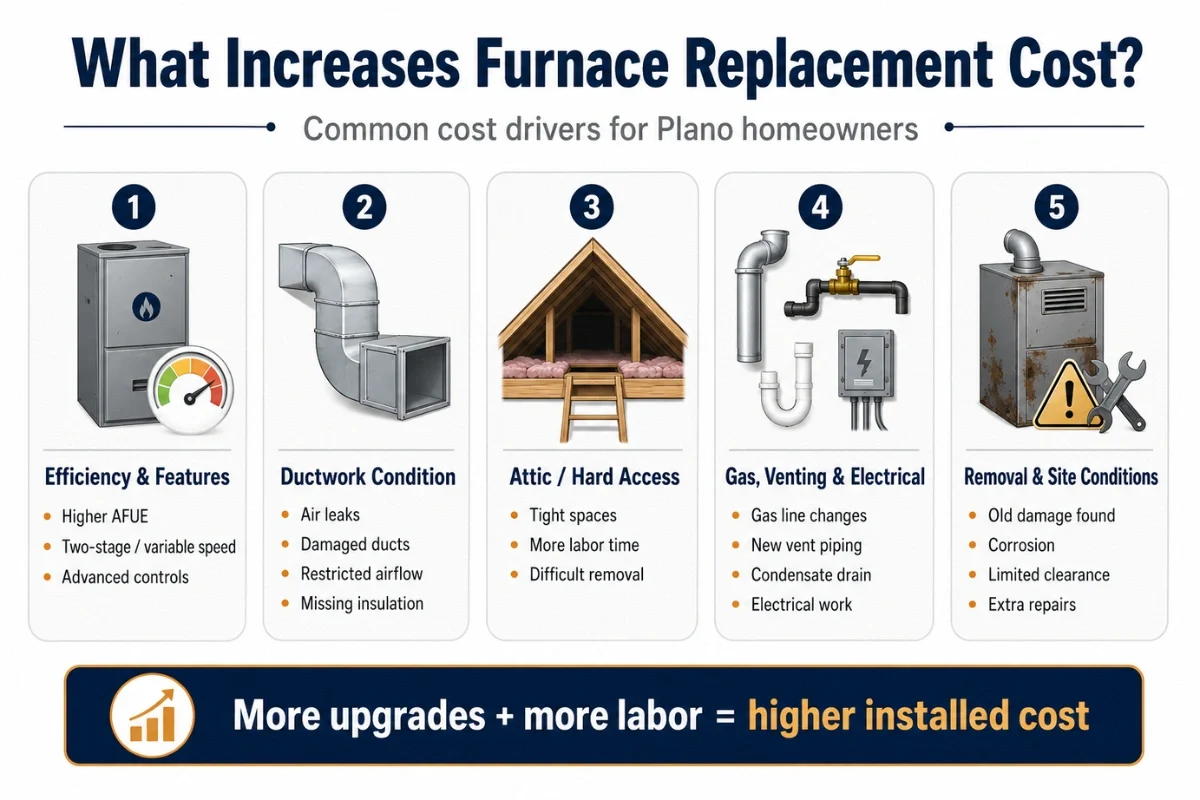
- Ductwork Modifications: If your existing ductwork is poorly sealed, undersized, or incompatible with the high-static pressure requirements of a modern high-efficiency furnace, your technician may need to perform modifications. Custom metal fabrication to ensure proper airflow significantly increases labor costs.
- Venting Requirements: High-efficiency furnaces (90% AFUE and above) require PVC venting to exhaust combustion byproducts outside. If your home currently uses an older metal chimney vent, the technician must install new piping through the roof or sidewall, which requires extra time and materials.
- Gas and Electrical Upgrades: Depending on the specific Lennox model selected, the furnace may require an updated gas line size or a dedicated electrical circuit to power the integrated controls and variable-speed blower motors.
Comparing Lennox Furnace Cost Drivers
| Factor | Low-Cost Impact | High-Cost Impact |
|---|---|---|
| Efficiency (AFUE) | 80% - 82% | 95% - 99% |
| Blower Motor | Single-stage, fixed speed | Modulating, variable speed |
| Infrastructure | Direct replacement/drop-in | Ductwork redesign/new venting |
| Tier | Merit Series | Signature Collection |
| Additional Add-ons | Basic thermostat | Smart zoning & air purification |
Geographical and Economic Variables
Regional labor costs play a decisive role in the final price of an installation. Costs in major metropolitan areas with high costs of living and strict building code enforcement are typically higher than in rural areas. Furthermore, local building departments may require specific permits for furnace replacement, which include inspection fees that are passed on to the consumer. In 2026, many regions also have specific energy-efficiency mandates that dictate the minimum efficiency ratings allowed for new installations, effectively raising the price floor for new systems.
Enhancing Performance with System Add-ons
When budgeting for a Lennox furnace, homeowners often choose to bundle the installation with compatible accessories. While this increases the upfront cost, it can improve long-term system performance and air quality.
- Lennox iComfort Thermostats: These smart controls are designed to communicate directly with variable-speed Lennox furnaces, allowing for precise control over humidity, airflow, and temperature. They are more expensive than standard non-communicating thermostats but are necessary to unlock the full potential of Signature Collection units.
- PureAir Filtration: Many homeowners choose to install a Lennox PureAir or similar whole-home air purification system alongside their furnace. Since the furnace blower pushes air through the home, integrating high-efficiency filtration at the time of installation is more cost-effective than a later retrofit.
- Zoning Systems: For larger homes, a zoning system allows you to control the temperature in different areas of the house independently. This involves adding dampers to the ductwork and multiple sensors, increasing the initial labor and equipment investment.
Understanding Maintenance and Warranty Value
A major "cost factor" that is often overlooked is the long-term support provided by the manufacturer. Lennox offers limited warranties on heat exchangers and covered components. However, the validity of these warranties often depends on professional installation and regular, documented maintenance. Budgeting for an annual professional tune-up is a hidden but essential cost to ensure that the equipment performs according to its rated efficiency and that the warranty remains intact.
Frequently Asked Questions
Does the price of a Lennox furnace include the installation labor? Typically, the quote provided by an HVAC contractor includes both the equipment and the labor. However, always request a breakdown to distinguish between the cost of the hardware and the labor charges. Be wary of estimates that do not account for permit fees, removal of the old unit, or necessary duct modifications.
Is it worth buying a higher efficiency (AFUE) model? If you live in a climate with long, cold winters, the monthly fuel savings provided by a 98% AFUE furnace often offset the higher upfront purchase price over the life of the unit. In milder climates, the ROI may take longer to realize, making a mid-efficiency model a more balanced financial choice.
What causes furnace installation costs to fluctuate so much? Pricing fluctuates based on the complexity of your specific home’s layout, the need for new venting, local labor rates, and whether the installer is a factory-authorized Lennox dealer. Authorized dealers often have access to specific training and technical support that can prevent long-term operational issues.
Can I use my old thermostat with a new Lennox furnace? You can, but it is rarely recommended. High-efficiency, communicating furnaces perform best when paired with the manufacturer’s proprietary smart thermostats. Using a generic thermostat may prevent the furnace from utilizing its variable-speed and modulating capabilities, which defeats the purpose of buying a high-end system.
How long does a typical Lennox furnace installation take? A standard replacement can usually be completed in one full day, assuming the location of the furnace is accessible and the existing infrastructure is up to code. If your project requires extensive ductwork modifications, venting changes, or the installation of zoning systems, the process may extend to two or three days.
Next Steps for Your Project
To receive an accurate estimate, contact at least three licensed HVAC contractors in your area. Ask each to perform a "Manual J" load calculation to determine the exact BTU size your home requires. Ensure the quote explicitly details the model number, the scope of the installation, and the warranty terms. Prioritize contractors who provide proof of insurance and local licensing, as these are critical safeguards when modifying gas and electrical systems in your home.
Image Gallery