2x2 MIMO Antenna Explained: Enhancing Wireless Speed and Reliability
A 2x2 MIMO antenna system uses two distinct transmitters and two receivers to transfer data simultaneously over the same frequency channel. By utilizing spatial multiplexing and diversity, it effectively doubles the potential data thro...
A 2x2 MIMO antenna system uses two distinct transmitters and two receivers to transfer data simultaneously over the same frequency channel. By utilizing spatial multiplexing and diversity, it effectively doubles the potential data throughput and significantly improves signal stability compared to traditional single-antenna (SISO) systems, making it a cornerstone of modern Wi-Fi and 5G connectivity.
Contents
What is a 2x2 MIMO Antenna?
To understand a 2x2 MIMO antenna, we must first break down the acronym. MIMO stands for Multiple-Input, Multiple-Output. In the context of radio communications, "Input" and "Output" refer to the radio link from the perspective of the signal processor: the transmitter provides the output, and the receiver provides the input.
The "2x2" designation indicates the number of radio chains or spatial streams the hardware can handle. Specifically, it means the device has two transmitters and two receivers. This is not merely a matter of having two physical "sticks" on a router; it involves sophisticated Digital Signal Processing (DSP) that allows the system to manage two separate data streams across the same frequency at the same time.
As of 2026, 2x2 MIMO has become the industry baseline for almost all consumer electronics, including smartphones, laptops, and tablets. While higher configurations like 4x4 or 8x8 exist, 2x2 remains the "sweet spot" for mobile devices because it balances the need for high-speed data with the physical space and power consumption constraints of portable hardware.
How 2x2 MIMO Technology Works
The magic of 2x2 MIMO lies in its ability to exploit a phenomenon that was once considered a problem in wireless networking: multipath propagation. In a standard environment, radio waves bounce off walls, furniture, and ceilings. In older systems, these reflections caused "fading" or interference because the signals reached the receiver at slightly different times, confusing the hardware.
MIMO turns this weakness into a strength through two primary mechanisms:
Spatial Multiplexing
In a 2x2 MIMO setup, the transmitter splits a high-speed data stream into two separate, lower-speed streams. These streams are transmitted simultaneously over different antennas. Because of the physical distance between the antennas (even if just a few centimeters) and the reflections in the room, the two signals take slightly different paths to the receiver. The receiving device uses complex mathematical algorithms to "unmix" these signals, effectively doubling the data rate without requiring additional bandwidth.
Spatial Diversity
When signal conditions are poor—such as when you are at the edge of a router’s range—the system may switch from multiplexing to diversity. Instead of sending different data on each antenna, the system sends the same data. The receiver then compares the two versions of the signal and selects the strongest one or combines them to reconstruct the original data more accurately. This significantly reduces "dead zones" and improves the reliability of the connection in challenging environments.
The Role of Polarization in 2x2 Antennas
A common question regarding 2x2 MIMO antennas is how two signals can occupy the same space without interfering. A key technique used, especially in external cellular antennas, is cross-polarization.
Most 2x2 MIMO antennas are designed with two internal elements oriented at a 90-degree angle to one another (often referred to as +45° and -45° "X-pol"). By shifting the physical orientation of the electromagnetic waves, the system ensures that the two streams remain "orthogonal" or distinct. This allows the receiver to distinguish between Stream A and Stream B even if they arrive at the exact same microsecond. In 2026, high-performance external antennas for 5G Fixed Wireless Access (FWA) almost exclusively use this cross-polarized design to maximize throughput over long distances.
Comparing MIMO Configurations
Choosing the right antenna configuration depends on your specific hardware and performance needs. Below is a comparison of how 2x2 MIMO stacks up against other common configurations.
| Configuration | Transmit/Receive Chains | Max Theoretical Throughput | Typical Use Case (2026) |
|---|---|---|---|
| SISO (1x1) | 1 Tx / 1 Rx | 1x Baseline | Budget IoT devices, legacy hardware. |
| 2x2 MIMO | 2 Tx / 2 Rx | 2x Baseline | Smartphones, laptops, standard Wi-Fi 6/7 routers. |
| 4x4 MIMO | 4 Tx / 4 Rx | 4x Baseline | High-end gaming routers, 5G base stations, premium phones. |
| 8x8 MIMO | 8 Tx / 8 Rx | 8x Baseline | Enterprise access points, industrial 5G hubs. |
Note: Real-world speeds are influenced by signal-to-noise ratio (SNR), interference, and the protocol version (e.g., Wi-Fi 7 vs. LTE).
Hardware Requirements and Compatibility
To benefit from 2x2 MIMO, both ends of the wireless link must support the technology. If you have a 2x2 MIMO router but are using an old laptop with a 1x1 (SISO) Wi-Fi card, the connection will default to the lowest common denominator: 1x1.
Access Points and Routers
Most modern Wi-Fi 6, 6E, and Wi-Fi 7 routers are at least 2x2 MIMO on all supported bands (2.4GHz, 5GHz, and 6GHz). High-end "Tri-band" routers often feature 4x4 configurations on the 5GHz or 6GHz bands to handle more simultaneous users, but they still communicate with 2x2 client devices using two of those streams.
External 2x2 MIMO Antennas
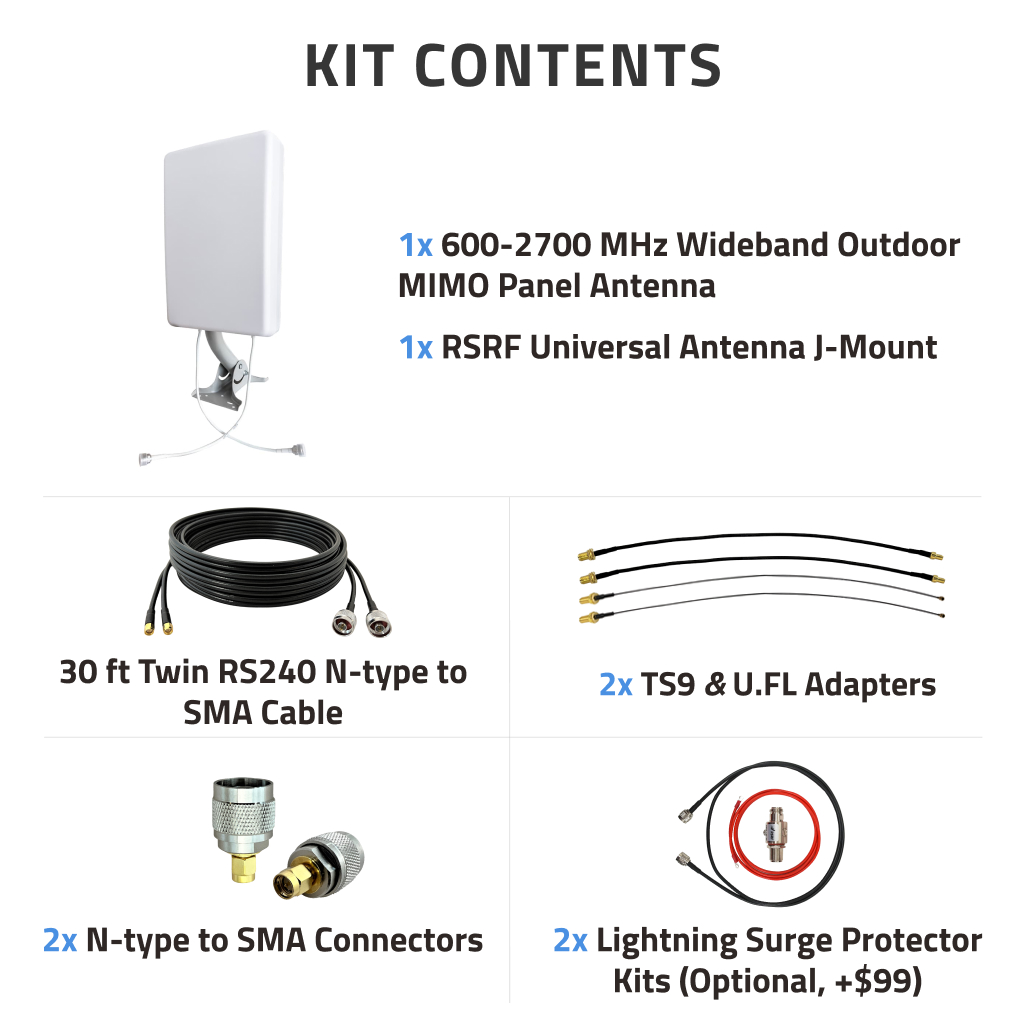
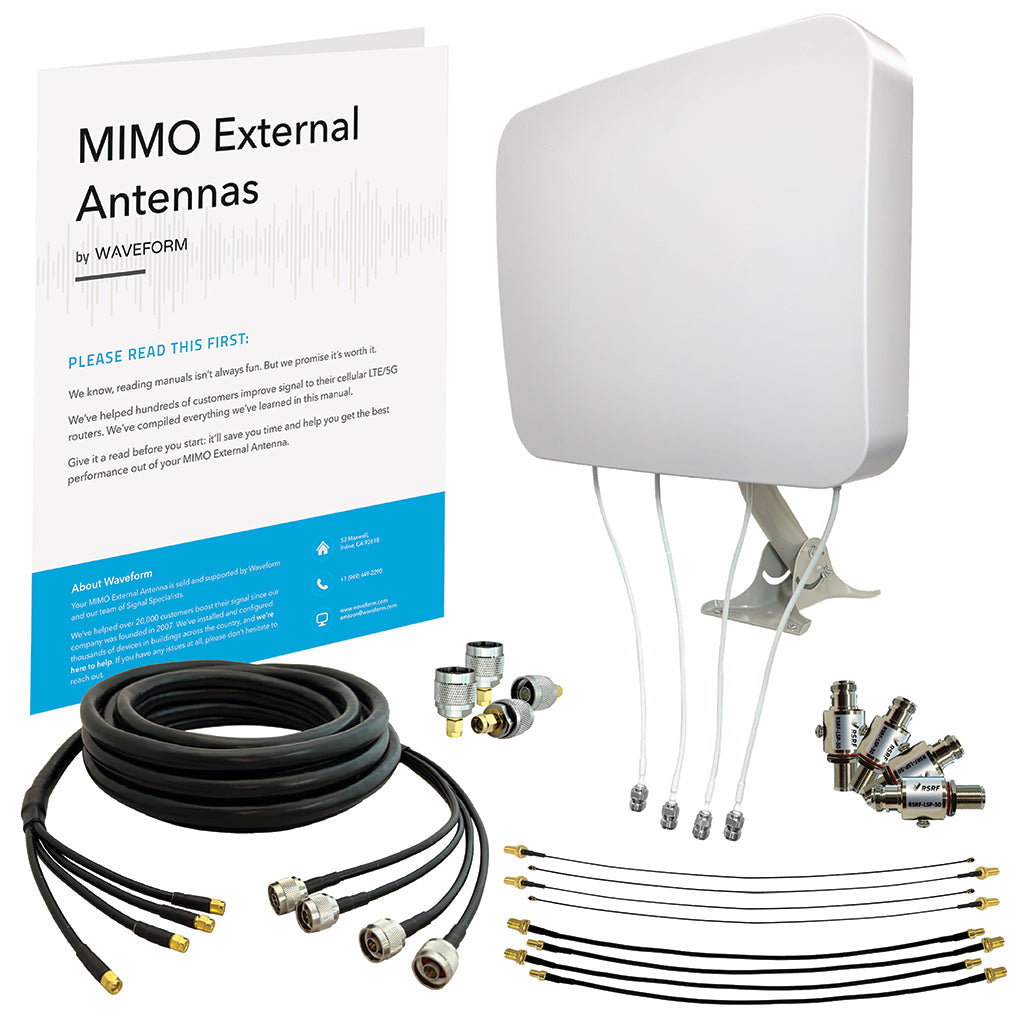
For users in rural areas using 5G or LTE for home internet, a 2x2 MIMO external antenna is a frequent upgrade. These antennas usually feature two cable leads (typically SMA or TS-9 connectors) that must both be plugged into the modem. If only one cable is connected, the device will lose its MIMO capabilities and revert to a slower, less stable SISO connection.
Common Use Cases and Applications
Residential Wi-Fi 7
In 2026, Wi-Fi 7 has become the standard for home networking. 2x2 MIMO is the primary configuration for mobile devices connecting to these networks. It allows for multi-gigabit speeds over the 6GHz band, supporting high-bandwidth activities like 8K video streaming and lag-free cloud gaming simultaneously.
5G Fixed Wireless Access (FWA)
Many households now use 5G "gateways" instead of fiber or cable. These gateways often include internal 2x2 or 4x4 MIMO antennas. In areas with weak signal, users often install a directional 2x2 MIMO antenna on their roof, pointed toward the nearest cell tower, to stabilize their "last-mile" connection.
Industrial IoT and Automation
In smart factories, 2x2 MIMO is used to ensure that autonomous robots and sensors maintain a persistent connection. The spatial diversity offered by MIMO is critical in environments filled with metal machinery, which creates significant signal reflections.
Troubleshooting 2x2 MIMO Performance
If you aren't seeing the expected speed increases with 2x2 MIMO, several factors might be at play:
- Cable Loss: If you are using an external 2x2 antenna, the cables connecting the antenna to the modem lose signal strength over distance. Using high-quality LMR-400 cables is recommended for runs over 10 feet.
- Antenna Placement: For MIMO to work effectively, the antennas need a "rich scattering environment" (indoors) or a clear line of sight with proper polarization (outdoors). If two external antennas are placed too close to each other without proper polarization, they may interfere rather than complement each other.
- Channel Width: MIMO throughput is heavily dependent on channel width (measured in MHz). A 2x2 system on a 20MHz channel will be significantly slower than the same system on an 80MHz or 160MHz channel. Ensure your router settings are optimized for wider channels if the interference environment allows.
Frequently Asked Questions
Does 2x2 MIMO increase the range of my Wi-Fi?
While MIMO is primarily designed to increase speed (throughput), it does indirectly improve range. Because of Spatial Diversity, 2x2 MIMO is better at recovering data from weak or reflected signals. This means you may maintain a usable, stable connection at distances where a SISO (1x1) system would drop the connection entirely.
Can I use two separate antennas for 2x2 MIMO?
Yes, you can use two individual antennas to create a 2x2 MIMO array, provided they are connected to the two distinct antenna ports on your modem or router. For the best results, one antenna should be mounted vertically and the other horizontally (or both at 45-degree angles) to achieve the necessary polarization diversity.
What is the difference between SU-MIMO and MU-MIMO?
2x2 MIMO refers to the physical antenna chains. SU-MIMO (Single-User) means the router can send two streams to one device at a time. MU-MIMO (Multi-User) allows the router to use its multiple antennas to send streams to different devices simultaneously. For example, a 4x4 router could talk to two different 2x2 smartphones at the exact same time.
Why do some devices have four antennas if it’s only 2x2 MIMO?
Some devices use "antenna switching" or "antenna diversity." They may have four physical antennas but only two radio chains. The device constantly monitors all four antennas and selects the two with the best signal to perform the 2x2 MIMO operations. This is common in high-end smartphones to prevent your hand from "blocking" the signal.
Future-Proofing Your Connectivity
When purchasing networking equipment in 2026, 2x2 MIMO should be considered the absolute minimum requirement. For high-traffic households or professional environments, look for routers labeled as 4x4 MIMO or higher to provide better "headroom" for multiple devices. However, for most client devices like laptops and phones, 2x2 remains the industry standard due to its excellent balance of performance and efficiency. If you are upgrading a cellular setup, investing in a high-quality, cross-polarized 2x2 MIMO external antenna is one of the most effective ways to ensure consistent high-speed internet.
Image Gallery